
Gossamer Gear Backpacks: Complete Guide
Comprehensive technical analysis of sizing, materials, installation requirements, and manufacturer standards for gossamer gear backpacks.
Affiliate disclosure: this page contains affiliate links. Purchases made through them may earn us a commission at no extra cost to you. See our affiliate disclosure.
In plain English
Gossamer Gear makes very light backpacks for people who want to carry as little as possible. Its packs often look simpler than a typical camping pack: fewer zippers, big stretchy mesh pockets on the outside, and a thin frame inside that can sometimes be taken out.
Light packs have a trade-off. A lighter frame is like a lighter bicycle: easy to carry, but not built for hauling big loads. Gossamer Gear publishes a comfortable load and a maximum load for its packs, and staying under those numbers is what keeps the pack comfortable.
Many of these packs come in fixed sizes rather than one adjustable size. That means you need to measure your back first, from the bump at the base of your neck down to the top of your hip bones, and pick the size that matches. Once the size is right, a light pack can feel very comfortable on long walks.
Recommended Products
See the full ranking →
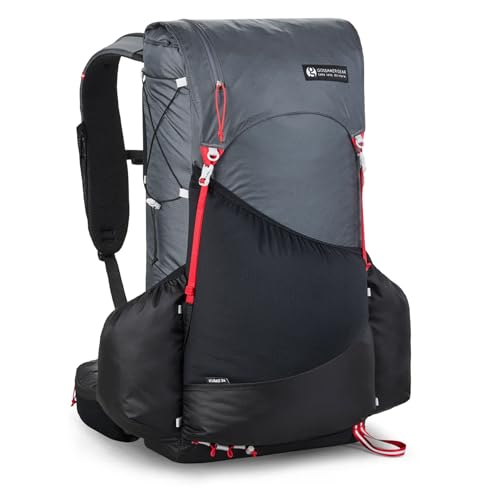
Gossamer Gear is an Austin, Texas–based hiking backpack brand built around a distinct suspension and fit philosophy: light, minimal packs worn close to the body, with frame designs that vary by model and range from a supportive framed carry for heavier loads to lighter, weight-shaved carries for shorter trips. The brand grew out of the early US ultralight backpacking movement rather than the mainstream outdoor-retail industry, and its packs are used more by long-distance and thru-hikers than by casual weekend campers. This hub covers Gossamer Gear's main pack lines — Mariposa, Gorilla, and Kumo — how the brand's sizing and frame system fits different bodies, and which model suits which kind of trip.
Gossamer Gear is known for ultralight backpacks built around lightweight frame systems (the Mariposa's is a closed-shape aluminum frame with a pivoting hipbelt), minimalist mesh pockets, and torso-specific sizing rather than one continuously adjustable harness. The brand is considered one of the pioneers of the modern US ultralight backpacking movement, and its packs are especially popular with thru-hikers on long-distance trails.
Gossamer Gear says it has outfitted outdoor enthusiasts since 1998, when it started as GVP Gear under civil engineer Glen Van Peski, and it has stayed focused on low-base-weight gear ever since: backpacks, trekking poles, and single-wall shelters make up most of the catalog. Its packs favor simplicity over feature count. Most models use a roll-top or floating-lid closure, external stretch-mesh pockets for quick access to water and snacks, and side compression straps in place of a heavy internal frame sheet and multiple zippered compartments. Fabric choices typically include a durable, higher-denier nylon for everyday abrasion resistance on the pack's base and high-wear panels, alongside lighter composite fabrics on select models for hikers chasing the lowest possible pack weight. Composite fabrics such as DCF are one option in the wider ultralight market; note that Challenge Sailcloth's ULTRA is a separate UHMWPE composite fabric, not a renamed DCF, so check the fabric listed for each model.
Gossamer Gear packs fit differently from many mainstream backpacks. Several models ship in fixed torso-length sizes rather than one frame with a sliding adjustment, so getting the fit right starts with measuring your torso rather than trying on a single one-size harness. The Mariposa's PVT Frame+Belt is a closed-shape aluminum frame with a pivoting hipbelt; check each model's page for how its frame works.
Fit on a Gossamer Gear pack comes down to a few adjustable and fixed elements:
- Torso length — sized in fixed ranges, commonly small, medium, and large, rather than one continuously adjustable harness. An accurate torso measurement, taken from the C7 vertebra at the base of the neck down to the iliac crest at the top of the hips, matters more here than on packs with a sliding yoke.
- Frame — varies by model; the Mariposa uses the PVT Frame+Belt, a closed-shape aluminum frame with a pivoting hipbelt, and lighter models use simpler or no frames.
- Hip belt — padded and load-bearing on framed models, built to carry the bulk of pack weight on the hips rather than the shoulders, in line with the general principle that a properly fitted hipbelt carries most of a loaded pack's weight.
- Shoulder straps — contoured and mesh-faced for ventilation, sized to the same small/medium/large range as the torso rather than adjusted independently.
The right Gossamer Gear pack depends on trip length and how much gear you carry. The Mariposa suits multi-day and thru-hiking loads, the Gorilla is a lighter mid-capacity option for hikers who pack tighter, and the Kumo is a minimalist, lightest-weight choice for short trips or experienced ultralight hikers.
| Model | General capacity class | Frame | Best suited for |
|---|---|---|---|
| Mariposa | Roughly 60-liter class | PVT Frame+Belt (closed-shape aluminum frame, pivoting hipbelt) | Thru-hikers and multi-day trips carrying more food, water, or gear |
| Gorilla | Roughly 40-to-50-liter class | Removable aluminum stay | Multi-day hikers who pack light-to-moderate loads |
| Kumo | Roughly mid-30-liter class | Light or removable minimal frame | Short trips, fastpacking, or experienced ultralight hikers packing very lean |
Hikers new to ultralight gear, or carrying bulkier winter or shoulder-season loads, generally do better with the Mariposa's larger capacity and full frame. Hikers who already dial in a low base weight, and want a lighter pack without giving up frame support entirely, tend to prefer the Gorilla. The Kumo suits hikers who have already trimmed their gear list and want the lightest carry the brand offers, typically on shorter trips where raw capacity matters less than shaving ounces.
Gossamer Gear warrants its products against manufacturing defects for one year from purchase, for U.S. purchasers only, and does not warranty fabric failure due to durability issues; it handles claims directly rather than through outdoor retailers and refers professional repairs to Rugged Thread in Bend, Oregon, at a discount. Exact warranty terms and length can change over time, so hikers should confirm current coverage on Gossamer Gear's own site before buying or filing a claim.
As a smaller, direct-to-consumer brand, Gossamer Gear generally handles warranty claims and repairs itself instead of routing them through a large retail network. That means support tends to come straight from the company rather than through a third-party return desk. Hikers considering a Gossamer Gear pack for a long thru-hike should weigh this against more retail-heavy brands: direct support can mean faster, more knowledgeable answers about a specific pack's frame or fabric, but it also means fewer brick-and-mortar locations to handle an in-person warranty exchange mid-trail.
Go Deeper
Detailed companion guides for gossamer gear backpacks.
Best Gossamer Gear Backpacks
Buyer's guide: best gossamer gear backpack.
Gossamer Gear Mariposa Review
An honest look at the Gossamer Gear Mariposa's aluminum PVT frame, torso-based sizing, and load capacity for multi-day, thru-hiking trips.
ULA & Zpacks (Cottage UL)
Related brands & model reviews guide.
Kelty & Teton (Budget)
Related brands & model reviews guide.
Origins, and the 1998 date
Gossamer Gear was started as GVP Gear by civil engineer Glen Van Peski in Carlsbad, California, and his first pack was the G1.1 The brand says it has outfitted outdoor enthusiasts since 1998 and moved its offices to Austin, Texas, in December 2005.1 Some guides place the company's roots in the early 2000s; by the brand's own account they go back to 1998.
Reading the Mariposa's load numbers
The Mariposa uses Gossamer Gear's PVT Frame+Belt, a closed-shape aluminum frame with a pivoting hipbelt, and the Mariposa 60 has a 30 lb recommended comfort load and a 35 lb maximum.2 Some guides describe the Mariposa frame as a removable aluminum stay; the current product page describes this closed-shape frame, so check which version you are looking at.
Those ratings fill up faster than many first-time buyers expect. Gossamer Gear defines lightweight backpacking as a base weight (gear without food, water and fuel) under 20 lb, and ultralight as under 10 lb.3 The National Park Service at Guadalupe Mountains notes water weighs about 8 lb per gallon.4 A 12 lb base weight plus a gallon of water already reaches about 20 lb before any food, which is why a desert stretch or a long resupply carry can push this pack toward its comfort limit.
Capacity is distributed unusually, too: the Mariposa 60 holds 36 liters in the main body and 24 liters across seven exterior pockets.2 Loading heavy items into outside pockets moves weight away from your back, while research on load carriage finds a center of mass close to the body costs the least energy.5 Keep dense food and water inside, against the frame, and use the pockets for light, bulky items.
Fabric names, recycled materials and the warranty
Some guides say the maker of Dyneema Composite Fabric now markets the same fabric as Ultra. The sources show something different. ULTRA is a product line from Challenge Sailcloth, a UHMWPE composite fabric; UHMWPE is the generic material sold under brand names such as Dyneema and Spectra.6 Dyneema itself is a separate brand of UHMWPE fiber.7 The two are related materials from different companies, not one fabric under a new name.
Gossamer Gear states its Jet line uses Global Recycled Standard certified 100% recycled nylon and that it is moving toward recycled fabrics and PFAS-free coatings; the Mariposa uses 100D and 210D recycled Robic nylon and is PFAS-free.8,2 Its warranty covers manufacturing defects for one year from purchase, for US purchasers, does not cover fabric failure due to durability issues, and refers professional repairs to Rugged Thread in Bend, Oregon, at a discount.9