

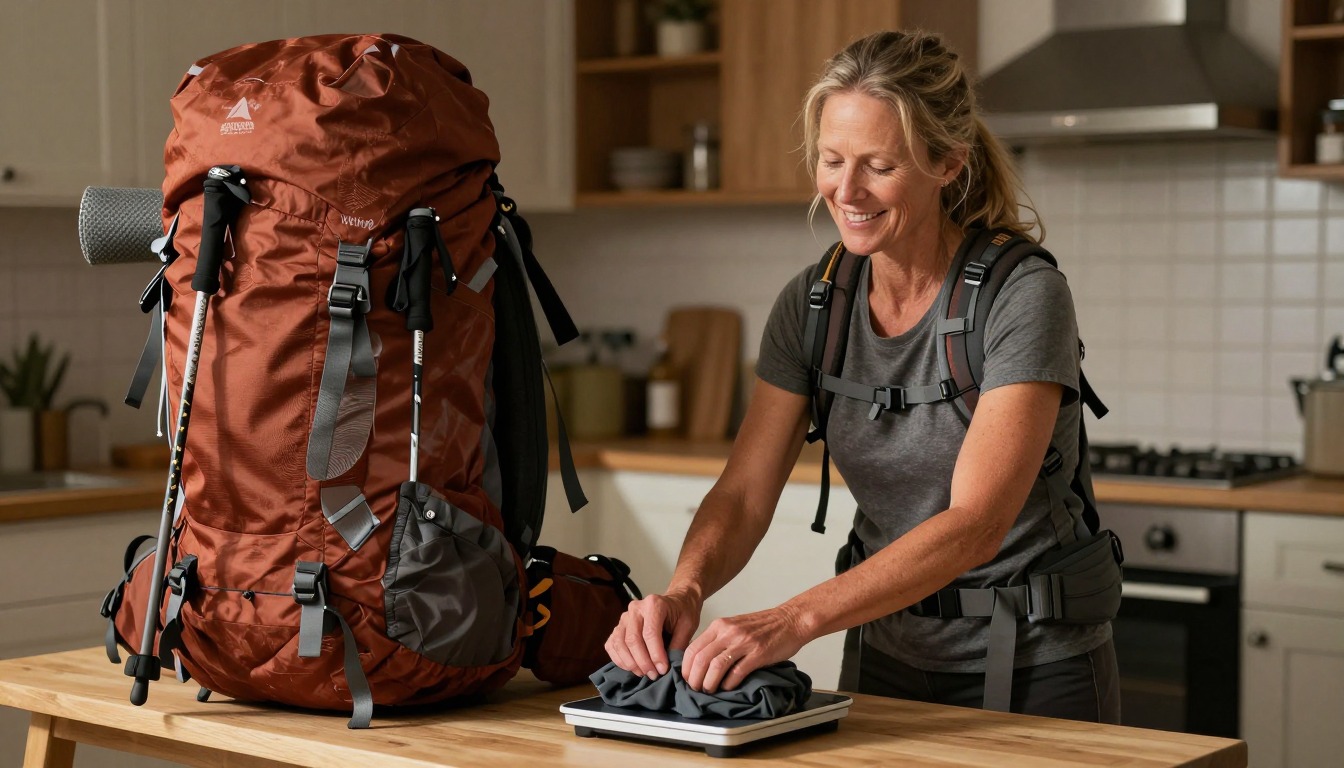


Whether a Hyperlite Mountain Gear backpack is worth it depends less on the brand and more on what you're carrying. The Dyneema Composite Fabric construction sheds water, doesn't stretch or sag the way nylon can, and holds up well over years of trail use based on published specs and trail use, which is why the pack shows up so often among long-distance thru-hikers. The roll-top closure adds weatherproofing without the hardware weight of a zippered lid.
The trade-off is frame support. Hyperlite packs use a removable aluminum stay and a thin foam back panel rather than a rigid internal frame, so they're built for hikers who have already brought their overall base weight down. A hiker still carrying a heavy traditional kit — bulky sleeping systems, non-ultralight cookware, redundant gear — is less likely to feel the benefit, since the pack's minimal suspension won't compensate for a heavy load the way a traditional framed pack does.
Where a Hyperlite pack tends to be worth it:
- You've already reduced your base weight and want a pack that matches the rest of an ultralight kit.
- You hike in wet conditions often and want a fabric that doesn't absorb water.
- You want a repairable pack rather than one you replace when it wears out.
- You regularly carry heavy, non-ultralight gear and need more frame support.
- You want to try several packs on in person before committing, since Hyperlite sells mostly direct-to-consumer.
- You bushwhack through terrain with sharp rock or thorns often and aren't willing to handle DCF's puncture sensitivity with extra care.