

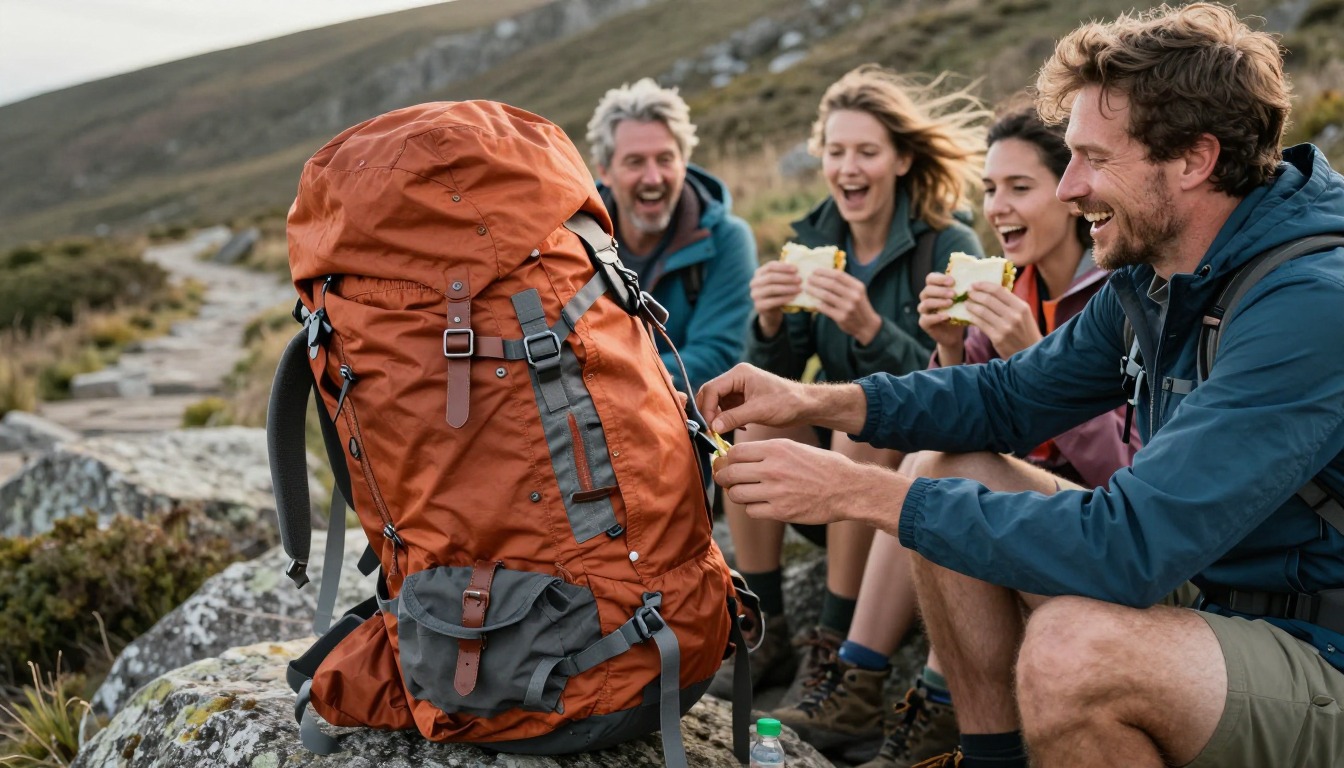
Most internal-frame hiking backpacks are designed around the sleeping bag going inside, at the bottom of the main compartment, rather than strapped to the outside.
Should a sleeping bag go inside the pack or outside?
Inside is the standard and generally better option. Packing the sleeping bag at the bottom of the main compartment protects it from rain, dirt, and brush, and its soft, compressible shape forms a stable, evenly padded base for the heavier gear packed above it in the core zone.
Some packs include a separate bottom sleeping-bag compartment with its own zippered access and an internal divider, letting you reach the bag without unpacking everything above it. This is a convenience feature, not a requirement — a pack without one works just as well with the bag packed loose or in a stuff sack at the bottom.
When should a sleeping bag be strapped outside instead?
If the sleeping bag doesn't fit inside a smaller pack alongside multi-day food and gear, external straps — typically along the bottom of the pack — are the fallback. In this case, use a waterproof stuff sack or dry bag, since an externally strapped bag has no protection from rain or trail spray.
Strapping a sleeping bag outside is more common on smaller-volume packs used for longer trips than they were sized for, or when carrying extra bulky gear. Where possible, packing it inside keeps both the bag protected and the pack's weight closer to your body.
Does the attachment method affect pack balance?
Packing the sleeping bag inside, at the bottom, keeps its weight centered and low, which supports the zone method's balance goals without any extra effort. An externally strapped bag adds bulk further from your spine and slightly raises the pack's overall profile, so it's worth reserving external carry for trips where internal space genuinely runs out rather than as a default habit.