

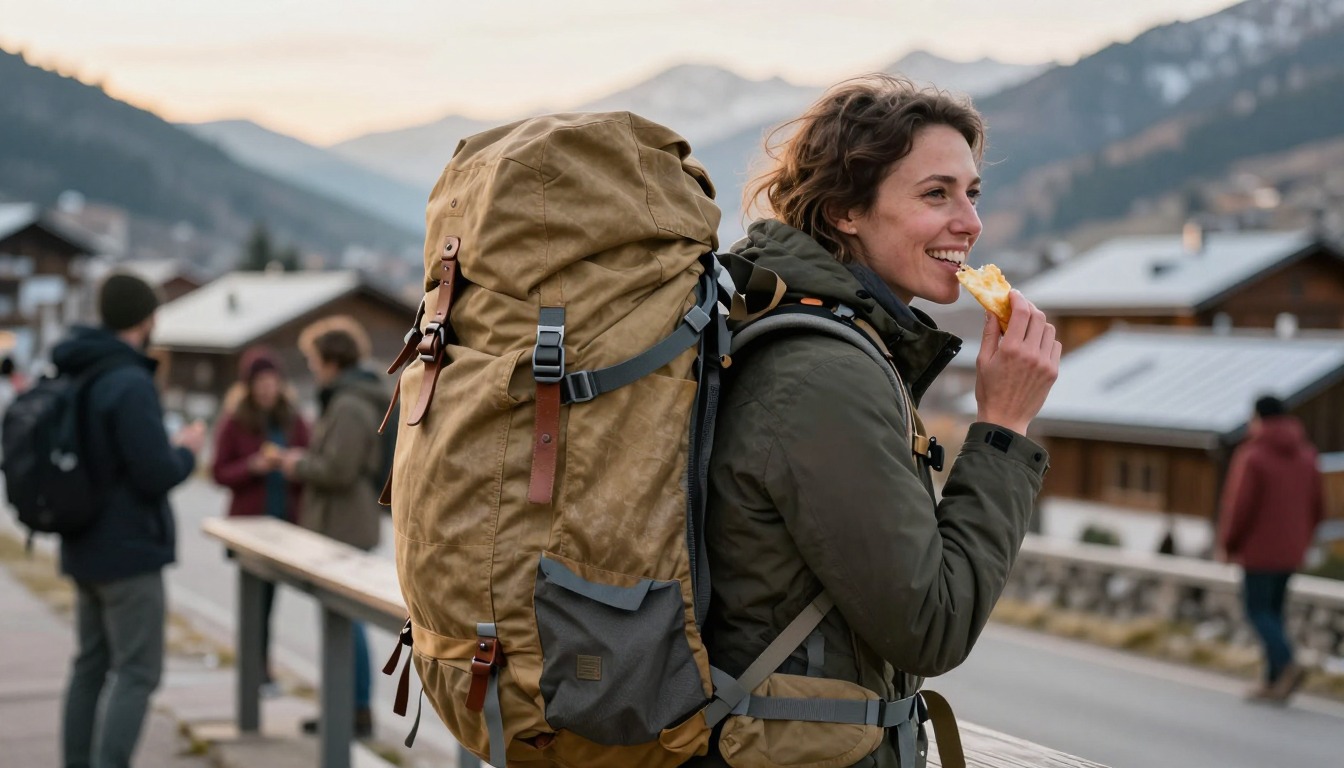
The 20%-of-body-weight guideline scales the target loaded pack weight to the individual hiker rather than giving one fixed number for everyone. A 120-pound hiker targets roughly 24 pounds loaded, while a 220-pound hiker can carry closer to 44 pounds under the same rule.
| Hiker Body Weight | Target Loaded Weight (~20%) |
|---|---|
| 120 lb | ~24 lb |
| 150 lb | ~30 lb |
| 180 lb | ~36 lb |
| 220 lb | ~44 lb |
This figure covers the full loaded pack — base weight plus food, water, and fuel — not base weight alone. A hiker can hit a low base weight and still land near 20% once several days of food and a full water supply are added, especially on longer, more remote sections between resupply points.
Conditioning and fit change how much of this guideline is tolerable in practice. A well-fitted pack with the hipbelt carrying roughly 80% of the load, correctly sized to torso length, lets many hikers carry loads nearer 25% comfortably over shorter stretches. A poorly fitted pack can make even a 15% load feel excessive, since more of it lands on the shoulders instead of the hips.
Day hikers should target a lower percentage, generally 10–15% of body weight, since a day pack skips the shelter, sleep system, and multi-day food that push overnight loads up. Kids and youth hikers need a lower percentage still, scaled further down from the adult guideline.
The 20% figure is a widely used starting guideline rather than a strict ceiling. Base weight is the number to focus on cutting if a loaded pack consistently runs heavier than this target, since it's the only weight fully within a hiker's control before food and water are added for a given trip.