By Dana Okoro, Editorial Reviewer · Published September 14, 2026, 6:03 PM ET
Direct Answer
Backpack size is determined by measuring your torso length (C7 vertebra to iliac crest) and your hip circumference (around the top of the hip bones), then matching both numbers against a brand's size chart. Frame-size labels like S/M/L map to torso-length ranges; hipbelt size is often listed and sized separately.
In plain English
Backpack size means two different things, and it helps to keep them apart. One is how much the pack holds, given in liters. The other is how the pack fits your body, and that is what this page covers.
Fit comes down to two measurements. The first is the length of your back, from the bump at the base of your neck to the top of your hip bones. That decides the frame size, like small, medium or large. The second is the distance around your hips at the top of the hip bones. That decides the size of the padded belt that wraps around your hips.
Write both numbers down, then look at the size chart for the exact pack you want. Brands use different charts, so a medium in one brand may not match a medium in another, much like jeans from different stores.
Measuring for backpack size means taking two body measurements — torso length and hip circumference — and comparing both against the specific pack's own size chart, since size labels aren't standardized across brands.
Torso length sets the frame size
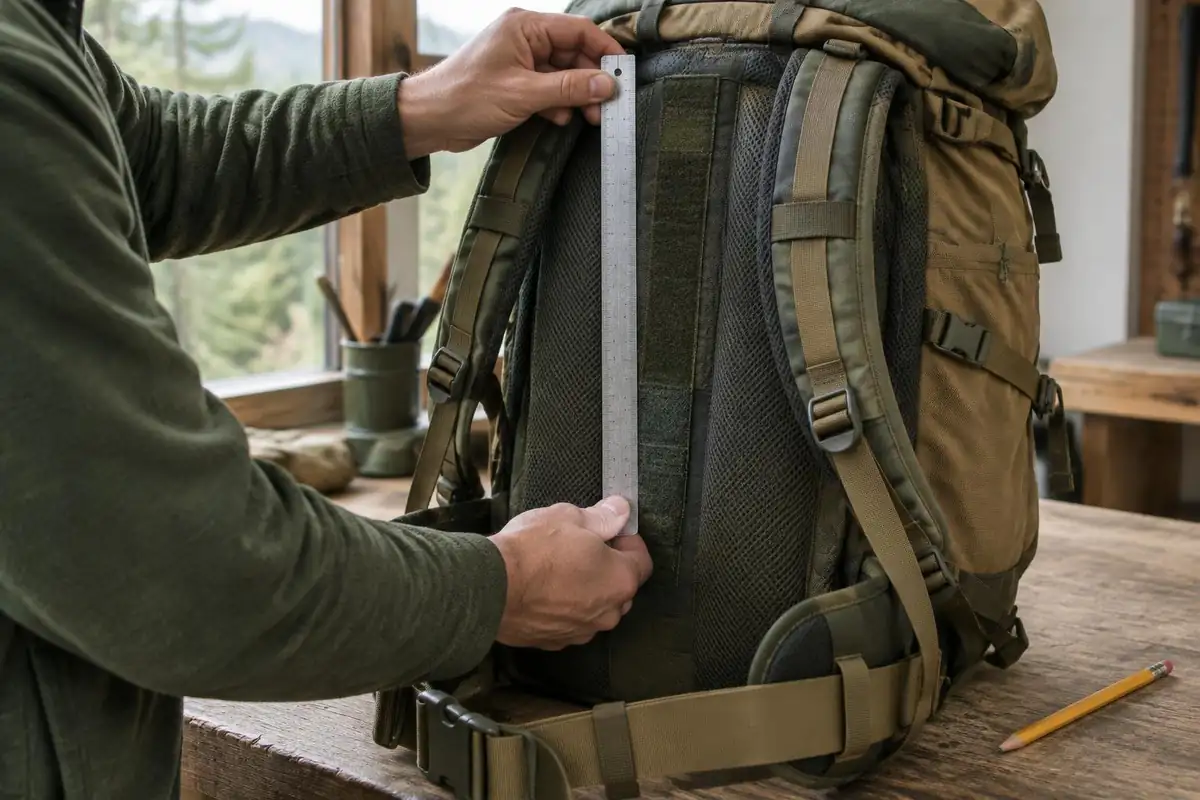
Torso length is the distance from the C7 vertebra at the base of the neck to the iliac-crest line at the top of the hip bones, measured with a flexible tape run down the curve of the spine. This number, not height, determines which frame-size label — XS, S, M, L, or a numeric size — fits correctly.
Hip circumference sets the hipbelt size
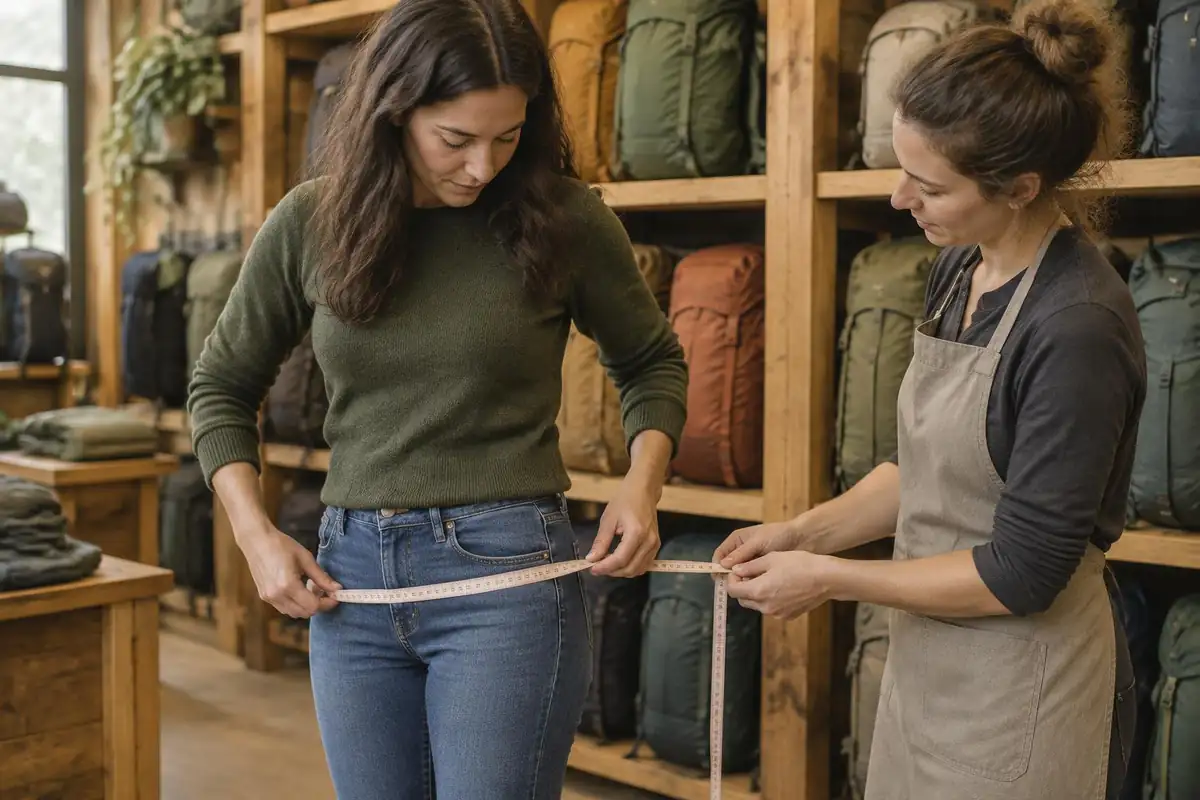
Hip circumference is measured by wrapping a tape measure around the body at the iliac crest, the same landmark used for torso length, and reading the number in inches. Packs with interchangeable hipbelts size this independently of the frame, since torso length and hip width don't always correlate.
Comparing against a size chart
Measurement
What It Sizes
Torso length (C7 to iliac crest)
Frame size / back length
Hip circumference (around iliac crest)
Hipbelt size
Neither measurement should be estimated from height, weight, or clothing size — clothing sizing and backpack sizing use different reference points and aren't interchangeable. Once both numbers are known, check them against the exact pack model's published chart, since the same torso length can land in different size bands on different brands.
Fit size versus capacity
Frame size and capacity are independent. The Washington Trails Association suggests a 25 to 30 liter pack for a full-day hike, 45 to 50 liters for a standard one- or two-night trip, and 50 to 70 liters for three to seven nights, and it also says packs are sized by torso length.1 Many packs are sold in two or three torso sizes at the same nominal volume, so choose capacity for the trip and fit size for your body.
The two can interact slightly: some makers list a different weight or volume for each torso size of the same model, since a longer frame means a taller bag. Check the spec for the size you are actually buying.
Hip-belt sizing methods genuinely differ
This page describes measuring hip circumference at the iliac crest. Gossamer Gear does the same, saying the hip belt size is measured around the top of the iliac crest.2 But other brands use clothing as a shortcut. Granite Gear says hip belt size is based on the circumference at the hip crest, roughly your regular pant waist size,3 and ULA sizes men's hip belts as pant waist size plus 2 inches.4 Mystery Ranch measures around the waist just above the top of the hip bones.5
So the page's advice not to estimate from clothing size is sound as a default, but some brands do build their charts on it. Use whichever method the chart in front of you was built on.
Why brand charts don't line up
Size labels are not standardized. Granite Gear offers Short (15 to 18 inches), Regular (18 to 21) and Long (21 to 24),3 while Hyperlite sells its Southwest in five torso sizes running from under 15 inches to 21 inches and up.6 A 19-inch torso is therefore a Regular in one system and could fall in a different named band in another.
Gender labels are not a reliable guide either. Gregory says it sizes packs identically regardless of gender, so a medium is the same torso size in its men's, women's and unisex packs.7 Deuter, by contrast, builds a separate SL fit with a shorter back panel and narrower S-shaped shoulder straps.8 Read the numbers, not the label.