By Dana Okoro, Editorial Reviewer · Published September 14, 2026, 6:03 PM ET
Direct Answer
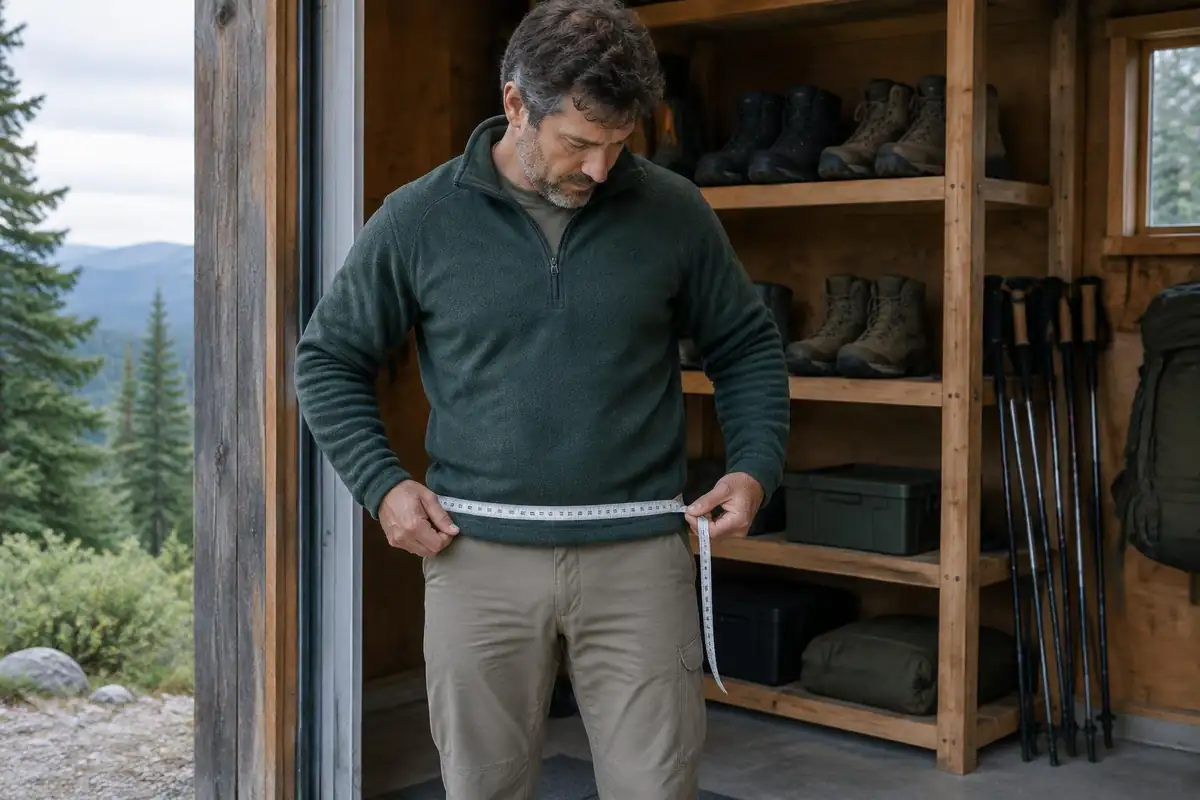
Hip size for a backpack belt is measured by wrapping a tape measure around the body at the iliac crest — the top ridge of the hip bones, found with thumbs pointing backward from the waist — not around the waistline. Read the circumference in inches and compare it to the pack's hipbelt size chart.
In plain English
The hip belt is the thick padded strap that wraps around your hips and buckles at the front. On a hiking pack it does much of the heavy lifting, so it has to fit.
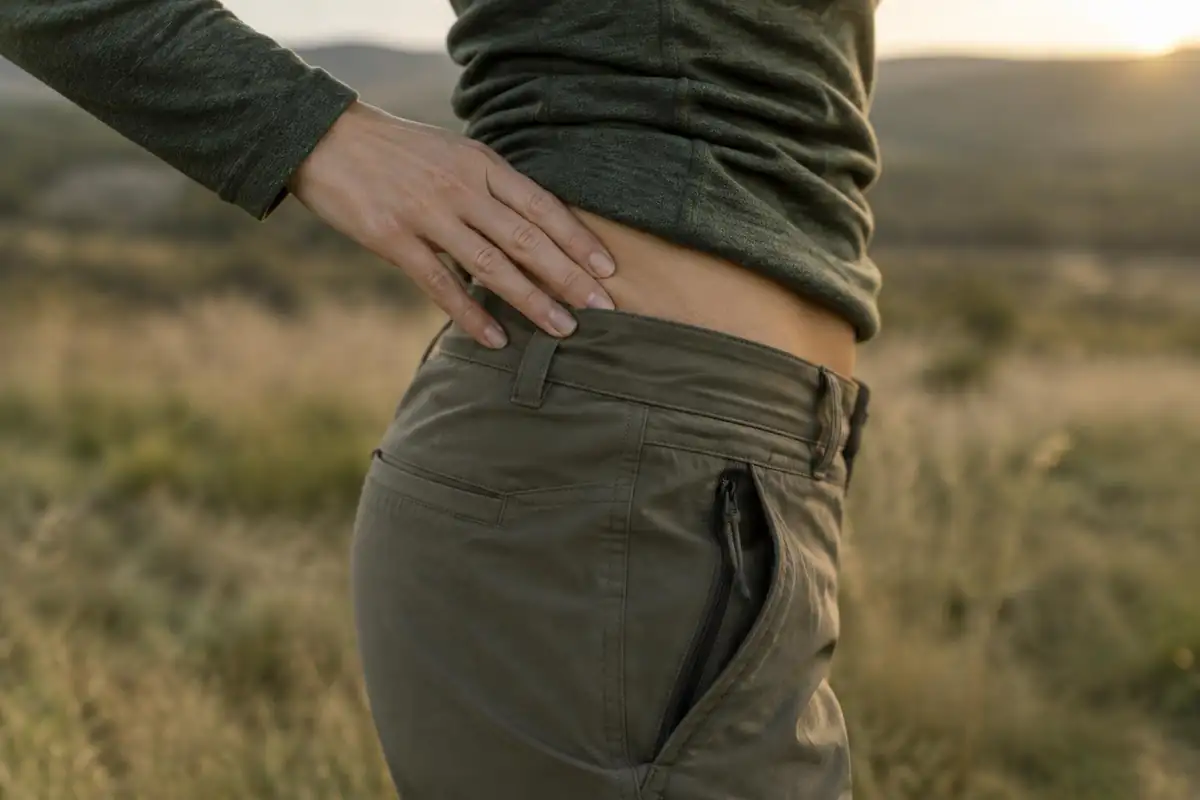
To measure, find the top of your hip bones: put your hands on your hips and feel for the hard ridge under your fingers. Wrap a soft tape measure around your body at that height, keep it level, and read the number without pulling it tight.
This is usually a little lower than where a belt on your trousers might sit, and lower than your natural waist, which is the narrowest part of your middle. Think of the hip belt as a shelf: it needs to rest on the bony ledge of your hips so the weight has something solid to sit on.
Hip size for a backpack hipbelt is measured as a circumference around the iliac crest, the bony ridge at the top of the hip bones, rather than around the natural waistline, which sits higher and gives an inaccurate number.
Finding the iliac crest
Place both hands on the waist with thumbs pointing backward and slide down until the thumbs catch the top ridge of the hip bones. That ridge, traced all the way around the body, is where the hipbelt is designed to sit.
Taking the measurement
Wrap a flexible tape measure horizontally around the body at that height, snug against the skin but not pulled tight, and read the circumference in inches or centimeters.
Why this measurement matters
A hiking backpack's hipbelt is built to carry most of a loaded pack's weight, transferring it off the shoulders and onto the legs — but only if the belt sits directly over the hip bones rather than riding above them on the waist. A hipbelt that's the wrong size for this measurement can't do that job, regardless of how well the shoulder straps fit.
Hipbelt size vs torso length
Measurement
Landmark
Sizes
Torso length
C7 vertebra to iliac crest
Frame / back length
Hip size
Around the iliac crest
Hipbelt
These two numbers are sized independently on packs with interchangeable hipbelts, since a hiker's torso length and hip circumference don't necessarily scale together.
Brands measure in slightly different places
The iliac-crest method on this page matches Gossamer Gear, which says hip belt size is measured around the top of the iliac crest.1 Other brands offer shortcuts or different points. Granite Gear says the size is based on the circumference at the hip crest, roughly your regular pant waist size,2 and Mystery Ranch measures around the waist just above the top of the hip bones.3
ULA uses clothing plus an allowance: men's belts are pant waist size plus 2 inches, and for women ULA adds 5 inches to the smallest waist measurement for curvier proportions or 3 inches for straighter builds.4 The page's advice to measure at the crest rather than the waistline is a sound default, but if a brand's chart is built on a pant-waist method, use that method.
Where the padding should sit on the bone
Sources agree the belt belongs on the iliac crest but differ on exactly how. Kelty says the middle of the waist-belt padding should rest on the iliac crest,5 Deuter says to center the hip fins over the top of the hip bone before securing the belt,6 and Gossamer Gear says the top third of the belt should rest there.1 All three put the bone inside the padded area rather than above or below it.
Shape matters as well as size. Granite Gear says its women's hip belts are built for hips with a greater angle than unisex belts,2 and Deuter's SL packs use conically shaped hip fins.7 Two belts with the same size label can therefore fit the same hips differently.
How to tell the belt size is right
Osprey says a correctly sized hipbelt leaves a 3 to 6 inch gap between the hip-pad tips when tightened, measured at the iliac crest.8 Granite Gear similarly says a properly sized belt wraps over the hipbones and leaves a gap in the padding at the front.2 If the pads meet before the belt is snug, it is too big; if the buckle barely reaches, it is too small.
This page says the hip belt carries most of the load. Brands agree, though figures range from Big Agnes's roughly 80% to Alpkit's 60 to 80%,9,10 and the US Army's foot-march manual puts it nearer 30% on the hips with a frame and hip belt.11 Whatever the exact share, a belt that sits on the crest is what makes any transfer possible.