

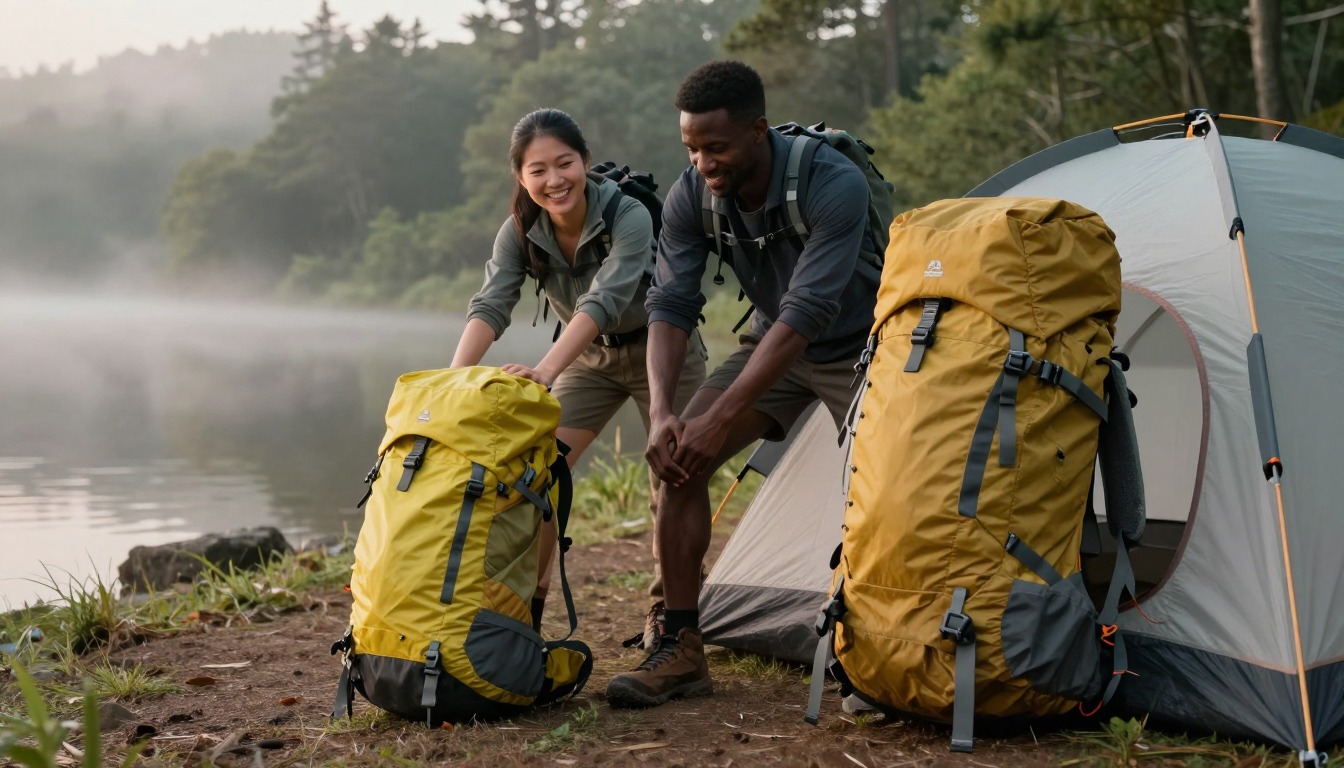
Base weight includes everything carried in and on the pack except food, water, and fuel: the backpack itself, shelter, sleep system, clothing carried (not worn), cook system, and any tools, electronics, or accessories. It excludes consumables because those items get used up during a trip and don't represent a fixed, repeatable weight from one trip to the next.
Backpackers generally sort base weight into three rough classes:
- Traditional: above 20 lb (9 kg) — typical of packs built around durable, heavier fabrics and full-featured frames.
- Lightweight: under 20 lb (9 kg) — usually reached by trimming redundant gear and choosing lighter fabrics without going fully minimalist.
- Ultralight: under 10 lb (4.5 kg) — usually built around a frameless or minimal-frame pack, a non-freestanding shelter, and fabrics like Dyneema Composite Fabric (DCF) instead of heavier nylon.
Tracking base weight — usually with a spreadsheet listing every item's weight in ounces — is the standard way backpackers identify where to cut. Because it isolates gear choices from trip-specific variables like food quantity, base weight lets a hiker compare a traditional framed pack from a brand like Osprey or Gregory against a minimalist pack from a brand like Hyperlite Mountain Gear or Gossamer Gear on genuinely equal terms.