

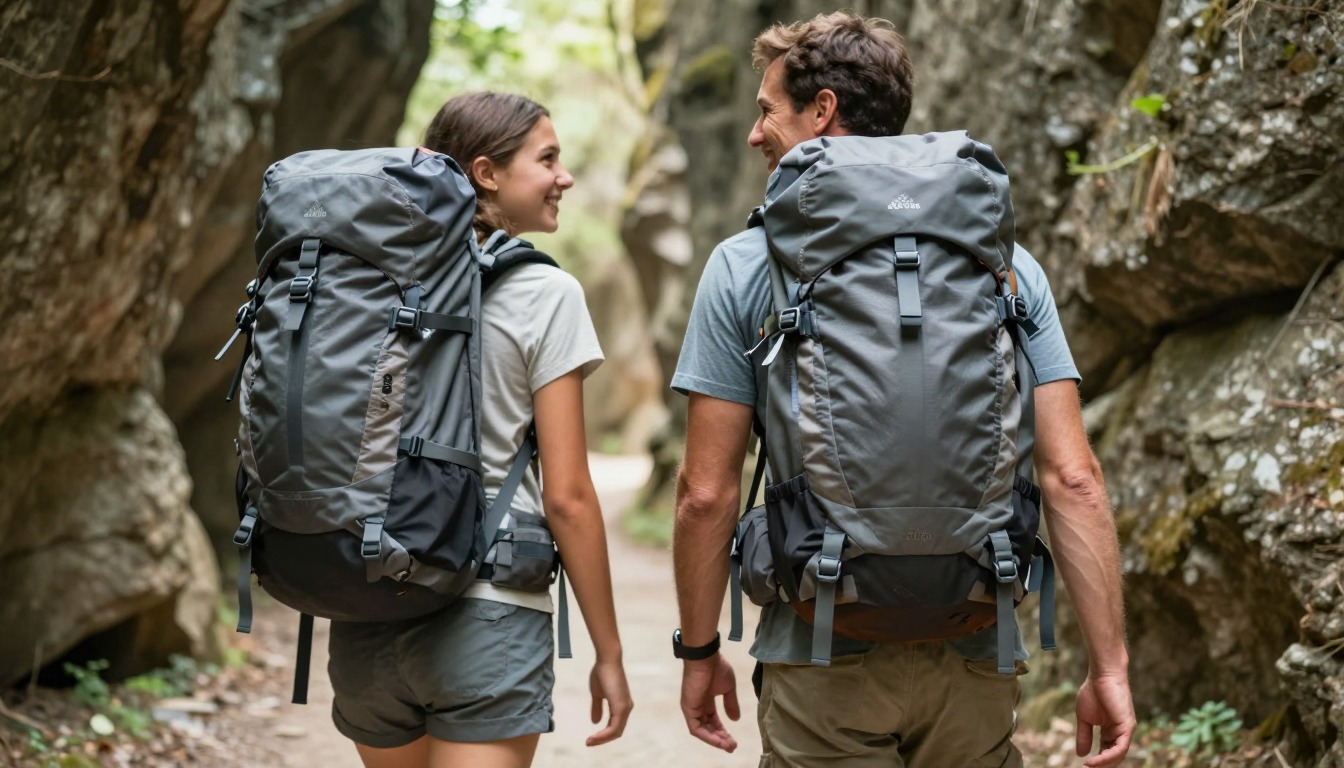
A five-day hike without resupply falls in the extended-trip capacity range, generally 55–65L. That range accounts for roughly five days of food, a full shelter and sleep system, and enough clothing to handle a stretch of variable weather without restocking.
A simple planning formula: budget roughly 10–15L per night of food and consumables on top of a 15–20L base for shelter, sleep system and cook kit. For five nights, that lands between 65L and 95L using the high end of the formula, but most hikers with a reasonably efficient three-season kit land closer to 55–65L in practice because food compresses well and doesn't scale linearly with a rigid per-night estimate.
Gear choices shift this range meaningfully. A hard-sided bear canister — required in some US wilderness areas — takes up fixed space regardless of how much food is inside it, and can add 10-plus liters of effective capacity need. An ultralight setup with a quilt, trekking-pole shelter and dehydrated meals can bring a five-day trip down into a 45–50L pack, while a hiker carrying a synthetic sleeping bag, a canister stove system and full cold-weather layers may need closer to 70L for the same five nights.
Food planning also matters more on a five-day trip than on a weekend, since it's long enough that meal-by-meal bulk adds up noticeably. Dehydrated or freeze-dried meals pack significantly smaller than fresh or canned food for the same calorie count, and repackaging food out of bulky retail packaging into resealable bags is a simple way to reclaim a liter or two of pack space without changing what's actually being carried.