

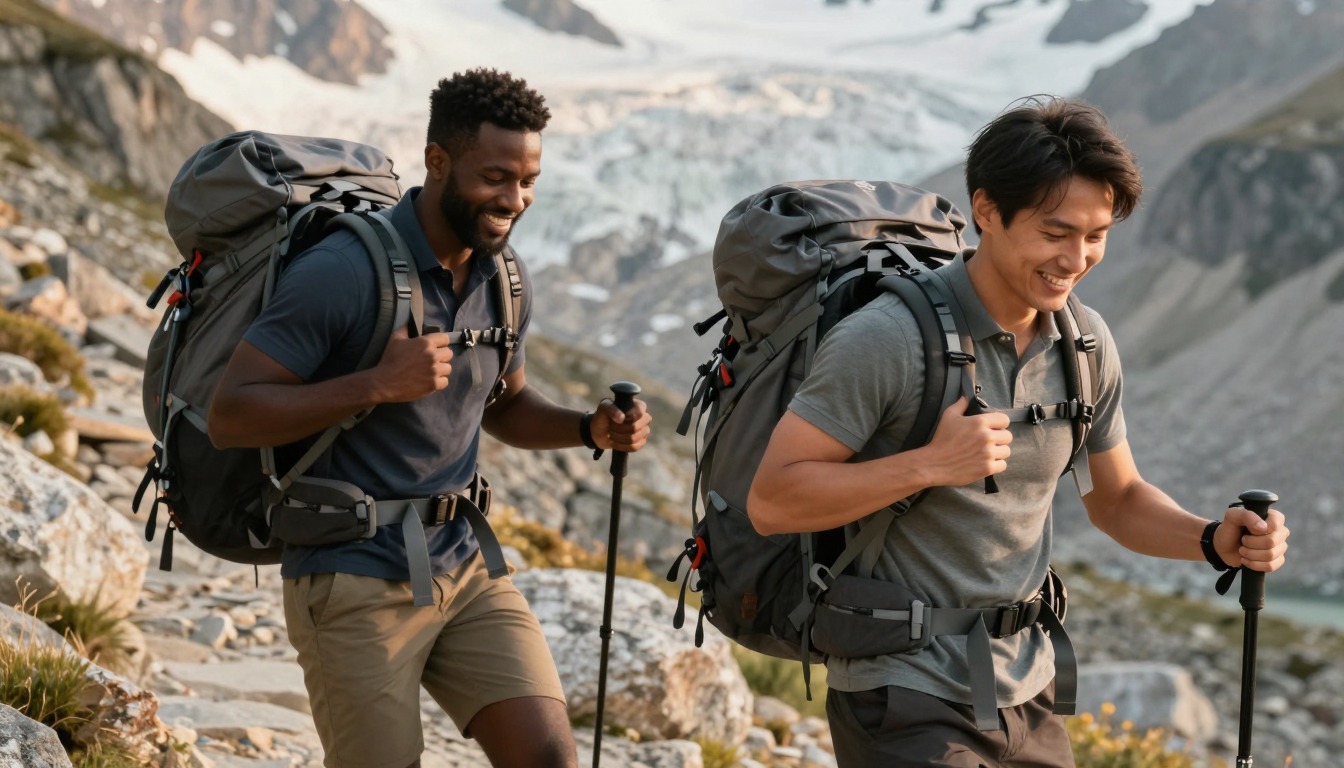
Load-lifter straps connect the top of each shoulder strap to an anchor point set higher on the pack's frame, and adjusting them correctly means pulling until they sit at roughly a 45-degree angle rather than straight up and down or nearly flat.
Why the angle matters
A 45-degree angle draws the load's upper mass in toward the shoulders and spine, keeping the pack's center of gravity close to the body. Pulled too steep, near vertical, load lifters lift the entire pack off the hipbelt and shift weight back onto the shoulders — the opposite of what a hipbelt-first fit is meant to achieve. Left too loose, near flat, the top of the pack tips backward away from the back, which makes a given load feel heavier than its actual weight because the center of gravity moves rearward.
When to adjust them
Load lifters come after the hipbelt and shoulder straps in the tightening sequence, never before. Setting them first, on an unbuckled or loose hipbelt, gives no reliable reference point for the 45-degree target since the pack's baseline position hasn't been established yet.
A quick field check
| Load-lifter angle | Effect |
|---|---|
| Near vertical (too tight) | Lifts pack off hipbelt, shoulders take more weight |
| Roughly 45 degrees | Load sits close to spine, hipbelt keeps carrying weight |
| Near flat (too loose) | Pack top leans back, center of gravity shifts rearward |
A common limiting factor
Torso length affects whether a hiker can even reach a proper 45-degree angle. On a pack correctly sized to torso length, the load-lifter anchor sits at the right height for that angle; on a pack that's the wrong size, the straps often run out of adjustment range before reaching 45 degrees, which is a sign to check torso-length sizing rather than keep pulling the load lifters tighter.