



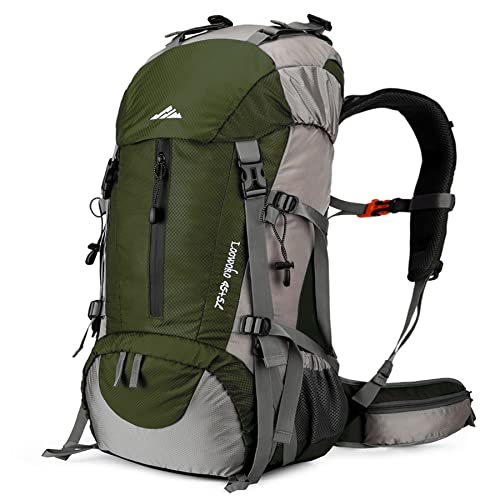


A backpacking backpack's real value comes from fit, frame durability, and hipbelt quality holding up over years of trips — not from the sticker price alone or from the longest feature list. A well-fitted mid-priced pack that lasts a decade often delivers more value than a premium pack that doesn't fit, or a bargain pack whose frame fails on trip three.
What determines value in a backpacking backpack?
Value is the ratio of what a pack delivers — comfortable carry, durability, and years of use — against what it costs, not the lowest price or the most expensive option on the shelf. A pack that fits your torso and hipbelt correctly, uses a frame rated for your typical loaded weight, and survives repeated trail seasons is a better value than a cheaper pack that needs replacing after a year or a pricier pack whose extra features go unused.
Does a higher price always mean a better pack?
No. Price tends to track frame sophistication, fabric durability, and brand engineering more closely than it tracks comfort for any specific hiker, since a pack that's a poor fit for your torso will feel worse than a correctly fitted budget pack regardless of cost. Premium pricing often buys lighter materials for the same load rating, more refined adjustability, and better warranty support — real advantages, but not universal ones.
Where do lower-priced packs cut corners?
Budget backpacking packs typically save cost in a few consistent places:
- Frame material — a single perimeter wire instead of a wire-plus-stay combination, which can feel less supportive above roughly 35 lbs
- Fabric denier — lighter-weight nylon that trades some abrasion resistance for a lower price and often a lower pack weight too
- Adjustability — fewer torso-length options or a simpler, non-swappable hipbelt
- Hardware — lighter-duty buckles and zippers rather than heavy-duty or reinforced components
- Organization — fewer pockets, less structured compression, or a simpler lid
When is paying more actually worth it?
Spending more is generally worth it when your loaded pack weight regularly sits near the top of a budget pack's rated range, when you hike in abrasive terrain that rewards tougher fabric, or when a specific fit problem — like a torso length or hipbelt shape only certain brands offer — is solved by a pricier model. It's less clearly worth it when the extra cost buys features, like a larger lid or more external pockets, that don't change how the pack carries.
How to compare value across brands and models
| Consider | Lower-cost packs | Premium packs |
|---|---|---|
| Frame support | Adequate for lighter loads | Better at higher loaded weights |
| Fabric durability | Shorter usable lifespan under hard use | Generally more abrasion-resistant |
| Fit range | Fewer torso/hipbelt size options | Often more size and adjustability options |
| Warranty support | Varies by brand | Frequently stronger, brand-dependent |
Brand reputation is a starting point for value, not a substitute for fit. A pack from a well-regarded maker like Osprey, Gregory, or Deuter still needs to match your torso length and typical loaded weight to deliver on that reputation; a mismatched size from a trusted brand carries no better than a mismatched size from a lesser-known one. Value-oriented lines from REI Co-op and Granite Gear cover the core suspension features most hikers need without the added cost of the most refined frame engineering, which is exactly the trade-off worth weighing against how often, and how heavily, you actually load a pack.
How resale and longevity factor into value
A pack that holds up well enough to resell or hand down after several seasons effectively lowers its real cost per year of use, which is worth factoring in alongside the sticker price. Frames and fabrics that show excessive wear after a season or two erase whatever savings a lower purchase price offered, while a pack that's still functional after many trips spreads its cost over more use. This is one reason a moderately priced pack with a strong reputation for durability can be a better long-term value than either the cheapest option on the shelf or a premium pack bought mostly for its brand name.
The most reliable way to judge value for your own use is to try a pack loaded to your typical trip weight, check that the hipbelt and torso length fit correctly, and weigh that fit and support against the price — rather than assuming a higher number on the tag guarantees a better pack for you specifically.