



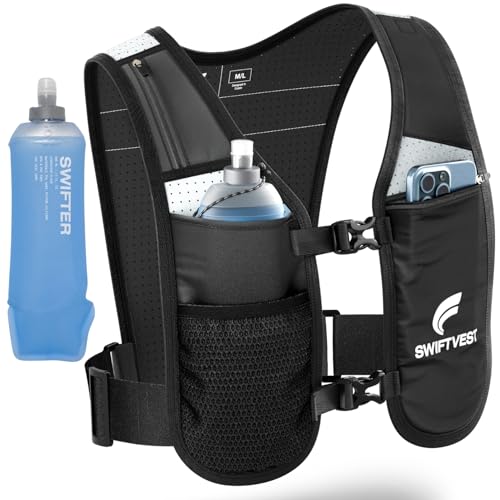
Fastpacking and ultralight backpacking share a minimalist gear philosophy but differ in pace and pack design: fastpacking mixes running and hiking to cover 20 to 50-plus miles a day in a body-hugging vest-style pack, while ultralight backpacking keeps a hiking pace and larger daily-mile targets around 15 to 25 miles using a lightweight framed or frameless pack with a base weight typically under 10 pounds.
Is fastpacking the same as ultralight backpacking?
No. Both trim base weight aggressively, but fastpacking adds a running component that ultralight backpacking doesn't require. A fastpacker alternates running and hiking depending on terrain, so gear has to work at both gaits without bouncing. An ultralight backpacker moves at a fast hiking pace the entire time and can use a wider range of pack styles, since there's no running motion to destabilize a poorly fitted load.
Can you fastpack with an ultralight backpacking pack?
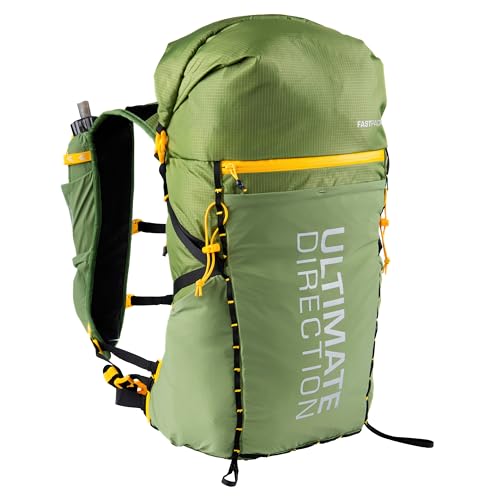
Yes, for shorter trips or lower total pack weights. A frameless ultralight pack in the 35 to 45-liter range, like those built for 35-45L weekend trips, can work for fastpacking if it's cinched down tight and the load stays light, but its taller profile and lack of a running-specific harness make it bounce more than a dedicated fastpacking pack once the pace increases. Runners doing serious fastpacking usually switch to a purpose-built vest-style pack once mileage or speed goals get demanding.
How does gear selection differ between the two?
Both approaches start from the same base-weight math, but fastpacking pushes further on a few specific items:
- Shelter: Ultralight backpackers often carry a trekking-pole tent; fastpackers frequently drop to a bivy or minimal tarp to save pack volume, not just weight.
- Sleep system: Both use quilts or compact bags, but fastpackers size down further since nights are shorter on high-mileage itineraries.
- Cook system: Ultralight backpackers commonly still cook; many fastpackers skip cooking entirely and eat cold, calorie-dense food to save pack weight and time.
- Footwear: Ultralight backpackers lean toward trail runners or light hikers; fastpackers almost always run in trail-running shoes for the running sections.
- Pack style: Ultralight backpacking uses framed or frameless hiking packs; fastpacking uses vest-style or lightly framed running packs for a no-bounce fit.
Which approach suits a given hiker?
Ultralight backpacking suits hikers who want lighter shoulders and faster days without adopting a running gait, and it works across nearly any fitness level once pack weight drops. Fastpacking suits hikers who already run or trail-run regularly and want to cover thru-hike-length routes in a fraction of the usual time. Fitness and running experience matter more for fastpacking than for ultralight backpacking, since sustaining a run-hike rhythm over multiple days demands more cardiovascular conditioning than walking the same miles.
How do daily mileage targets compare?
Ultralight backpackers commonly target 15 to 25 miles a day, a pace that's still achievable on a standard hiking gait with a lighter-than-average pack. Fastpackers target a wider range, often 20 to 50-plus miles a day depending on terrain and fitness, because running the flat and downhill sections adds miles that a hiking pace can't match. That wider range is also why fastpacking itineraries vary more than ultralight backpacking ones: a technical, rocky route limits running opportunities and can flatten the mileage gap between the two approaches almost entirely.
Does pack weight target differ between the two?
Both approaches chase a low base weight, but the numbers used to hit "ultralight" differ slightly by context. Ultralight backpacking generally targets a base weight — everything except food, water and worn clothing — under 10 pounds. Fastpacking uses total pack weight, including food and water, as the more useful number, since that figure determines how the pack rides at a run; keeping total weight under 15 pounds is the more common fastpacking benchmark. A fastpacker with a 10-pound ultralight base weight can easily land under that 15-pound total once a day or two of food and water is added, which is part of why the two approaches share so much gear in practice.
Can the same gear list work for both?
In most cases, yes, with adjustments to shelter and food. A three-season ultralight gear list built around a trekking-pole tent, quilt and closed-cell foam pad transfers directly to fastpacking, and many hikers use the identical kit for both. The main changes fastpackers make are trading a taller tent for a lower-profile bivy or tarp to cut pack volume, and simplifying food to reduce both weight and pack space, since a fastpacking pack has less room than a typical ultralight backpacking pack in the 35-45L weekend range.