

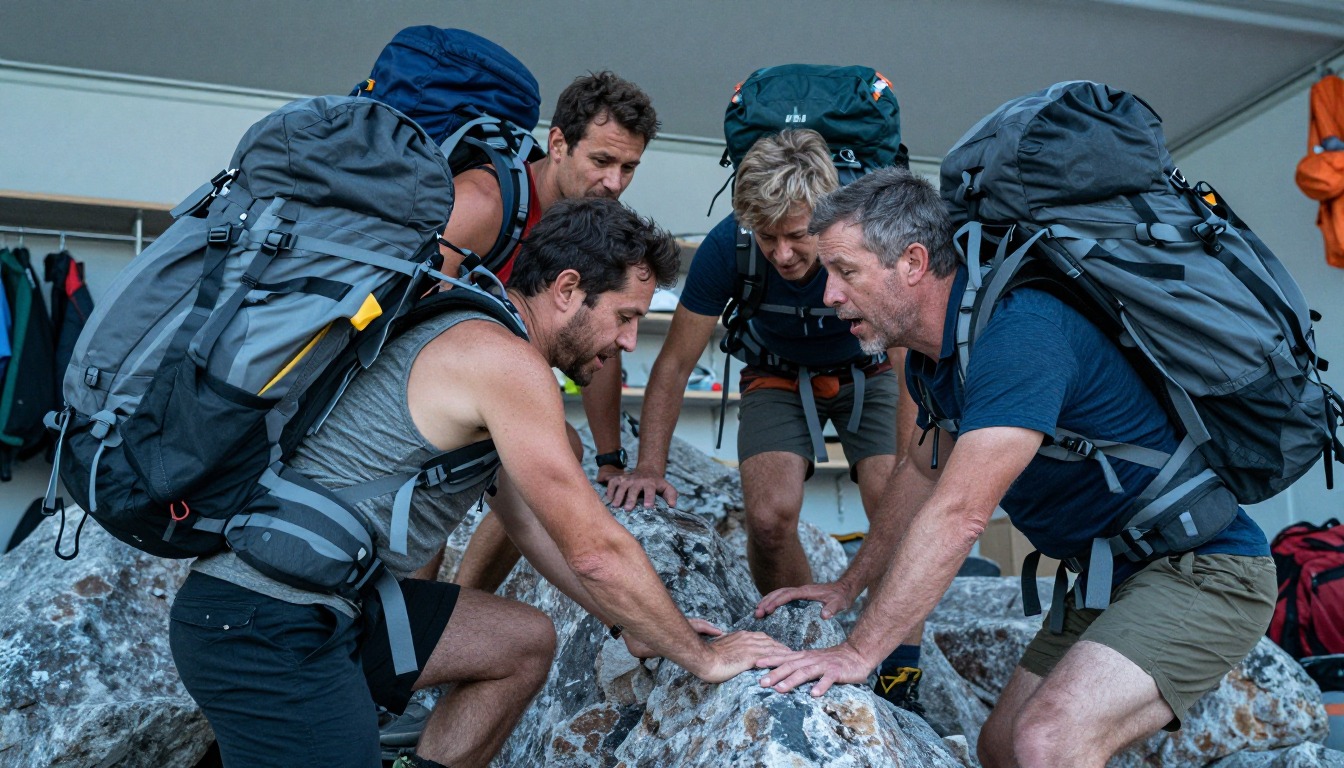

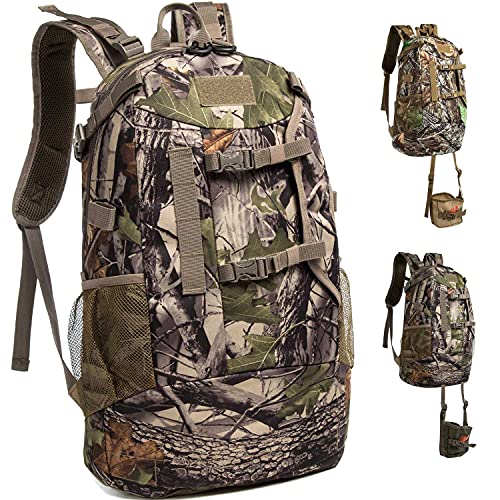



An external frame backpack carries meat, gear and bone weight on a rigid frame set outside the pack bag, rather than a frame sewn inside it. That external structure is what lets a meat-hauler pack rate loads of 100 pounds or more, well above what most internal-frame hunting or hiking packs are built to carry comfortably.
What is an external frame pack?
An external frame pack uses a visible, rigid frame — traditionally aluminum tubing, now often a mix of aluminum stays and a load-bearing shelf — mounted outside or behind the pack bag instead of built into it. The bag itself can be small or even removed entirely, letting the frame carry a game bag, panniers or a lashed-on quarter directly.
Older external frame packs used a full aluminum ladder frame with the pack bag riding high and away from the back. Modern hunting-specific external frames, like ALPS OutdoorZ's Commander or Kifaru's frame-only systems, keep that separation between frame and bag but tighten the fit closer to the body than vintage 1970s-style frames, so the pack still handles reasonably well when it isn't loaded with meat.
How does an external frame carry more weight than an internal frame?
An external frame carries more weight because the rigid structure sits away from the body and transfers load straight down through the frame rails into the hipbelt, rather than flexing with a soft pack bag. That stiffness is what lets it hold an irregular, heavy load — like a bone-in quarter — without the load twisting the pack or digging into the hiker's back.
Internal frame packs use aluminum stays or a plastic framesheet built into the bag itself, which keeps the load close to the body and improves balance on technical terrain, but flexes more under an oversized or oddly shaped load. That's a real trade-off, not a simple upgrade:
- External frame: highest rated load capacity, best for hauling an irregular meat load, but bulkier and less stable on steep, technical ground.
- Internal frame: closer center of gravity and better balance scrambling or side-hilling, but a lower practical ceiling for raw pack-out weight.
- Hybrid frame: an internal-frame bag built on hunting-specific hardware with a reinforced, removable meat shelf, aiming at both jobs at once.
What is a meat shelf and how does it attach?
A meat shelf is a mesh or nylon platform, built into or added onto a hunting pack's frame, that expands to hold a boned-out quarter, backstrap or full game bag against the frame rails. On most modern packs it folds flat and out of the way when empty, then unzips or unclips to extend backward for the pack-out.
Meat shelves attach in one of two ways: sewn directly to the frame as part of the pack system, or sold as a separate accessory that clips onto compatible frame rails. Compression straps then cinch the load tight against the shelf so it rides close to the frame rather than swinging loose, which matters as much for balance on a steep pack-out as for comfort.
Internal frame vs external frame for hunting: which should you choose?
Choose an external or hybrid frame for backcountry hunts where a pack-out could realistically exceed 80 to 100 pounds of meat, and a standard internal-frame hiking or multi-day pack for day hunts, spot-and-stalk trips, or hunts where the expected pack-out load stays lighter. Elk and other big-game backcountry hunters lean toward external or hybrid frames precisely because a single animal can require multiple heavy pack-out trips.
| Factor | External / hybrid frame | Standard internal frame |
|---|---|---|
| Rated load capacity | Often 100–150+ lbs | Typically under 70–90 lbs |
| Balance on technical terrain | Lower, load sits farther out | Higher, load rides close to the back |
| Best hunt type | Elk, backcountry big game, multi-trip pack-outs | Deer, day hunts, lighter-game trips |
| Everyday hiking use | Limited outside hunting season | Doubles as a standard multi-day pack |
Hunters who already own a general-purpose backcountry pack, such as a 55–65L extended-trip pack, can sometimes add a hunting-specific meat shelf accessory rather than buying a dedicated frame — a reasonable option for a first hunt before committing to hunting-only gear.