




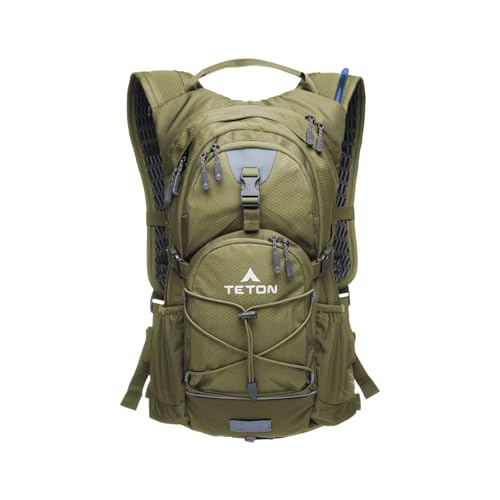
Day-hike packs and overnight packs differ mainly in capacity, suspension weight and hipbelt design: day packs run 15 to 30 liters with a light framesheet or no frame, while overnight packs start around 50 liters and use a heavier, load-bearing suspension built to carry a sleeping bag, shelter and multiple days of food.
What's the difference between a day pack and an overnight pack?
A day pack is built to carry a light load comfortably for a few hours without a break, while an overnight pack is built to carry a heavy load comfortably for days at a time. That difference shows up in three places: internal frame, hipbelt padding, and fabric weight. Day packs like the Osprey Talon and Tempest series or Gregory's Miwok and Kalmia use a light aluminum stay or plastic framesheet, if any, since loads rarely exceed 20 pounds. Overnight packs like the Osprey Atmos AG and Aura AG, or Gregory's Baltoro and Deva, use a suspended-mesh back panel over a rigid perimeter frame designed to transfer 40, 50 or more pounds onto a wide, structured hipbelt.
Can a day pack handle an overnight load?
A day pack can technically hold overnight gear, but most day packs lack the frame and hipbelt structure to carry that weight comfortably once a sleeping bag, shelter, stove and multiple days of food are added. Loading a frameless or lightly framed daypack past roughly 20 pounds usually shifts the weight onto the shoulders instead of the hips, which turns a short overnight trip into a strain even when the volume technically fits.
Ultralight backpackers sometimes push a large daypack into one-night use by cutting a sleep system's weight down enough to stay under that threshold, but this is a deliberate weight-cutting strategy, not a default approach. A hiker planning even one night out should size up rather than rely on a day pack's frame to handle overnight loads.
Can an overnight pack work for day hiking?
An overnight pack can be used for day hiking, but its extra frame weight, taller profile and larger hipbelt are unnecessary for a load that rarely nears what the pack is designed to carry. An empty 55- to 65-liter overnight pack often weighs close to twice what a daypack does, so using one for a short hike means carrying dead weight before any gear goes in.
Some hikers compromise with a multi-day pack compressed down using its side and top straps, which keeps a single pack for both day hikes and overnights but sacrifices the low weight and easy-access pockets a dedicated day pack offers. For a hiker who owns both, matching pack to trip length rather than defaulting to the bigger pack keeps every hike lighter on the shoulders.
Which pack style suits which hiker?
The right choice comes down to how often each trip length happens and how much a hiker is willing to compromise on comfort versus weight.
- Frequent day hikers, occasional overnights — a dedicated day pack in the 20–30L range, sized up slightly to leave room for extra layers on the rare overnight trip carried ultralight.
- Regular overnight and multi-day backpackers — an overnight pack with a real load-bearing suspension, used on day hikes too when a single-pack setup matters more than shaving weight.
- Hikers who do both equally — two packs: a lightweight day pack for single-day trips and a framed overnight pack sized for the heaviest multi-day trip planned, rather than one compromise pack for everything.