
Best Fastpacking Backpack
Best Fastpacking Backpack, ranked from aggregated owner ratings and reviews, not first-hand testing. Real pros, cons, and who each pick is best for.
Our Top 3 Picks
Quick Comparison
| Product | Best for | Buy | |
|---|---|---|---|
| Ultimate Direction Fastpack 20 | Top Overall Pick | See Amazon | View |
| USWE HAJKER ULTRA 30L DAYPACK | Best Value | See Amazon | View |
| Ultimate Direction Fastpack 30L Daypack for Running | Best Ultralight | See Amazon | View |
| ULTIMATE DIRECTION Fastpack 40 M/L Spruce | Best Hydration Pack | See Amazon | View |
| BLACK DIAMOND Beta Light 45L Alpine Backpack | Also Great | See Amazon | View |
Choosing a fastpacking backpack starts with matching capacity to trip length and total carried weight, then narrowing by harness type, fabric and pocket layout for how much running versus hiking the route demands.
What capacity fastpacking backpack should I buy?
Most fastpackers should buy a pack in the 20 to 35-liter range, which fits a minimalist shelter, quilt, spare layer and one to two days of food. Solo overnight trips with a bivy or tarp can work with 15 to 20 liters; trips over three nights or with shared gear push toward 35 to 40 liters, closer to a light backpacking pack than a running vest.
How should a fastpacking pack fit and carry the load?
A fastpacking pack should sit close to the back with minimal vertical shift, using either a light internal frame sheet or a firm foam back panel plus a slim hipbelt that rides higher than a standard backpacking belt. Because these packs lack the structured hipbelt that carries roughly 80% of the load on a full framed pack, keeping total weight low — generally under 15 pounds — matters more than chasing extra load-carrying features. Fit is checked the same way as any backpack: measure torso length from the C7 vertebra at the base of the neck to the iliac crest at the hip, then match that to the brand's size chart, since a pack sized to torso length rather than height keeps the shoulder straps and load lifters in the right position at both a run and a hike.
What fabric and features matter for a fastpacking pack?
Fastpacking packs typically use lighter-denier ripstop nylon (around 100D to 210D) or Dyneema Composite Fabric (DCF) to cut weight while resisting abrasion from off-trail scrambling. Look for these features when comparing packs:
- Stretch-mesh front pockets for quick-access food, a soft flask or a wrung-out layer, without opening the main compartment.
- Compression straps that cinch the load close to the back to control bounce on descents.
- External pole or ice-axe attachment for hands-free running on smooth sections.
- A roll-top or minimal-zip main compartment, which sheds weight compared to multi-zip panel-loading designs.
- Hydration-sleeve compatibility, since most fastpackers run a bladder or front-mounted soft flasks rather than stopping to dig out a bottle.
Who should choose a vest-style pack versus a lightly framed pack?
Runners doing single-night or ultra-supported trips under about 10 pounds of total load are usually best served by a high-capacity running vest rather than a true fastpacking pack, since the vest's chest-strap fit gives the least bounce. Hikers carrying two or more nights of food and a full sleep system are better served by a lightly framed fastpacking pack, since the added structure — while heavier than a bare vest — keeps a heavier load from sagging and chafing over long days. The trade-off is consistent across the category: more frame and hipbelt structure adds comfort at higher loads but adds weight and reduces the close, no-bounce fit that makes running feel natural.
Full Ranking, Reviewed

Best for Fastpacking backpacks
- 20–21 L capacity
- 16 oz empty
- Hydration-ready
- Tech Specs | Capacity
- Set up to carry a reservoir for hands-free sipping
- Ventilated back panel cuts sweat on long climbs
- Colours and exact capacity options change often on Amazon — confirm the current variant on the listing before buying.
Verdict: This 20–21 L daypack pairs a breathable back with room for a bladder, making it our overall pick for Fastpacking Backpacks.

Best for Fastpacking backpacks
- 30 L capacity
- 25 oz empty
- Ultra lightweight design
- Low carry weight pays off on big-mileage days
- Multiple compartments make organising kit easy
- Check the size and colour options on the live listing, as availability shifts.
Verdict: This 30 L hiking pack keeps things refreshingly simple, making it a strong option for Fastpacking Backpacks.

Best for Fastpacking backpacks
- 30–31 L capacity
- 26 oz empty
- Hydration-ready
- Pack More
- Hydration sleeve keeps water within easy reach
- Airflow channels help your back stay cooler under load
- Check the size and colour options on the live listing, as availability shifts.
Verdict: This 30–31 L hiking pack pairs a breathable back with room for a bladder, making it well worth a look for Fastpacking Backpacks.
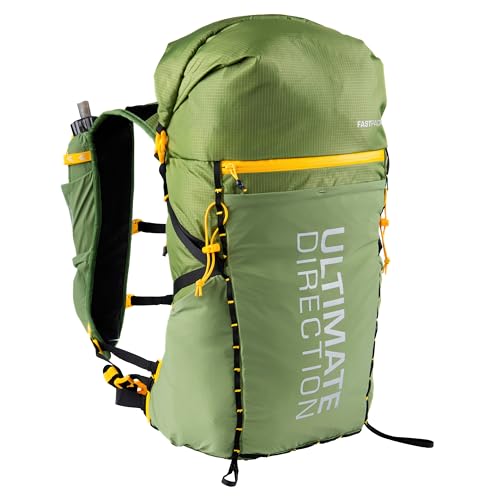
Best for Fastpacking backpacks
- 40–41 L capacity
- 29 oz empty
- Hydration-ready
- Tech Specs
- Routes a hydration bladder and hose without fuss
- Breathable mesh back keeps air moving against your spine
- At 40–41 L it sits between a daypack and a backpacking pack — a touch large for quick hikes, a touch small for long multi-night loads.
Verdict: This 40–41 L hiking pack pairs a breathable back with room for a bladder, making it a strong option for Fastpacking Backpacks.

Best for Fastpacking backpacks
- 45 L capacity
- 25 oz empty
- Padded hip belt
- Ultralight, high-capacity design
- Padded hip belt shifts load onto your hips, not your shoulders
- Light enough that you forget you are wearing it
- At 45 L it sits between a daypack and a backpacking pack — a touch large for quick hikes, a touch small for long multi-night loads.
Verdict: This 45 L hiking pack offers real hip-belt support, making it an easy shortlist pick for Fastpacking Backpacks.
Frequently Asked Questions
How many liters do I need for fastpacking?
Most fastpackers need 20 to 35 liters for a one to three-night trip with a minimalist shelter, quilt and food. Solo, ultra-minimal overnight setups can work with 15 to 20 liters; longer trips or shared gear push toward 35 to 40 liters.
Do fastpacking backpacks have hipbelts?
Most have a slim, low-profile hipbelt rather than a full structured belt, since a bulky belt restricts the running motion. The belt adds some load transfer but relies mainly on keeping total pack weight low rather than carrying the bulk of the load.