
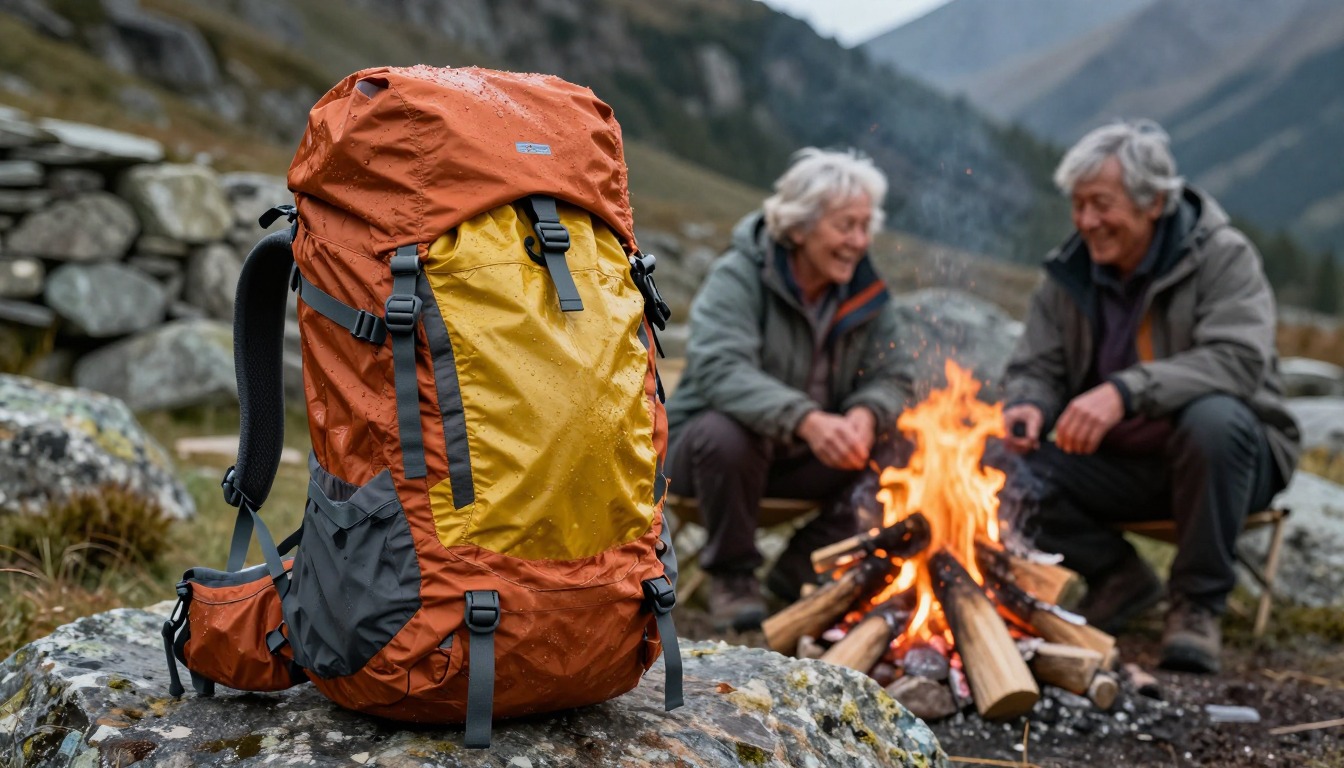


A wet backpack — soaked from rain, a stream crossing, or a wash — dries safely with airflow and time, not heat. Heat is the actual risk to a pack's materials during drying, more than the water itself.
Why heat damages a pack while drying
A clothes dryer's heat can melt the glue bonding a pack's polyurethane (PU) coating to its face fabric, causing it to flake or peel over time. The same heat warps foam back panels and hip belt padding out of shape and can crack or discolor plastic buckles, zipper pulls, and sliders. Prolonged direct sun causes slower damage through the same channels via UV exposure, which is why full shade with good airflow is the safer default even though it takes longer than a heat source would.
The drying process
Hang the pack inside out if the construction allows it, with every pocket, main compartment, and zipper open to expose interior surfaces to airflow. Stuffing the main body loosely with a dry towel or two absorbs residual moisture from the inside and helps the pack hold its shape while foam and mesh panels dry.
| Component | Typical dry time | Notes |
|---|---|---|
| Outer body fabric | 6–12 hours | Dries fastest with airflow on both sides |
| Mesh back panel | 6–12 hours | Dries quickly once suspended and off the body |
| Foam hip belt/straps | 24–48 hours | Slowest to dry; check by feel before storing |
| Frame sheet/stays | Wipes dry quickly | Remove if possible to speed overall drying |
Check the thickest padding — the hip belt and shoulder straps — for lingering dampness before repacking or storing the pack, since that padding holds moisture longest and is where mold is most likely to start if put away too soon.