

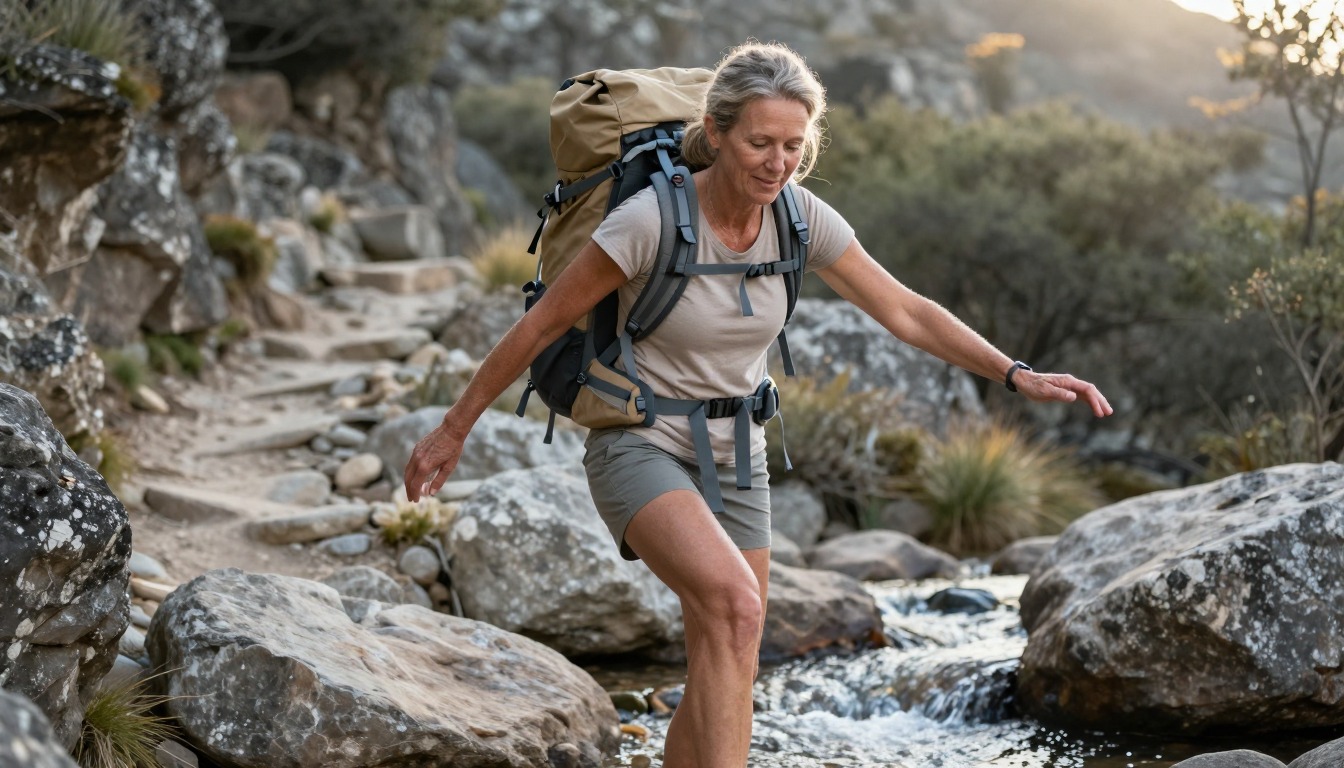


The amount of water a hiker needs depends on hours on trail, temperature, exertion level, and altitude, but 0.5 liters per hour of moderate hiking in mild conditions is a workable baseline for planning. That works out to roughly 1.5 to 2 liters for a half-day hike and 2.5 to 3 liters for a full day, before accounting for extra heat or elevation gain.
What increases water needs on a hike?
Hot weather, high altitude, steep elevation gain, and heavier packs all increase how much water a hiker needs, sometimes pushing the per-hour figure well above 0.5 liters. Altitude alone increases fluid loss through faster breathing and drier air, even in cool temperatures, which is why hikers often underestimate water needs on high-elevation trails that don't feel especially hot.
How does water need change by trip length?
| Trip length | Typical water need |
|---|---|
| Short day hike (2–4 hrs) | 1–1.5L |
| Full day hike (6–8 hrs) | 2.5–3L |
| Hot-weather full day | 3–4L, plus electrolyte replacement |
| Overnight, with a water source at camp | 2–3L per day of hiking |
Should water sources on the route change the plan?
Yes — a route with reliable water sources every few miles lets a hiker carry less and refill along the way, while a dry stretch between sources means carrying the full estimated need up front. Checking a trail's water report or recent trip logs before heading out is standard practice, since seasonal creeks and springs can run dry later in the year even when a map shows them as a source.