By Marcus Hale, Lead Pack Research Editor · Published September 14, 2026, 6:03 PM ET · Updated September 29, 2026, 6:16 PM ET
Direct Answer
Wipe down a hiking backpack after most trips by brushing off loose dirt and spot-cleaning sweat-heavy areas — the hip belt and shoulder straps — with a damp cloth and a little mild soap. Reserve a full hand wash in a tub for a couple of times per season or whenever odor, stains, or visible grime build up.
In plain English
A hiking backpack gets sweaty and dirty, a bit like a pair of sneakers. Most of the time it just needs a quick wipe: brush off the dust and clean the straps where your sweat soaks in. That takes a few minutes.
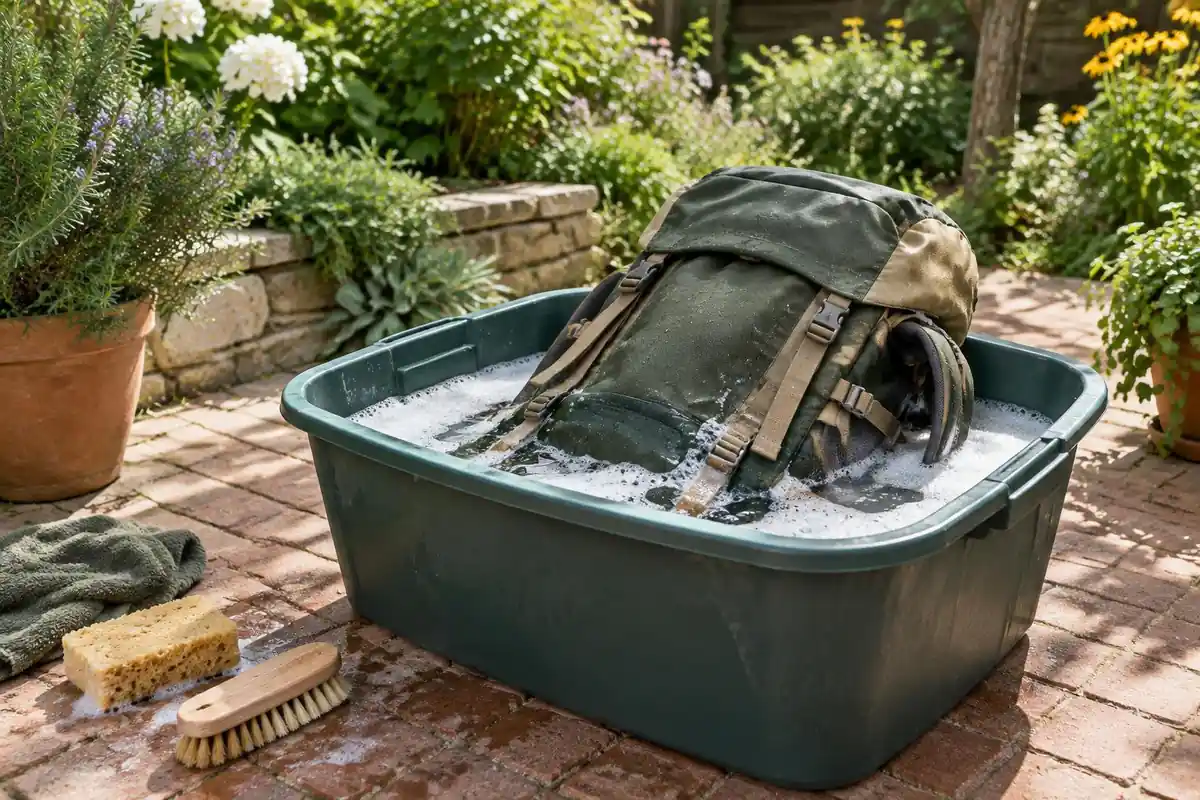
Every so often, when the pack smells or has mud ground into it, it needs a proper bath. Fill a tub with a little lukewarm water, add a mild soap, and gently scrub with a soft brush. Rinse it well so no soap is left behind.
Drying is where people often go wrong. Don't put a pack in a clothes dryer, and don't leave it baking in the sun. Heat and sunlight can damage the coatings that keep the pack water-resistant. Hang it in the shade or indoors, with the pockets unzipped so air gets inside.
Cleaning a hiking backpack covers two different jobs: quick maintenance after a single hike, and a full wash a few times a season. Confusing the two either leaves a pack under-cleaned between full washes or means over-washing a pack that only needed a quick wipe-down.
Quick cleaning after a hike
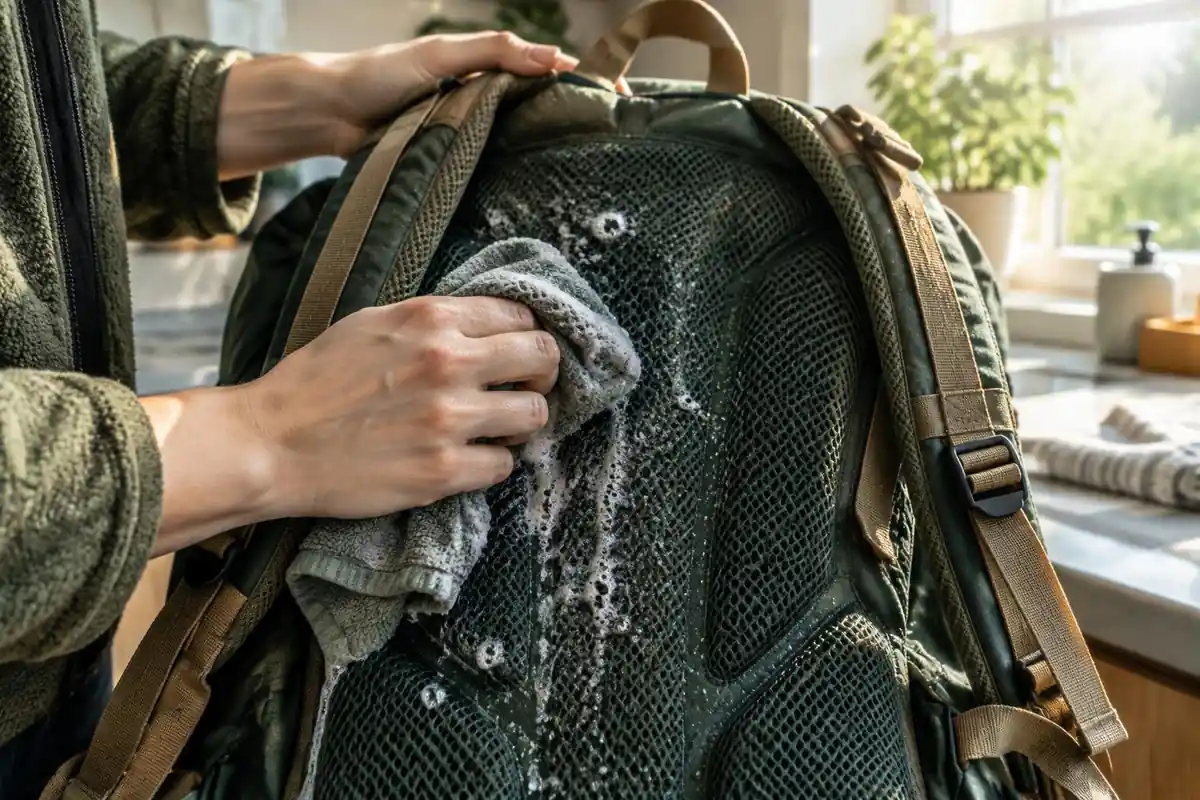
After most day hikes, brushing off loose dirt with a dry cloth or soft brush and spot-cleaning the hip belt padding and shoulder strap lining with a damp cloth and a drop of mild soap handles the bulk of trail grime. This takes a few minutes and prevents sweat salts and body oils from building up between full washes.
When a full wash is needed
A full hand wash — submerging the pack in lukewarm water with mild soap (check your maker's instructions first, since some brands say not to submerge) and scrubbing seams and straps with a soft brush — is worth doing once or twice per hiking season, or after any trip that left the pack visibly muddy, salt-stained, or smelling of sweat. Multi-day and thru-hiking trips build up grime faster than single day hikes, so packs used that way often need washing more frequently.
What to use and avoid
Do
Avoid
Lukewarm water
Hot water
Mild soap or technical wash
Bleach or fabric softener
Soft-bristle brush
Stiff scrub brush
Air-drying in shade
Clothes dryer or direct prolonged sun
Following this split — quick wipe-downs often, full washes occasionally — keeps a pack clean without the coating wear that comes from washing more aggressively or more often than it actually needs.
What the pack makers actually say
Care instructions differ more than you might expect, which is why REI says to follow the manufacturer's recommendations first; some brands say to submerge the pack and others say not to.1 Osprey recommends a bathtub or large sink with mild, soapy warm water and a sponge or soft brush, and says its wheeled travel packs should not be immersed.2 Deuter recommends lukewarm water with pH-neutral soap or shower gel.3 REI suggests about 6 inches of lukewarm water in a tub with a mild, fragrance-free soap.1 Lukewarm sits in the middle of that range; no source here calls for hot water.
Machine washing is where brands split. Deuter says never to machine wash a backpack because abrasion stresses the fabric and its PU coating.3 Gregory says not to machine wash packs or put them in a dryer, which can damage protective coatings.4 ULA, unusually, permits washing the whole pack in a top-loader or agitatorless washer, removing it before the spin cycle.5 So 'never machine wash' is the norm for most brands, not a universal rule.
Why heat, sun and harsh cleaners do damage
The page's 'avoid' list has good backing. Nikwax says normal laundry detergents leave a water-attracting residue on outdoor fabrics,6 and Gregory advises against detergents or solvents and warns that heavy brushing can damage fabric coatings.4 That means a technical wash or a mild soap is safer than whatever is in the laundry room. REI also says not to scrub zippers, since many have water-resistant coatings, and to use a zipper lubricant for sticking zippers.1
Sunlight is a slow threat. REI says to dry packs in shade or indoors because UV light can degrade the fabric,1 and Nikwax says UV exposure destroys water repellency and reduces fabric tear strength.7 Cleaning mistakes can also affect your warranty: Gregory's guarantee excludes damage from improper cleaning or storage.8
Drying, storage and reproofing
Gregory says to air dry packs away from heat and direct sunlight with the zippered pockets open,4 and Osprey says to hang them in a well-ventilated area out of direct sunlight.2 Make sure the pack is fully dry, including the foam in the straps and hip belt, before you store it. Deuter recommends storing packs in a well-ventilated, dry place.3
A wash is a good time to check water repellency. Deuter suggests dropping water on the fabric: if it soaks in rather than beading, the pack needs re-waterproofing.3 Nikwax's instructions for its spray-on gear treatment say to clean the pack first, spray it on clean, wet fabric, and then air dry only, letting it dry fully before use or storage.7
Looking for Complete Category Guidance?
Explore our complete, evidence-based master guide for Care, Repair & Accessories.