
Best Backpack Liner
Best Backpack Liner, ranked from aggregated owner ratings and reviews, not first-hand testing. Real pros, cons, and who each pick is best for.

Affiliate disclosure: this page contains affiliate links. Purchases made through them may earn us a commission at no extra cost to you. See our affiliate disclosure.
In plain English
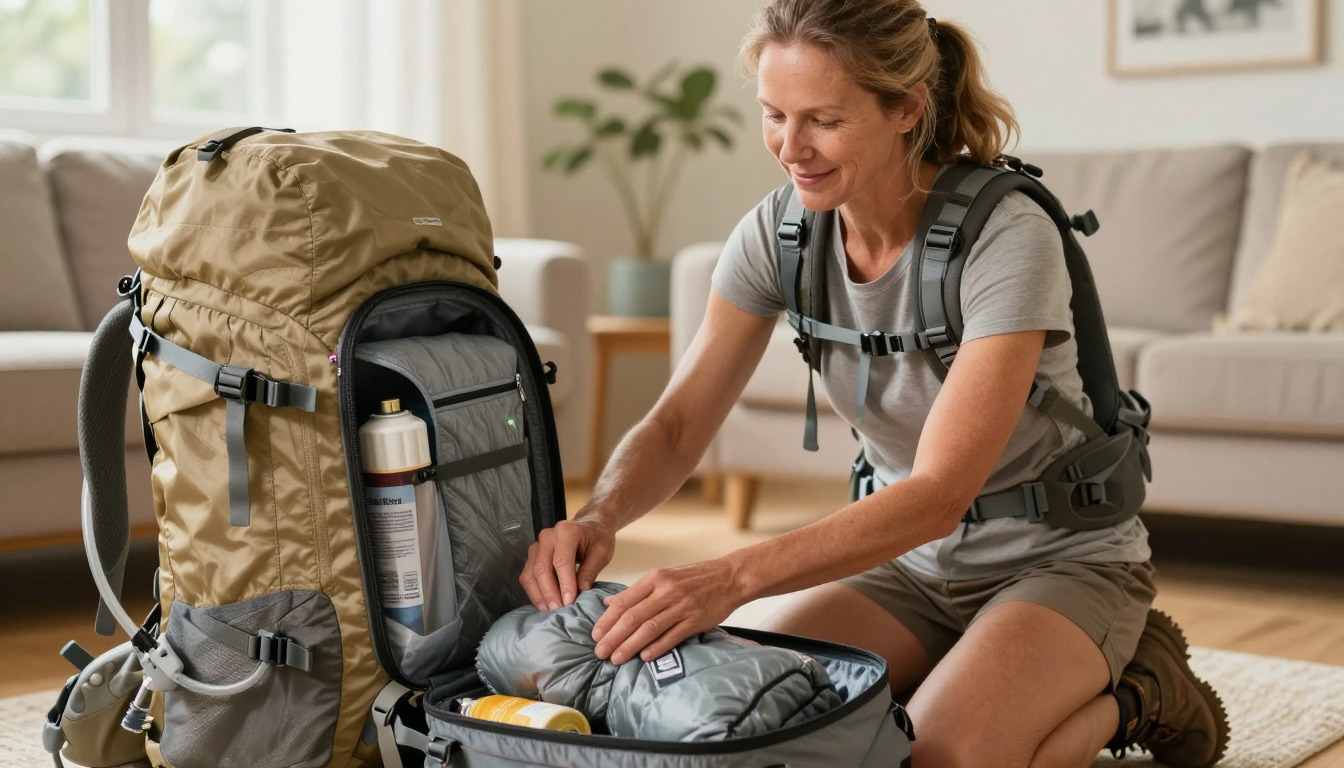
Think of a backpack like a tent with lots of doors. The fabric may keep water out, but every zipper and stitched seam is a small gap where rain can creep in during a long downpour. A pack liner is a big waterproof bag that goes inside the pack before you load it, so everything sits in a dry inner bag no matter what the outside is doing.
The simplest liners are thick trash compactor bags. Purpose-built liners use tougher fabric and close with a roll-top, where you fold the opening over several times and clip it. Some hikers use several smaller waterproof bags instead of one big one, which also keeps gear sorted.
Why bother? A wet sleeping bag or wet spare clothes can turn an uncomfortable night into a dangerous one. The liner is cheap insurance for the things that must stay dry.
Our Top 3 Picks
Quick Comparison
| Shell | Extras | Buy | ||||
|---|---|---|---|---|---|---|
| 1 | Waterproof Backpack Liner fit 40Top Overall Pick | 40–70 L | 13 oz | — | — | View |
| 2 | Pack Liners for BackpackingBest Value | 75 L | — | — | — | View |
| 3 | YXYFDC 15 Pack Premium PA Nylon Polymer Backpack LinersBest Ultralight | 30–60 L | — | Nylon | — | View |
| 4 | Feviroz 5 Pcs Generously Pack Liners for Backpacking 35.4x23.6Inch withBest for Multi-Day | 40–70 L | — | — | — | View |
| 5 | Osprey Ultralight Protective Backpack LinerAlso Great | — | — | — | — | View |
| 6 | Nylon Pack Bag LinersSolid Alternative | — | — | Nylon | — | View |
A pack liner is the most reliable single piece of waterproofing gear a hiker can carry, since it keeps the main compartment's contents dry regardless of whether the pack's shell, seams, or zippers leak. Choosing one comes down to durability needs, pack size, and how the gear inside needs to be organized.
What is a pack liner and why use one?
A pack liner is a waterproof bag placed inside a hiking backpack's main compartment before packing, so that gear stays dry even if the pack's outer fabric, seams, or zippers let water through during sustained rain. It works because it doesn't depend on covering every seam and zipper on the outside of the pack — the barrier is on the inside, sealed independently of the shell.

This matters because no hiking backpack's shell is fully waterproof: stitched seams and zipper coils let water through under sustained rain even on packs with a fresh DWR coating. A liner sidesteps that problem entirely rather than trying to solve it at the shell.
What types of pack liners are there?
There are three common types of pack liners: disposable trash compactor bags, purpose-built roll-top pack liners, and individual dry bags used to compartmentalize gear inside the pack. Each suits a different balance of cost, durability, and organization.
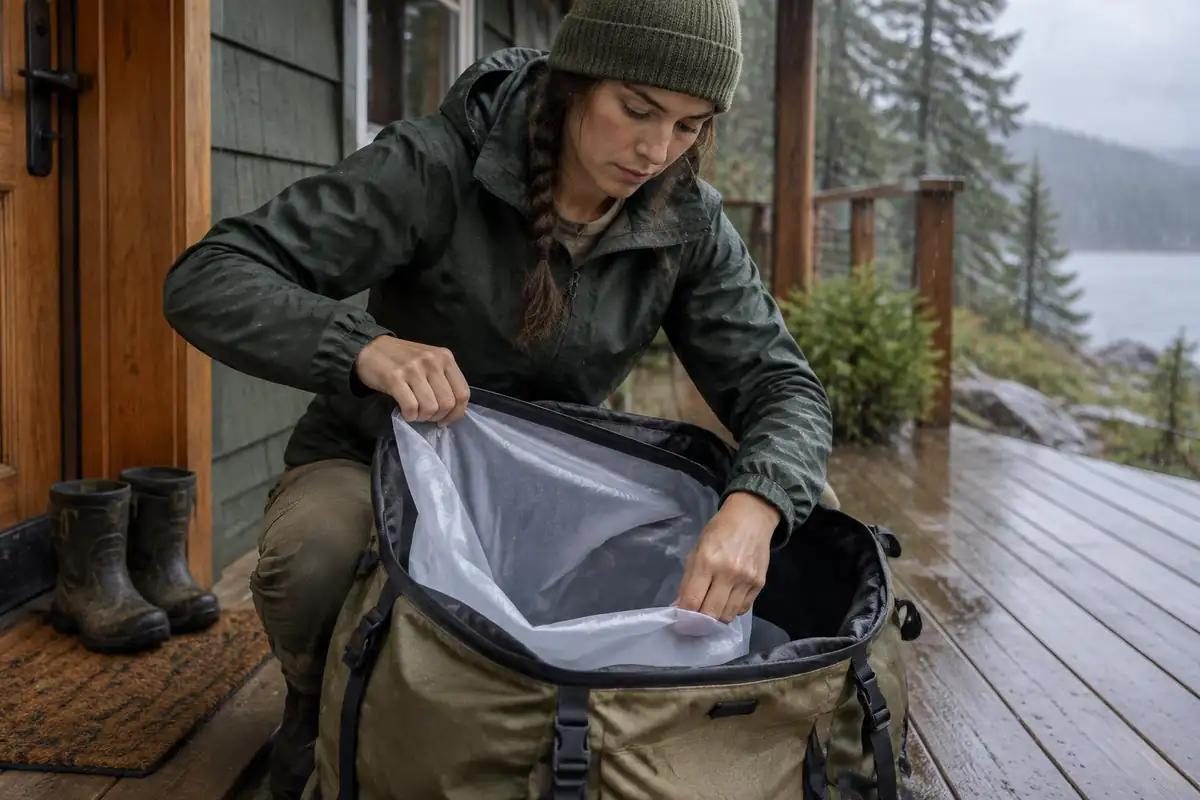
- Trash compactor bags: cheap, lightweight, and thicker than standard kitchen bags; twist and fold shut; typically replaced every few trips as they tear
- Purpose-built roll-top liners: heavier-duty fabric sized to specific pack volumes, with a roll-top closure for a more reliable seal; reusable over many seasons
- Individual dry bags: separate waterproof sacks for specific gear categories — a sleep system, spare clothing, electronics — that also keep items organized, not just dry
What size liner do I need?
Match liner size to the pack's rated volume rather than sizing down, since a liner that's too small won't reach the top of a fully loaded pack to seal properly, and a liner slightly larger than the pack's volume rolls down further for a more secure closure. A liner close to the pack's own liter rating is usually the right starting point.
Hikers using individual dry bags instead of a single full-pack liner should size those bags to the gear categories they're packing — a compressible sleep-system bag, a mid-size bag for spare clothing, and a small bag for electronics — rather than one oversized bag that leaves air gaps and makes gear harder to find.
Roll-top liner vs dry bags: which is better?
A single roll-top liner is simpler and lighter for most three-season hiking trips, since it protects everything in the main compartment with one seal and one closure step. Individual dry bags add weight and cost but make gear easier to find without unpacking the whole bag, which matters more on multi-day trips where the pack gets opened and repacked repeatedly.
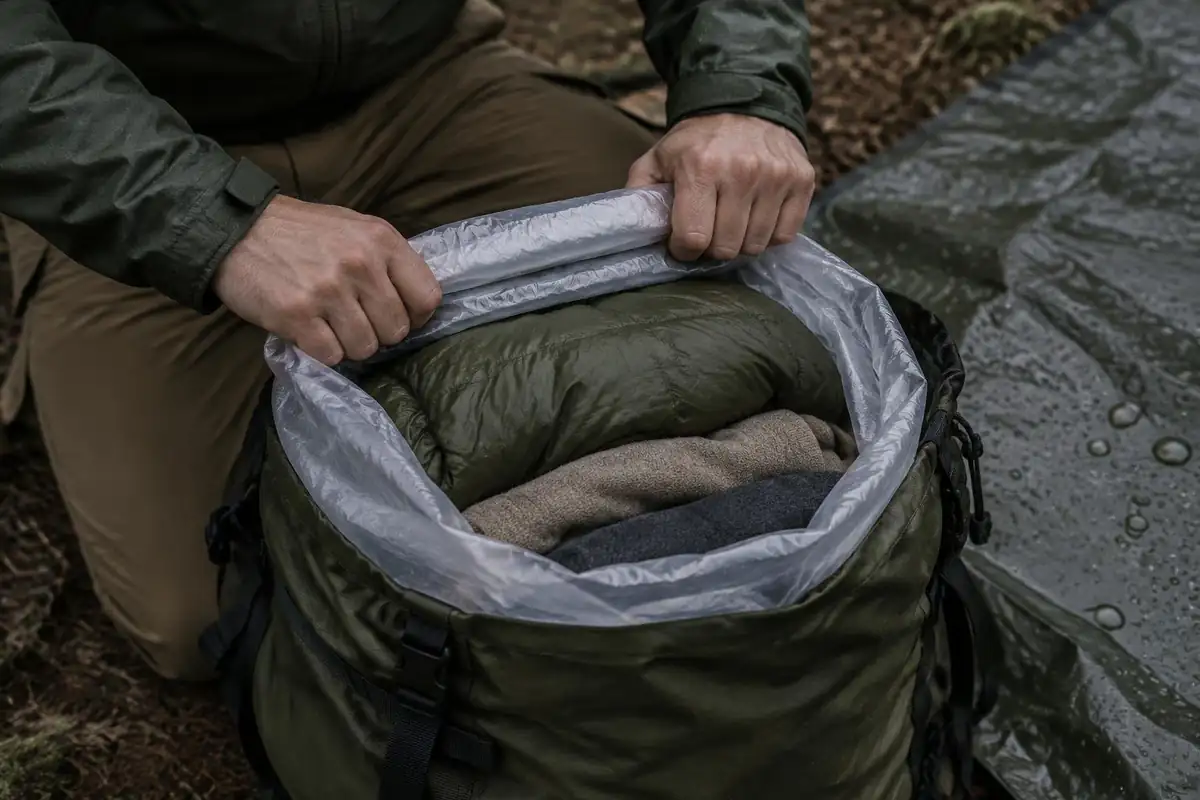
Trade-offs run in both directions. A single liner is faster to pack and unpack and adds less weight, but finding one item means partially emptying the whole liner. Multiple dry bags add a small amount of weight and cost from extra material and closures, but let a hiker pull out just the rain layer or the stove without disturbing the sleep system. Many experienced hikers combine both: a liner for the bulk of the gear, plus one or two small dry bags for electronics or anything that needs to stay both dry and separate.
Full Ranking, Reviewed

Best for Pack Liners & Dry Bags
- 40–70 L capacity
- 13 oz empty
- Light enough that you forget you are wearing it
- Packable build stows into its own pocket for travel
- Waterproof build keeps contents dry through real weather
- At 40–70 L it is more pack — and more weight — than a day hiker needs; it earns its keep on overnight and multi-day loads.
Verdict: Xsourcer’s 40–70 L backpacking pack offers a packable build, making it our overall pick for Pack Liners & Dry Bags.

Best for Pack Liners & Dry Bags
- 75 L capacity
- Pack Liner for Wet Trail Days
- Soft Matte Black CPE
- Outdoor and Home Ready
- That 75 L volume is overkill for quick hikes and better suited to multi-night trips.
Verdict: Gljyoka’s 75 L backpacking pack keeps things refreshingly simple, making it an easy shortlist pick for Pack Liners & Dry Bags.

Best for Pack Liners & Dry Bags
- 30–60 L capacity
- Nylon shell
- Light enough that you forget you are wearing it
- Built from hard-wearing nylon
- At 30–60 L it is more pack — and more weight — than a day hiker needs; it earns its keep on overnight and multi-day loads.
Verdict: This 30–60 L backpacking pack keeps things refreshingly simple, making it an easy shortlist pick for Pack Liners & Dry Bags.

Best for Pack Liners & Dry Bags
- 40–70 L capacity
- Ultralight & Compact
- Light enough that you forget you are wearing it
- Packable build stows into its own pocket for travel
- At 40–70 L it is more pack — and more weight — than a day hiker needs; it earns its keep on overnight and multi-day loads.
Verdict: This 40–70 L backpacking pack offers a packable build, making it an easy shortlist pick for Pack Liners & Dry Bags.

Best for Pack Liners & Dry Bags
- Item Dimensions
- Low carry weight pays off on big-mileage days
- Check the size and colour options on the live listing, as availability shifts.
Verdict: This hiking pack keeps things refreshingly simple, making it well worth a look for Pack Liners & Dry Bags.

Best for Pack Liners & Dry Bags
- Nylon shell
- Heavy-Duty Protection
- Waterproof build keeps contents dry through real weather
- Waterproof Gear Defense
- Check the size and colour options on the live listing, as availability shifts.
Verdict: POVFGHN’s hiking pack keeps things refreshingly simple, making it an easy shortlist pick for Pack Liners & Dry Bags.
Why waterproof fabric is not a waterproof pack
Most pack fabrics have a waterproof coating on the inside, but REI notes that water can still seep through seams and zippers.1 Deuter says the same: even when the fabric is waterproof, sustained downpours can let moisture through zippers and seams.2 The outer face also depends on a DWR, an invisible water-repellent finish that makes water bead and roll off.3 Nikwax says UV exposure destroys water repellency and reduces fabric tear strength,4 so an older pack that once shed rain may start to soak through, and Deuter suggests a simple test: drop water on the fabric, and if it soaks in rather than beading, it needs reproofing.2
A liner sidesteps all of that. Its seal does not depend on the shell's coating, stitching or zipper design, which is why the page calls it the most reliable single waterproofing item. The trade-off is that it protects only what is inside it: side pockets, hip-belt pockets and anything strapped outside stay exposed.
Liner or rain cover, and why wind decides it
Brands do not agree on a single answer. Deuter suggests dry bags inside the pack for alpine use, where they keep straps accessible, and a rain cover for hiking packs.2 REI says waterproof stuff sacks inside the pack are an alternative to a rain cover and can work better in wind.1 The wind point is the key one: a cover can lift or flap on an exposed ridge and cannot seal the back panel against your body, while a liner inside the pack is unaffected by gusts. Many hikers carry both, with the cover keeping the pack itself from getting waterlogged and heavy, and the liner as the backstop.
Material, durability and what 'waterproof' is measured by
Fabric waterproofing is usually rated by hydrostatic head: the height of a water column the fabric withstands, so fabric that fails at 1 meter is rated 1,000 mm.5 The test presses water against the fabric until three drops pass through.6 The number tells you about the fabric, not the closure, which is why a liner's roll-top or twist matters as much as its material.
Liner fabric weight is often given in denier, the weight in grams of 9,000 meters of yarn; a higher denier means a heavier yarn.7 Heavier liners resist abrasion from a stove, tent stakes or pack frame better, while thin plastic bags tear at corners over a few trips, as the page notes. Dyneema composite liners are the light, costly option: Dyneema says its composite fabric won't absorb water,8 and Hyperlite says its Dyneema composites are inherently waterproof and that it tapes its seams.9
What goes inside the liner matters most. CDC says hypothermia can develop even above 40°F if a person gets chilled from rain, sweat or cold water, and it lists hikers among those at higher risk.10 Put the sleeping bag and dry camp layers in the liner first, and keep wet rain gear outside it.
Frequently Asked Questions
Do I need a pack liner if my backpack has a rain cover?
Yes — a rain cover and a liner protect different things. The cover shields the pack's shell and exterior-lashed gear; it can't cover the back panel or fully stop wind-driven rain. A liner protects everything inside the main compartment independent of the shell, so most hikers use both together.
How long do dry bags and pack liners last?
A disposable trash compactor bag typically lasts a handful of trips before tearing at the seams or corners. A purpose-built roll-top liner or dry bag, made from heavier coated fabric, can last multiple seasons of regular use if it's not repeatedly overstuffed or dragged over sharp rock.
Related Buying Guides
Planning a hiking trip? Compare hotels, lodges and guesthouses.
Book on Booking.com Book on AgodaAffiliate links: we may earn a commission at no extra cost to you.