
Best 45l Backpack
Best 45l Backpack, ranked from aggregated owner ratings and reviews, not first-hand testing. Real pros, cons, and who each pick is best for.

Affiliate disclosure: this page contains affiliate links. Purchases made through them may earn us a commission at no extra cost to you. See our affiliate disclosure.
In plain English
A 45-liter pack gives a weekend hiker a little breathing room. It holds the same basics as a 40-liter pack, plus a slightly bigger tent, an extra warm layer or some shared gear for a friend.
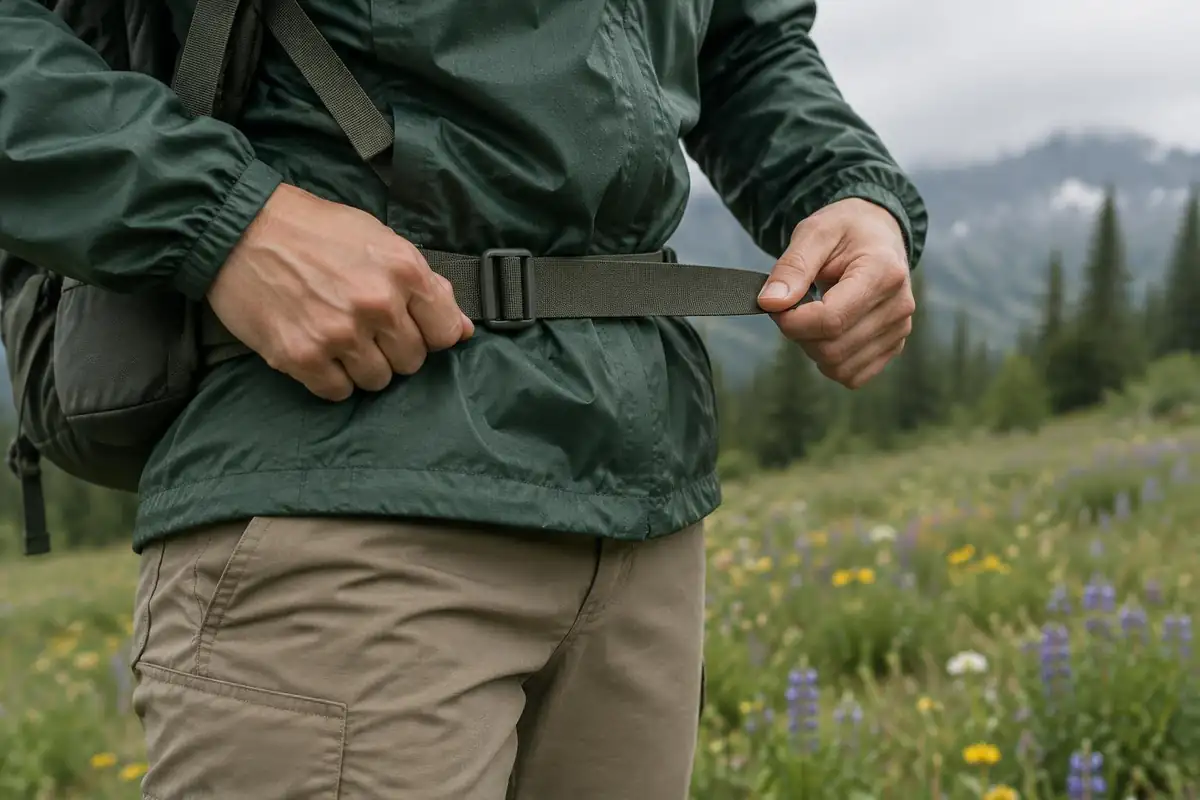
Two measurements decide fit. The first is your back length. The second is the size of the belt around your hips, which is separate, just as someone can be tall with narrow hips or short with wider ones. A hip belt that is too big slides down; one that is too small can't close properly.
Many 45-liter bags are also sold as travel backpacks. If you want to take one on a plane, look at the outside measurements in inches, because airlines check the size of the bag, not the number of liters printed on the label.
Our Top 3 Picks
Quick Comparison
| Shell | Extras | Buy | ||||
|---|---|---|---|---|---|---|
| 1 | Osprey Kestrel LT 45L Men's Backpacking BackpackTop Overall Pick | 45 L | 4.1 lb | Ripstop nylon | Rain cover | View |
| 2 | Osprey Exos 48L Men's Ultralight Backpacking BackpackBest Value | 48 L | 2.8 lb | — | Hydration | View |
| 3 | Gregory Zulu 45L Hiking/Backpacking PackAlso Great | 45 L | — | — | Hip belt | View |
| 4 | Osprey Kestrel 48L Men's Backpacking BackpackSolid Alternative | 48 L | 4.6 lb | — | Rain cover | View |
| 5 | Deuter Unisex Aircontact Lite 40 + 10 LBest for Women | 40–50 L | 3.5 lb | 140D ripstop fabric | Vented back | View |
| 6 | Osprey Kyte LT 45L Women's Backpacking BackpackBest Hydration Pack | 45 L | 3.9 lb | Ripstop nylon | Rain cover | View |
What should you look for in a 45L backpack?
Look for a frame built to handle your typical loaded weight, a hipbelt that fits your hip size independently of torso length, and fabric durable enough for the terrain you hike. At 45 liters, most packs are framed, so frame rigidity and hipbelt padding matter more than at smaller sizes.
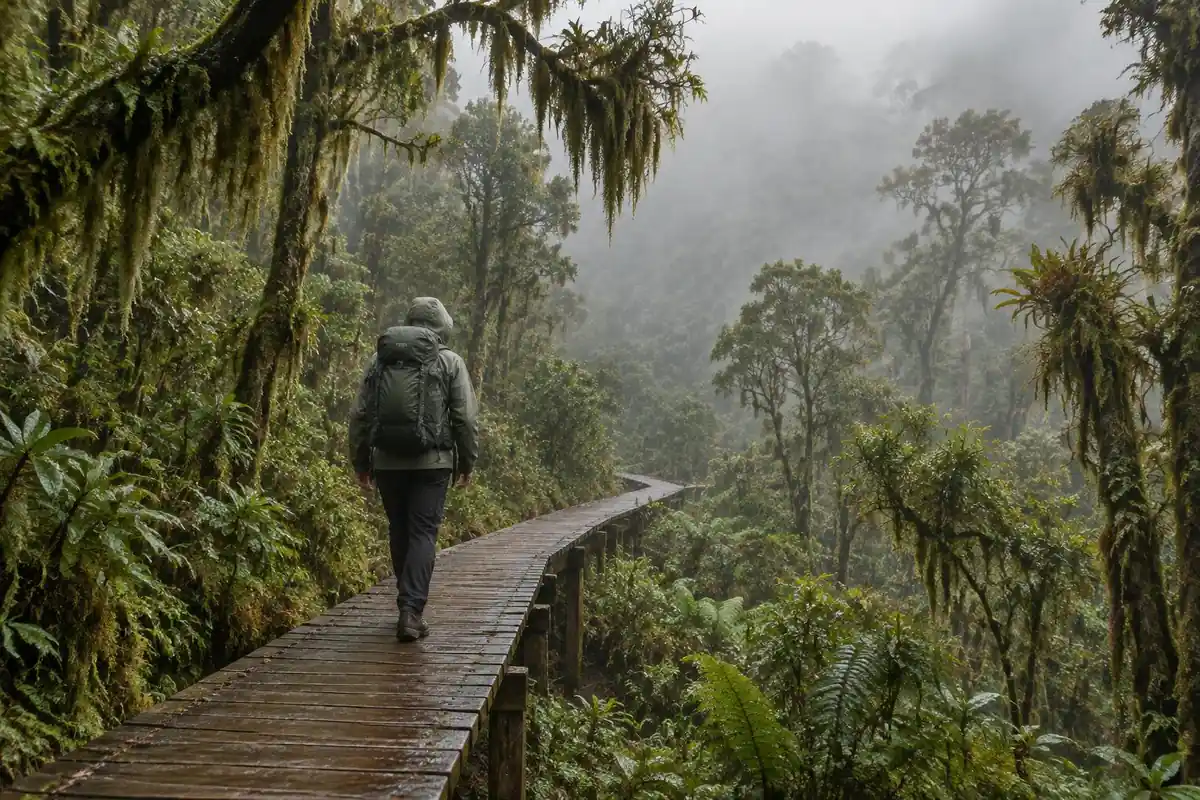
Check the manufacturer's recommended load range before buying. Ultralight-oriented 45L packs, built with thin high-tenacity fabric and a minimal frame, are typically rated for loads under 30 pounds. Traditional 45L packs, with heavier denier fabric and a fuller frame, often carry comfortably up to 35–40 pounds. Matching the pack's rated range to your actual loaded weight, including water and food, prevents the frame from flexing under a load it wasn't built for.
45L vs 40L: when does the extra room matter?
The extra 5 liters in a 45L pack matters most for hikers carrying a slightly bulkier shelter, a second layer for shoulder-season temperature swings, or shared group gear like a filter or stove. It matters less for strict ultralight packers whose full kit already fits inside 35 liters.
| Scenario | Better Fit |
|---|---|
| Dialed-in UL kit, warm season | 40L |
| Standard 3-season kit | 45L |
| Sharing group gear with a partner | 45L |
| Cold-weather layers needed | 45–50L |
Five liters rarely changes the trip length a pack can support on its own; it more often changes how comfortably the same one- or two-night kit fits without compression.
Who is a 45L pack best suited for?
A 45L pack best suits weekend backpackers who want a buffer above minimalist capacity, hikers with slightly bulkier three-season gear, and anyone choosing a structured framed pack over an ultralight frameless build. It also suits hikers who occasionally stretch a trip to three nights with careful food planning.
What trade-offs come with a 45L pack?
The trade-off is weight versus margin: a 45L pack typically weighs more than a comparable 40L model because of its added frame and fabric, even before it's loaded. Hikers who backpack often and want to shave pack weight over many trips may prefer trimming their gear list to fit 40L instead of carrying a larger, heavier pack for occasional extra room.
What fabric and durability differences show up at 45L?
Fabric choice at 45L splits along the same lines as frame type. Ultralight-oriented 45L packs use thinner high-tenacity nylon, sometimes combined with a Dyneema Composite Fabric (DCF) panel, to hold weight down while still resisting tears from branches and rock scrambles. Traditional 45L packs use a heavier 300–420 denier fabric, often with a reinforced base panel, trading some weight for a build that tolerates more abrasion on rough or off-trail terrain.
Zipper and buckle quality matter as much as the body fabric on a pack this size, since a 45L pack sees more loading and unloading cycles per trip than a smaller daypack. Look for:
- Coil zippers with storm flaps on the main compartment, which resist water intrusion better than exposed-tooth zippers.
- Buckles rated for the pack's frame, since a hipbelt buckle undersized for a heavy load is a common failure point.
- A reinforced haul loop and daisy chain or gear loops for lashing a sleeping pad or trekking poles externally when internal space runs out.
How does hipbelt sizing work on a 45L pack?
Hipbelt sizing is measured separately from torso length, based on waist or hip circumference rather than back length. Most 45L packs come with a fixed hipbelt sized to match the torso-length range, though some brands offer interchangeable hipbelts in multiple widths for the same frame size. Since a correctly tightened hipbelt carries, by a common rule of thumb, roughly 80% of a loaded pack's weight, a hipbelt that's too small or too large undermines even a well-chosen torso fit, so checking hip measurement against the brand's hipbelt size chart is worth doing before buying.
Full Ranking, Reviewed

Best for 45L Backpacks for Backpacking
- 45 L capacity
- Ripstop nylon shell
- 4.1 lb empty
- Rain cover included
- Rugged, classic rucksack
- Set up to carry a reservoir for hands-free sipping
- Airflow channels help your back stay cooler under load
- At 45 L it sits between a daypack and a backpacking pack — a touch large for quick hikes, a touch small for long multi-night loads.
Verdict: This 45 L hiking pack pairs a breathable back with room for a bladder, making it our overall pick for 45L Backpacks for Backpacking.

Best for 45L Backpacks for Backpacking
- 48 L capacity
- 2.8 lb empty
- Hydration-ready
- Hipbelt Pockets
- Routes a hydration bladder and hose without fuss
- Adjustable torso dials the fit to your back length
- At 48 L it sits between a daypack and a backpacking pack — a touch large for quick hikes, a touch small for long multi-night loads.
Verdict: This 48 L hiking pack pairs room for a bladder with real hip-belt support, making it a strong option for 45L Backpacks for Backpacking.

Best for 45L Backpacks for Backpacking
- 45 L capacity
- Padded hip belt
- Adjustable torso dials the fit to your back length
- Padded hip belt shifts load onto your hips, not your shoulders
- At 45 L it sits between a daypack and a backpacking pack — a touch large for quick hikes, a touch small for long multi-night loads.
Verdict: This 45 L hiking pack pairs real hip-belt support with an adjustable fit, making it well worth a look for 45L Backpacks for Backpacking.

Best for 45L Backpacks for Backpacking
- 48 L capacity
- 4.6 lb empty
- Rain cover included
- Made for Work
- Packs an integrated rain cover to keep gear dry
- Adjustable torso dials the fit to your back length
- At 48 L it sits between a daypack and a backpacking pack — a touch large for quick hikes, a touch small for long multi-night loads.
- Empty weight (4.6 lb) runs above ultralight rivals.
Verdict: This 48 L hiking pack pairs a bundled rain cover with real hip-belt support, making it a strong option for 45L Backpacks for Backpacking.

Best for 45L Backpacks for Backpacking
- 40–50 L capacity
- 140D ripstop fabric shell
- 3.5 lb empty
- Ventilated back panel
- Use case
- Breathable mesh back keeps air moving against your spine
- Adjustable torso dials the fit to your back length
- At 40–50 L it is more pack — and more weight — than a day hiker needs; it earns its keep on overnight and multi-day loads.
Verdict: This 40–50 L backpacking pack pairs a breathable back with a tough ripstop shell, making it well worth a look for 45L Backpacks for Backpacking.

Best for 45L Backpacks for Backpacking
- 45 L capacity
- Ripstop nylon shell
- 3.9 lb empty
- Rain cover included
- Rugged, classic rucksack
- Hydration sleeve keeps water within easy reach
- Airflow channels help your back stay cooler under load
- The 45 L size is a versatile in-betweener rather than a specialist at either end.
Verdict: This 45 L hiking pack pairs a breathable back with room for a bladder, making it well worth a look for 45L Backpacks for Backpacking.
Sizing the hipbelt on its own terms
Brands measure the hips in slightly different ways. Granite Gear bases hip belt size on the circumference at the hip crest, roughly your regular pant waist size, and says a properly sized belt wraps over the hipbones and leaves a gap in the padding at the front.1 Osprey puts that gap at 3–6 inches between the pad tips when tightened.2 ULA sizes men's belts as pant waist size plus 2 inches.3
Where the belt sits matters as much as its length. Gossamer Gear measures around the top of the iliac crest, the ridge at the top of your hip bones, and says the top third of the belt should rest there.4 If the pad tips touch before the belt is snug, the belt is too big; if you can't close the buckle without the pads digging in, it's too small.
How dry routes push a 45L to its load limit
The page recommends matching the pack's rated load to your loaded weight, including food and water. Water is the part people underestimate. At Guadalupe Mountains National Park, the Park Service advises a gallon per person per day and notes water weighs about 8 pounds per gallon, so a three-day, two-night trip means about 24 pounds of water.5
Base weight, meaning all gear minus consumables like food, water and fuel,6 may be modest, but add a desert water carry and a 45L pack can land at or above the under-30-pound range the page gives for ultralight-oriented designs. On dry routes, the traditional, heavier-framed 45L is often the safer pick.
Using a 45L pack as travel luggage
Liters don't translate directly into airline sizes. As one example, Delta's carry-on limit is 22 x 14 x 9 inches, or 45 linear inches combined.7 A box of exactly those dimensions holds about 45 liters, so a fully stuffed 45L pack with a hipbelt and frame can easily bulge past it. Measure the packed bag and check your airline's current rules.
Hiking gear adds its own checks. TSA prohibits flammable liquid fuels, including cooking fuel, in both carry-on and checked bags.8 Camp stoves are allowed only when completely emptied of fuel and cleaned,9 and sharp-tipped hiking poles can't go in carry-on bags.10
Frequently Asked Questions
Is 45L enough for a week-long trip?
45L is usually not enough for a week-long trip unless resupply points break the trip into shorter food-carry segments, since a week of food alone can take 10–14 liters. For an unsupported week-long trip, most hikers need a 55–65L pack to carry enough food and fuel.
Do 45L packs come in women's-specific fit?
Yes, many 45L packs come in women's-specific versions with shorter torso-length ranges, narrower shoulder-strap spacing, and hipbelts shaped for a different hip-to-waist ratio. Checking torso length against the women's-specific size chart matters more than assuming a smaller pack automatically fits a shorter torso.
Related Buying Guides
Planning a hiking trip? Compare hotels, lodges and guesthouses.
Book on Booking.com Book on AgodaAffiliate links: we may earn a commission at no extra cost to you.