
Best 50l Backpack
Best 50l Backpack, ranked from aggregated owner ratings and reviews, not first-hand testing. Real pros, cons, and who each pick is best for.

Affiliate disclosure: this page contains affiliate links. Purchases made through them may earn us a commission at no extra cost to you. See our affiliate disclosure.
In plain English
A 50-liter pack is the everyday size for two to four nights outside in mild weather. It holds a tent, sleeping bag, cooking kit, clothes and a few days of food without being huge.
Two packs with the same 50-liter label can feel very different. Some have a mesh panel that holds the bag slightly away from your back, like a hammock, so air can flow and you sweat less. Others press right against your back, which feels steadier on rocky ground but gets warmer.
On shorter trips a 50-liter pack won't be full. Straps on the sides pull the empty space tight, a bit like squeezing the air out of a bag of chips, so your gear doesn't slosh around. If you hike where bears are common, some parks require a hard food container that takes up a lot of room.

Our Top 3 Picks
Quick Comparison
| Shell | Extras | Buy | ||||
|---|---|---|---|---|---|---|
| 1 | WoneNice 50LTop Overall Pick | 45–50 L | 2.4 lb | Nylon | Rain cover | View |
| 2 | Osprey Rook 50L Men's Backpacking BackpackBest Value | 50 L | 3.6 lb | — | Rain cover | View |
| 3 | Osprey Renn 50L Women's Backpacking BackpackMost Breathable | 50 L | 3.5 lb | — | Rain cover | View |
| 4 | Gregory Alpinisto 50L Climbing BackpackAlso Great | 50 L | — | — | Hip belt | View |
| 5 | Loowoko 50L Hiking Backpack with Rain Cover for Both Men & WomenBest for Women | 50 L | 2.4 lb | Nylon | Rain cover | View |
What should you look for in a 50L backpack?
The most important factor in a 50L backpack is torso fit, not the liter number, since two 50L packs from different brands can carry very differently depending on frame length and hipbelt size. After fit, prioritize suspension type, back panel ventilation, and how the pack's compression system handles a partially loaded trip.
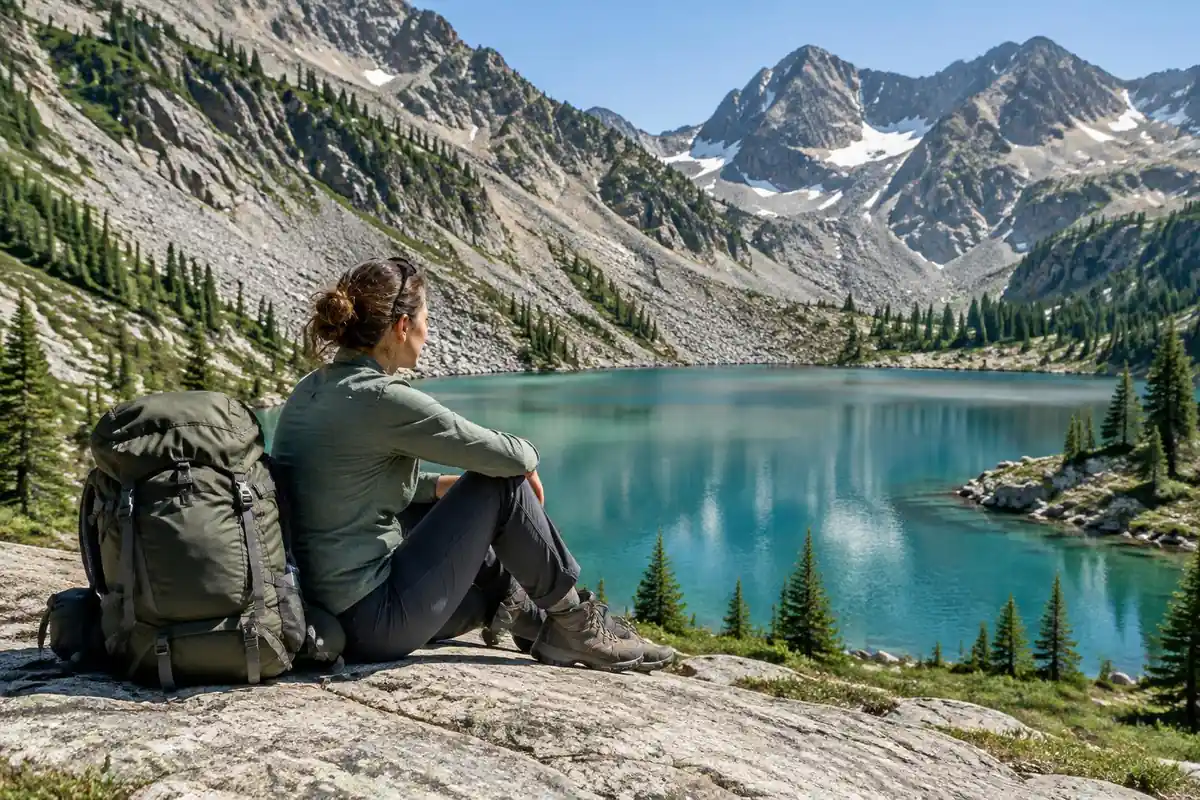
Start with torso length rather than height. Torso length is measured from the C7 vertebra at the base of the neck down to the iliac crest at the top of the hip bones, and most 50L packs are sold in small, medium, and large torso sizes or offer an adjustable suspension that slides within a range. Getting this measurement right before buying matters more than any feature comparison, because a pack with the wrong torso length will ride poorly regardless of price or brand reputation.
Internal frame types and back panels
Nearly every 50L hiking backpack on the market uses an internal frame, typically a perimeter wire or a pair of aluminum stays, that transfers load to the hipbelt. Within that category, back panels split into two styles worth understanding before you choose:
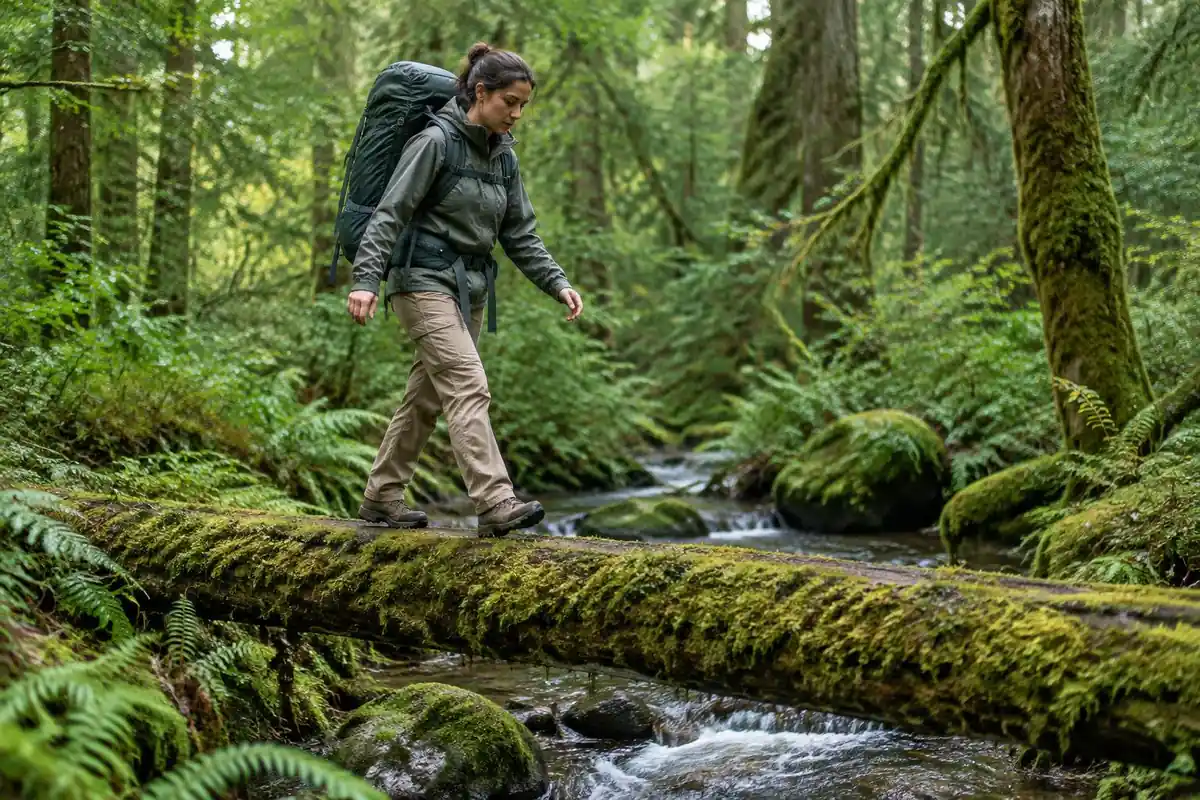
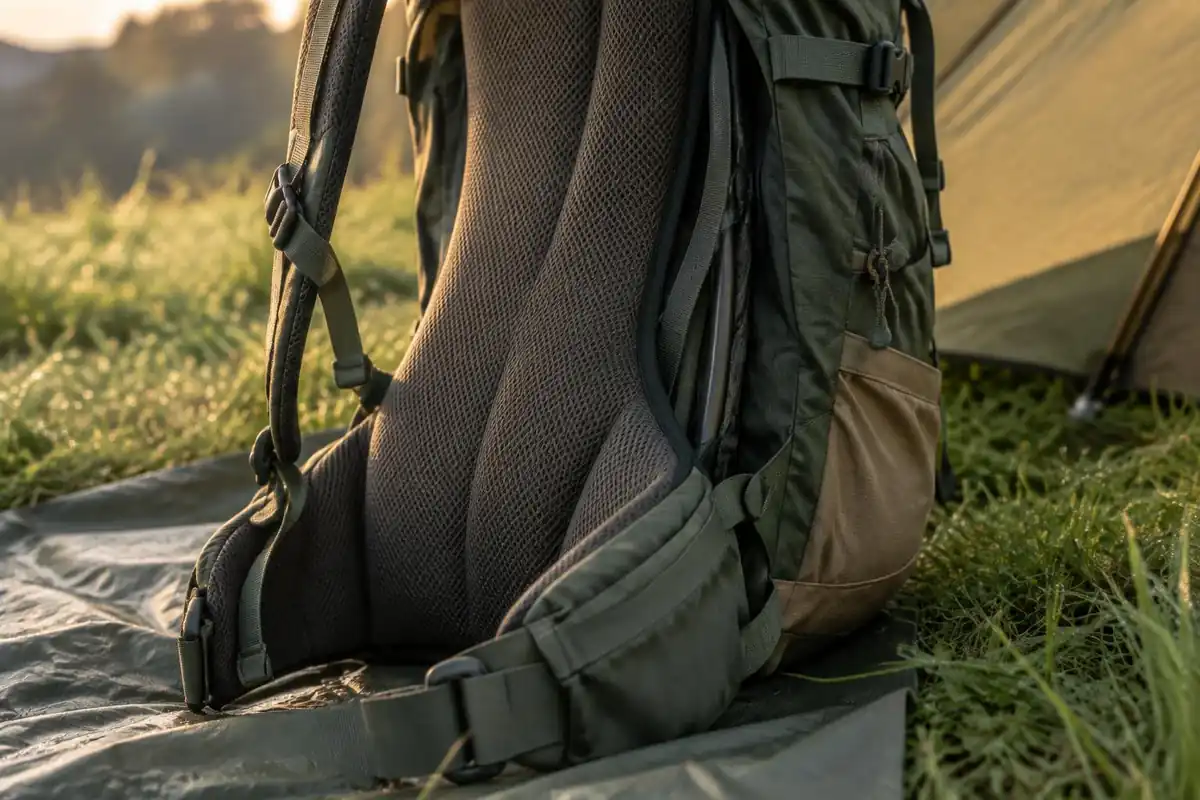
- Trampoline-style mesh panels suspend a taut mesh sheet off the pack body, creating an air gap that improves ventilation on hot days but sits the pack's weight slightly farther from your back, which can affect stability on rough terrain.
- Contact mesh panels sit closer to your back for a more stable, load-hugging carry, at the cost of less airflow and a sweatier back panel in warm conditions.
Who a 50L pack suits
A 50L pack suits hikers who backpack two to four nights at a time in three-season conditions and who own a standard, rather than ultralight, gear list. It is generally not the right size for single-night trips, where a 35–45L pack carries the same kit with less unused volume, and it is often too small for winter trips or hikers who need to carry a bear canister alongside a full three-season kit.
Honest trade-offs to weigh
No single 50L pack wins on every attribute, and the trade-offs are consistent across brands:
- Packs with more structured suspension and load-support features generally weigh more empty than minimalist internal-frame packs at the same volume.
- More durable, higher-denier fabrics resist abrasion better on off-trail scrambling but add weight compared to lighter ripstop weaves.
- Extensive external organization, such as multiple hipbelt pockets, a floating lid, and side compression straps, adds convenience but also adds pack weight and potential snag points.
- A women's-specific fit, with a shorter torso range and shaped hipbelt and shoulder straps, fits many women better than a unisex pack sized down, but not every female hiker fits the women's-specific geometry better; trying on both is worth the time.
How to decide between two similar 50L packs
When two 50L packs both fit your torso length, compare them on suspension style, back panel type, and how their compression system performs when the pack is only two-thirds full, since most 50L packs spend more nights partially loaded than fully loaded. A pack that cinches down cleanly for a two-night trip and still carries a full four-night load well is more versatile than one optimized for only one end of that range.
Full Ranking, Reviewed

Best for 50L backpacks
- 45–50 L capacity
- Nylon shell
- 2.4 lb empty
- Rain cover included
- Breathable mesh back keeps air moving against your spine
- Includes a rain cover for sudden downpours
- Supportive hip belt takes weight off the shoulders
- That 45–50 L volume is overkill for quick hikes and better suited to multi-night trips.
Verdict: This 45–50 L backpacking pack pairs a breathable back with a bundled rain cover, making it a strong choice for 50L Backpacks.

Best for 50L backpacks
- 50 L capacity
- 3.6 lb empty
- Rain cover included
- Adjustable AirSpeed Suspension
- Breathable mesh back keeps air moving against your spine
- Packs an integrated rain cover to keep gear dry
- At 50 L it is more pack — and more weight — than a day hiker needs; it earns its keep on overnight and multi-day loads.
Verdict: This 50 L backpacking pack pairs a breathable back with a bundled rain cover, making it well worth a look for 50L Backpacks.

Best for 50L backpacks
- 50 L capacity
- 3.5 lb empty
- Rain cover included
- Adjustable AirSpeed Suspension
- Airflow channels help your back stay cooler under load
- Packs an integrated rain cover to keep gear dry
- At 50 L it is more pack — and more weight — than a day hiker needs; it earns its keep on overnight and multi-day loads.
Verdict: This 50 L backpacking pack pairs a breathable back with a bundled rain cover, making it an easy shortlist pick for 50L Backpacks.

Best for 50L backpacks
- 50 L capacity
- Padded hip belt
- Padded hip belt shifts load onto your hips, not your shoulders
- 50 L of organised carrying space
- At 50 L it is more pack — and more weight — than a day hiker needs; it earns its keep on overnight and multi-day loads.
Verdict: This 50 L backpacking pack offers real hip-belt support, making it well worth a look for 50L Backpacks.
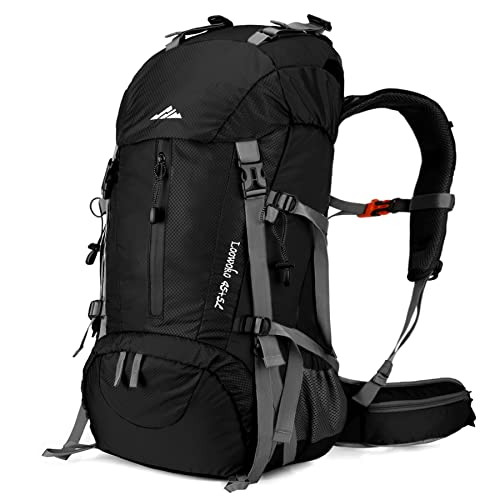
Best for 50L backpacks
- 50 L capacity
- Nylon shell
- 2.4 lb empty
- Rain cover included
- Rain Cover Included
- Ventilated back panel cuts sweat on long climbs
- Packs an integrated rain cover to keep gear dry
- At 50 L it is more pack — and more weight — than a day hiker needs; it earns its keep on overnight and multi-day loads.
Verdict: This 50 L backpacking pack pairs a breathable back with a bundled rain cover, making it well worth a look for 50L Backpacks.
What 50 liters holds on a real trip
The Washington Trails Association suggests 45–50 liters for a standard one- or two-night trip and 50–70 liters for trips of 3 to 7 nights.1 A 50L pack sits right on that boundary, which matches the page's two-to-four-night range for a standard, not ultralight, gear list.
Bear canisters are what most often break that estimate. Glacier Bay National Park's loaner canister holds 560 cubic inches, about 9 liters, and about 6 days of food for one person.2 In New York's Eastern High Peaks Wilderness, where canisters are required for overnight campers, typical canisters are about 8 by 12 inches and hold up to 5 days of food.3 Because the canister is rigid, those 9 liters can't be squeezed into odd corners, and the space around it is often wasted too.
Trampoline versus contact backs: what's behind the trade-off
REI describes suspended-mesh, or tension-mesh, back panels as holding the packbag a few inches off the back to reduce sweat.4 Deuter describes its Aircomfort system as a ventilated gap between mesh and back held by a flexible spring steel frame.5 The benefit is real in heat: the CDC Yellow Book notes sweat rates can reach 1 liter per hour.6
The cost is distance. A military load-carriage review found the lowest energy cost comes from keeping the load's center of mass as close as possible to the body's.7 A few inches of air gap moves the load backward, which is why contact panels feel more planted on technical ground and at the heavy end of the 50L range.
Compression, partial loads and warranty as tiebreakers
Once packed, the Appalachian Mountain Club suggests cinching the external compression straps to shrink and stabilize the load.8 US Army doctrine adds that compression straps keep the internal load from shifting and hold it closer to the body.9 When comparing two packs, load each to about two-thirds and see which one tightens into a firm shape.
Warranty terms are another practical tiebreaker for a pack you'll use for years, and they vary a lot. Osprey says it will repair or replace a bag for any damage, regardless of when it was made.10 Deuter gives a two-year warranty plus a lifetime repair service for incidental damage where repair is possible.11 Kelty covers the reasonable life of the product rather than the owner's lifetime.12 Check the terms for whichever brand you're considering, including whether third-party sellers are covered.
Frequently Asked Questions
What torso size range do most 50L backpacks cover?
Most 50L backpacks offer small, medium, and large torso sizes, or an adjustable suspension covering roughly 15 to 22 inches. The exact range varies by brand, so measure from your C7 vertebra to your iliac crest and check that measurement against each pack's specific size chart before buying.
Is a 50L backpack too small for a bear canister?
A bear canister fits tightly in many 50L packs and can crowd out other gear, since canisters are rigid and don't compress. Hikers who regularly need one alongside a full three-season kit often find a 55–65L pack fits both more comfortably.
Do men's and women's 50L packs differ beyond color?
Yes. Women's-specific 50L packs typically use a shorter torso range, a narrower shoulder strap contour, and a hipbelt shaped for a different hip-to-waist ratio. The underlying frame and load-carrying design is usually similar to the unisex or men's version in the same product line.
Related Buying Guides
Planning a hiking trip? Compare hotels, lodges and guesthouses.
Book on Booking.com Book on AgodaAffiliate links: we may earn a commission at no extra cost to you.