
Packing Aids (Cubes, Sacks): Complete Guide
Comprehensive technical analysis of sizing, materials, installation requirements, and manufacturer standards for packing aids (cubes, sacks).

Recommended Products
See the full ranking →
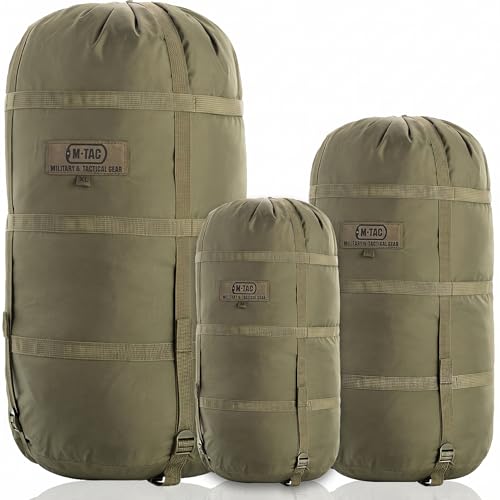
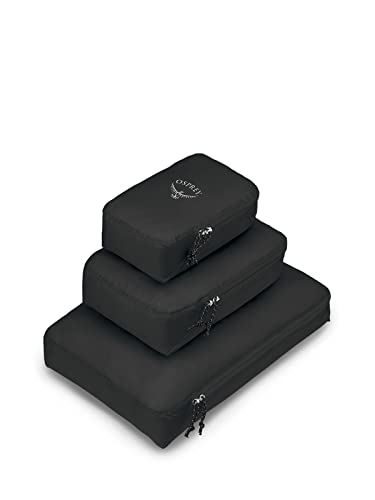
Packing aids shrink and organize gear so it fits a backpack's main compartment and stays findable on the trail. Compression sacks squeeze compressible items smaller, stuff sacks group and protect gear without adding compression hardware, and packing cubes organize clothing into visible compartments, most useful in packs that open like a suitcase rather than load from the top.
A compression sack uses external straps that cinch the load smaller after the drawstring closes, while a stuff sack has only a drawstring and holds whatever shape its contents naturally settle into. Compression sacks suit compressible insulation like a sleeping bag or puffy jacket, and stuff sacks suit everything else without adding the weight of straps and buckles.
| Aid | Closure | Compresses volume | Best for |
|---|---|---|---|
| Compression sack | Drawstring + 2-4 external straps | Yes, straps cinch tighter after closing | Sleeping bags, puffy jackets, quilts |
| Stuff sack | Drawstring only | No, holds contents' natural shape | Rigid or bulky gear, quick separation |
| Packing cube | Zipper, mesh or solid panel | Minimal, unless a compression-zip design | Clothing organization, travel-hiking packs |
Compression sacks typically weigh more than a plain stuff sack of the same size because the straps and buckles add hardware weight. Ultralight versions use Dyneema Composite Fabric (DCF) instead of coated ripstop nylon to cut that weight back down, though DCF sacks cost more and can puncture more easily against sharp gear.
Packing cubes help most in panel-loading travel-hiking backpacks and on hut-to-hut trips, where gear gets unpacked and repacked in a room rather than dug out of a tent vestibule. They sort clothing into visible compartments, but in a top-loading backcountry pack they add weight and zipper bulk without saving meaningful space.
A pack's access style decides how much a cube system pays off. Packs built around a full panel or clamshell opening let a hiker see and lift out an entire cube at once, the same way a hiker would use top-loading vs panel-loading access to judge how a pack opens in the first place. A traditional top-loading backcountry pack forces a hiker to dig past whatever sits on top, which erases most of a cube's organizational advantage since only the top layer is visible at any time.
Two cube styles cover most needs:
- Standard mesh-top cubes show contents at a glance and shed a little weight, but offer no compression.
- Compression-zip cubes add a second zipper that flattens the load after the first zipper closes, working closer to a compression sack for folded clothing.
Compression sacks typically shrink a compressible item like a sleeping bag or puffy jacket by roughly 30-50% compared to loosely stuffing it into a plain sack, though the exact reduction depends on the item's loft and how tightly the straps cinch. Rigid gear like a stove, cook pot, or tent poles sees no volume benefit from compression since there's nothing to squeeze.
The savings come specifically from squeezing air out of insulation, whether down or synthetic fill. A 20°F sleeping bag that fills a third of a pack's main compartment loose can drop to roughly half that footprint once compressed, freeing room for food or water on multi-day trips. That reduction matters more on smaller packs, where a few liters of saved space decides whether everything fits inside the main compartment or has to ride externally.
Compression comes with a trade-off that matters after the trip, not during it. Leaving a sleeping bag compressed for weeks or months breaks down its loft faster than storing it loose, which is why proper long-term backpack and gear storage calls for keeping insulated gear loosely packed or hung, not cinched down in its compression sack.
Assigning a consistent color to each gear category lets a hiker find items by color alone without unpacking everything, which matters most before dawn, in the rain, or when digging through a pack in a hurry. The system only works if the same colors get used trip after trip, so the association becomes automatic.
A simple, repeatable color scheme covers most gear categories:
- Red or orange sacks for a first-aid and repair kit, so it's the fastest thing to locate in an emergency.
- Yellow sacks for food and cooking gear, kept away from clothing to limit scent transfer inside the pack.
- Blue sacks for clothing and sleep layers, often split into a "dry" bag and a "worn" bag.
- Green sacks for electronics, batteries, and a headlamp.
- Clear or mesh sacks for small items used constantly through the day, like snacks or a map.
Go Deeper
Detailed companion guides for packing aids (cubes, sacks).
Best Compression Sacks
Buyer's guide: best compression sacks.
Best Packing Cubes For Backpacking
Buyer's guide: best packing cubes for backpacking.
Compression Sacks vs Stuff Sacks
Compare compression sacks and stuff sacks by closure, weight, durability, and volume reduction to pick the right packing aid for your backpacking gear.
Trekking-Pole & Gear Attachment
Related care, repair & accessories guide.
Cleaning & Washing
Related care, repair & accessories guide.