




A compression sack and a stuff sack look similar but solve different problems: one actively shrinks compressible gear, the other simply contains and protects it. Choosing between them depends on what's going inside and how much pack space that item needs to give up.
What's the actual difference between a compression sack and a stuff sack?
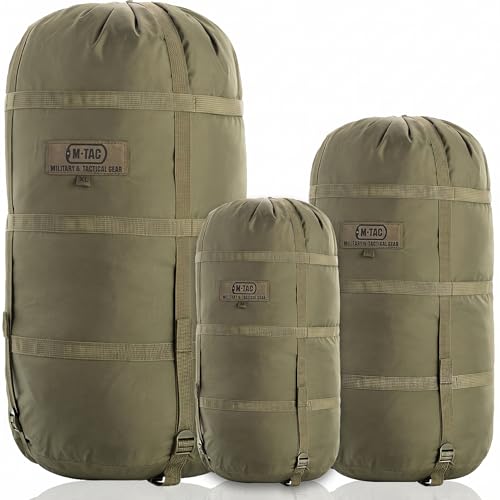
A compression sack adds 2 to 4 external straps around a drawstring-closed sack, so a hiker can cinch the straps after loading to squeeze the contents smaller than the fabric alone would allow. A stuff sack skips the straps entirely, using only a drawstring closure, which means it holds whatever volume its contents naturally settle into once stuffed.
That structural difference drives everything else about the two aids:
- Weight: A compression sack's straps and buckles add roughly 1-3 ounces over a stuff sack of the same size, a real consideration for ultralight kits.
- Durability: Straps create stress points at the stitching, so a compression sack generally needs sturdier fabric and reinforced attachment points than a basic stuff sack.
- Cost: Compression sacks cost more than equivalent-size stuff sacks because of the added hardware and construction.
- Versatility: A stuff sack works for any gear shape, while a compression sack only pays off on compressible items.
Which gear actually benefits from compression?
Compressible insulation is the only gear category that meaningfully benefits from a compression sack. Down and synthetic-fill sleeping bags, quilts, and puffy jackets all trap air within their fill, and squeezing that air out is exactly what a compression sack's straps accomplish. A three-season sleeping bag can drop to roughly half its loosely-stuffed size once fully compressed, freeing real volume inside a pack's main compartment.
Rigid or semi-rigid gear gains nothing from compression. A cook pot, stove, water filter, or tent poles hold a fixed shape regardless of strap tension, so packing them in a compression sack just adds unnecessary hardware weight. A plain stuff sack, or no sack at all, handles this gear just as well while weighing less.
Does fabric choice matter between the two?
Fabric choice matters more for weight and durability than for function, since both compression sacks and stuff sacks come in similar material options. Coated ripstop nylon is the standard choice for both, offering a reasonable balance of weight, cost, and water resistance. Ultralight versions of either aid use Dyneema Composite Fabric (DCF), which cuts weight further and adds genuine waterproofing, though at a higher price and slightly lower puncture resistance against sharp objects packed nearby.
Roll-top closures appear on both compression sacks and stuff sacks as a water-resistance upgrade over a simple drawstring, since rolling the top down several times before securing it blocks water more effectively than a cinched drawstring alone. A roll-top compression sack combines both benefits: genuine volume reduction from the straps and better water resistance from the closure style.
How many compression sacks does a typical pack need?
Most hikers need just one or two compression sacks, reserved for the bulkiest compressible items like a sleeping bag and a puffy jacket, while everything else goes in ordinary stuff sacks. Packing an entire kit into compression sacks adds unnecessary weight, since most gear categories, from food to electronics to a first-aid kit, don't compress and don't need the hardware.
Do compression sacks and stuff sacks work together in the same pack?
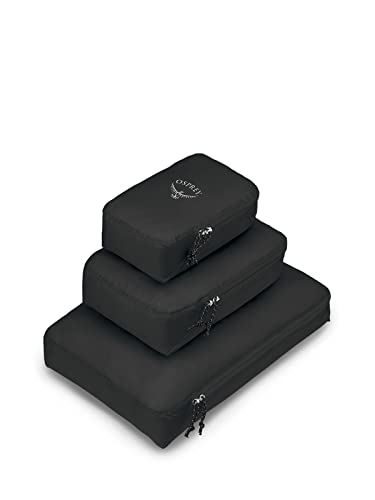
Yes, most experienced backpackers run both at once rather than choosing one system exclusively. A compression sack handles the one or two bulky insulated items that actually benefit from squeezing, while a set of ordinary stuff sacks organizes everything else by category, whether that's food, a repair kit, electronics, or spare clothing. Running the two together keeps total pack weight lower than compressing everything would, while still gaining the space savings where it counts.
This combined approach also simplifies packing order inside the main compartment. A compressed sleeping bag typically goes in first, at the bottom of a top-loading pack, since it's used only at camp and its smaller compressed footprint leaves more room above it for gear needed during the day. Stuff sacks holding food, layers, and a first-aid kit stack on top, arranged by how often each one gets opened on the trail, with frequently needed items kept nearer the top or in external pockets rather than buried under everything else.