By Marcus Hale, Lead Pack Research Editor · Published September 14, 2026, 6:03 PM ET · Updated September 29, 2026, 6:16 PM ET
Direct Answer
Clean an Osprey backpack the way Osprey describes: hand wash in a bathtub or large sink with mild, soapy warm water and a sponge or soft brush, avoiding harsh chemicals, then rinse thoroughly and hang the pack to dry in a well-ventilated area out of direct sunlight rather than using a washing machine or dryer. Packs with Osprey's High Road wheeled chassis should not be immersed.
Affiliate disclosure: this page contains affiliate links. Purchases made through them may earn us a commission at no extra cost to you. See our affiliate disclosure.
In plain English
Osprey is one of the best-known backpack brands, and its hiking packs are built from the same basic parts as most others: tough coated fabric, foam padding in the straps and belt, and often a stretched mesh panel that holds the pack a little away from your back so air can flow. Cleaning one is a lot like washing a delicate sweater by hand rather than throwing it in the machine.
Fill a tub or big sink with a few inches of warm water and a little mild soap, then wipe and gently scrub the pack with a sponge or soft brush. Rinse it well with clean water, because leftover soap attracts dirt and can leave the fabric less water-repellent.
Then hang it up somewhere airy and out of the sun, with all the zippers open, and wait. Thick padding can take a day or two to dry fully. Don't store it until it feels dry all the way through.
Osprey hiking backpacks use the same general construction as most framed packs on the market — coated nylon body fabric, foam-padded hip belts and shoulder straps, and on many models a tensioned mesh back panel suspension that stands off the back for airflow. That mesh suspension is the one detail worth extra care during washing.
Washing the mesh back panel
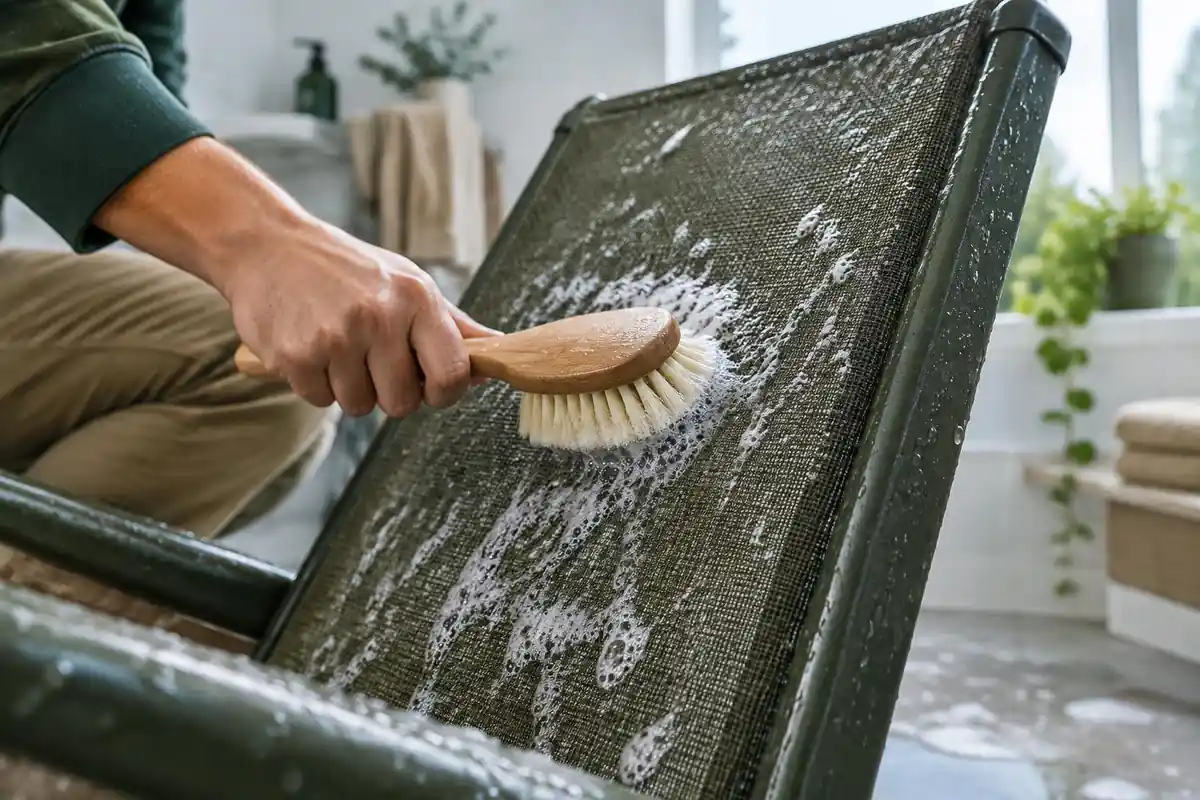
A tensioned mesh back panel sits away from the main pack body on a frame, so it needs gentle scrubbing rather than hard brushing, which can stretch or tear the mesh weave. Rinse it thoroughly, since trapped soap residue in tightly woven mesh is harder to flush out than from flat fabric panels.
Hand wash, not machine wash
Like most hiking backpack brands, hand washing is the safer default for an Osprey pack. Machine agitation risks bending internal frame stays and snagging the compression straps, buckles, and mesh pockets that framed packs like Osprey's are built with. A warm-water hand wash with mild soap and a sponge or soft brush covers the body fabric, hip belt, and shoulder straps without that risk.
Drying an Osprey pack
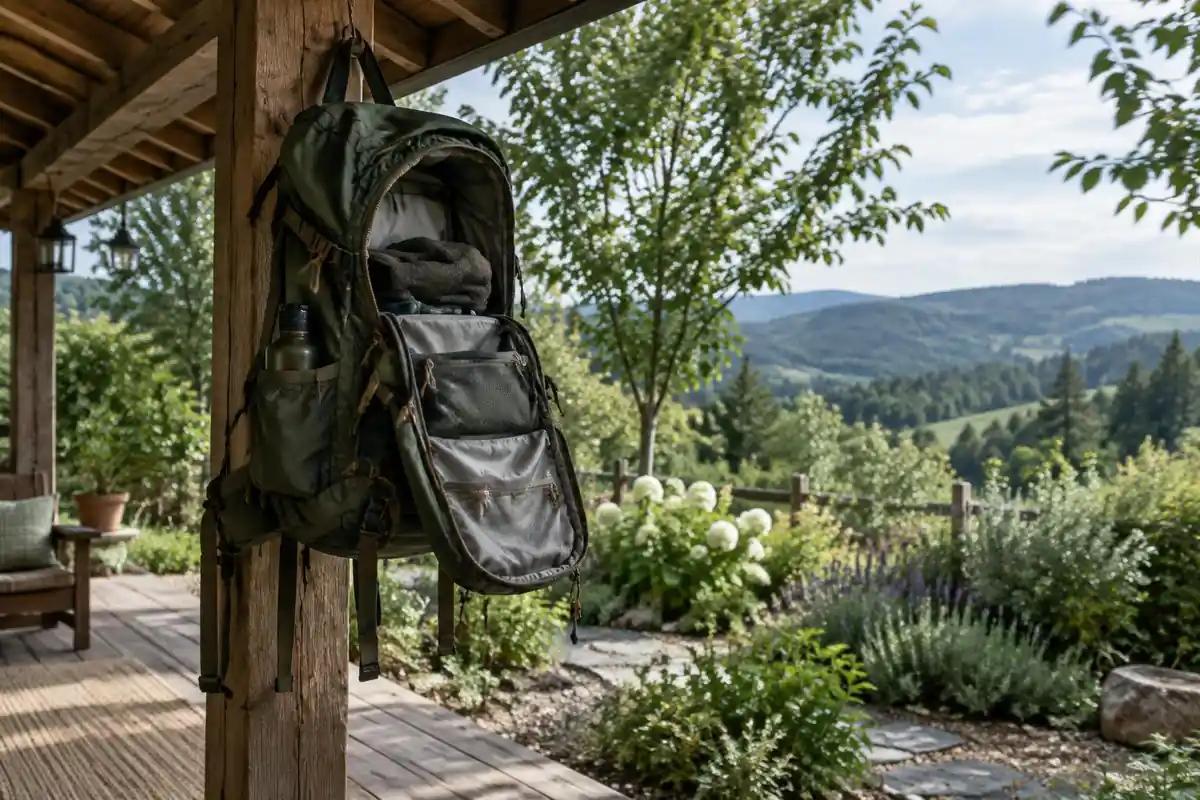
After rinsing, hang the pack in a well-ventilated area out of direct sunlight rather than in a dryer. The mesh suspension panel dries quickly on its own once the pack is upright with airflow moving through it; the foam-padded hip belt and shoulder straps take longer and should be checked for lingering dampness before the pack goes back into storage.
As with any hiking backpack, check the specific model's sewn-in care label for any model-specific notes, since construction details vary across an Osprey lineup that spans daypacks through mountaineering-alpine packs.
Warm or cool water? What Osprey actually says
Some guides suggest cool water, but Osprey's own cleaning guide calls for a bathtub or large sink with mild, soapy warm water and a sponge or soft brush, and it asks owners to avoid harsh chemicals.1 Other makers land in the same place. REI suggests about 6 inches of lukewarm water with a mild, fragrance-free soap for a deep clean,2 and Deuter recommends lukewarm water with a pH-neutral soap or shower gel.3 The practical reading is lukewarm, not hot: comfortable to your hands, and never close to the heat of a dryer.
The soap matters more than the exact temperature. Nikwax says normal laundry detergents leave a water-attracting residue on outdoor fabrics,4 and Gregory advises against detergents and solvents for packs.5 That is why thorough rinsing is the step most worth doing slowly.
Why the mesh, coatings and zippers need a light touch
Many Osprey packs use a suspended mesh back. Osprey describes its AntiGravity suspension as enveloping the back and hips in 3D-suspended mesh,6 and REI explains that tension-mesh panels hold the pack bag a few inches off your back to reduce sweat.7 Because that mesh is stretched tight, stiff brushing can distort it. Work the brush in small circles and let soaking do most of the work.
The fabric behind the mesh has coatings of its own. Gregory warns that heavy brushing can damage fabric coatings,5 and REI says not to scrub zippers, because many have water-resistant coatings; for a zipper that sticks, REI suggests a zipper lubricant instead.2
Machine washing: where brands disagree
Hand washing is the right default for an Osprey pack because that is what Osprey describes. It is not a universal industry rule, though. Deuter says never to machine wash a pack because abrasion stresses the fabric and its coating,3 and REI's general guidance is never to machine wash or machine dry one.2 ULA, by contrast, permits washing its packs in a top-loader or agitatorless washer as long as the pack comes out before the spin cycle.8 REI's own advice is to follow the maker's recommendations first.2
One Osprey-specific edge case: travel packs built on Osprey's High Road wheeled chassis should not be immersed at all.1 Spot-clean those instead. And if a wash reveals real damage, such as a torn seam or failing buckle, Osprey states it will repair or replace a bag for any damage at no cost, regardless of when it was made.9
Looking for Complete Category Guidance?
Explore our complete, evidence-based master guide for Care, Repair & Accessories.