

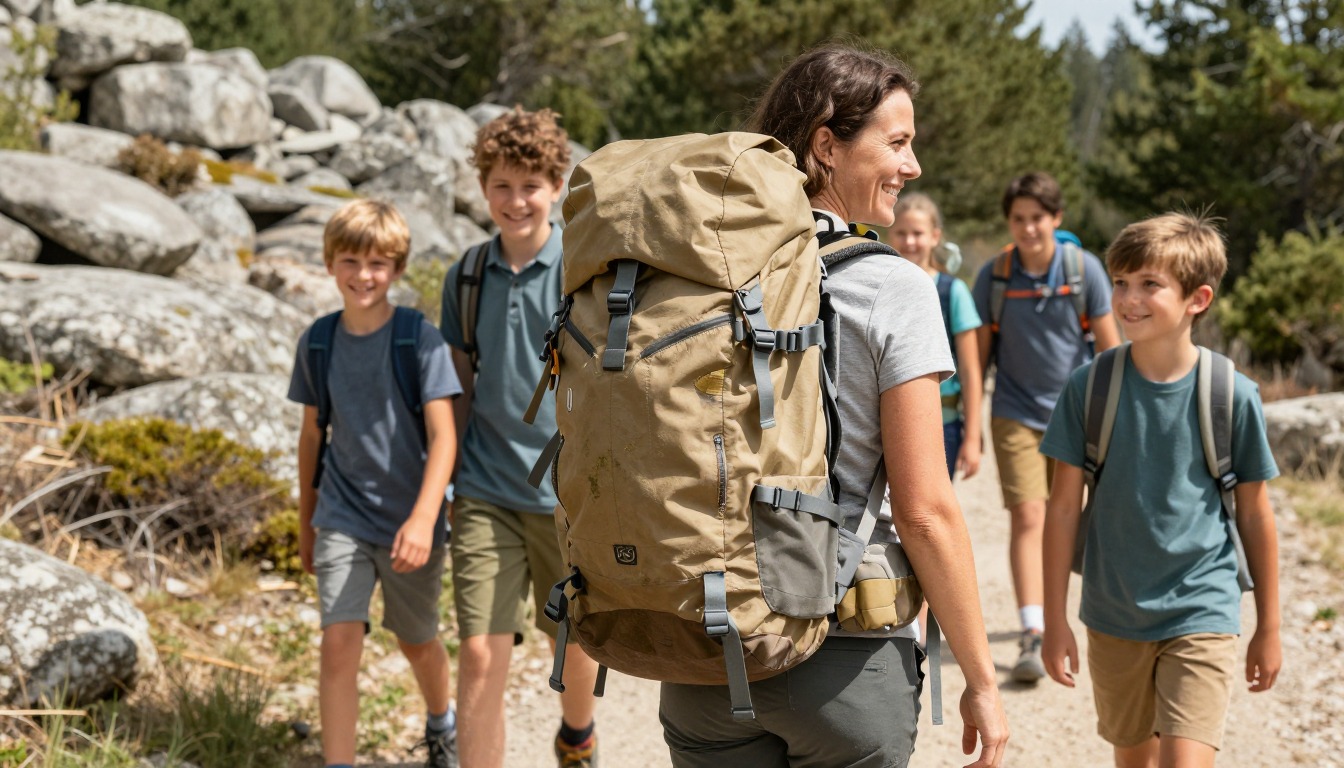


Mold on a hiking backpack shows up as dark, fuzzy, or discolored spots, usually in foam back panels, hip belt padding, or mesh pockets — anywhere moisture gets trapped against fabric without airflow. It almost always means the pack was put away for storage while still damp.
Treating existing mold
Mix one part white vinegar to four parts cool water and scrub the affected spots with a soft-bristle brush, working the solution into the fabric rather than just wiping the surface. Rinse thoroughly with clean water afterward, since leftover vinegar residue can retain odor of its own if left to dry in the fabric.
For mold embedded in foam padding, an enzymatic cleaner reaches bacterial and fungal residue that a vinegar rinse on the surface won't fully clear. Skip bleach — it can discolor coated nylon and weaken stitching thread, and it doesn't reach mold growing inside foam padding any more effectively than vinegar does.
Sun exposure and drying
Twenty to thirty minutes of direct sun after washing helps kill lingering mold spores on the fabric surface. Longer sun exposure does more harm than good — UV light degrades fabric coatings and fades color over time, so shade with good airflow is the better choice for the bulk of the drying time.
Preventing mold from coming back
Mold prevention comes down to one rule: never store a pack that's still damp. A pack dried completely — checked at the thickest padding, not just the outer fabric — before its next storage stint, kept in a cool, dry spot rather than a damp garage or basement, rarely grows mold again even after repeated trail use.