




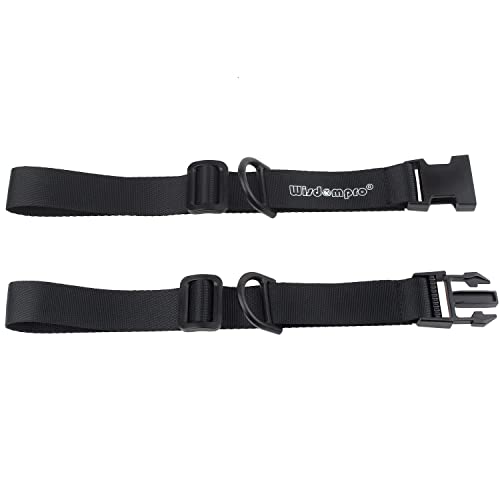

External attachment hardware on a hiking backpack falls into four categories: daisy chain webbing, compression straps, dedicated tool loops, and lash tabs — and matching gear to the right category keeps the load balanced and secure. Most hiking backpacks combine several of these systems, so knowing which hardware suits which item prevents both damage to gear and an unstable, swinging load.
What hardware does a backpack use for external gear?
A hiking backpack uses four main types of external hardware: daisy chain webbing (a row of sewn loops running vertically along the front or sides), compression straps (adjustable webbing that cinches the pack body and anything strapped beneath it), dedicated tool loops (small webbing tabs at the base of the pack for trekking poles or an ice axe), and lash tabs (single loops or D-rings for clipping a carabiner or bungee cord).
Daisy chain is the most flexible system since any strap, carabiner, or bungee can thread through its loops, but it takes longer to rig than purpose-built hardware. Compression straps double as attachment points almost by accident — most hikers use them daily just to cinch the pack body smaller, then reuse the same webbing to pin a rolled pad or tent underneath. Dedicated tool loops are fastest to use but only fit their intended item; a pole loop sized for a trekking-pole shaft won't securely hold a rolled sleeping pad.
How do you keep externally lashed gear from swinging?
Gear stays still on a hiking backpack when it's secured at two points rather than one, pulled snug against the pack body rather than left loose, and positioned close to the pack's center rather than hanging off one side. A single strap around the middle of an item lets both ends swing independently with each stride, which is the most common cause of gear working loose on trail.
Two-point attachment is the standard fix: a lower loop or strap anchors one end of the item, and a second strap higher up pins the other end against the pack body. This applies whether the item is a trekking pole, an ice axe, or a rolled sleeping pad — one anchor point lets an item pivot, two points lock it in place.
- Anchor low, anchor high. Use a bottom loop or strap plus a second point higher on the pack body.
- Tension evenly. Both straps should hold the item snug, not just the closer one.
- Center the load. Keep gear along the pack's vertical centerline rather than hanging off one side.
- Check after the first mile. Straps settle and loosen slightly once gear compresses; a quick retighten early on prevents drift later.
Should gear go inside or outside the pack?
Gear that's rigid, sharp, or bulky but light — trekking poles, an ice axe, a foam sleeping pad — typically rides outside a hiking backpack, while gear that's compressible, heavy, or weather-sensitive — a sleeping bag, spare clothing, food — stays inside. The general rule: anything that could puncture, snag, or crush other gear belongs on the outside; anything that needs protection from rain or impact belongs inside.
Weight also matters. Heavier items carried externally, away from the back panel, pull a pack's center of gravity backward and downward, making the load feel heavier than its actual weight suggests. Most items commonly lashed outside — poles, an axe, a foam pad — are light enough that this effect is minor, which is part of why they're the standard candidates for external carry rather than, say, a water-heavy hydration reservoir or a stove.
How many attachment points does a typical hiking backpack have?
Most hiking backpacks in the 40- to 65-liter range include four to eight dedicated external attachment points: one or two trekking-pole loops, one or two ice-axe loops, two to four compression straps, and often a stretch of daisy chain on the front panel. Smaller daypacks typically include fewer — sometimes just a single pole loop and one or two compression straps — while mountaineering-specific packs add extra axe loops and crampon patches.
Checking a pack's attachment points before a trip, rather than after reaching the trailhead, avoids improvising with paracord or carabiners that weren't designed for load-bearing use. A pack with too few dedicated points for a hiker's regular gear list is a sign to look at models built for that activity — winter and mountaineering packs, for instance, consistently include more tool-carry hardware than general three-season packs.