
How to Train for Inca Trail
To train for the Inca Trail, build an aerobic base with steady walking, add weekly stair or hill sessions to mimic the stone steps, then carry a loaded pack on longer walks. Strengthen your legs and core twice a week, practice slow step-downs for the long descents, and taper in the final one to two weeks. Then arrive in Cusco early so your body can acclimatize before day two.
General fitness guidance, not medical or personal training advice. If you have a health concern, an injury, or you're returning to exercise after a long break, check with a doctor first.
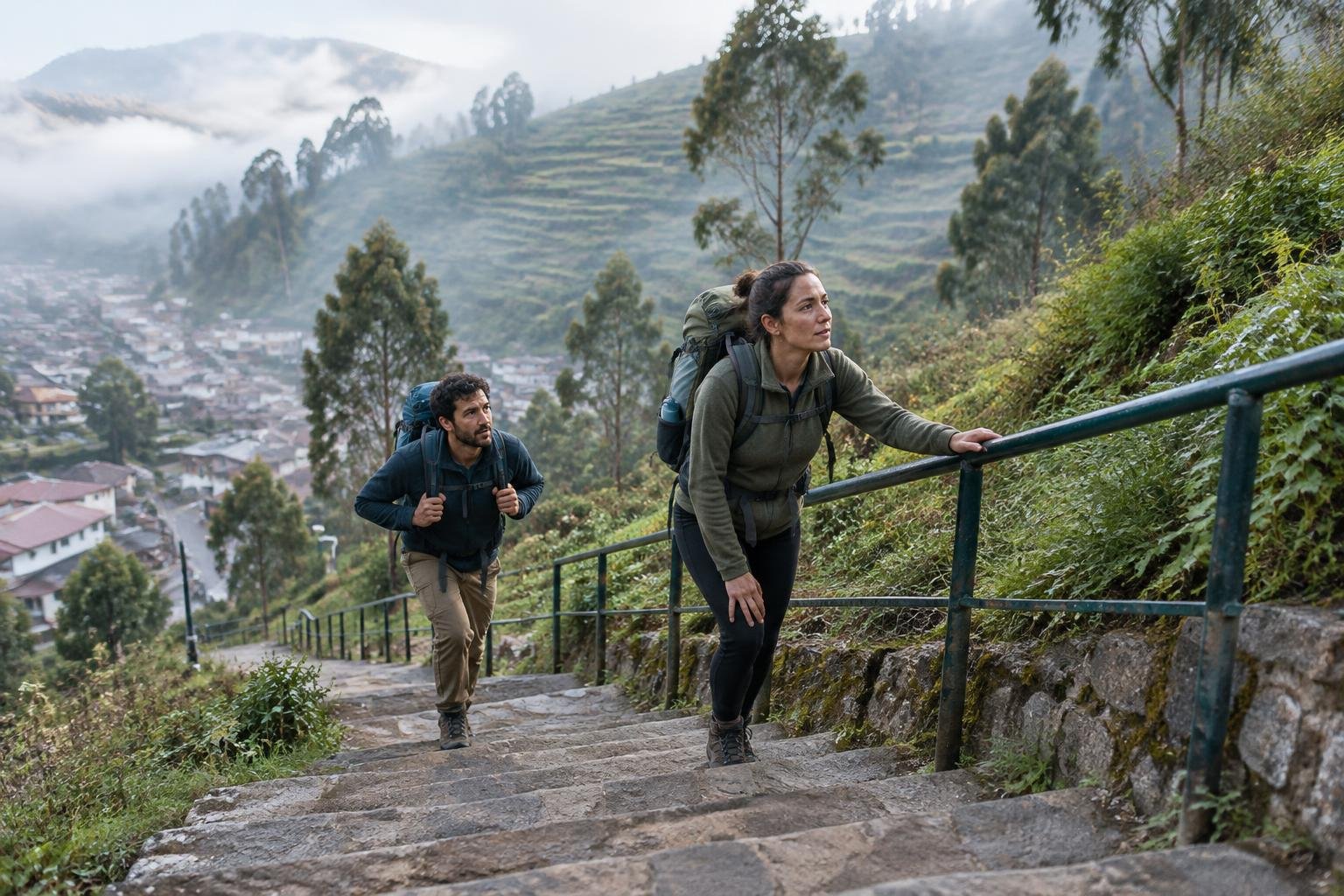
What the Inca Trail asks of your body
This 4-day, roughly 42 km (26 mi) point-to-point trek is rated strenuous, and the numbers explain why: about 2,507 m (8,225 ft) of climbing and 2,937 m (9,635 ft) of descent, topping out at Dead Woman's Pass, 4,215 m (13,829 ft). Much of it is Inca stone paving, with irregular blocks and flights of narrow stairs. Day two is the hardest, a sustained stair climb followed by an equally long stone descent. The thin air on the first pass makes the stairs feel steeper than they measure. Pack weight is not published here, so plan around your own load.
Start with a weekly base
The CDC suggests adults get 150 minutes of moderate-intensity activity a week, or 75 minutes of vigorous activity, or an equivalent mix, and it can be split across the week rather than done all at once. For a multi-day trek like this one, treat that as your floor, not your target. Brisk walking counts, so start there. Spend about 4 to 8 weeks building the habit before you add hills, stairs or a loaded pack. If you have health concerns, ask a doctor before ramping up.
The training plan, phase by phase
Aerobic base · Weeks 1 to 4
Walk most days at a steady, conversational effort, building toward the CDC's weekly 150 minutes of moderate activity or an equivalent mix. Keep it simple and repeatable. The goal is consistency, not heroics. Add two short strength sessions each week, and let your body adapt before you add any new demands.
Hills and stairs · Weeks 5 to 8
Keep the base walking and add one weekly hill or stair session. Stairs matter most here, because Inca stone staircases run for hours on this route, especially on day two. Climb at a pace you could hold for a long time. Stairs replicate downhill poorly, so add slow, controlled step-downs to the end of each session.
Loaded pack walks · Weeks 9 to 11
Start walking with a pack, light at first. Many people begin around 10 pounds, then add weight in small steps. A commonly quoted ceiling for a loaded pack is about 20% of body weight. Keep one weekly hill or stair session, and carry the pack on it. A couple of weeks out, rehearse with two loaded walks on consecutive days.
Taper · Weeks 11 to 12
In the last one to two weeks, ease back. Keep walking, but cut the volume and skip any new, hard efforts. The aim is to arrive fresh, not to cram in fitness. Pack your gear, check how your boots and pack fit after your loaded walks, and save your legs for the trail.
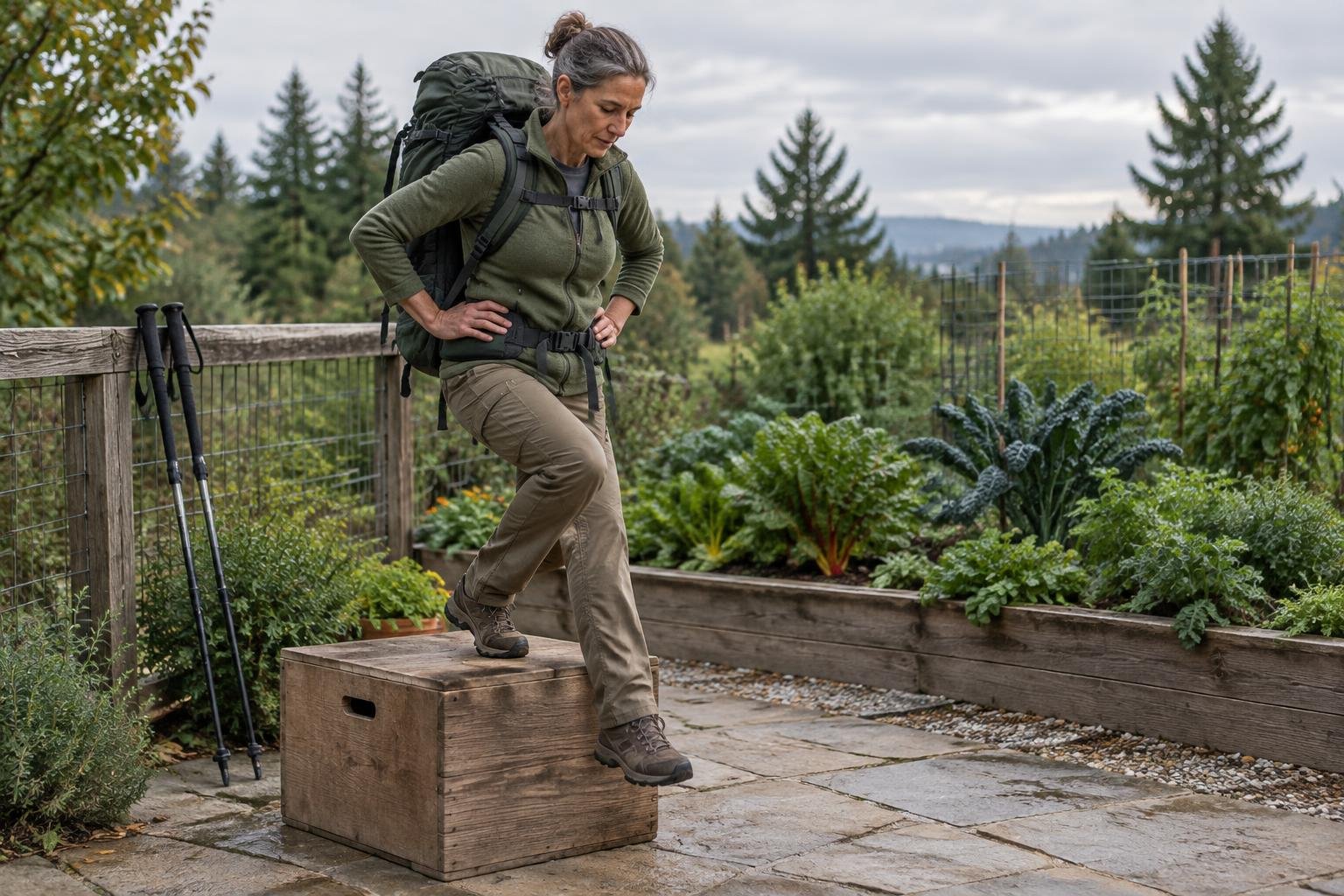
Strength work that helps on the trail
The CDC recommends muscle-strengthening on at least 2 days each week, working all major muscle groups. For this trek, favor legs, hips and core, since those carry you up and down thousands of feet of stone steps. Add slow step-downs to your routine too, because descents load the quads and cause delayed soreness, and this route drops more than it climbs. Keep sessions steady, and ask a doctor if you have health concerns.
Pack walks and back-to-back days
Start with a light pack, many people begin around 10 pounds, and add weight in small steps rather than jumping up fast. A commonly quoted ceiling is about 20% of body weight. Because this is a 4-day thru-hike where day two is the toughest, rehearse a couple of weeks out with two loaded walks on consecutive days. That shows how your legs, shoulders and feet feel on the second day, which is when this route asks the most.
Altitude: why a slow ascent matters
Fitness does not replace a slow ascent. Avoid going from low elevation straight to a sleeping altitude of 2,750 m (9,000 ft) or more in one day. Spending 2 to 3 nights at roughly 2,450 to 2,750 m (8,000 to 9,000 ft) before going higher is protective against acute mountain sickness. Sleeping altitude matters more than the altitude reached in the day, because low oxygen is worst during sleep. Plan several nights in Cusco first. For medical questions, ask a doctor.
More in our guide to hiking at altitude and acclimatization.
Training mistakes to avoid
The common training errors are easy to name. Some people never walk with a loaded pack, then meet the weight for the first time on day one. Others ignore downhill work, even though this route drops steeply on stone. Starting too late is another, since a multi-day trek with a full pack calls for roughly 8 to 12 weeks. And relying on training alone while skipping altitude acclimatization in Cusco leaves day two harder than it needs to be.
Common questions
How long should I train for the Inca Trail?
Allow roughly 8 to 12 weeks for a multi-day trip with a full pack. Spend about 4 to 8 weeks building an aerobic base, then add hills or stairs and loaded pack walks. Taper in the last one to two weeks. If you have health concerns, ask a doctor before you start.
Is walking enough training?
Walking is the foundation. Build a steady base first, then add a weekly hill or stair session and walks with a loaded pack. The CDC also recommends muscle-strengthening on at least 2 days each week. Add slow step-downs, because stairs replicate downhill poorly and this route has long stone descents.
Can training prevent altitude problems?
No. Training fitness does not replace a slow ascent. Spending 2 to 3 nights at roughly 2,450 to 2,750 m (8,000 to 9,000 ft) before going higher is protective against acute mountain sickness. Plan several nights in Cusco before the trek. For medical concerns, ask a doctor.
How heavy should my pack be when I practice?
Start light, since many people begin around 10 pounds, and add weight in small steps. A commonly quoted ceiling for a loaded pack is about 20% of body weight. A couple of weeks before the trip, rehearse with two loaded walks on consecutive days to see how your body responds.
Sources
- Centers for Disease Control and Prevention — Physical Activity Guidelines for Adults: weekly aerobic and muscle-strengthening targets.
- CDC Yellow Book — High-Altitude Travel and Altitude Illness: ascent-rate guidance (consistent with Wilderness Medical Society recommendations).
- Peru Ministry of Culture / SERNANP — machupicchu.gob.pe (official Machu Picchu site, Peru Ministry of Culture): official route information.
- Training and fitness for hiking (this site): the general training progression this plan builds on.
See our editorial policy and affiliate disclosure.