
Best Time to Hike Inca Trail to Machu Picchu
The best time to hike the Inca Trail to Machu Picchu is May to September, the dry season, when modelled rainfall is lowest. The trail traditionally closes in February for maintenance, and permits can sell out well ahead, so book early and confirm dates on the official Machu Picchu site.
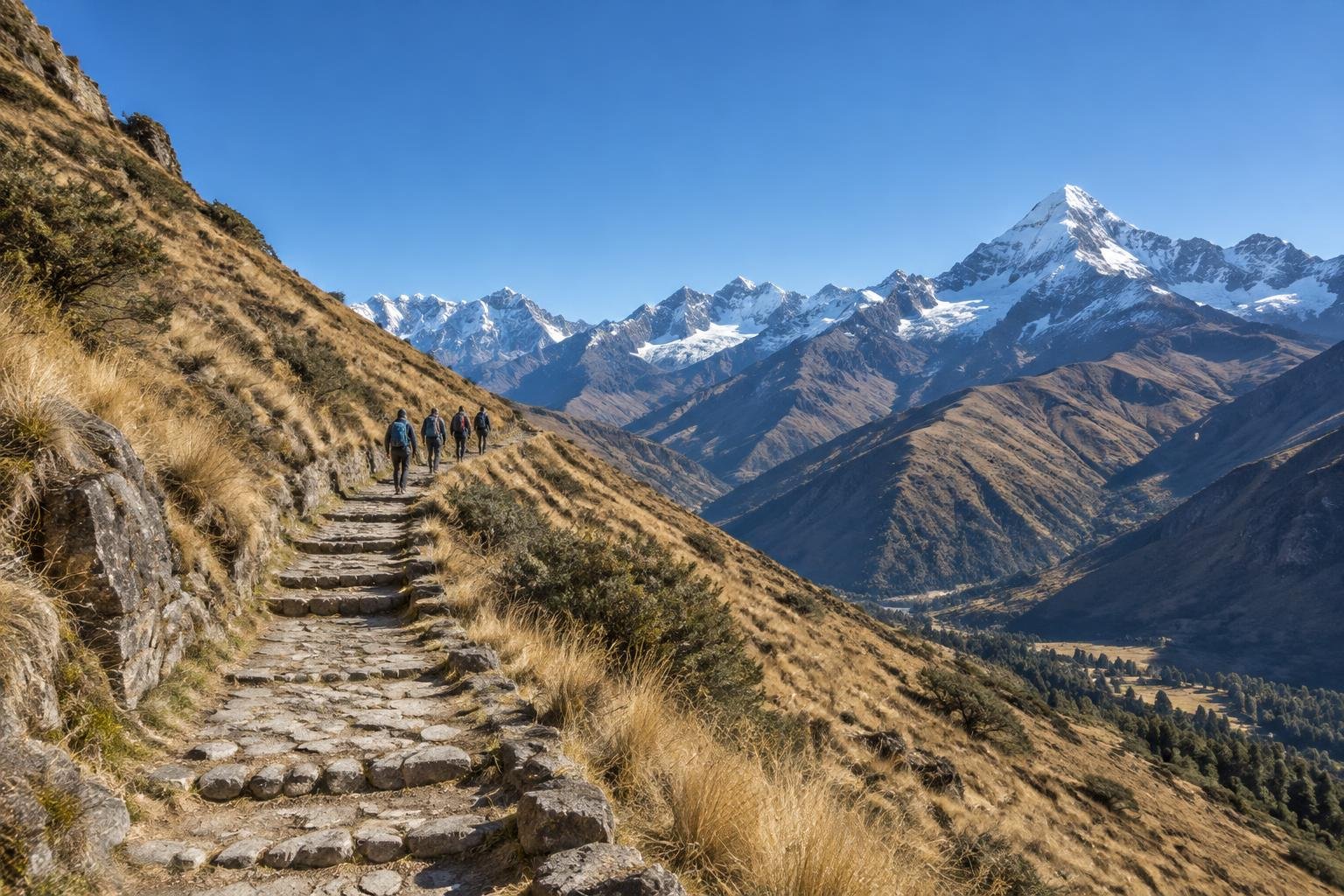
Month-by-month climate for Inca Trail to Machu Picchu
| Month | Rain | Daylight |
|---|---|---|
| Jan | 114 mm | 12.7 h |
| Feb | 165 mm | 12.4 h |
| Mar | 91 mm | 12.1 h |
| Apr | 52 mm | 11.7 h |
| May | 10 mm | 11.4 h |
| Jun | 5 mm | 11.2 h |
| Jul | 9 mm | 11.3 h |
| Aug | 7 mm | 11.6 h |
| Sep | 19 mm | 11.9 h |
| Oct | 56 mm | 12.3 h |
| Nov | 65 mm | 12.6 h |
| Dec | 134 mm | 12.8 h |
Modelled regional averages for 2010–2023 (rainfall) and calculated daylight hours; they describe the wider area, not a reading taken on the trail. Temperature changes little from month to month here, so we don’t chart it. Altitude, not season, drives how cold it feels on the route, so check the managing authority’s guidance for the section you plan to walk.
The monthly numbers show a sharp divide. June is typically the driest month at about 5 mm, and May through August each average under 11 mm. February is the wettest at about 165 mm, with December near 134 mm and January near 114 mm. Daylight is longest in December (about 12.8 hours) and shortest in June (about 11.2 hours), a swing of roughly 1.6 hours. Temperature barely changes by month here, so altitude, not season, drives how cold it feels. Check the managing authority's guidance for conditions.
Inca Trail to Machu Picchu season by season
Dry season · May to August
These are the driest months in the data, with rainfall typically between 5 and 10 mm a month. This is the core of the official May to September dry-season window, and permits for it tend to sell out well in advance. Daylight is at its shortest, roughly 11.2 to 11.6 hours, so you have less time in the day to cover each stage. Plan your pace and start times around that, and carry a headlamp for early starts and camp routines.
Late dry season · September to October
September still falls inside the official dry season, with typical rainfall around 19 mm and daylight lengthening to about 11.9 hours. By October the average climbs to roughly 56 mm, a clear step toward the wetter half of the year. This shoulder period can suit hikers who could not secure a permit for the busiest months, but the odds of rain rise as the weeks pass. Expect to need reliable rain cover, and confirm your dates with a licensed operator.
Wet season · November to January
Rainfall typically builds from about 65 mm in November to roughly 134 mm in December and 114 mm in January. Daylight is at its longest, around 12.6 to 12.8 hours, which gives more usable hours but does not offset the wetter conditions. This period falls outside the official May to September guidance. Trail surfaces and views can be affected by rain, so confirm conditions and permit availability with the managing authority and your operator before committing.
Closure and recovery · February to April
February is the wettest month in the data at about 165 mm, and the trail traditionally closes then for maintenance. Rainfall eases through March (about 91 mm) and April (about 52 mm), though both remain wetter than the dry-season months. Daylight shortens from about 12.4 hours in February to 11.7 hours in April. Because closure dates can shift, confirm them on the official Machu Picchu site rather than assuming a fixed window.
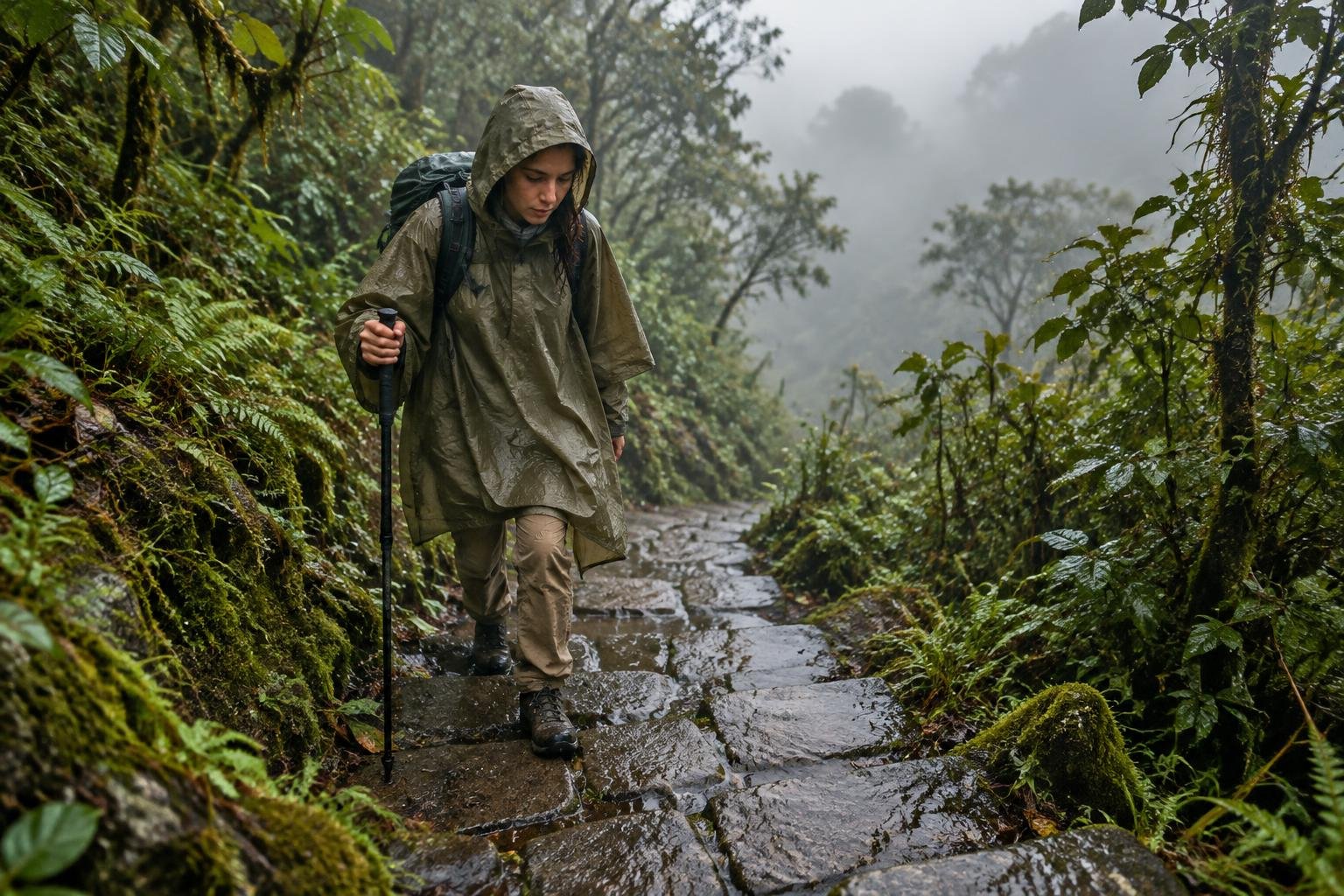
Official season guidance
Peru Ministry of Culture / SERNANP: May to September (dry season); the trail traditionally closes in February for maintenance
The classic Inca Trail is permit-limited and in practice booked through licensed operators; permits can sell out well ahead, and the trail traditionally closes for maintenance in February, so confirm dates on the official Machu Picchu site. Independent trekking is not generally offered.
Check current dates on machupicchu.gob.pe (official Machu Picchu site, Peru Ministry of Culture)What to pack for the season
Packing follows the season. In the wetter months, reliable rain cover for you and your pack matters most. In the dry months, plan for strong sun at altitude and for layers, since altitude drives how cold it feels. Shorter dry-season days make a headlamp worthwhile year-round for early starts and camp routines.
For layering, rain cover and weather planning, see hiking in rain, heat and cold.
Timing mistakes to avoid
The most common mistake is choosing a month from rainfall alone without checking permits. The classic Inca Trail is permit-limited and booked through licensed operators, and dry-season dates can sell out well ahead, so waiting for a perfect forecast can leave you with nothing. Another mistake is overlooking the traditional February closure for maintenance. Treat the modelled monthly averages as a guide, not a guarantee, and confirm dates on the official Machu Picchu site.
Common questions
Which month is driest for the Inca Trail?
In the modelled regional data, June is typically the driest month at about 5 mm, with July, August and May also very low. These sit inside the official May to September dry-season window. Modelled averages describe a region, not the trail itself, so conditions on any given day can differ.
Is the Inca Trail open in February?
The trail traditionally closes in February for maintenance, which is also the wettest month in the data at about 165 mm. Closure dates can change, so do not plan around a fixed assumption. Confirm current dates on the official Machu Picchu site and with your licensed operator before booking.
How far ahead should I book for the dry season?
Permits are limited and the trail is booked in practice through licensed operators. Dry-season permits can sell out well ahead of time, so booking early matters more than waiting on weather. Check the official Machu Picchu site and your operator for current availability and rules.
Does daylight change much through the year?
Modestly. Daylight runs from about 11.2 hours in June to about 12.8 hours in December, a swing of roughly 1.6 hours. During the dry season days are at their shortest, so plan your stage pacing accordingly and carry a headlamp for early starts and camp.
Sources
- Peru Ministry of Culture / SERNANP — machupicchu.gob.pe (official Machu Picchu site, Peru Ministry of Culture): official season and permit guidance.
- NASA POWER (Prediction Of Worldwide Energy Resources): monthly temperature and rainfall averages, 2010–2023, from MERRA-2 reanalysis. Daylight hours are calculated from latitude.
Conditions, closures and permit rules change without notice — confirm current information with the managing authority before you go. See our editorial policy and affiliate disclosure.