
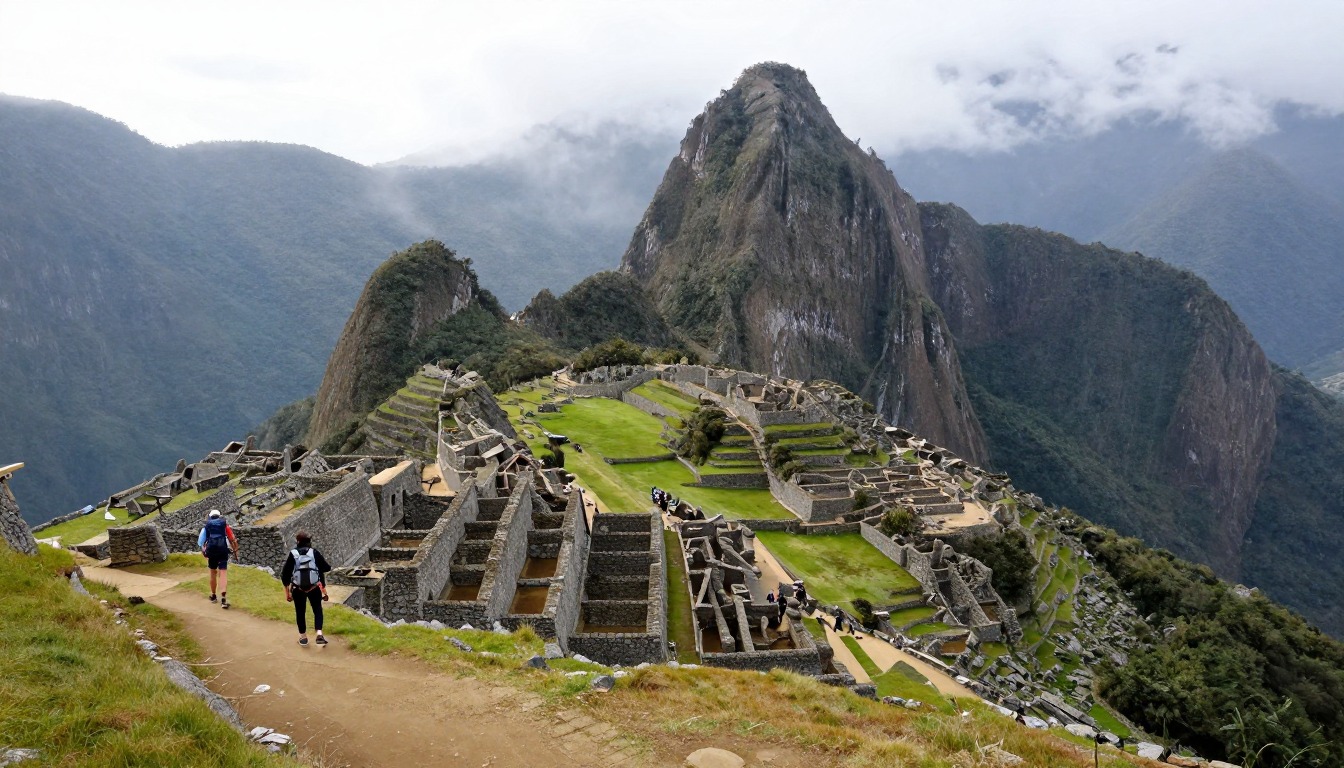
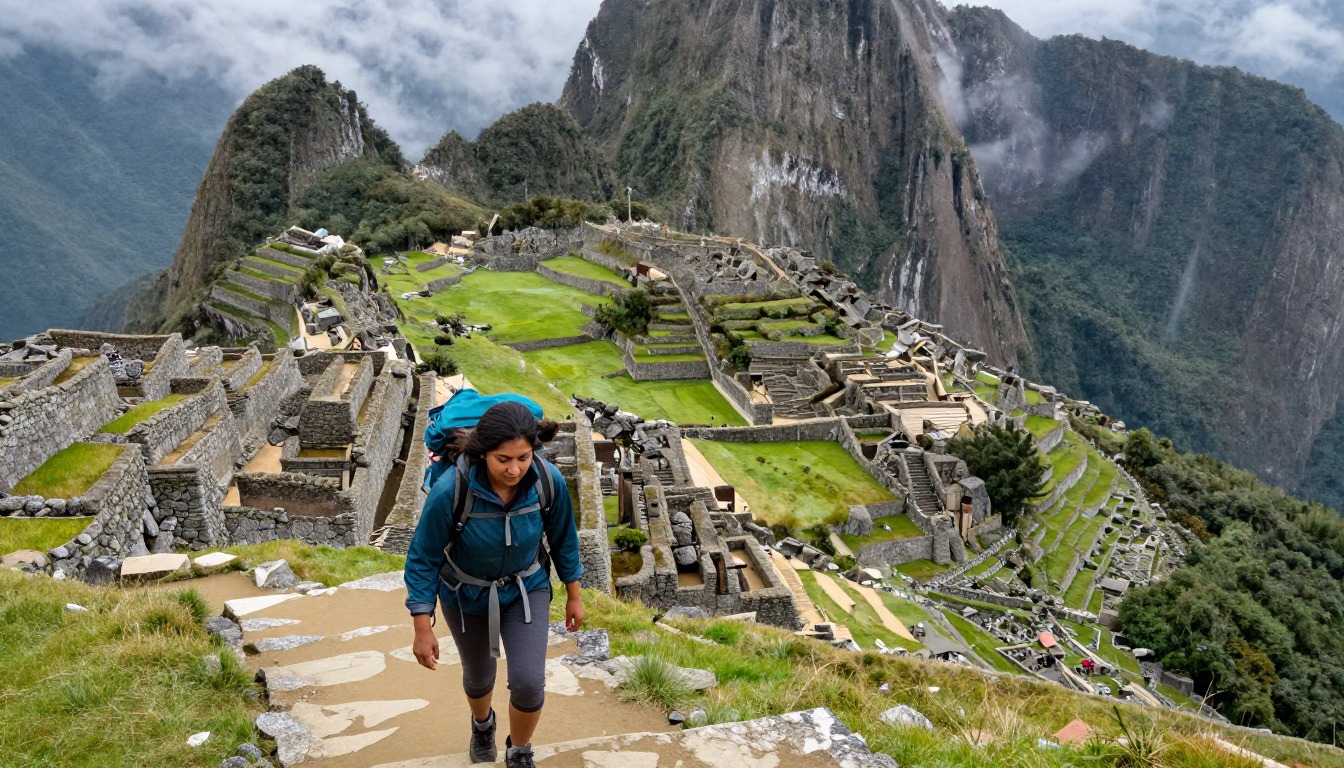
Illustrative artwork — an impression of Inca Trail to Machu Picchu, not a literal photograph.
The Classic Inca Trail is a roughly 42-kilometer, four-day trek through the Andes to Machu Picchu, and because permits are limited and tightly controlled, where you sleep each night is decided long before you set out. Independent trekking isn't allowed on this route — a licensed operator handles the whole route, setting up designated trail campsites with tents and porters. Cusco is the town where the trip begins, and Aguas Calientes, just below the ruins, is where trekkers spend the final night.
Why hike here
What sets the Inca Trail apart from simply taking the train to Machu Picchu is the four days spent getting there on foot, following stone paving laid by the Inca themselves. The route climbs out of Cusco's valley through cloud forest, over high mountain passes where the air is thin and the views open up in every direction, then drops back down through orchid-hung jungle. Each evening your operator's porters have a campsite waiting — at stops like Wayllabamba and Pacaymayo — so the days settle into a rhythm of walking, arriving, and watching the light shift over the peaks. The last camp, Wiñay Wayna, sits beside ruins of its own, and from there trekkers climb on toward the Sun Gate for the first glimpse of Machu Picchu spread out below.
Getting there
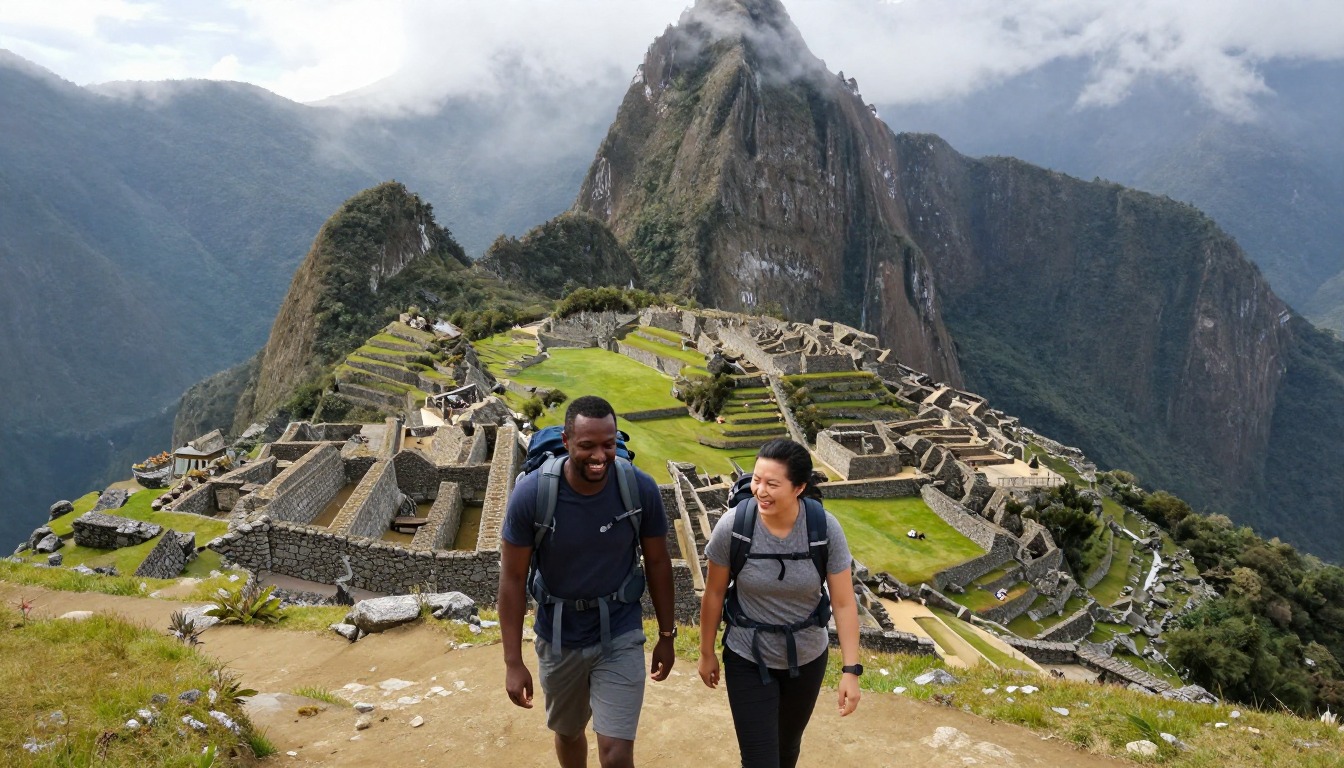
Cusco is the starting point for the Classic Inca Trail, and it has its own airport with regular connections from Lima, Peru's main international gateway. Because permits are limited, sold only through licensed operators, and booked out months ahead, the trailhead transfer itself is arranged as part of your trek rather than something you organize on your own. Most hikers spend two to three nights in Cusco beforehand to acclimatize to the altitude. At the end of the trek, the route comes down to Aguas Calientes, the town below Machu Picchu, before the trip back to Cusco.
Where to stay
The realistic options, closest-to-the-trail first. Book through the official links — we don't list prices or availability because they change all the time.
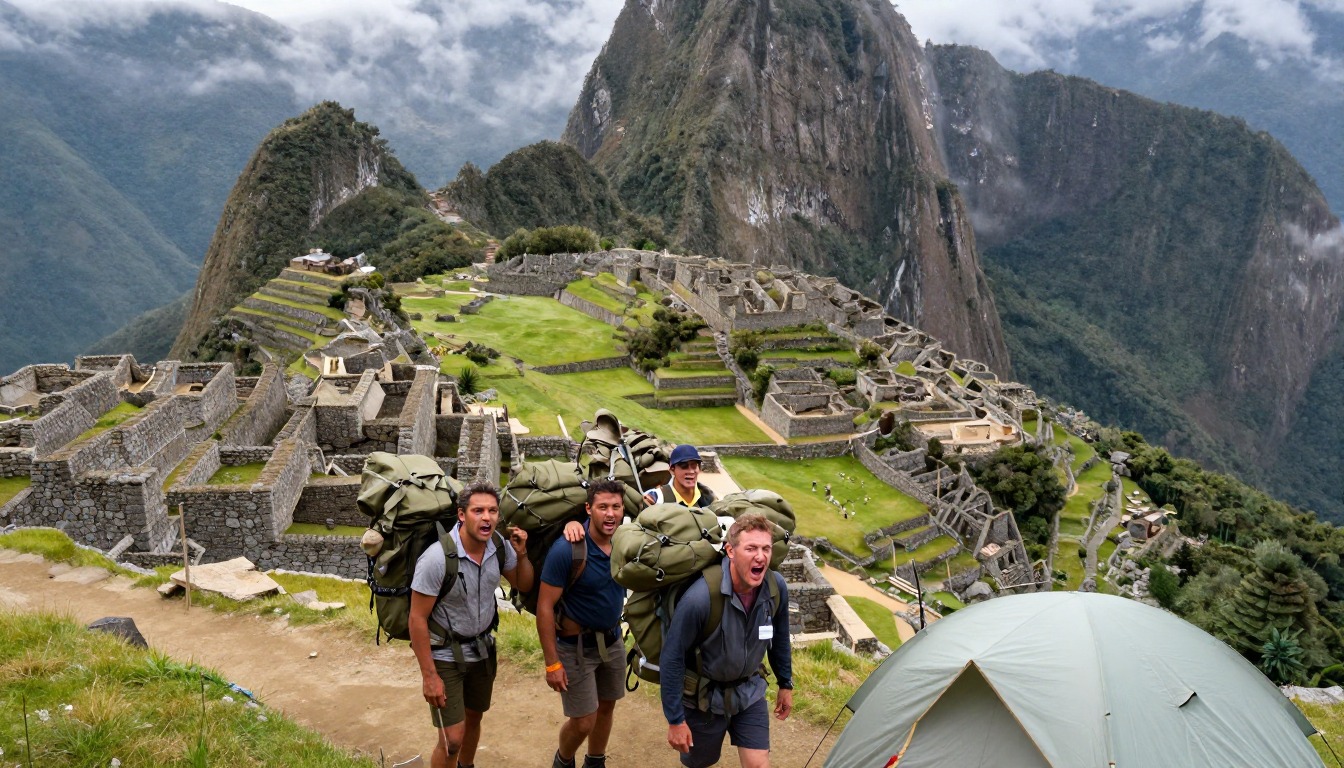 Illustrative — evokes the setting, not a specific property.
 For example: Designated campsites (e.g. Wayllabamba, Pacaymayo, Wiñay Wayna) set up by your licensed operator
Every Inca Trail trekker — you must go with an authorized operator, who provides tents and porters.
Independent trekking is not allowed; camps and permits come through the operator.
Licensed Inca Trail operatorFor example: Hotels and hostels in Cusco (acclimatize) and Aguas Calientes (below Machu Picchu)
Everyone before the trek (Cusco) and the night at the end (Aguas Calientes).
Spend 2-3 nights in Cusco first to acclimatize to the altitude.
Search lodging in Cusco / Aguas CalientesPermits & rules
The classic Inca Trail is strictly permit-limited and sold only through licensed operators; permits sell out months ahead and the trail closes each February for maintenance. There is no independent access.
Gear you'll want for this trip
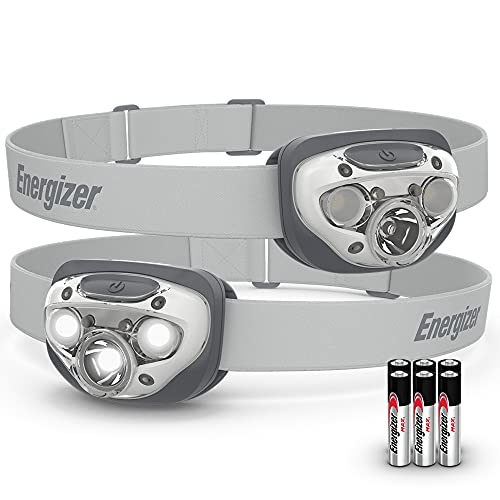
Matched to the terrain and conditions here. Real products — check current price on Amazon.


Common questions
Can I hike the Inca Trail independently and arrange my own lodging?
No. The Classic Inca Trail can only be walked with a licensed operator, who arranges the designated campsites, tents, and porters along the route as part of the permit system. Independent trekking isn't allowed on this trail, so there's no option to book your own lodging night to night the way you might on an unrestricted route.
Where do you actually sleep during the four-day trek?
At designated trail campsites set up by your operator's crew — places like Wayllabamba, Pacaymayo, and Wiñay Wayna. You spend the night before finishing the trek in Aguas Calientes, the small town below Machu Picchu, then head up to the ruins from there.
How far in advance should I book, and do I need to prepare for the altitude?
Book as early as you can. Permits are strictly limited and licensed operators sell out months ahead, especially for the May-to-September dry season. Plan on spending two to three nights in Cusco before you start, since acclimatizing to the altitude there makes the high passes considerably more manageable.
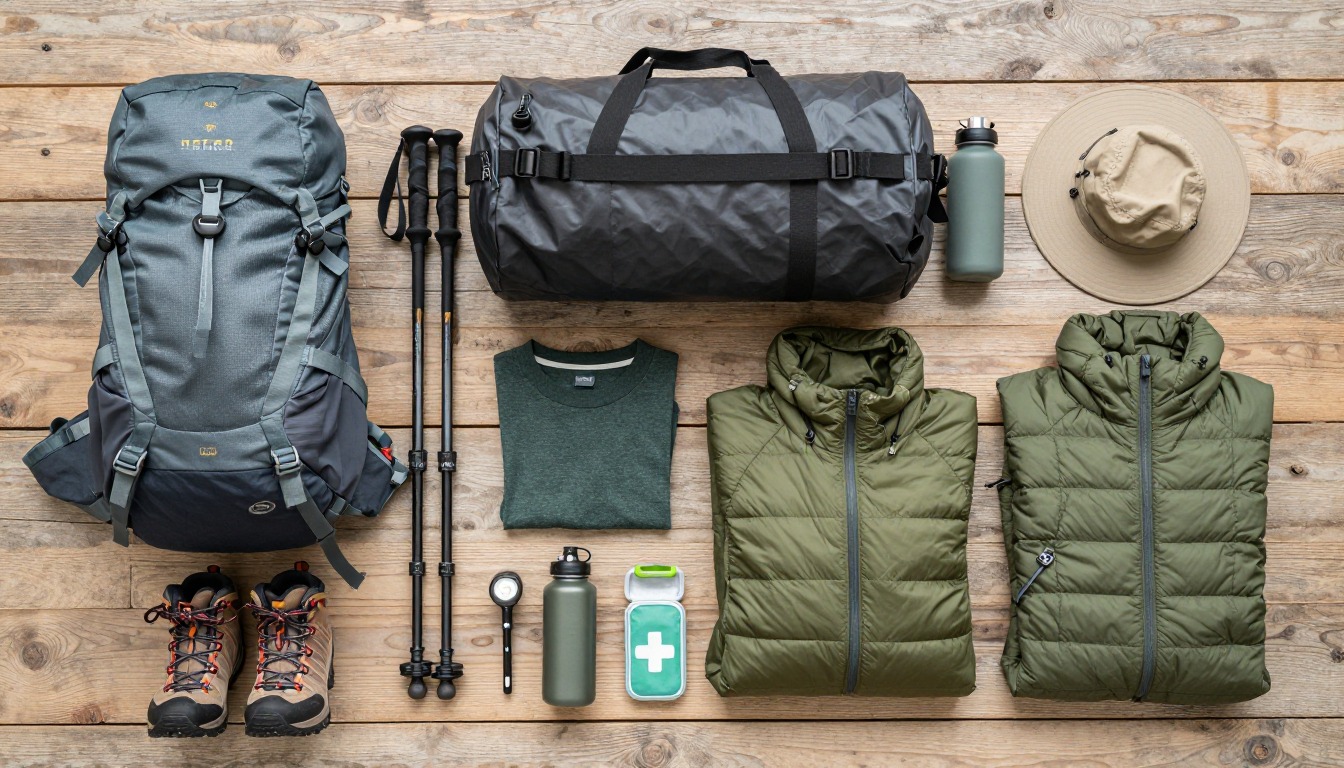
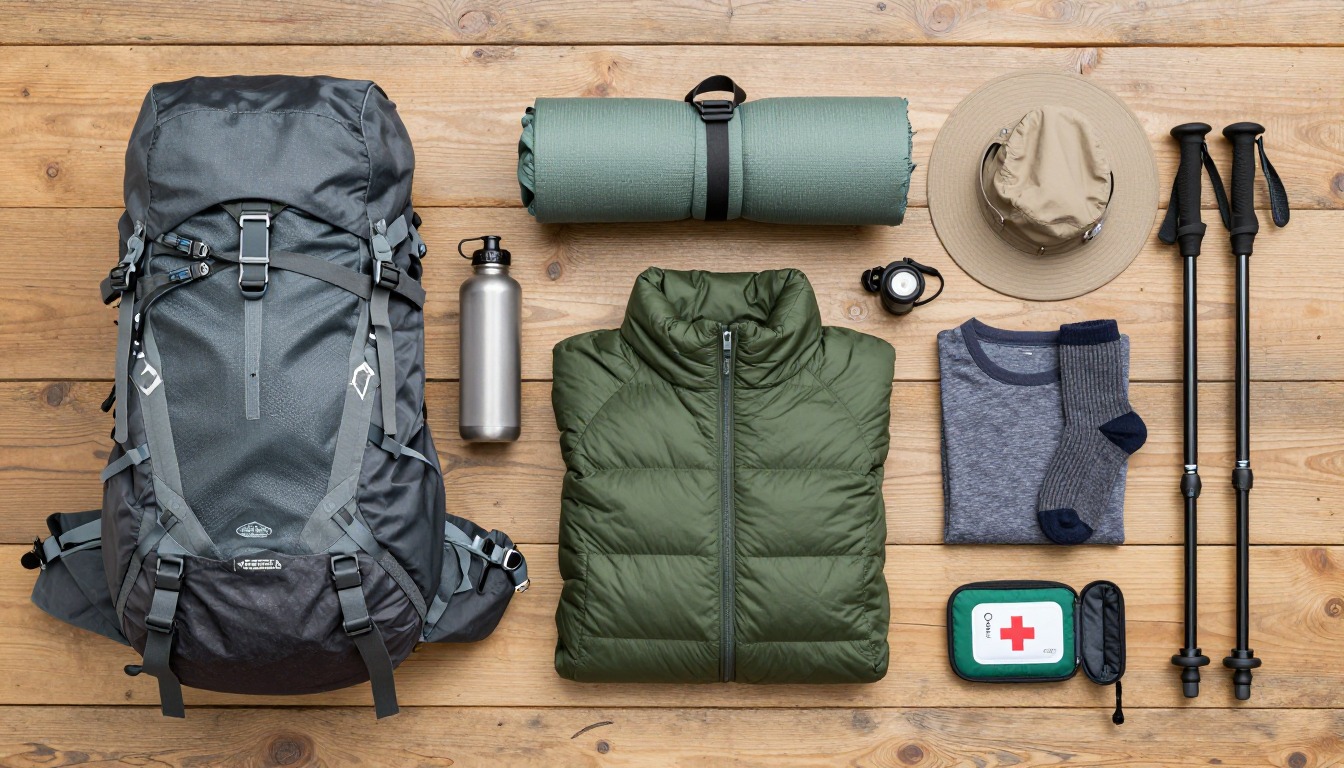
Complete gearsets for this trip
Full curated kits built for exactly this kind of hike — what to bring, why, and links to similar gear.
Lodging details are compiled from official parks, refuge associations and reservation systems and can change without notice. We publish no prices, availability or ratings — always confirm current information on the official site before booking or setting out. Product links are affiliate links: we may earn a commission at no extra cost to you; prices and availability are shown on Amazon. See our affiliate disclosure.