
Best Time to Hike Laugavegur Trail — Iceland
The best time to hike the Laugavegur Trail is roughly late June to early September, according to the season guidance from the Icelandic Touring Association. That window combines the warmest months of the year with very long daylight. Check the association for exact hut opening dates before you plan.
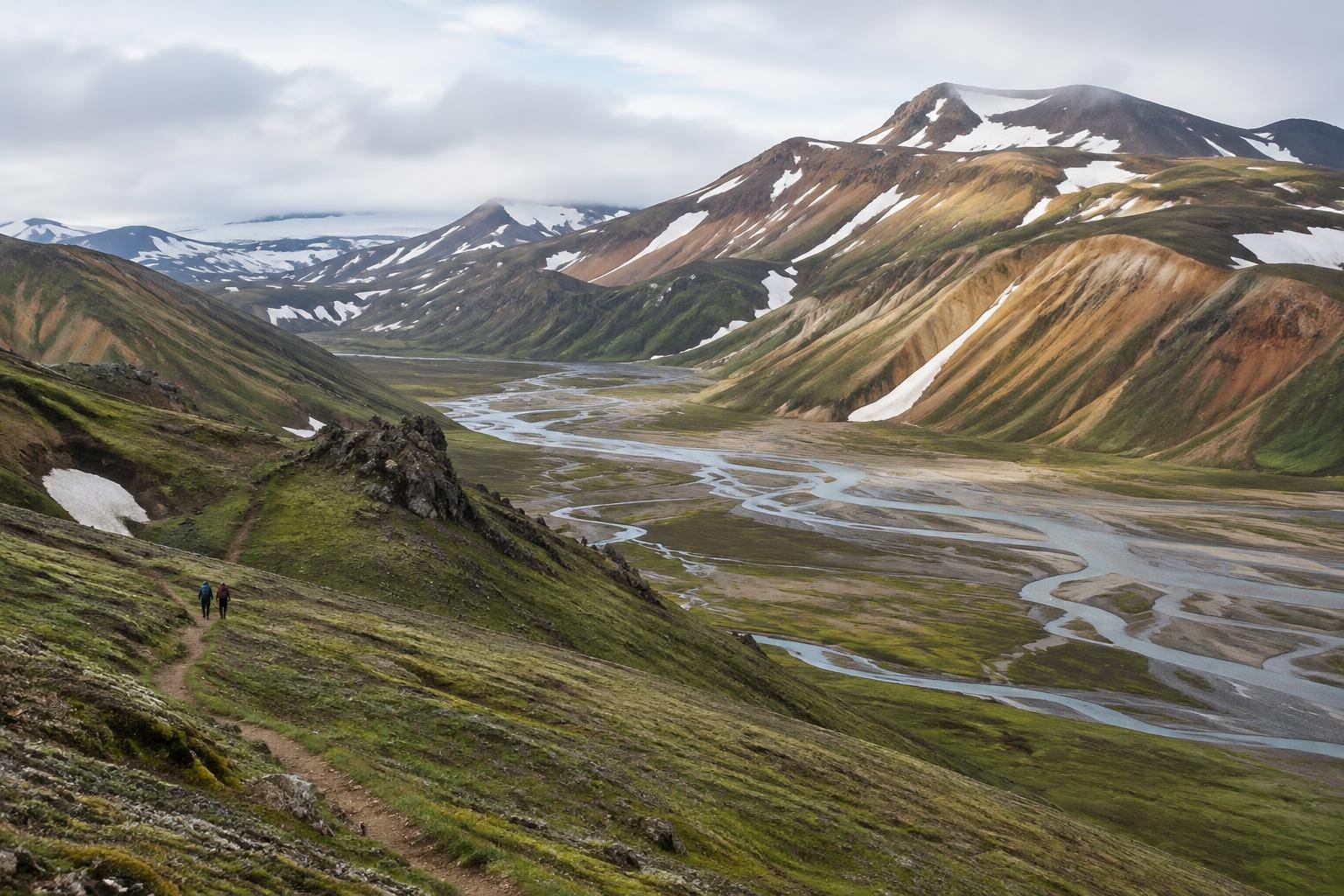
Month-by-month climate for Laugavegur Trail — Iceland
| Month | Relative warmth | Rain | Daylight |
|---|---|---|---|
| Jan | Coldest | 216 mm | 5 h |
| Feb | Coldest | 212 mm | 8.1 h |
| Mar | Coldest | 202 mm | 11.2 h |
| Apr | Cool | 151 mm | 14.6 h |
| May | Mild | 124 mm | 17.9 h |
| Jun | Warmest | 111 mm | 20.2 h |
| Jul | Warmest | 119 mm | 19.2 h |
| Aug | Warmest | 129 mm | 16 h |
| Sep | Warm | 203 mm | 12.6 h |
| Oct | Mild | 174 mm | 9.3 h |
| Nov | Cool | 180 mm | 6 h |
| Dec | Coldest | 185 mm | 3.7 h |
Modelled regional averages for 2010–2023 (rainfall) and calculated daylight hours; they describe the wider area, not a reading taken on the trail. “Relative warmth” compares each month with the warmest and coldest months of this place’s own year. It is not a temperature, and the high parts of a route are colder than the region around them.
Modelled regional averages show rainfall is lowest in June at about 111 mm and climbs to roughly 203 mm by September, so the dry stretch is short. Daylight swings enormously, from about 3.7 hours in December to about 20.2 hours in June. June, July and August are the warmest months of this area's own year, while December through March are the coldest. These are typical regional figures, not measurements taken on the trail itself.
Laugavegur Trail — Iceland season by season
Late spring · April to May
Daylight grows quickly, reaching roughly 14.6 hours in April and about 17.9 hours in May, and rainfall eases from around 151 mm to 124 mm. Warmth is only cool to mild for this place's year, and this sits ahead of the official season guidance, which points to late June onward. Hut opening dates matter here, so confirm them with the Icelandic Touring Association before relying on any early window.
Peak summer · June to August
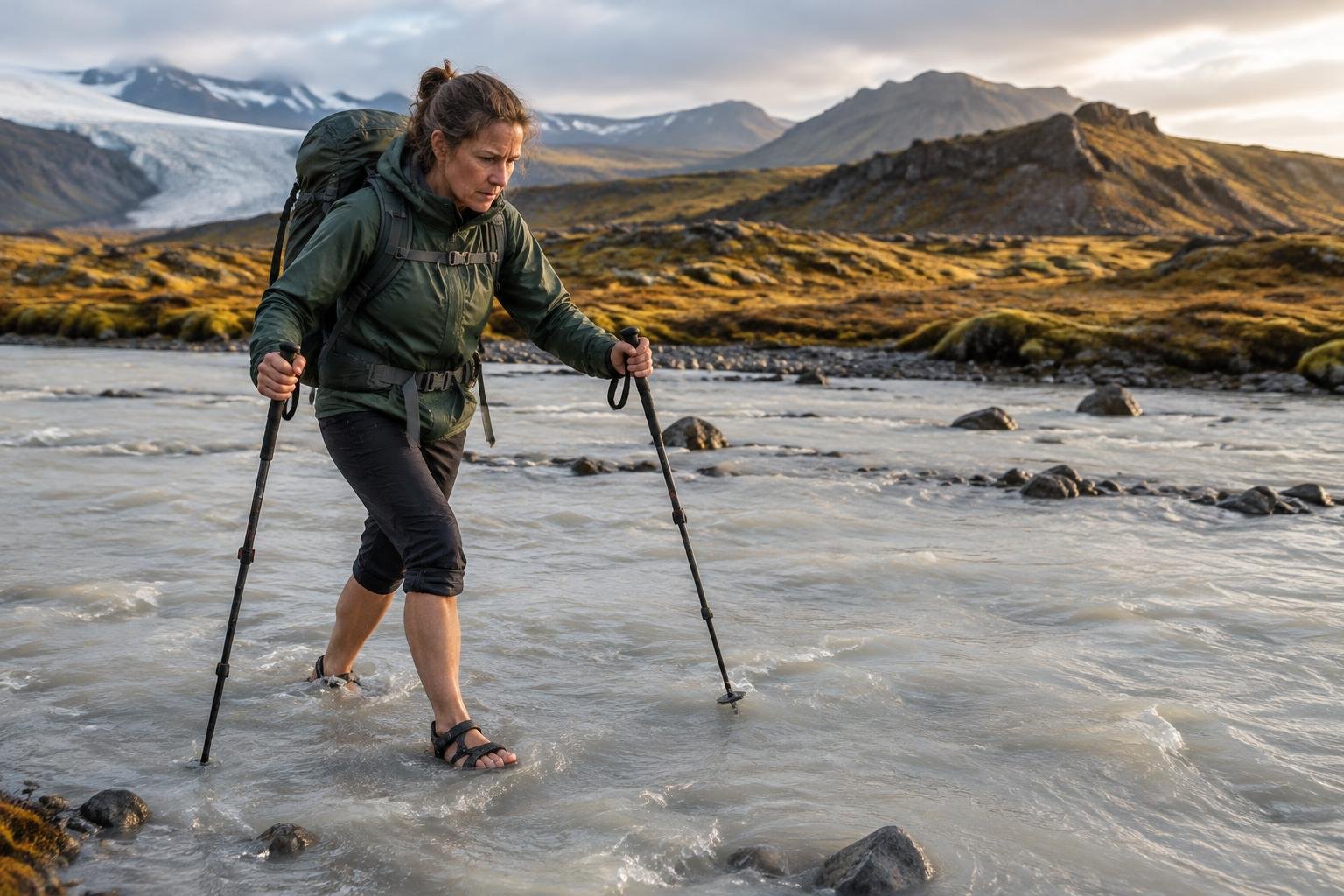
This is the core of the recommended window. June to August are the warmest months of the year here, with the lowest rainfall figures, roughly 111 to 129 mm, and long daylight of about 16 to 20 hours. That extra light gives generous margins for slow days and weather delays. Rapid weather changes and river crossings remain the real hazards, so conditions still deserve respect even in the best months.
Early autumn · September to October
September is still described as warm for this place and sits at the end of the official season guidance, but modelled rainfall jumps to about 203 mm and daylight drops to roughly 12.6 hours. By October warmth is only mild, rain is around 174 mm and daylight is about 9.3 hours. Huts and services may be winding down, so check dates with the managing association.
Winter · November to March
These are the coldest and darkest months of this area's year, with modelled rainfall typically between roughly 180 and 216 mm and daylight as short as about 3.7 hours in December. Daylight recovers to around 11.2 hours by March. The official season guidance points to summer for this trek, so these months are outside the recommended window. Confirm conditions with the managing authority.
Official season guidance
Ferðafélag Íslands (Icelandic Touring Association): Roughly late June to early September (check the Icelandic Touring Association for hut opening dates)
No trekking permit is required, but hut beds and campsites should be booked through the Icelandic Touring Association. River crossings and rapid weather changes are the real hazards.
Check current dates on fi.isWhat to pack for the season
Season drives the kit. In the summer window, pack layers you can add or shed quickly, reliable rain protection, sun cover for the long bright days and a headlamp for any shoulder-season starts. If you travel toward September or later, daylight shrinks fast, so allow for shorter hiking days and wetter conditions.
For layering, rain cover and weather planning, see hiking in rain, heat and cold.
Timing mistakes to avoid
The biggest mistake is picking a date from the calendar alone without checking hut opening dates with the Icelandic Touring Association, since the season guidance depends on them. Another is treating long summer daylight as a guarantee of good weather, when rapid weather changes and river crossings remain the real hazards. Travelers also overlook that rainfall rises toward September, so late dates deserve extra buffer days and flexible planning.
Common questions
When does the Laugavegur Trail season run?
The season guidance from the Icelandic Touring Association points to roughly late June to early September. Exact hut opening dates can shift, so confirm them with the association before you book beds or campsites. Outside that window, services and conditions may differ considerably.
Which month has the least rain?
Modelled regional averages show June as the driest month at about 111 mm, with July at roughly 119 mm and August near 129 mm. These are typical figures for the wider area rather than trail measurements, and weather can still change quickly on the day, so carry rain protection regardless.
How much daylight can I expect in summer?
Calculated daylight is about 20.2 hours in June, roughly 19.2 hours in July and about 16.0 hours in August. That is far more than winter, when December has around 3.7 hours. Long days help with pacing, though you should still plan around weather and river conditions.
Is early September a good time to hike?
Early September falls at the end of the official season guidance and is still described as warm for this place's year. However, modelled rainfall rises to about 203 mm and daylight falls to roughly 12.6 hours, so allow extra time and confirm hut availability with the Icelandic Touring Association first.
Sources
- Ferðafélag Íslands (Icelandic Touring Association) — fi.is: official season and permit guidance.
- NASA POWER (Prediction Of Worldwide Energy Resources): monthly temperature and rainfall averages, 2010–2023, from MERRA-2 reanalysis. Daylight hours are calculated from latitude.
Conditions, closures and permit rules change without notice — confirm current information with the managing authority before you go. See our editorial policy and affiliate disclosure.