
Affiliate disclosure: this page contains affiliate links. Purchases made through them may earn us a commission at no extra cost to you. See our affiliate disclosure.
In plain English
The Inca Trail is a four-day walk through the Andes mountains in Peru that ends at Machu Picchu, the ancient stone city. Much of the path is made of old stone steps laid by the Incas, so it can feel like climbing and descending a very long staircase.
The hardest part is the second day, when you climb to a pass over 4,000 meters high. At that height the air is thin, and your body can struggle, even if you are fit.1 The usual fix is to spend a few days in the city of Cusco before the hike so your body can get used to it.
You cannot just turn up and walk the trail. You book through a tour company, and a team of porters usually carries the camping gear and food. You carry a small daypack with water, rain gear, warm layers and snacks. Walking sticks help a lot on the steep way down.
What the hike is like
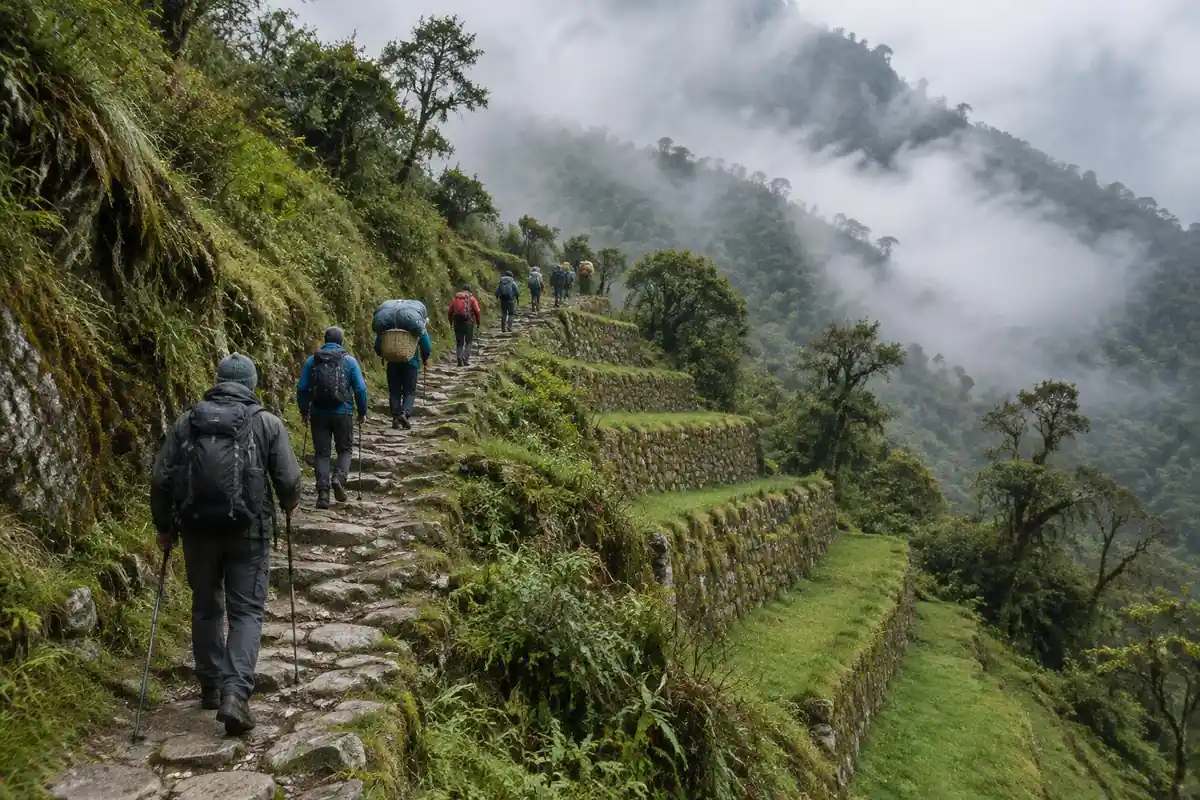
What makes this trek physically distinctive is the stone. Long sections run on Inca paving — irregular blocks, narrow flights of stairs cut into the hillside, and stretches where the trail is effectively a staircase for hours in either direction. The opening is the gentlest part, a river-valley approach on dirt track past terraced farmland. After that the route settles into a rhythm of climbing to a high pass and dropping steeply off the other side, twice over, with the air thin enough on the first pass that the stairs feel far steeper than they measure. Between the passes the landscape swings from bare, windblown grassland to dripping cloud forest, with ruins appearing on spurs and ledges beside the trail, and the final morning runs on near-level paving to the Sun Gate.
How to plan the itinerary
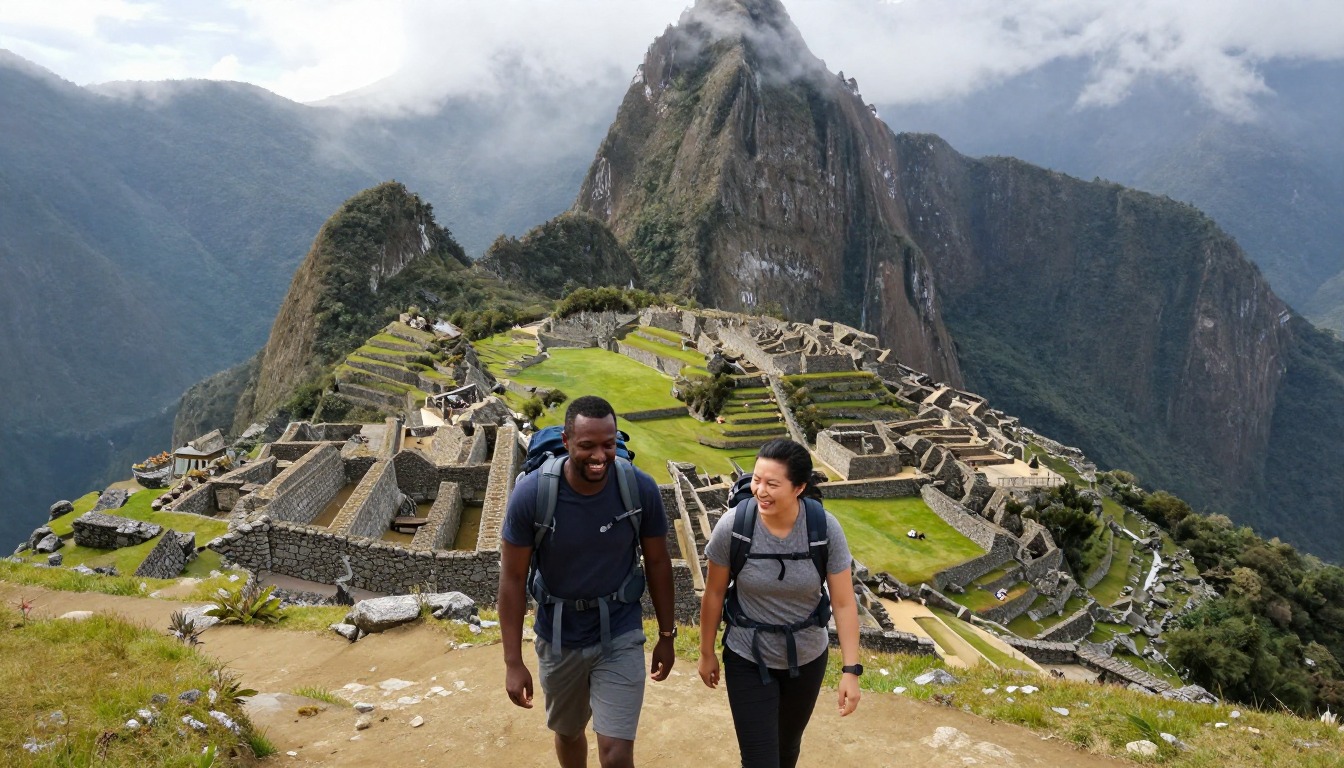
The four-day structure is standard and set by your operator, with nights at designated camps like Wayllabamba, Pacaymayo and Wiñay Wayna. Permit numbers, closure dates and trail rules are not published on Peru's official tourism site, so confirm permits and any closures (the trail is commonly reported closed in February) with a licensed operator well before you book flights. Day one is a moderate warm-up. Day two is the hardest by a clear margin — a long, sustained climb of stone stairs to the trek's highest pass, then an equally long stone descent — and most groups start early and take it slowly. Day three tends to be the favorite: more distance, but rolling rather than punishing, with the most ruins and the best cloud-forest walking. Day four begins before dawn with a short walk to the Sun Gate and the descent to Machu Picchu itself. Plan several nights at altitude in Cusco beforehand; that acclimatization does more for day two than any amount of training.
Plan this trip in 5 steps
-
Pick the right pack
Match a pack to your trip, fit and priorities.
-
Plan food & water
Calories, food weight and water for your days on trail.
-
Estimate your time
Pre-filled with this trail’s distance and climb — adjust for your pace.
Trail-specific tips
Poles with rubber tips are worth their weight here — the stone descents are long, uneven and hard on knees, and operators commonly ask for rubber tips to protect the paving (confirm the rule with yours). Wet stone is slick, and cloud forest sections stay damp even in the dry season, so tread carefully rather than quickly. Step to the inside of the trail when porters come through; they move fast under heavy loads. The common mistake is racing day two's climb to keep up with a group — walk your own pace and arrive able to enjoy day three. General altitude and conditions advice is on /trail-smarts/.
Permits & rules
The classic Inca Trail is permit-limited and in practice booked through licensed operators; permits can sell out well ahead, and the trail traditionally closes for maintenance in February, so confirm dates on the official Machu Picchu site. Independent trekking is not generally offered.
Gear suited to this hike
Matched to the terrain and conditions here. Real products — check current price on Amazon.



Altitude, not distance, decides day two
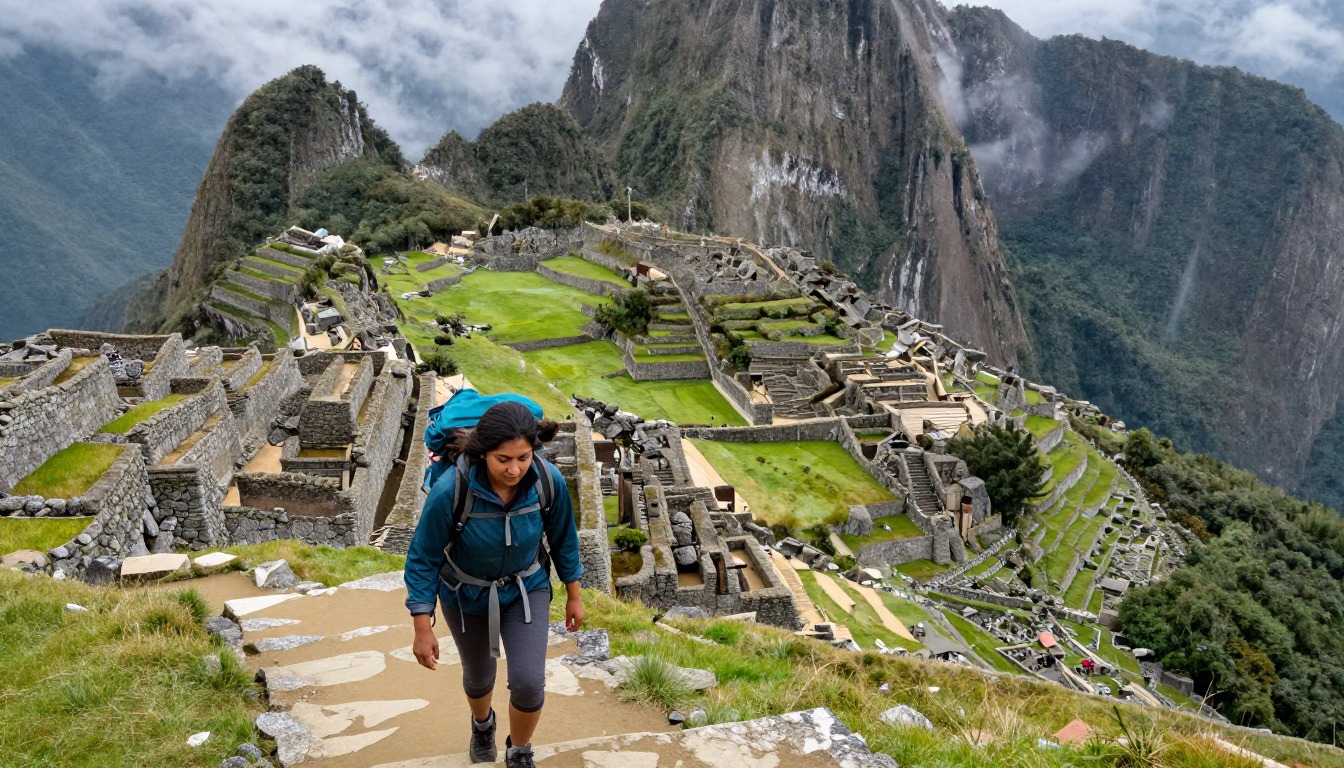
The CDC Yellow Book says any unacclimatized person sleeping at 8,000 ft or higher is at risk of altitude illness, and that physical fitness and training do not protect against it.1 Dead Woman's Pass, at 4,215 m (13,829 ft) on this page's figures, is far above that line, which is why the page's advice to spend several nights in Cusco first is the most important preparation on the list.
Headache is the main symptom of acute mountain sickness and usually starts 2 to 12 hours after arriving at altitude.1 Two CDC rules are worth knowing before day two: never go higher to sleep while having symptoms, however mild, and symptoms improve rapidly with a descent of 1,000 ft or more.1 On a fixed group itinerary, tell your guide early rather than pushing on. Worsening symptoms mean getting medical help.
Stone stairs, knees and trekking poles
The Inca Trail loses almost 3,000 m over four days on this page's figures, much of it on uneven stone steps. That is the kind of loading poles are best at easing. In a study on a 25-degree downhill ramp, hiking poles cut knee compressive and shear forces by 12 to 25%, partly because walkers leaned forward and pushed through the poles.2 A separate study found poles reduced lower-limb joint loads downhill whether hikers carried no pack, a day pack or a heavy expedition pack.4
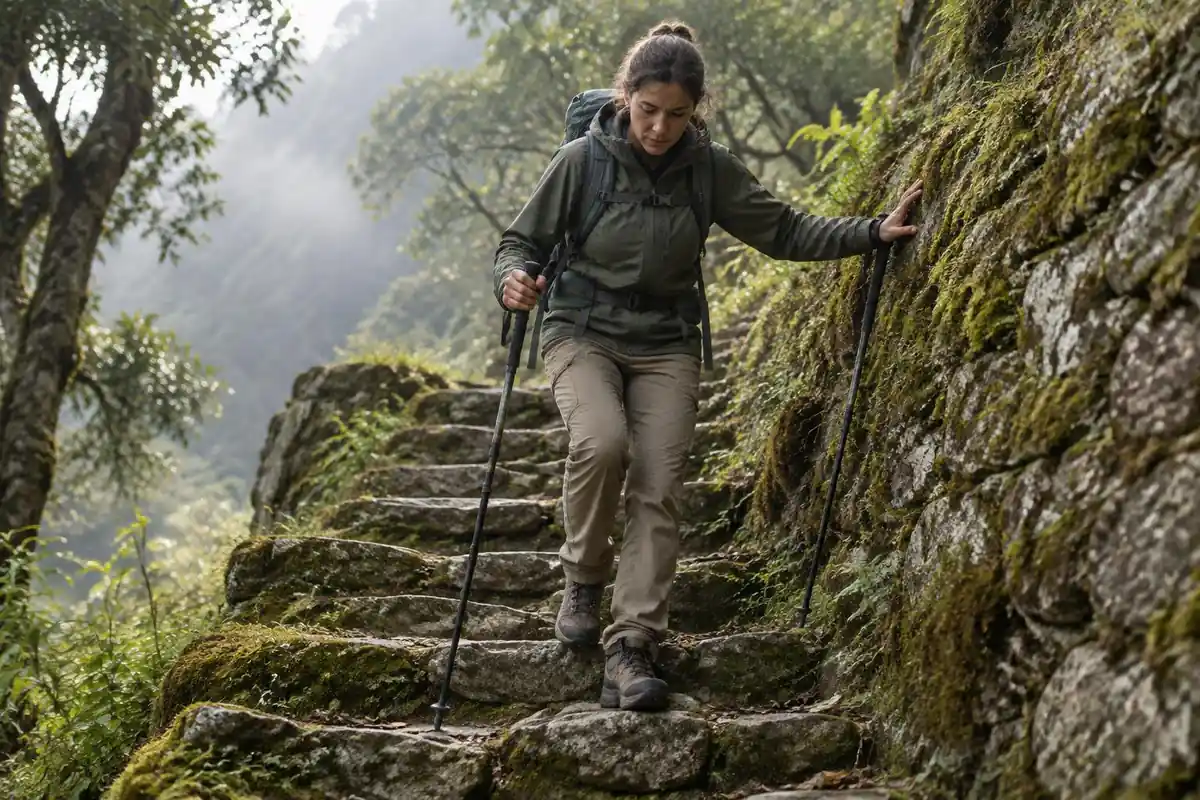
Operators commonly say bare metal tips are restricted on the paving and rubber tips are expected. That rule does not appear on Peru's tourism site, so ask your operator what they require; carrying rubber tip covers is a cheap way to be ready either way. Collapsible poles also make sense, because some stairways are steep enough that you will want both hands free.
Sun, damp and water on a mixed-climate trek
UV rises about 6% for every kilometer of elevation, so on the high pass you are exposed to roughly a quarter more UV than at sea level, and you can still burn on overcast days.5,6 A few hours later the trail drops into cloud forest, where the problem is damp rather than sun. The CDC notes hypothermia can develop above 40°F when someone is chilled by rain or sweat, so a dry warm layer in the daypack matters even in the dry season.7
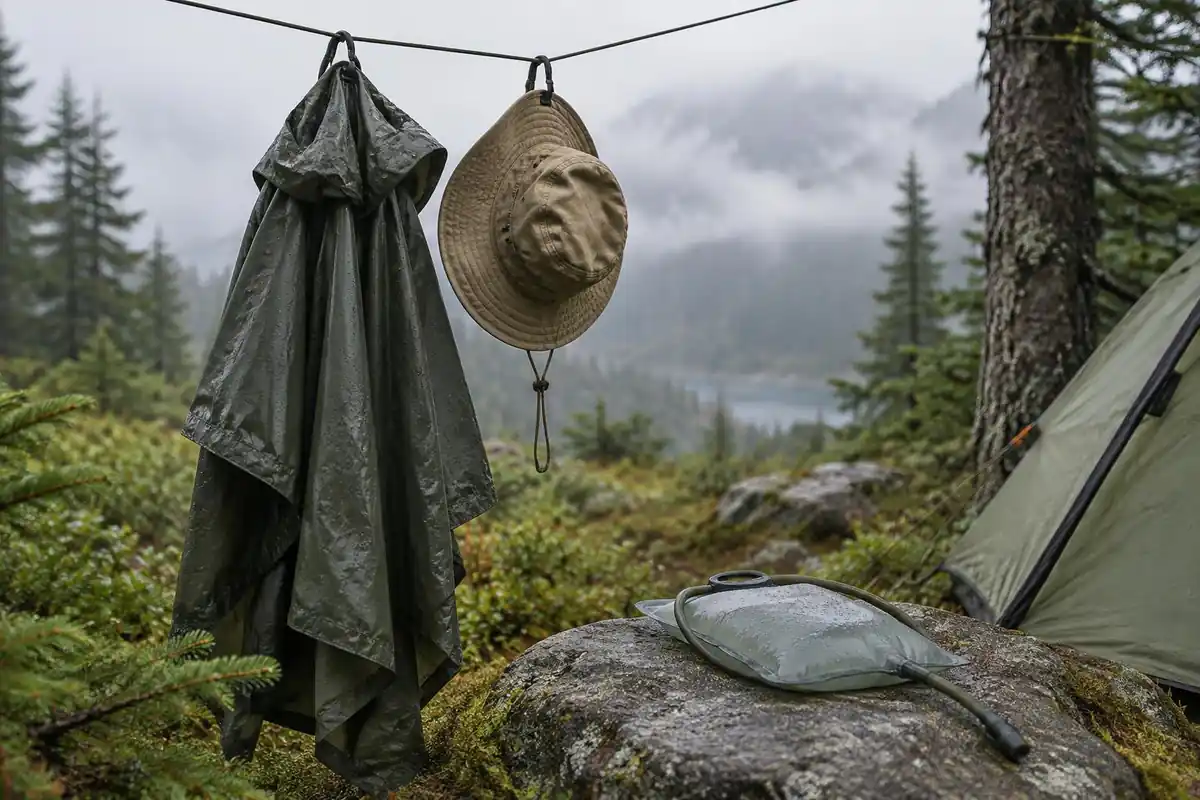
Operators usually supply boiled water, but for any water you collect yourself, the CDC says a clear stream can still carry germs and that boiling is the most reliable method, for 3 minutes above 6,500 ft.8
Finally, a note on sources. Peru's official tourism site presents Machu Picchu as one of the country's major archaeological sites, alongside Kuelap, Chavín de Huántar, Caral, Chan Chan, the Nasca Lines and Sipán, but it does not publish Inca Trail permit numbers, closure dates or trail rules.3 Treat the permit, February-closure and operator details on this page as things to confirm with a licensed operator.
Common questions
How hard is the second day, honestly?
It's the day everyone remembers. A long climb on stone stairs to the highest pass on the route, at an altitude where most visitors are still adjusting, followed by a steep stone descent that's rough on the knees. It's entirely doable at a slow, steady pace — it just rewards patience far more than fitness.
Do I need trekking poles?
Most trekkers are glad they brought them, mainly for the descents. Use poles with rubber tips fitted, since bare metal tips can damage the ancient paving and operators commonly require rubber tips; ask yours what they require. Collapsible poles are easier to stow when you want both hands on a steep stone staircase.
Will porters carry my gear?
Operators run the trek with a porter crew carrying camp equipment and food, and most offer an option for a porter to carry a portion of your personal kit as well. You'll still carry a daypack with water, layers and anything you need during the day. Arrangements and weight limits vary by operator, so confirm when you book.
What is the last morning actually like?
Short and early. Groups set off well before daylight for a modest walk along near-level paving, with one steep flight of steps near the end, arriving at the Sun Gate for the first view down onto Machu Picchu. From there it's a descent into the site itself, so the trek ends walking downhill rather than climbing.
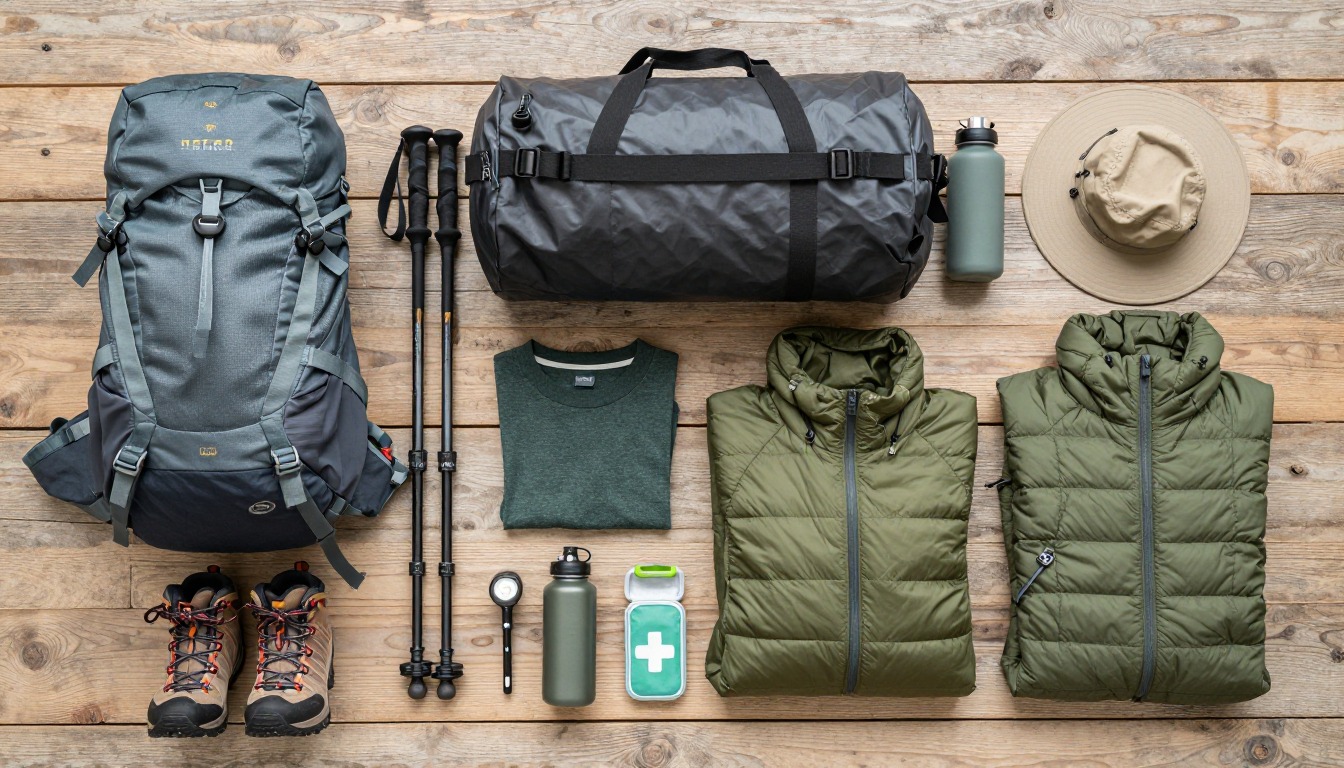
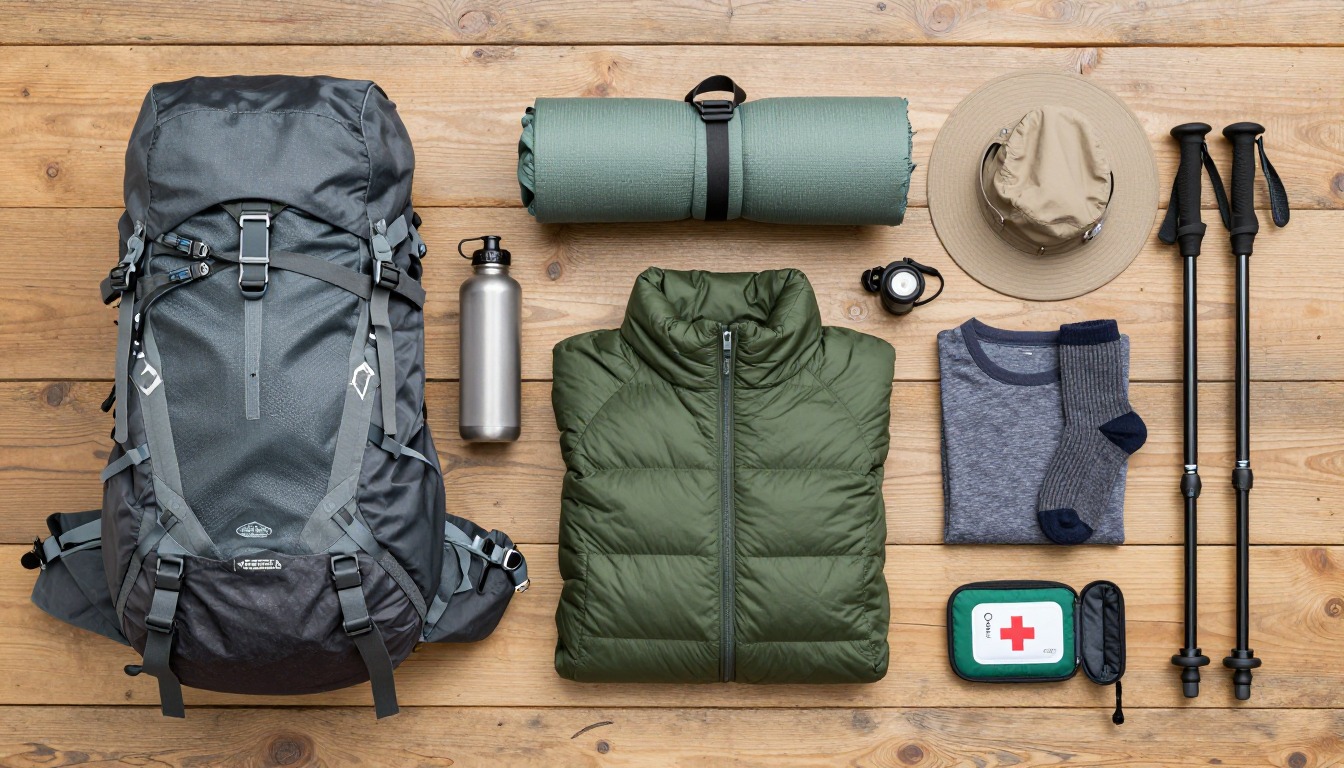
Complete gearsets for this trip
Full curated kits built for exactly this kind of hike.
Trail conditions, permits and access rules change without notice — always confirm current information on the official source above before you go. Some facts on this page are still pending owner verification and are marked accordingly. Product links and the accommodation map are affiliate links: we may earn a commission at no extra cost to you; product prices and availability are shown on Amazon, and accommodation prices on the booking site. See our affiliate disclosure.