
Backpacking Lunch & Trail Snack Ideas
Lunch on a backpacking trip rarely looks like lunch at home. Most hikers either graze steadily through the middle of the day or stop once for a proper sit-down meal, and both approaches work — they just ask for different food in your pack. This page covers how to think about trail snacks and midday eating: what travels well, what keeps you moving, and how to pack it so you can actually reach it.
Affiliate disclosure: this page contains affiliate links. Purchases made through them may earn us a commission at no extra cost to you. See our affiliate disclosure.
In plain English
Lunch on a hike is less a single meal and more a steady supply of fuel through the middle of the day. Some people snack a little every hour. Others stop once for a proper picnic. Both work; they just need different food.
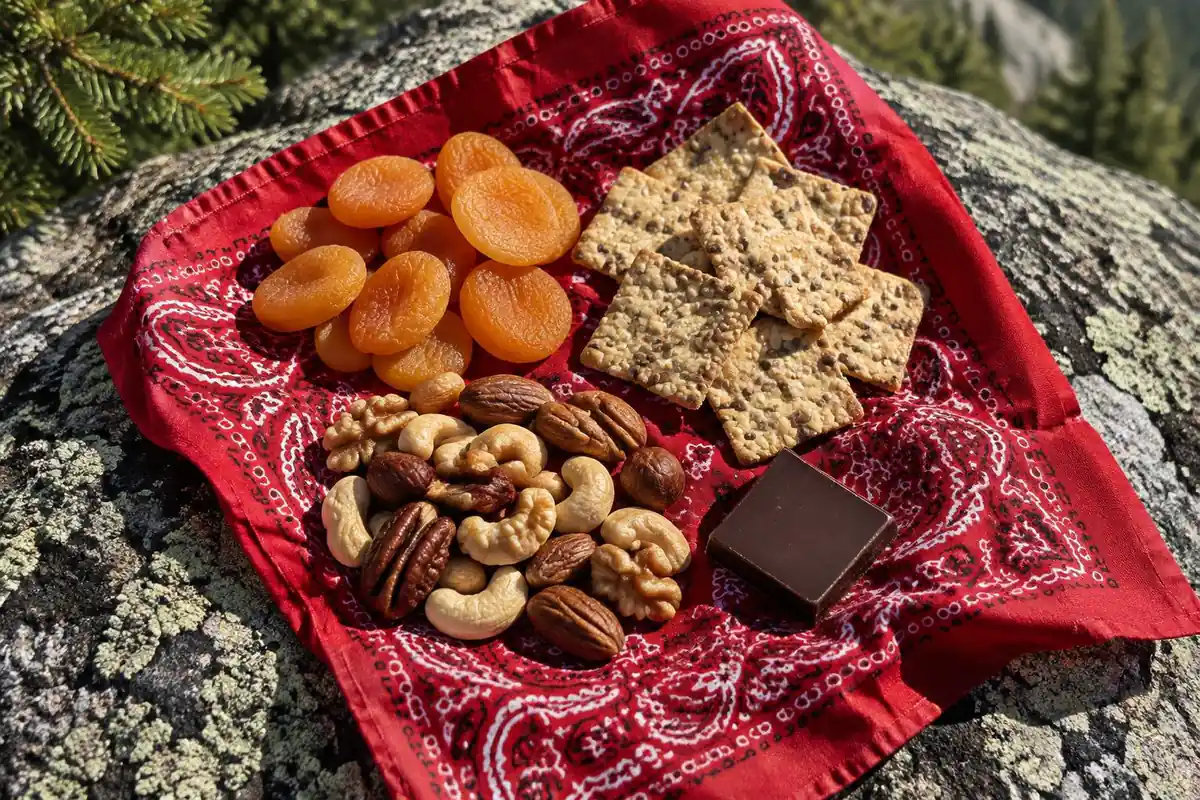
Good trail snacks are light, do not need a fridge, and survive being squashed. Nuts, dried fruit, hard cheese, jerky and crackers are classics. They give you quick energy, longer-lasting energy and some salt, all without a stove.
Salt matters more than people expect on hot days. When you sweat, you lose salt as well as water. Drinking lots of plain water while eating nothing salty can upset that balance. Salty snacks at lunch help, and so does drinking when you feel thirsty rather than forcing water down.
Who it's for
This matters most on trips where you're walking through the middle of the day — weekend overnights right up to long thru-hikes. On a one-nighter you can carry a little luxury and eat whatever sounds good. Past two or three days, weight and calorie density start deciding for you, and snack choices matter more than dinner.
What to pack
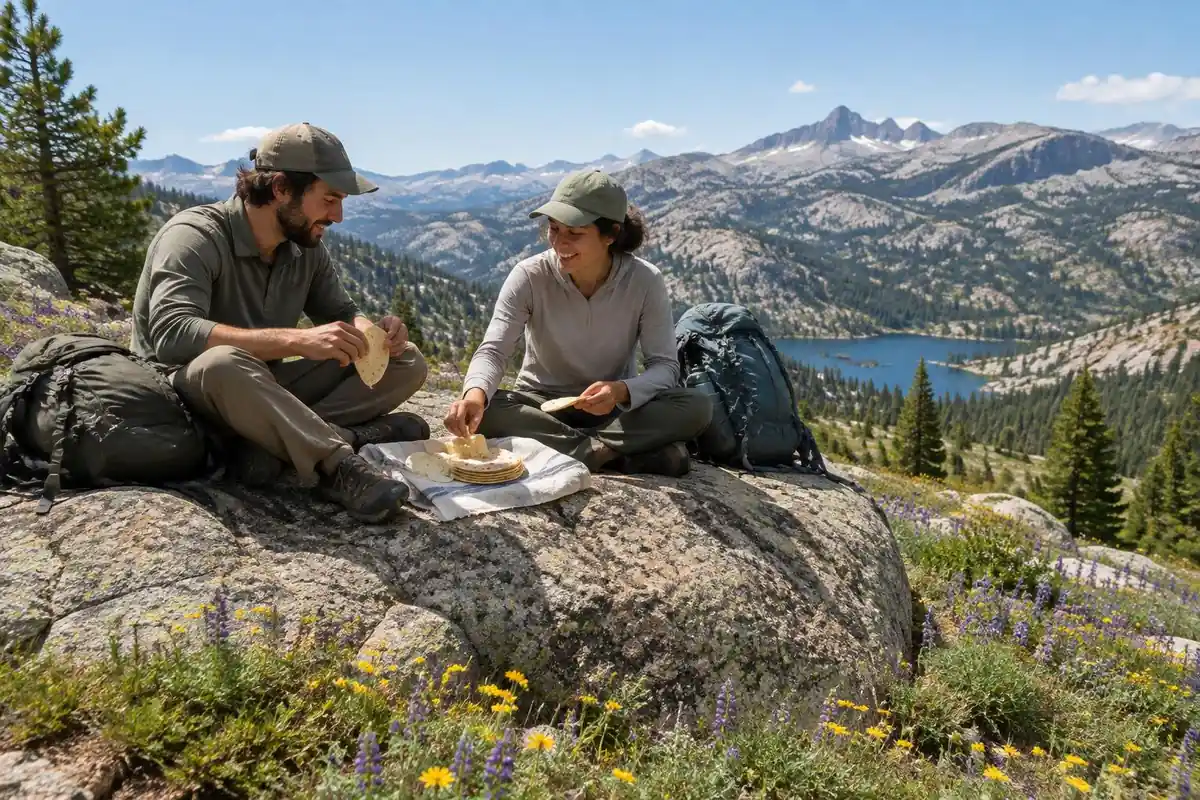
Grazing means eating small amounts every hour or two without really stopping, which keeps energy level and suits cold or buggy days. A sit-down lunch means one longer break with a fuller meal — better for morale, for drying gear in the sun, and for anyone who feels queasy eating on the move. Pick one before you shop, because they need different food.
The standard no-cook lunch is some mix of jerky or cured meat, nuts, dried fruit, hard cheese, crackers or tortillas, and a nut butter. It covers protein, fat, salt and quick carbs without a stove, and it can be eaten in five minutes or spread across three hours. Tortillas travel better than bread because they don't crush.
Fat packs more calories per gram than carbs or protein do, so fatty foods — nuts, seeds, nut butter, olive oil, chocolate — do the most work per ounce on long days. Balance them with faster carbs, since fat digests slowly and won't lift you out of a mid-afternoon slump on its own.
You lose salt as well as water when you sweat, and hot-weather hikers often find plain water alone leaves them flat or crampy. Salty snacks — pretzels, salted nuts, chips, jerky, crackers — cover this without any special product, and electrolyte drink mixes are an easy alternative. Anyone on a low-sodium diet should follow their doctor's guidance instead.
Chocolate, soft cheese, and coated bars turn to soup in a pack on a hot afternoon. For summer trips, lean on things that don't mind heat: nuts, jerky, dried fruit, pretzels, hard cheese, coconut, and dark chocolate stored deep in the pack rather than in a sun-facing pocket. Anything melted usually still tastes fine once it cools overnight.
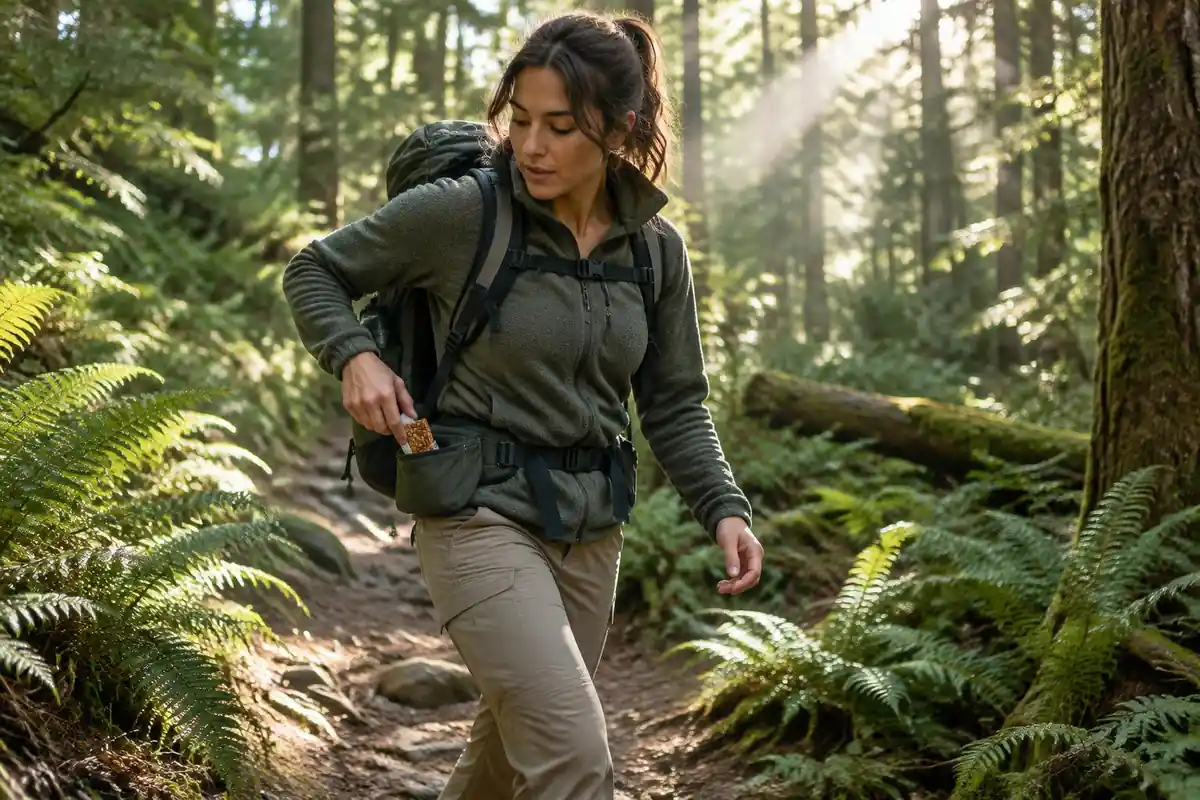
Food you have to stop and dig for is food you won't eat. Pre-portion a day's snacks into one small bag each morning and move it to a hipbelt pocket, a shoulder-strap pocket, or the very top of the pack. Open packaging at home where you can, so you aren't fighting a wrapper with cold hands or trekking poles in the way.
Salt, water and the hyponatremia trap
This page links salty snacks to hot-weather hiking, and the park service agrees. Grand Canyon's park service says hikers in heat can lose one to two quarts of water per hour, advises eating salty snacks to balance water intake, and defines hyponatremia as low blood sodium from drinking too much water and losing too much salt.1 The CDC Yellow Book notes that hyponatremia affects recreational hikers, not just endurance athletes, that sweat rates can reach 1 liter an hour, and that drinking only enough to relieve thirst helps prevent it; forcing water when you are not thirsty raises the risk.2
Sweat varies a lot between people. The American College of Sports Medicine says individual fluid plans are best because sweat rates differ widely, suggests weighing before and after exercise to estimate yours, and notes that drinks with electrolytes and carbohydrates can outperform water alone in some circumstances.4 Workplace guidance from NIOSH, written for workers rather than hikers, suggests a cup of water every 15 to 20 minutes during moderate activity in heat and no more than 6 cups an hour.5 Anyone told to limit salt should follow their doctor's advice, as the page says.
Lunch timing in the heat
The long sit-down lunch has a safety use on hot days. Grand Canyon's park service reports that most heat-illness rescues involve people hiking between 10 a.m. and 4 p.m.1 The CDC suggests doing outdoor activity during the coolest parts of the day when heat risk is high.6 A long, shaded break across the hottest hours, with salty food and water, turns lunch into part of the heat plan.
Know the warning signs while you rest. The National Weather Service lists heavy sweating, weakness, cool, pale, clammy skin, cramps, dizziness, nausea and headache as signs of heat exhaustion, and says to seek medical attention if the person vomits or symptoms worsen or last longer than an hour.7 Confusion or slurred speech with hot skin points to heat stroke, a medical emergency.7
The pounds-per-day figure on this page
The FAQ's 1.5 to 2.5 pounds of food per day and the 2,500 to 4,500 calorie range are hiking-community rules of thumb, not published standards. The research figures that exist are military: a National Academies review for the armed forces put cold-weather energy needs at 3,400 to 4,300 kcal a day.8 The pounds figure is simply calories divided by how dense your food is, so weigh your own snack bag and read the labels to find your real number.
Common questions
How much food should I pack for lunch and snacks?
A full day of backpacking is commonly estimated by hikers at roughly 2,500–4,500 calories (a rule of thumb, not an official figure), depending on effort, terrain and body size, and snacks plus lunch usually cover roughly a third to half of that. Many hikers plan by weight instead, aiming for a daily food bag in the 1.5–2.5 pound range on shorter trips.
Should I stop for a real lunch or just snack all day?
Either works, and plenty of hikers switch between them within one trip. Grazing suits cold, wet or bug-heavy days when stopping gets uncomfortable, and it keeps your stomach from handling a large meal all at once. A long lunch break is worth it when the weather is good, your feet want air, or morale needs a reset.
Do I need to store my lunch food the same way as dinner?
Yes — smellable food is smellable food, whether it's dinner or a half-eaten bar. Snacks, wrappers and trash all belong in whatever storage method your area calls for, and those rules vary widely by location. Check the current regulations for the specific land you're visiting before the trip rather than assuming.
This is general backpacking-food guidance, not a lab review — it explains what to look for and how to plan so you can choose well. See our affiliate disclosure.