
How to Train for Half Dome
To train for Half Dome, build a steady aerobic base for 4 to 8 weeks, then add a weekly hill or stair session, then carry a loaded pack on long walks, with muscle-strengthening on at least 2 days a week. Because this out-and-back day is about 14 to 16 miles with roughly 4,800 feet of gain, give stairs and step-downs real attention, then taper for the last 1 to 2 weeks.
General fitness guidance, not medical or personal training advice. If you have a health concern, an injury, or you're returning to exercise after a long break, check with a doctor first.
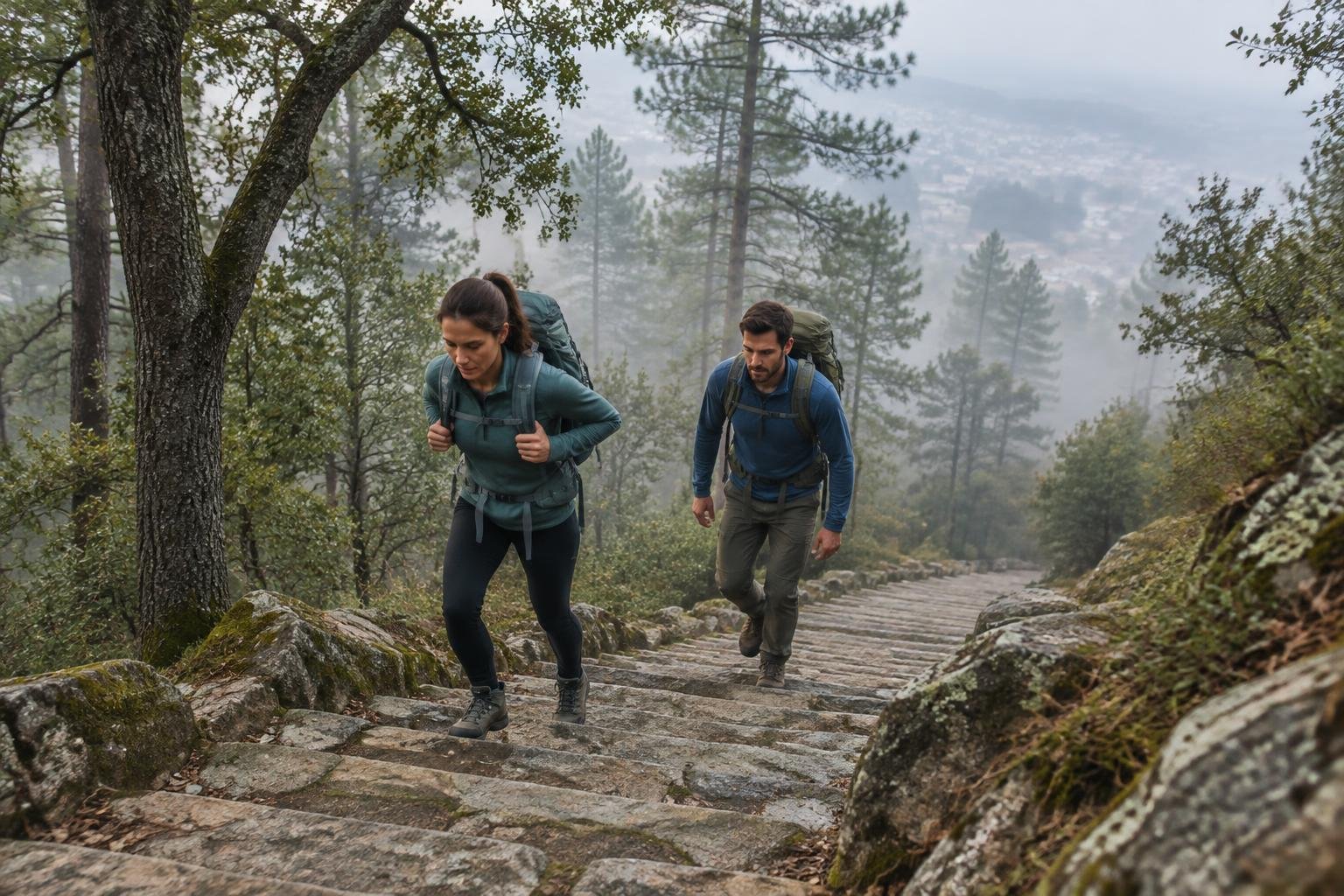
What Half Dome asks of your body
Half Dome is rated very strenuous: 14 to 16 miles round-trip with about 4,800 feet (1,460 m) of gain, out and back. Much of it is a long staircase of granite steps beside the waterfalls, then forest and sand, then bare slab, an exposed sub-dome of stone stairs and the cable section, which is climbed hand over hand. That asks for sustained climbing endurance, strong legs for the descent, and enough grip and arm strength to work the cables. A published pace or finish time is not part of what we have, so judge readiness by how you handle long, loaded days of climbing.
Start with a weekly base
The CDC suggests adults aim for 150 minutes of moderate-intensity activity a week, or 75 minutes of vigorous activity, or an equivalent mix, and it does not have to happen all at once. Treat that as the floor under your Half Dome plan, not the finish line. Split it across the week with brisk walks, and use the first few weeks to settle into that routine. If you have health concerns, ask a doctor before ramping up.
The training plan, phase by phase
Aerobic base · Weeks 1 to 4
Walk most days and build toward the CDC weekly minutes. Keep the pace conversational and let the volume grow gradually. The aim is simply to arrive at the harder weeks with a dependable aerobic base, since this route is long before it is anything else. Add one longer walk each week so your legs and feet get used to time on the trail.
Hills and stairs · Weeks 3 to 6
Add a weekly hill or stair session, because the climb here is relentless granite steps. Climb repeatedly, then walk back down slowly and deliberately. Stairs replicate downhill poorly, so include slow step-downs too. Downhill loads the quads and causes delayed soreness, and Half Dome has a long descent waiting at the end of a big day.
Loaded pack walks · Weeks 5 to 10
Start walking with a light pack, since many people begin around 10 pounds, and add weight in small steps. A commonly quoted ceiling is about 20% of body weight. Make your longest walks the biggest ones, with hills in them, and practice the food, water and layer routine you plan to use. Pack for a one-day push or an overnight, whichever you choose.
Rehearsal and taper · Weeks 9 to 12
A couple of weeks out, rehearse with two loaded walks on consecutive days, which is especially useful if you plan the split-the-climb overnight version. Then taper in the last 1 to 2 weeks, cutting volume so you arrive rested. Allow roughly 8 to 12 weeks overall for a multi-day trip with a full pack; a single day can run shorter if you already have a base.
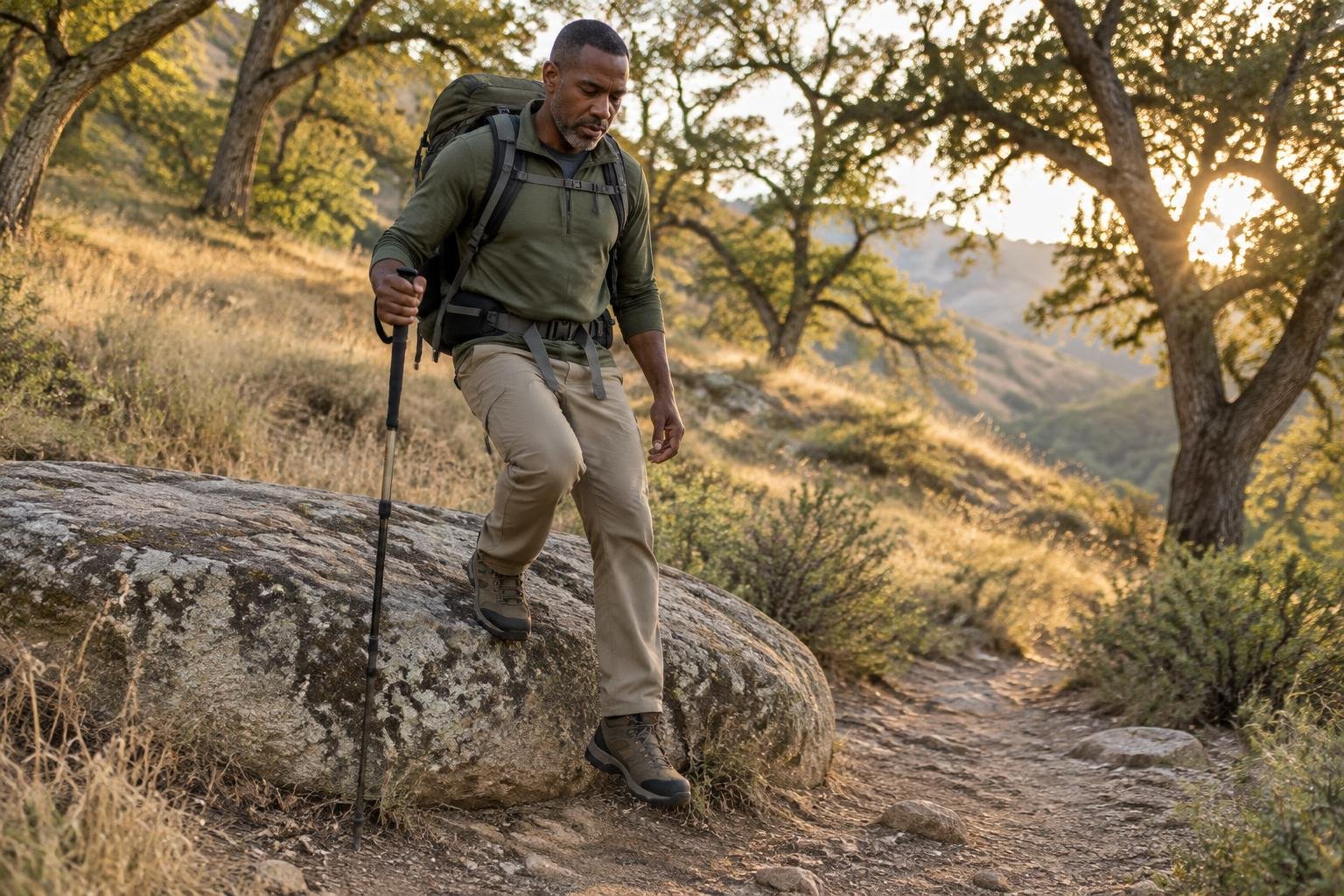
Strength work that helps on the trail
Do muscle-strengthening work on at least 2 days each week, covering all major muscle groups, as the CDC advises. For this route that means legs, hips and core first, since they carry you up thousands of feet of steps and brace you on the descent. Add slow step-downs from a bench or low step to prepare your quads for the long drop. Keep a little upper-body and grip work in the mix for the hand-over-hand cables.
Pack walks and back-to-back days
Begin light, around 10 pounds, and add weight in small steps rather than jumping up, keeping to the roughly 20% of body weight ceiling. If you plan the overnight version, your first afternoon is a moderate walk under a full pack, so rehearse that. A couple of weeks before the trip, do two loaded walks on consecutive days to learn how tired legs and shoulders feel on day two, then carry only a light pack for the summit push.
Terrain and descents
Terrain is the story here. The wet, slick rock and blown spray of the steeper Mist Trail reward steady footing, while the longer John Muir Trail trades grade for distance. Above the falls the tread turns to bare slab and cut rock steps, then an exposed sub-dome of stone stairs. Downhill loads the quads and causes delayed soreness, so practice controlled descents. Because the cables are the exposed finale, also practice your schedule: decide your turnaround time at the trailhead, not at the sub-dome.
Training mistakes to avoid
A common mistake is never walking with a loaded pack before a day this long. Another is training only on flat ground and skipping stairs and step-downs, then feeling the descent in the quads for days. Starting too late is also common, since the ledger suggests allowing 8 to 12 weeks for a multi-day trip. Finally, do not build your plan around mileage alone; build it around the cables and a firm turnaround time.
Common questions
How many weeks should I train for Half Dome?
Allow roughly 8 to 12 weeks for a multi-day trip with a full pack, starting with 4 to 8 weeks of aerobic base. A single-day push may need less if you already have a base. These are general guidelines, not medical advice.
Does stair training prepare me for the descent?
Only partly. Stairs replicate downhill poorly, so add slow step-downs to train the quads. Downhill loads the quads and causes delayed soreness, which matters after a long day of climbing granite steps.
How heavy should my training pack be?
Start light, around 10 pounds, and add weight in small steps. A commonly quoted ceiling for a loaded pack is about 20% of body weight. Match the load to what you will actually carry on the trip.
What strength work should I do?
The CDC advises muscle-strengthening on at least 2 days each week, working all major muscle groups. For Half Dome, focus on legs, hips and core, add step-downs for the descent, and keep some grip and arm work for the cables.
Sources
- Centers for Disease Control and Prevention — Physical Activity Guidelines for Adults: weekly aerobic and muscle-strengthening targets.
- U.S. National Park Service — nps.gov/yose: official route information.
- Training and fitness for hiking (this site): the general training progression this plan builds on.
See our editorial policy and affiliate disclosure.