
Hikes in Nepal
Hikes in Nepal, in this collection of four trails, are all high-altitude Himalayan treks rated moderate-strenuous to strenuous. Three are out-and-back routes and one is a loop. Official seasons cluster in autumn and spring, with October to November and March to April or May given for the routes here.
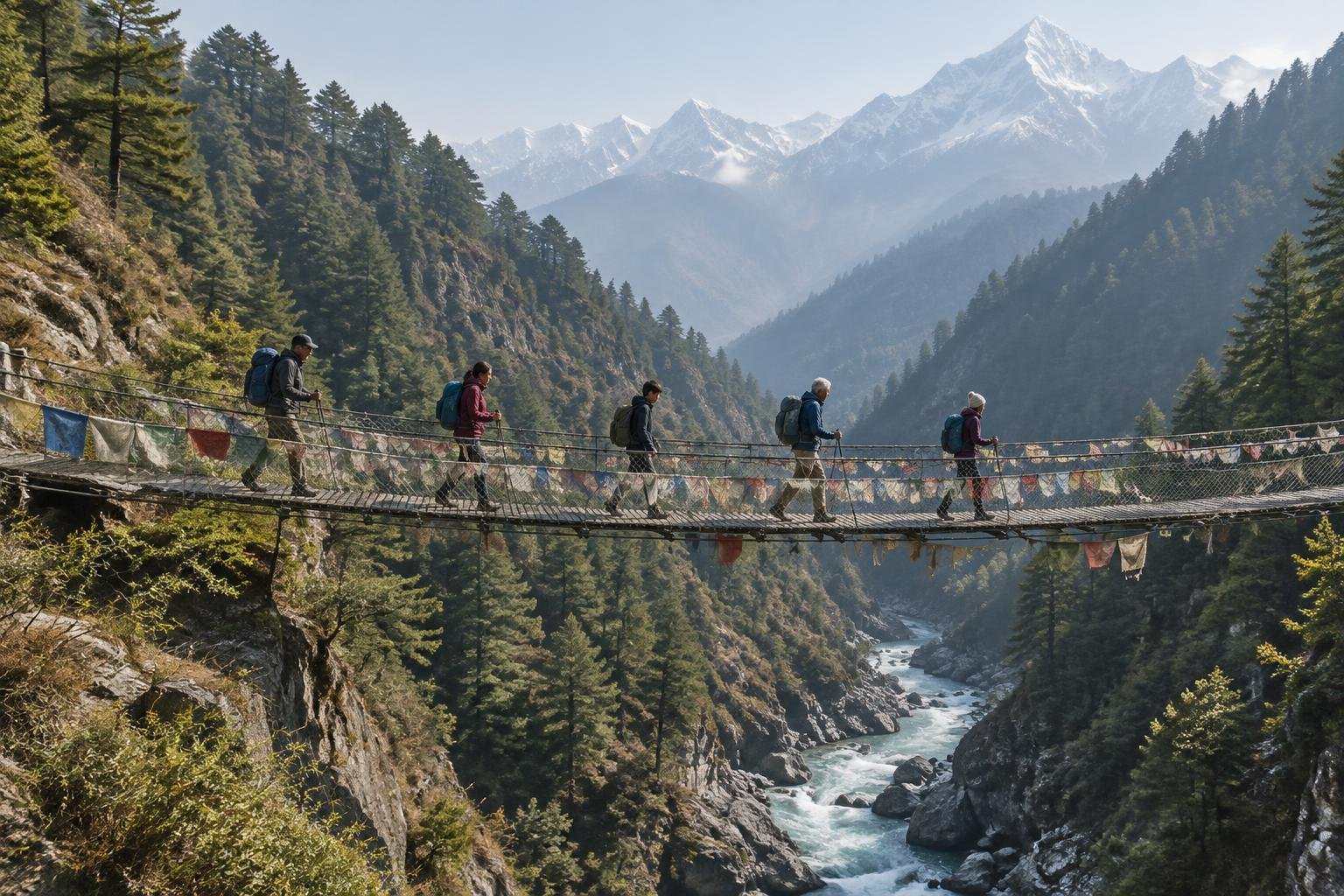
This collection gathers four Nepal treks across two regions: the Khumbu Himalaya and the Annapurna Himalaya. Two are Everest Base Camp routes from Lukla, one reaches Annapurna Base Camp in the Sanctuary, and one loops the Annapurna massif over Thorong La. None requires technical climbing, but altitude is the common thread: the high points listed run from 4,130 m at Annapurna Base Camp to 5,545 m at Kala Patthar. Most are teahouse-style treks measured in many days, and they are managed by Nepal DNPWC and local committees or by ACAP and NTNC.
The routes at a glance
-
Everest Base Camp — Namche & Tengboche · Khumbu Himalaya · Nepal
This out-and-back trek runs from Lukla (2,860 m) to Everest Base Camp (5,364 m) through Namche and Tengboche, covering roughly 130 km round trip. It is rated strenuous and high-altitude, with altitude and multi-day fatigue as the main hazards. It suits trekkers prepared for sustained effort and acclimatization time.
- Distance
- ~130 km / 80 mi round-trip from Lukla (~65 km / 40 mi one-way to Base Camp)
- Difficulty
- Strenuous / high-altitude (no technical climbing, but altitude and multi-day cumulative fatigue are the main hazards)
- Official season
- Late September to November and March to May
-
Annapurna Base Camp — the Sanctuary · Annapurna Himalaya · Nepal
This out-and-back teahouse trek leads from Nayapul or Siwai into the Sanctuary, finishing at Annapurna Base Camp at 4,130 m. It covers about 110 to 115 km round trip, typically over 7 to 12 days, and is rated moderate-strenuous. It suits trekkers wanting a Himalayan objective with no technical climbing.
- Distance
- ~110–115 km / 68–71 mi round trip (out-and-back from Nayapul/Siwai), typically walked over 7–12 days
- Difficulty
- Moderate–strenuous (teahouse trek, no technical climbing required, but sustained high altitude and long trekking days)
- Official season
- October–November and March–April
-
Annapurna Circuit — Thorong La · Annapurna Himalaya · Nepal
A loop around the Annapurna massif, this strenuous teahouse trek crosses Thorong La at 5,416 m. Total length is listed at roughly 160 to 230 km, depending on how much is walked rather than covered by jeep or bus. It suits trekkers who want a varied multi-valley route and are ready for one serious high pass.
- Distance
- ~160–230 km / 100–145 mi total route length, looped around the Annapurna massif — the wide range reflects how much of the route is done on foot vs. by jeep/bus on the now-motorable lower sections, and where trekkers start/end
- Difficulty
- Strenuous / high-altitude — teahouse trek with one serious high-altitude pass crossing at Thorong La
- Official season
- October–November and March–April
-
Everest Base Camp — Gorak Shep & Kala Patthar · Khumbu Himalaya · Nepal
This out-and-back route runs from Lukla via Gorak Shep, typically over 12 to 14 days, and adds the Kala Patthar side trip of roughly 3 to 4 km round trip. Kala Patthar reaches 5,545 m, the trek's highest point. It is rated strenuous and suits trekkers seeking the viewpoint above Base Camp.
- Distance
- ~130 km / 80 mi round trip (out-and-back from Lukla), typically walked over 12–14 days; the Gorak Shep–Kala Patthar side trip adds roughly 3–4 km round trip
- Difficulty
- Strenuous / high-altitude
- Official season
- Late September–November and March–May
How to choose between them
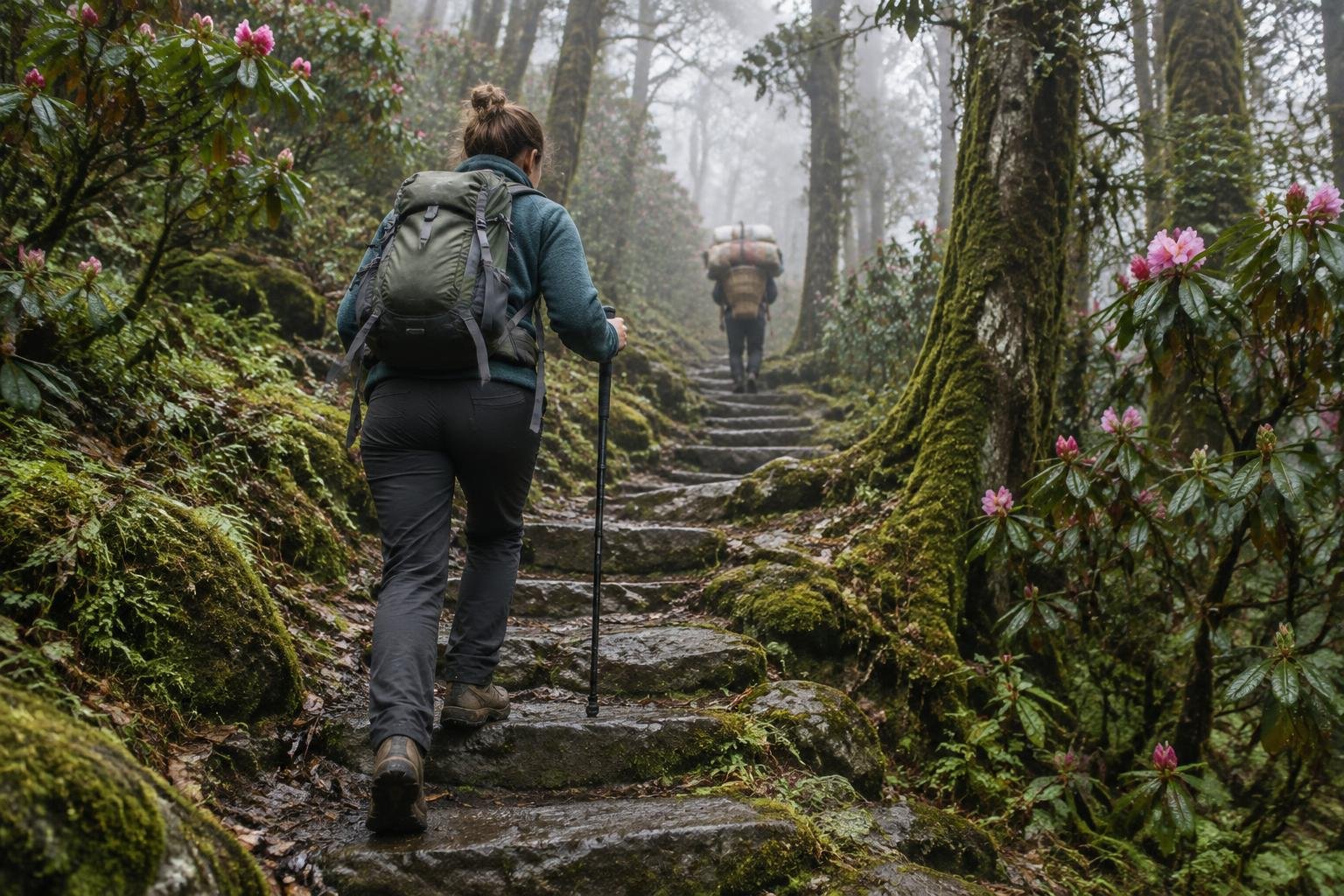
Start with route type. If you prefer a loop, the Annapurna Circuit is the only one here; the other three retrace their path. Next, weigh effort: Annapurna Base Camp is rated moderate-strenuous and peaks at 4,130 m, while the Everest routes and the Circuit are rated strenuous, with high points of 5,364 m, 5,416 m and 5,545 m. Both Everest options share the Lukla start; the Gorak Shep and Kala Patthar version adds a viewpoint climb of roughly 150 to 200 m beyond Base Camp. Compare trip length too, since the listed durations run from 7 to 14 days.
When to go
The official seasons for these four trails fall in two windows. Both Annapurna routes list October to November and March to April. The two Everest Base Camp routes list late September to November and March to May, a little wider at the edges. In practice, that places every trek in autumn or spring. Conditions and access can change, so confirm current dates and any requirements with the managing authority, ACAP and NTNC for Annapurna or Nepal DNPWC and local committees for Khumbu, before you plan.
Common questions
How many hikes are in this Nepal collection?
There are four trails: two Everest Base Camp routes in the Khumbu Himalaya, plus Annapurna Base Camp and the Annapurna Circuit in the Annapurna Himalaya. Three are out-and-back and one is a loop.
Do these Nepal treks require technical climbing?
The supplied details say none of the routes requires technical climbing. The main hazards are altitude and sustained, multi-day fatigue, so the difficulty ratings run from moderate-strenuous to strenuous and high-altitude.
Which Nepal trek here has the highest point?
Kala Patthar on the Everest Base Camp route via Gorak Shep reaches 5,545 m (18,192 ft), the highest listed. Thorong La on the Annapurna Circuit follows at 5,416 m, then Everest Base Camp at 5,364 m.
When is the official trekking season for these routes?
Annapurna routes list October to November and March to April. Everest routes list late September to November and March to May. Confirm exact dates with the managing authority before planning.
Sources
Facts come from each route's official managing authority, linked on its trail guide:
- Nepal DNPWC & local committees — ntb.gov.np (Everest Base Camp — Namche & Tengboche)
- ACAP / NTNC — ntb.gov.np (Annapurna Base Camp — the Sanctuary)
- ACAP / NTNC — ntb.gov.np (Annapurna Circuit — Thorong La)
- Nepal DNPWC & local committees — ntb.gov.np (Everest Base Camp — Gorak Shep & Kala Patthar)
Conditions, permits and access rules change without notice — confirm current information with each managing authority before you go. See our editorial policy.