
Best Time to Hike Everest Base Camp — Gorak Shep & Kala Patthar
The best time to hike Everest Base Camp and Kala Patthar is late September through November and again from March through May, matching the managing authority's guidance. These windows pair the lowest modeled rainfall with usable daylight, while the summer months bring the heaviest rain of the year.
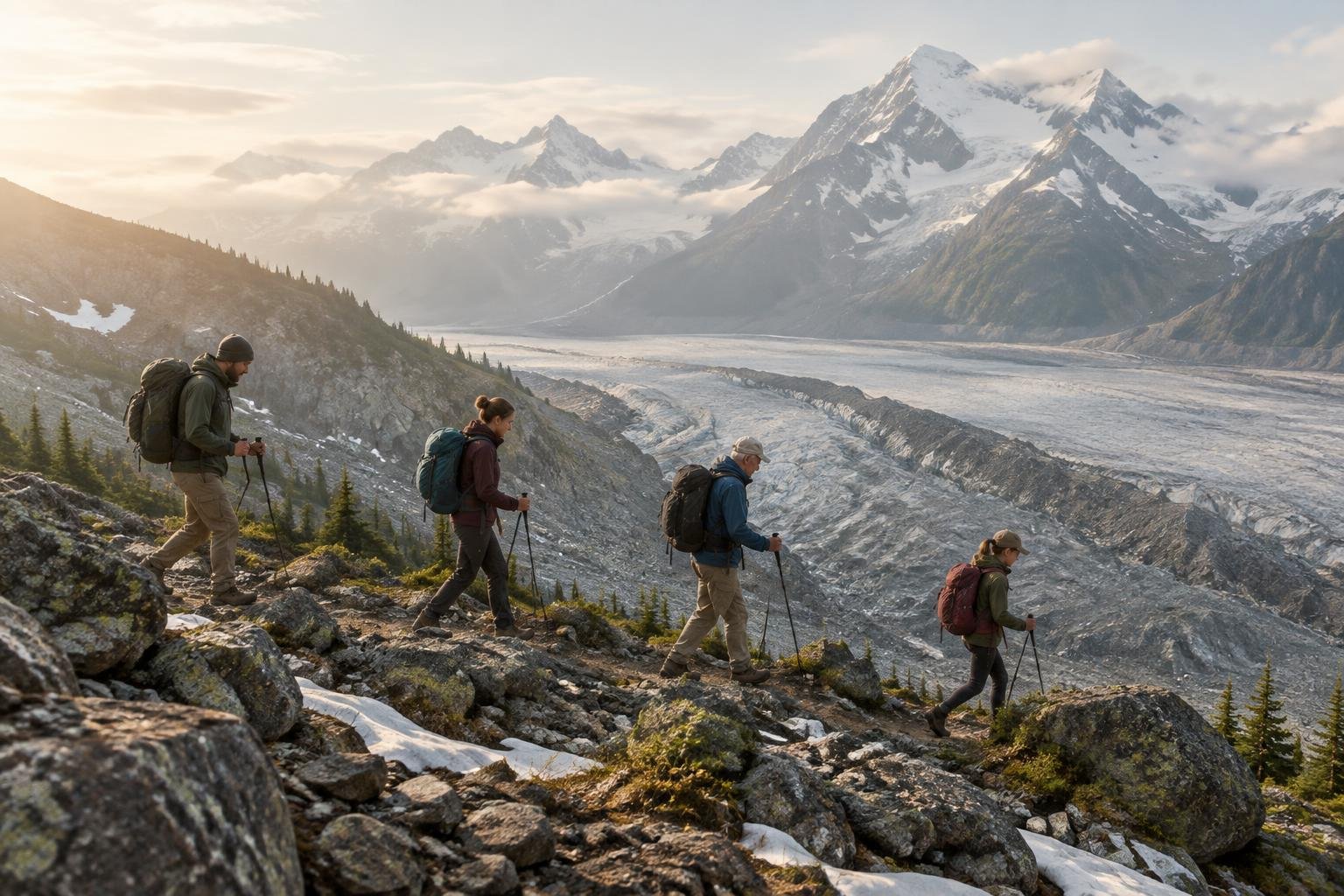
Month-by-month climate for Everest Base Camp — Gorak Shep & Kala Patthar
| Month | Relative warmth | Rain | Daylight |
|---|---|---|---|
| Jan | Coldest | 3 mm | 10.4 h |
| Feb | Coldest | 9 mm | 11 h |
| Mar | Cool | 15 mm | 11.8 h |
| Apr | Mild | 27 mm | 12.7 h |
| May | Warm | 57 mm | 13.4 h |
| Jun | Warmest | 83 mm | 13.8 h |
| Jul | Warmest | 176 mm | 13.6 h |
| Aug | Warmest | 171 mm | 13 h |
| Sep | Warmest | 97 mm | 12.2 h |
| Oct | Mild | 26 mm | 11.3 h |
| Nov | Cool | 1 mm | 10.6 h |
| Dec | Coldest | 3 mm | 10.2 h |
Modelled regional averages for 2010–2023 (rainfall) and calculated daylight hours; they describe the wider area, not a reading taken on the trail. “Relative warmth” compares each month with the warmest and coldest months of this place’s own year. It is not a temperature, and the high parts of a route are colder than the region around them.
The monthly numbers show a sharp wet season. Rainfall peaks in July at 176 mm and August at 171 mm, with June (83 mm) and September (97 mm) still wet, while November (1 mm), January (3 mm) and December (3 mm) are the driest. Daylight swings from about 10.2 hours in December to 13.8 hours in June. Relative to this place's own year, January, February and December are the coldest months, and June through September are the warmest.
Everest Base Camp — Gorak Shep & Kala Patthar season by season
Spring · March to May
This is one of the two recommended windows. Rainfall is modest in March (15 mm) and April (27 mm), then climbs to 57 mm in May as the monsoon approaches. Daylight grows from about 11.8 to 13.4 hours, giving more time on the trail. March is relatively cool, April mild and May warm for this region, so conditions ease as the season goes on. Because this is the highest stretch of the trek, still acclimatize carefully and confirm current conditions with the managing authority.
Summer monsoon · June to August
These months fall outside the official season guidance, and the numbers show why. Rainfall reaches 83 mm in June, 176 mm in July and 171 mm in August, the wettest stretch of the year. Daylight is at its longest, around 13 to 13.8 hours, and these are the warmest months relative to the rest of the year. Heavy rain on a demanding high-altitude route is a real consideration, so anyone weighing this period should check with the managing authority first.
Autumn · September to November
Late September through November is the other recommended window. September is still fairly wet at 97 mm, which is why the guidance points to the later part of the month. Rainfall then drops to 26 mm in October and just 1 mm in November, among the driest readings of the year. Warmth eases from mild in October to cool in November, and daylight shortens from about 12.2 to 10.6 hours, so plan your daily pacing around earlier sunsets.
Winter · December to February
Winter is the coldest part of this place's year, and December, January and February sit outside the recommended windows. Rainfall is very low, between 3 and 9 mm, but daylight is at its shortest at roughly 10.2 to 11 hours. The numbers do not capture conditions at the highest points, so treat this period with caution and confirm trail and weather guidance with the managing authority before committing to a date.
Official season guidance
Nepal DNPWC & local committees: Late September–November and March–May
Beyond the Sagarmatha National Park and Khumbu Pasang Lhamu permits, this is the highest, hardest stretch of the trek. Kala Patthar gives the classic Everest view. Acclimatize on the way up and watch closely for altitude sickness.
Check current dates on ntb.gov.npWhat to pack for the season
Pack for the season you choose, using layers you can add or remove as the day changes. Spring and autumn windows still call for solid rain protection, especially near the edges of the monsoon. Bring sun protection for the long daylight hours, and carry a headlamp, since shorter autumn days can push you into early mornings or evenings.
For layering, rain cover and weather planning, see hiking in rain, heat and cold.
Timing mistakes to avoid
A common mistake is picking a date from a single month's numbers instead of the full window in the managing authority's guidance. Another is treating the shoulder months, such as early September or late May, as equal to the core weeks. Because the final stretch is the highest and hardest part of the trek, rushing the schedule to fit a date also works against acclimatization. Check the permit rules and current conditions well before you travel.
Common questions
Which months are officially best for this hike?
The managing authority's guidance points to late September through November and again from March through May. These windows line up with the lowest modeled rainfall outside winter, though conditions still change, so confirm details with Nepal DNPWC and the local committees before you go.
Why is the summer monsoon not recommended?
The modeled rainfall peaks in July at 176 mm and August at 171 mm, with June and September also wet. Heavy rain on a high, demanding route adds difficulty, which is why the official season guidance steers hikers to spring and autumn instead of mid-summer.
Does daylight change much through the year?
Yes. Daylight runs from about 10.2 hours in December to roughly 13.8 hours in June. In the autumn window it shortens from about 12.2 hours in September to 10.6 in November, so plan earlier starts and carry a headlamp for dark mornings or evenings.
Is winter a good time to go?
Winter, from December to February, sits outside the recommended windows. Rainfall is very low, but these are the coldest months of the year here and daylight is shortest. The figures do not describe conditions at the highest points, so check with the managing authority before planning.
Sources
- Nepal DNPWC & local committees — ntb.gov.np: official season and permit guidance.
- NASA POWER (Prediction Of Worldwide Energy Resources): monthly temperature and rainfall averages, 2010–2023, from MERRA-2 reanalysis. Daylight hours are calculated from latitude.
Conditions, closures and permit rules change without notice — confirm current information with the managing authority before you go. See our editorial policy and affiliate disclosure.