
Best Time to Hike Bhutan — Snowman Trek & Tiger’s Nest
The best time to hike Bhutan's Snowman Trek is autumn, September to October, according to the official season guidance. The Tiger's Nest day hike is open year-round. Rainfall drops sharply from September into October, which is why autumn stands out for the long high trek.
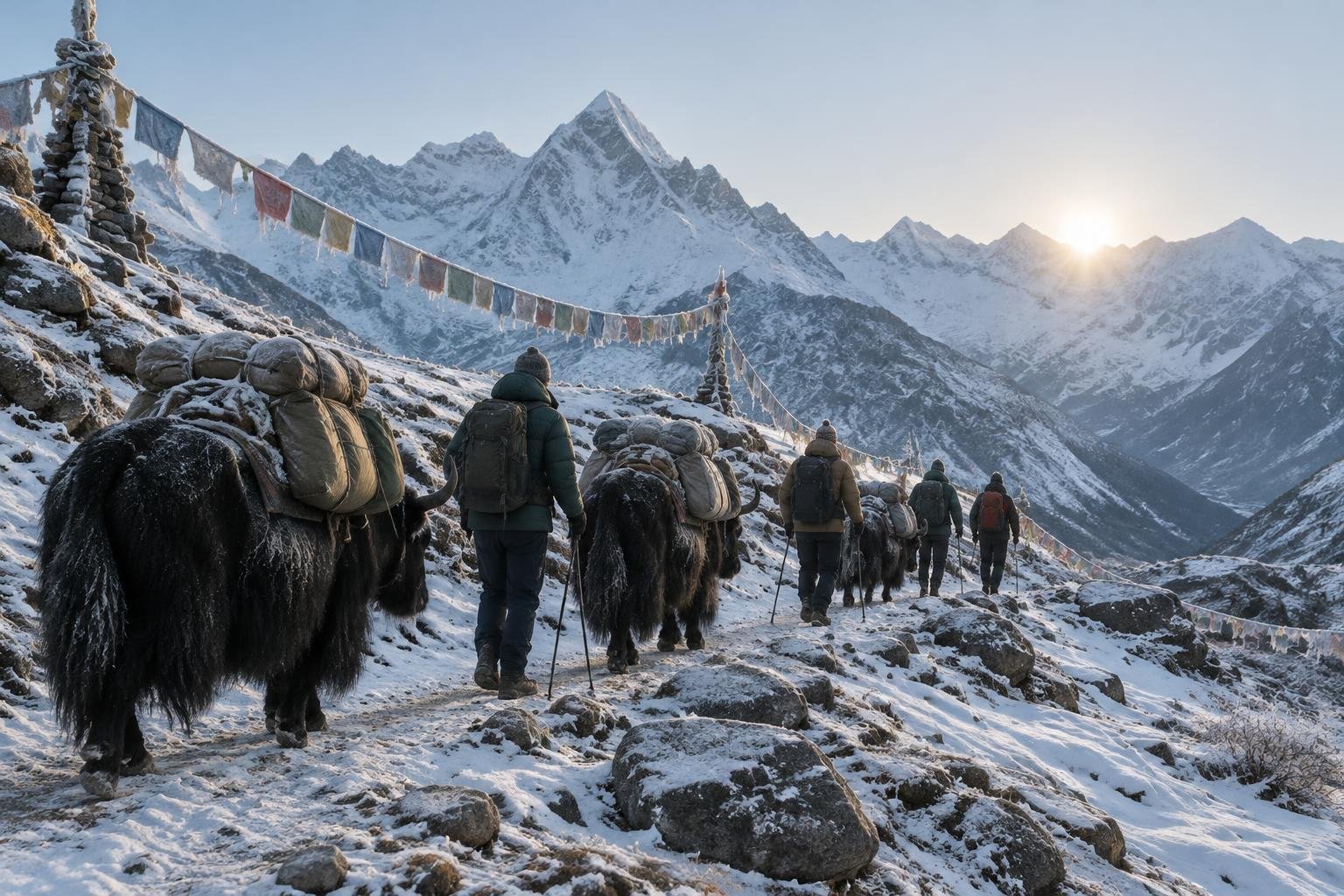
Month-by-month climate for Bhutan — Snowman Trek & Tiger’s Nest
| Month | Relative warmth | Rain | Daylight |
|---|---|---|---|
| Jan | Coldest | 4 mm | 10.4 h |
| Feb | Coldest | 15 mm | 11.1 h |
| Mar | Cool | 44 mm | 11.8 h |
| Apr | Mild | 84 mm | 12.7 h |
| May | Warm | 136 mm | 13.4 h |
| Jun | Warmest | 215 mm | 13.7 h |
| Jul | Warmest | 289 mm | 13.6 h |
| Aug | Warmest | 246 mm | 13 h |
| Sep | Warmest | 163 mm | 12.2 h |
| Oct | Mild | 54 mm | 11.3 h |
| Nov | Cool | 2 mm | 10.6 h |
| Dec | Coldest | 4 mm | 10.3 h |
Modelled regional averages for 2010–2023 (rainfall) and calculated daylight hours; they describe the wider area, not a reading taken on the trail. “Relative warmth” compares each month with the warmest and coldest months of this place’s own year. It is not a temperature, and the high parts of a route are colder than the region around them.
The numbers show a strong monsoon-style rhythm. Rainfall peaks in July at 289 mm and stays heavy through June (215 mm) and August (246 mm), then falls from 163 mm in September to 54 mm in October and just 2 mm in November. January is the driest of the cold months at 4 mm. June to September are the relatively warmest months of this place's year, while December to February are the coldest. Daylight swings from about 10.3 hours in December to 13.7 hours in June. These are modelled regional averages, not trail measurements.
Bhutan — Snowman Trek & Tiger’s Nest season by season
Winter · December to February
Winter is the coldest stretch of the year here, with daylight at its shortest, roughly 10.3 to 11.1 hours. Rainfall is very low, between 4 mm and 15 mm a month on average, so the Tiger's Nest day hike is still available, which fits the official year-round guidance. The Snowman is a different matter: the official guidance points to autumn for that trek, and high-altitude winter conditions should be checked with the Department of Tourism and your accredited operator before you plan anything.
Spring · March to May
Spring warms from cool in March to mild in April and warm in May, and daylight stretches from about 11.8 to 13.4 hours. Rainfall climbs steadily, from 44 mm in March to 84 mm in April and 136 mm in May, so afternoons turn wetter as the season goes on. This is a workable window for the Tiger's Nest day hike, which the official guidance lists as year-round. For the Snowman, the official season guidance names autumn instead, so confirm spring suitability with the managing authority.
Summer monsoon · June to August
These are the relatively warmest months of this place's year and also the wettest on average, with 215 mm in June, 289 mm in July and 246 mm in August. Daylight is longest, around 13 to 13.7 hours, but heavy rain is the defining feature. The Tiger's Nest remains an option year-round according to the official guidance, though wet conditions on a steep route call for care. The Snowman is not a summer trek in the official guidance, which points to autumn, so check with the authority.
Autumn · September to November
Autumn is the official recommendation for the Snowman, and the numbers show why. Rainfall eases from 163 mm in September to 54 mm in October and about 2 mm in November, while daylight shortens from 12.2 to 10.6 hours. September is still among the warmest months, October turns mild, and November cools. Treks run with an accredited operator and guide, so confirm dates and conditions with them and the Department of Tourism before committing to a window.
Official season guidance
Department of Tourism, Bhutan: Autumn (Sept–Oct) for the Snowman; Tiger’s Nest year-round
Independent booking of hotels and transport has been allowed since 23 September 2022, and visitors pay the Sustainable Development Fee; treks must be run with an accredited operator and guide and are camping-based. The Snowman is a serious, long, very high trek — the Tiger’s Nest is a steep but achievable day hike for most fit visitors.
Check current dates on bhutan.travelWhat to pack for the season
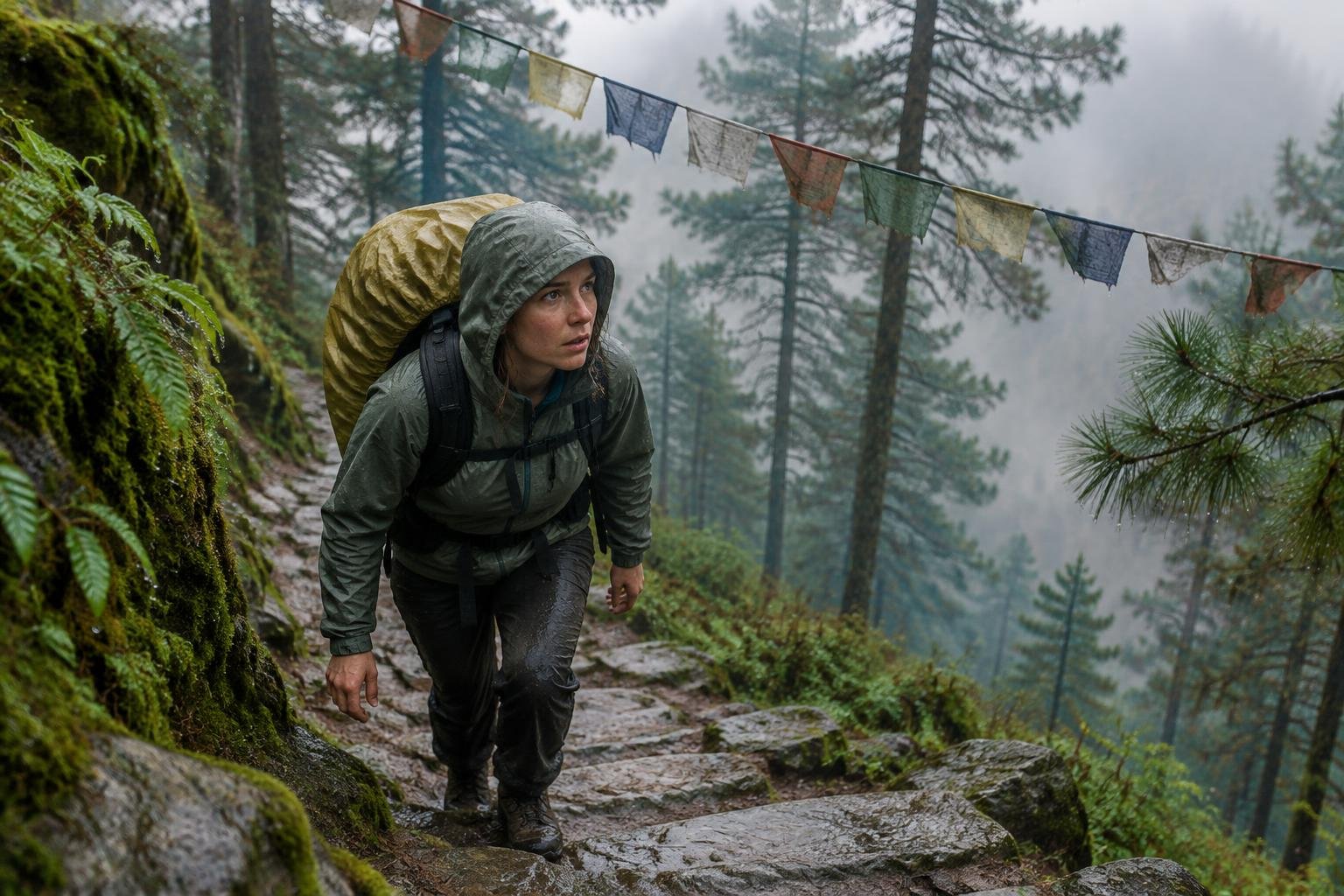
Packing follows the season you choose. Autumn on the Snowman calls for warm layers you can add and remove, reliable rain protection for any wetter days, and sun protection at altitude. Shorter autumn daylight, around 10.6 to 12.2 hours, makes a headlamp worth carrying. Your accredited operator will advise on camping-specific gear.
For layering, rain cover and weather planning, see hiking in rain, heat and cold.
Timing mistakes to avoid
The biggest mistake is treating Bhutan as one trip: the Snowman and the Tiger's Nest follow different timing, with autumn for the first and year-round for the second. Another is assuming a dry September, when it still averages 163 mm. Planning around a single month is risky, and so is ignoring the rules that treks run with an accredited operator and guide. Always confirm current conditions with the Department of Tourism.
Common questions
When is the best time to hike the Snowman Trek?
The official season guidance names autumn, September to October, for the Snowman. The modelled data supports this, with rainfall falling from 163 mm in September to 54 mm in October. Because conditions change, confirm dates and suitability with the Department of Tourism and your accredited operator before booking.
Can I hike to the Tiger's Nest at any time of year?
The official guidance lists the Tiger's Nest as a year-round hike. Rainfall varies a lot across the year, from about 2 mm in November to 289 mm in July, so the experience differs by month. Check current conditions with the managing authority before you go.
Which months are wettest?
On the modelled averages, June to August are the wettest, peaking at 289 mm in July. September is still wet at 163 mm. The driest months are November (2 mm), December (4 mm) and January (4 mm). These are regional averages and not measurements taken at the trail.
How much daylight can I expect?
Daylight ranges from about 10.3 hours in December to 13.7 hours in June. In autumn, the Snowman window, it shortens from roughly 12.2 hours in September to 11.3 in October. Shorter days affect how much hiking time you have, so plan your itinerary with your operator.
Sources
- Department of Tourism, Bhutan — bhutan.travel: official season and permit guidance.
- NASA POWER (Prediction Of Worldwide Energy Resources): monthly temperature and rainfall averages, 2010–2023, from MERRA-2 reanalysis. Daylight hours are calculated from latitude.
Conditions, closures and permit rules change without notice — confirm current information with the managing authority before you go. See our editorial policy and affiliate disclosure.