
Tour du Mont Blanc vs Haute Route: Which Should You Hike?
Choose the Tour du Mont Blanc if you want a strenuous but well-signed multi-day loop with built-in shortcuts and a Chamonix day-walk option. Choose the Haute Route if you have alpine skills or a guide, about two weeks, and want a one-way traverse from Chamonix to Zermatt with glacier-edge sections.
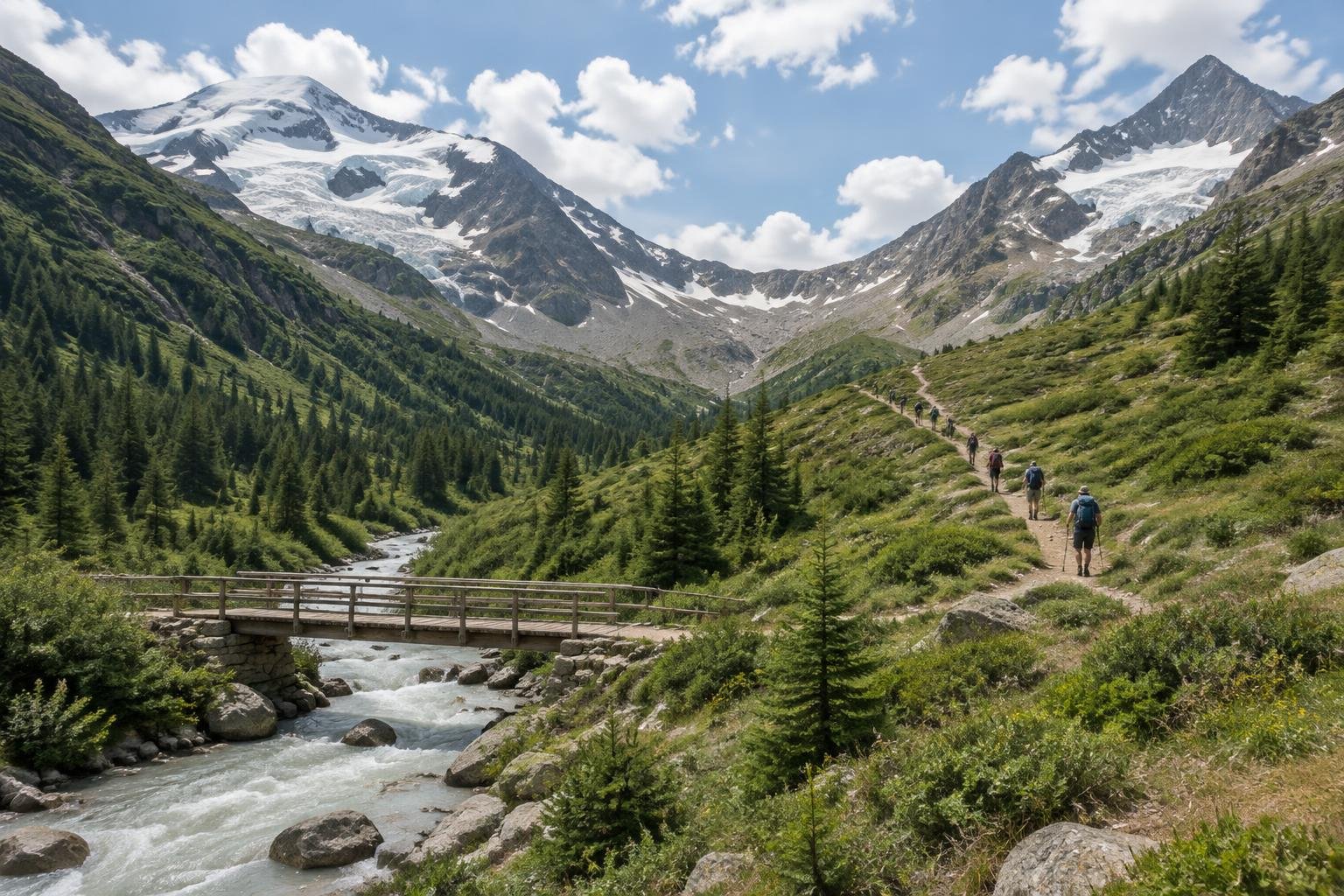
Tour du Mont Blanc and Haute Route at a glance
The Tour du Mont Blanc is a ~170 km (105 mi) loop around the massif through France, Italy and Switzerland. The Walker's Haute Route is a ~200-215 km (125-134 mi) thru-hike over 14 stages from Chamonix to Zermatt. Both start from the Chamonix area, cross repeated high cols, and rely on mountain huts, so hikers often weigh them against each other.
| Tour du Mont Blanc | Haute Route | |
|---|---|---|
| Place | European Alps · France, Italy & Switzerland | Alps · France & Switzerland |
| Distance | ~170 km / 105 mi circuit | ~200-215 km (125-134 mi) over 14 stages |
| Elevation gain | ~10,000 m (33,000 ft) cumulative ascent over the full circuit (descent roughly equal) | ~13,800-15,200 m cumulative ascent |
| Difficulty | Strenuous (multi-day, high cumulative gain, several passes over 2,500 m) | Very strenuous / expert (high-alpine terrain, some glacier-edge sections, multi-day) |
| Route type | loop | thru-hike |
| Official season | Mid-June to mid-September, once the high cols are clear of snow | Mid-July to mid-September |
| Managed by | Regional authorities & refuge associations | Alpine clubs & regional authorities |
Effort and difficulty
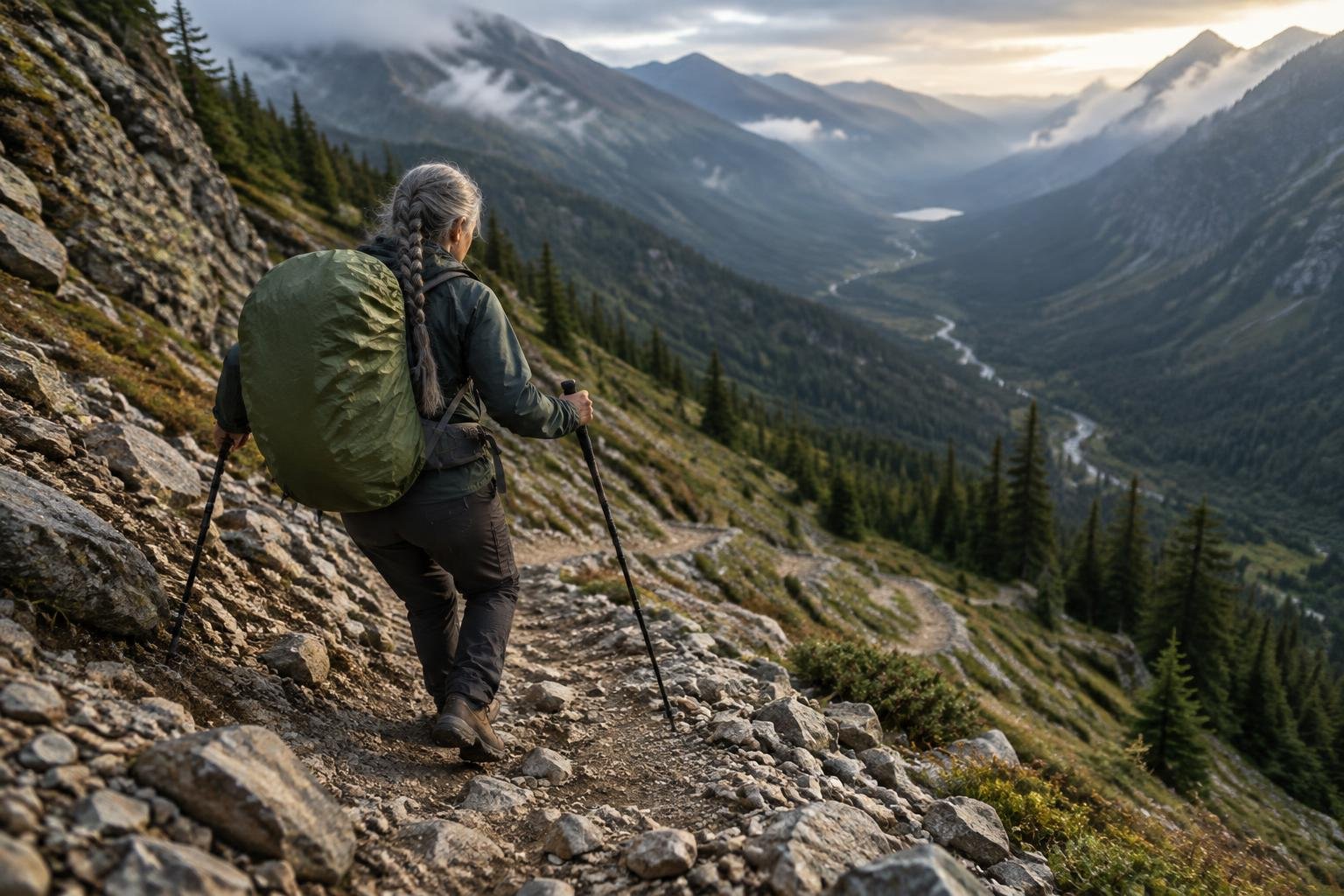
The Tour du Mont Blanc is rated strenuous, with about 10,000 m (33,000 ft) of cumulative ascent and several passes over 2,500 m. The Haute Route is rated very strenuous / expert, with roughly 13,800-15,200 m of cumulative ascent over a longer distance. Both are built on the same pattern of climbing a col and dropping a long way into the next valley. The Haute Route is the bigger commitment: more climbing, more distance, high-alpine terrain, cables or fixed ropes in places, and some glacier-edge sections where a guide or proper equipment is advised.
Season, permits and booking
The Tour du Mont Blanc's official best season runs from mid-June to mid-September, once the high cols are clear of snow. The Haute Route's runs from mid-July to mid-September, so its window is shorter and starts later. Neither requires a trekking permit, but refuge or hut reservations are effectively mandatory in summer. For the TMB, camping and bivouacking outside official sites are not allowed along the route, and a Swiss reroute near Les Treutsebo applies as of 2026. Confirm current rules with each managing authority.
Which one is right for you?
Choose Tour du Mont Blanc if…
Pick the Tour du Mont Blanc if you want a serious multi-day trek without glacier-edge terrain. Most of it follows wide, well-graded, heavily signed path. The route has built-in shortcuts by bus or lift on a tired or wet day, and it suits hikers with about a week and a half of walking days. It also works if you only have a day or two: the Chamonix end stands alone as a day walk toward Lac Blanc.
How to hike Tour du Mont Blanc — ChamonixChoose Haute Route if…
Pick the Haute Route if you are an experienced high-alpine walker, or will go with a guide, and have around two weeks. It suits people who want a point-to-point traverse from Chamonix to Zermatt, with varied terrain from pasture and villages to boulder fields, cable-protected traverses and glacier-edge stages. Build in spare days for weather, and book the hut chain early.
How to hike Walker's Haute Route — Chamonix to ZermattWhat the two have in common
Both routes repeat the same rhythm: climb to a col, cross it, descend into the next valley, and sleep in a hut or refuge. Both include balcony paths contouring high above the valleys, and both are served by buses and lifts that let hikers shorten stages. Neither needs a permit, both need advance bookings in summer, and both reward early starts and careful weather watching.
How your choice changes what you pack
Both routes call for a pack sized for hut-to-hut walking, with layers for wind and cold at the cols and enough water capacity for long climbs. Because you sleep in huts, you can leave out a tent and cooking kit. The Haute Route adds the question of glacier-edge sections, where a guide or proper glacier equipment is advised, so what you carry there depends on the variant you choose.
Common questions
Which is harder, the Tour du Mont Blanc or the Haute Route?
The Haute Route. It is rated very strenuous / expert, with more distance and cumulative ascent, high-alpine terrain, cable or rope-protected traverses and some glacier-edge sections. The Tour du Mont Blanc is rated strenuous and is mostly on well-signed path.
Which is better for a first big alpine trek?
The Tour du Mont Blanc is generally the more approachable choice. It is a strenuous loop, but its path is mostly wide and heavily signed, and it has bus and lift shortcuts. The Haute Route asks for alpine skills or a guide.
Do I need a permit for either route?
Neither requires a trekking permit. Refuge or hut reservations are effectively mandatory in summer on both. The TMB also has camping and bivouac restrictions, so check the official TMB notices and each managing authority before you go.
Can I do just part of either route?
Yes. The Chamonix end of the TMB, toward Lac Blanc, is commonly done as a day walk, often using a lift one way. The Haute Route is flexible too, since buses and lifts let hikers shorten stages, skip a valley floor or take a rest day and rejoin later.
Sources
- Regional authorities & refuge associations — autourdumontblanc.com: official information for Tour du Mont Blanc.
- Alpine clubs & regional authorities — sac-cas.ch (Swiss Alpine Club, Swiss huts only): official information for Haute Route.
Conditions, permits and access rules change without notice — confirm current information with each managing authority before you go. See our editorial policy.