
Affiliate disclosure: this page contains affiliate links. Purchases made through them may earn us a commission at no extra cost to you. See our affiliate disclosure.
In plain English
The Tour du Mont Blanc is a big loop around Western Europe's highest mountain, passing through France, Italy and Switzerland.1 Instead of camping, most people sleep in mountain huts called refuges, which are like simple hostels high on the hillside that serve dinner and breakfast.
Each day follows the same pattern. You climb up out of one valley to a high mountain pass, called a col, then walk down into the next valley. Doing that day after day is what makes it hard, not any single difficult move.
Because the huts feed you, your backpack can be much smaller and lighter than for a camping trip. You carry clothes for all weather, water, snacks and a few personal things. The whole loop takes about ten days, but plenty of people walk only part of it, or just do the famous day walk above Chamonix to Lac Blanc.
What the hike is like
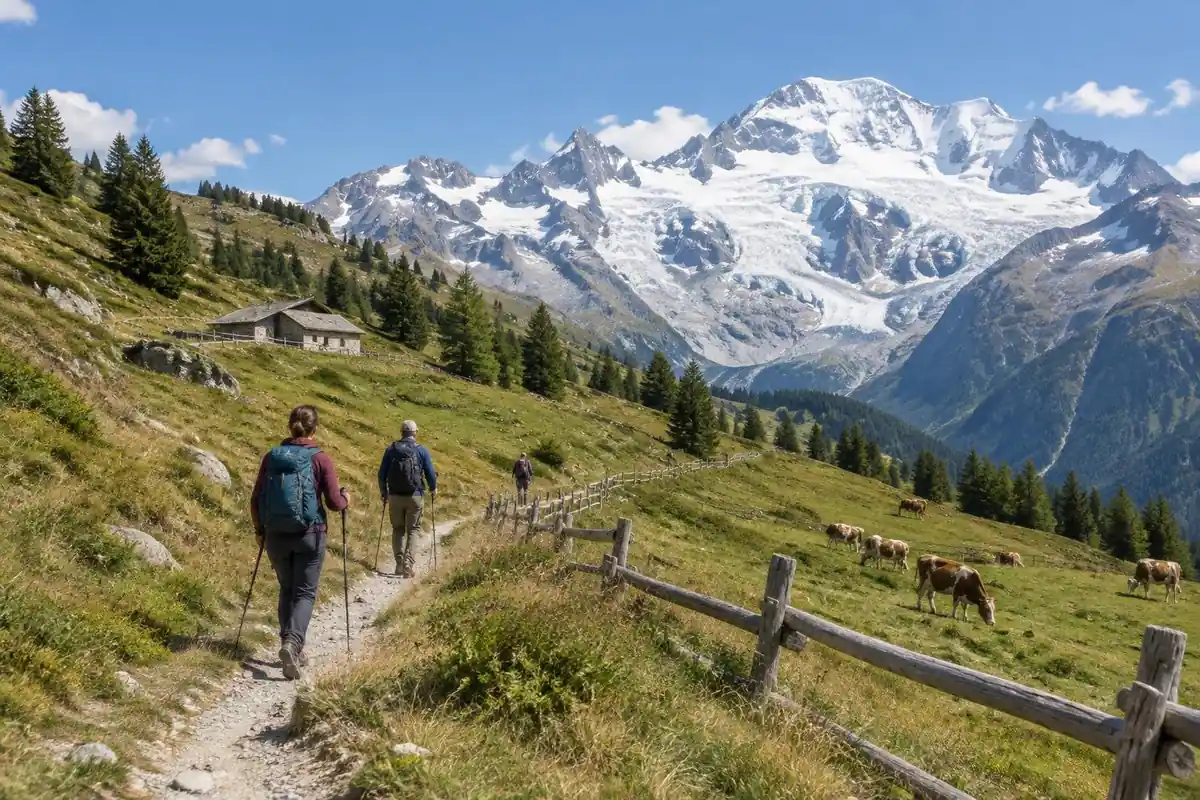
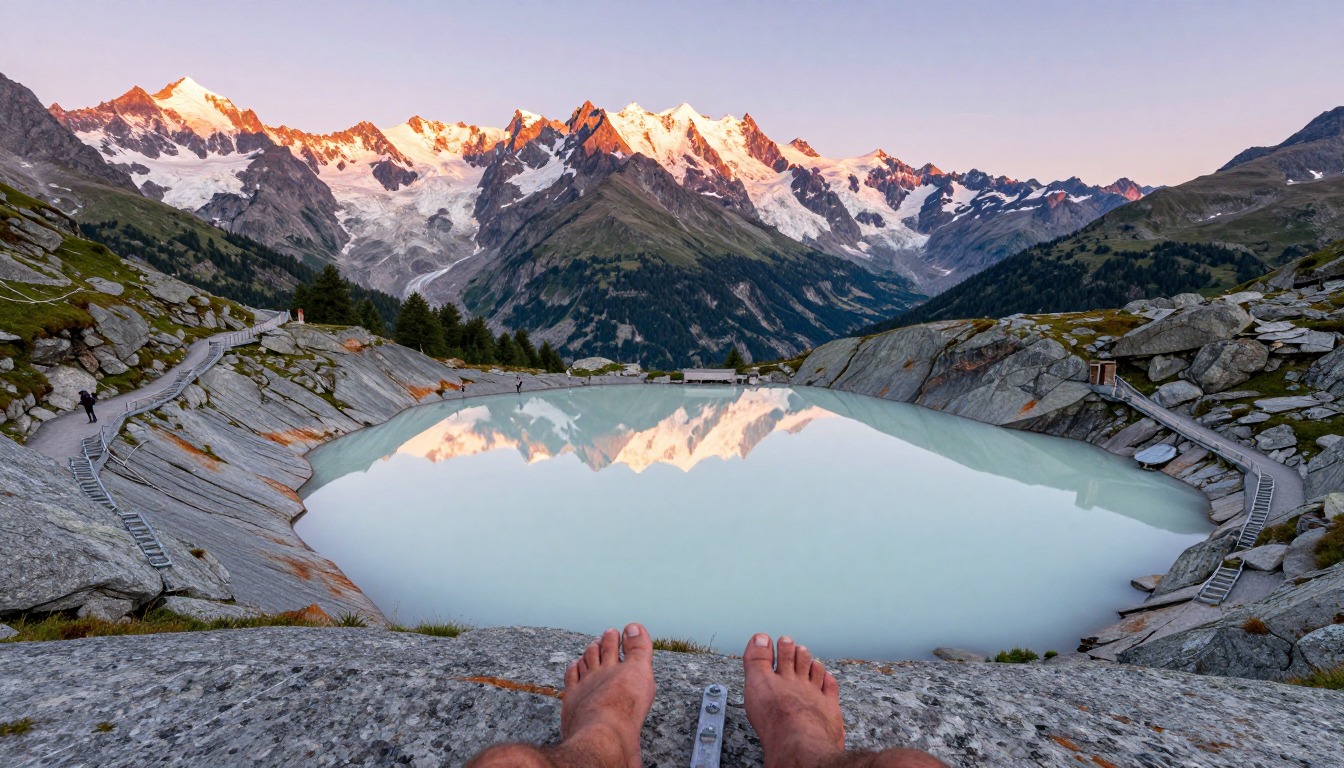
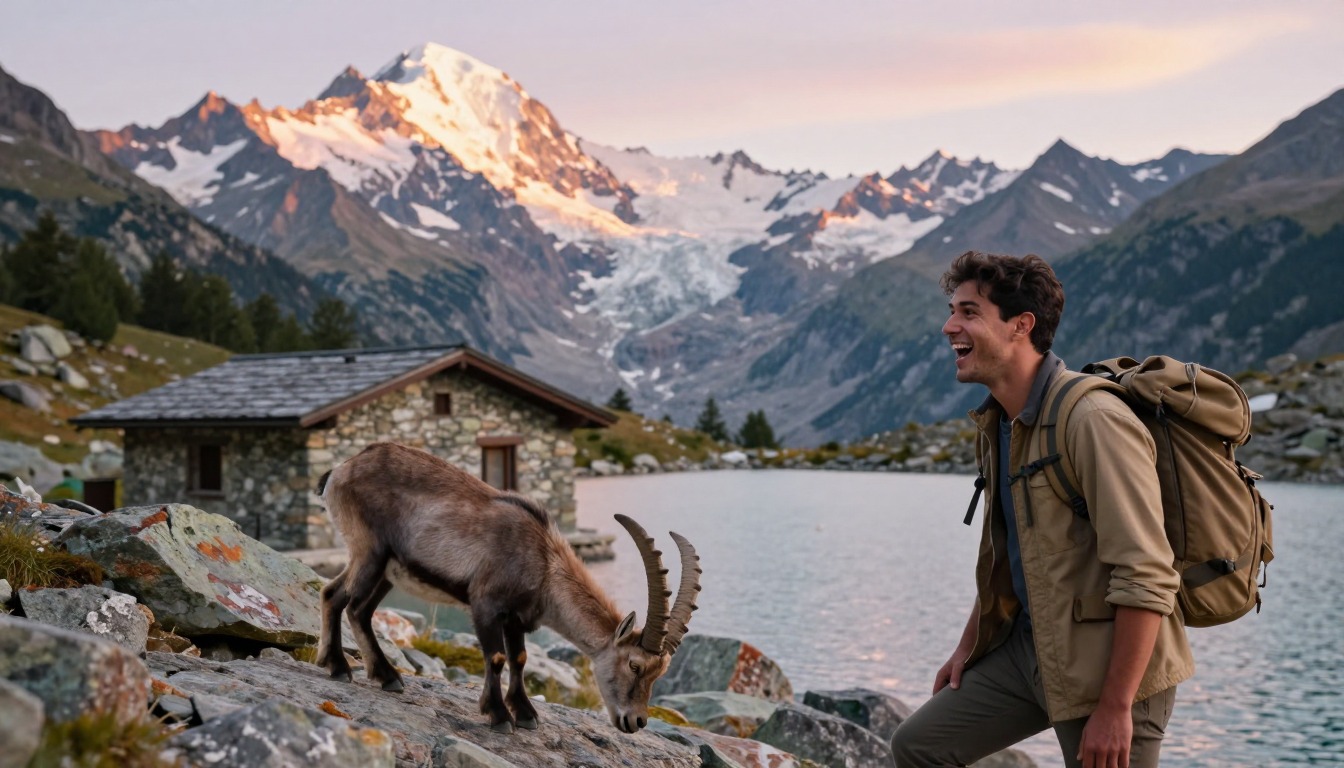
The TMB isn't really one trail so much as a repeating shape: climb out of a valley, cross a col, drop into the next one, sleep, repeat. Most of the walking is on wide, well-graded, heavily signed path, but every day is defined by its pass — rocky switchbacks, loose scree near the saddle, and wind that arrives the second you step over the top. Strung between the cols are balcony traverses that contour along a hillside at more or less constant height, and those are where the walking is easiest and the massif stays in view longest. The Chamonix side is the classic example: the climb toward Lac Blanc sits directly opposite the glaciers, and a few steep, ladder-and-rock steps break up what is otherwise a long, steady haul.
How to plan the itinerary
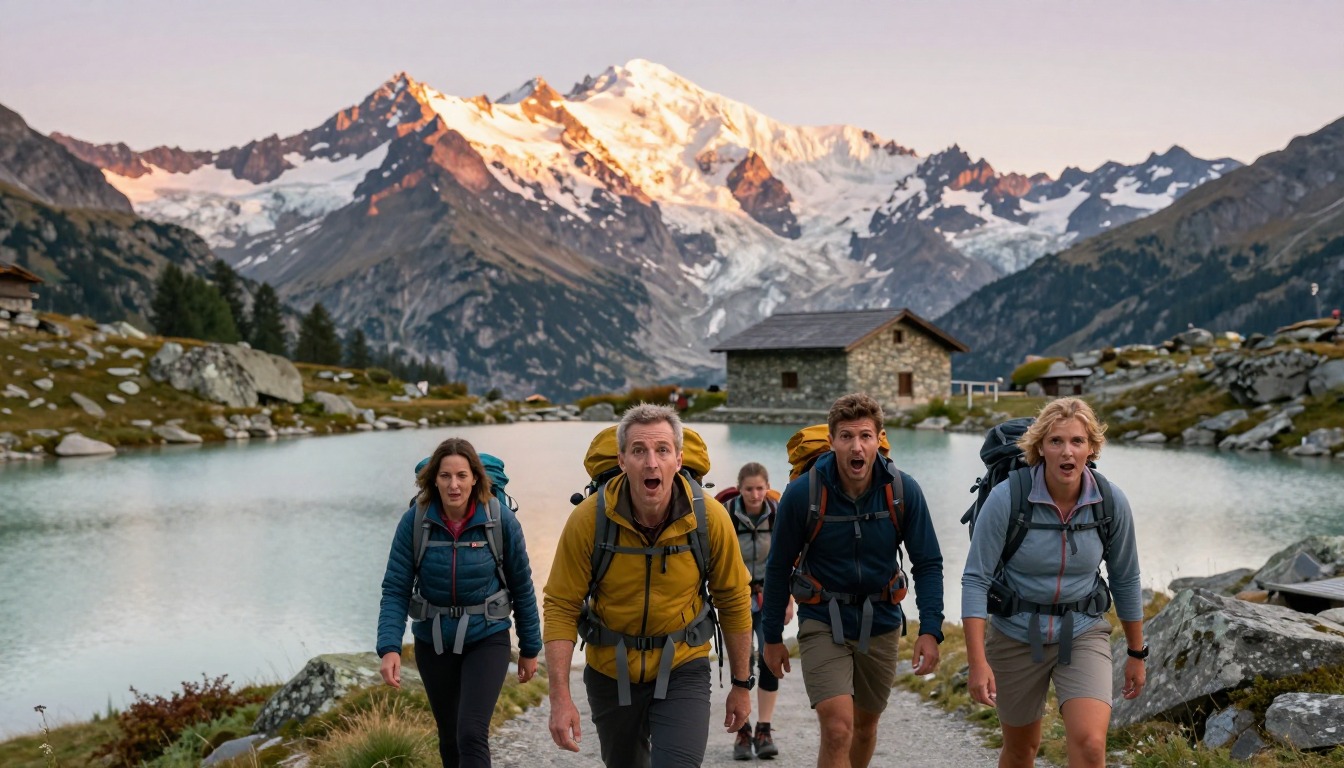
Most people walk the full circuit counter-clockwise from the Chamonix valley, spreading it over a week and a half or so of walking days, with refuge bookings fixing the stages long before anyone arrives. Individual days tend to follow the same arc: an early start, the col crossed before midday while the weather is most reliable, then a long afternoon descent into the next valley. Shortcuts are built into the route — valley buses and lifts that let you skip a climb or spare your knees a descent — and plenty of hikers use them without apology on a tired or wet day. If you don't have ten days free, the Chamonix end stands on its own: the balcony section toward Lac Blanc is commonly done as a day walk from town, often using a lift in one direction, and it delivers the head-on massif views the whole circuit is built around.
Plan this trip in 5 steps
-
Pick the right pack
Match a pack to your trip, fit and priorities.
-
Book a place to stay
Campgrounds, huts and lodges near Tour du Mont Blanc — Chamonix.
-
Plan food & water
Calories, food weight and water for your days on trail.
-
Estimate your time
Pre-filled with this trail’s distance and climb — adjust for your pace.
Trail-specific tips
Descents do more damage here than the climbs — the drops off the cols are long and unrelenting, and poles will save your knees more than they'll speed you uphill. Judge the weather pass by pass rather than day by day; a col that's straightforward in morning sun can be genuinely unpleasant in afternoon cloud and wind. Carry layers you can pull on without stopping, because the temperature swing between a sheltered valley and an exposed saddle is dramatic. And don't treat a lift as cheating; on this route it's a normal tool. For 2026 the official TMB site announced a new route in the Swiss sector, on the path between Prayon and Branche near Les Treutsebo, because of rockfall risk; camping and bivouacking are strictly prohibited there. Older guidebooks will not show the change, so check the official site before finalizing a Swiss stage. General mountain-weather judgment sits on /trail-smarts/.
Permits & rules
No trekking permit is required, but refuge reservations are effectively mandatory in summer. Bivouac/wild-camping rules differ by country and protected area. As of 2026 a reroute applies in the Swiss section near Les Treutsebo, and camping and bivouacking outside official sites are not allowed along the route — check the official TMB notices.
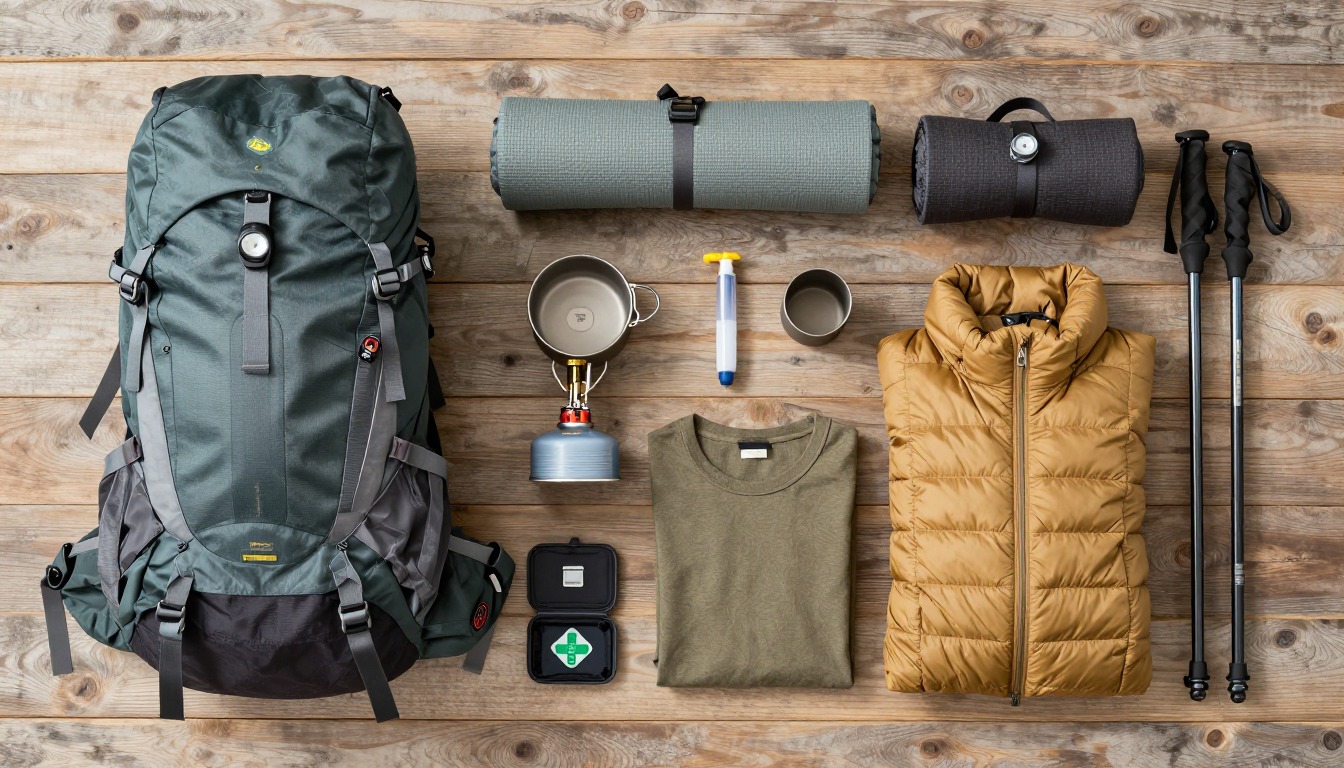
Gear suited to this hike
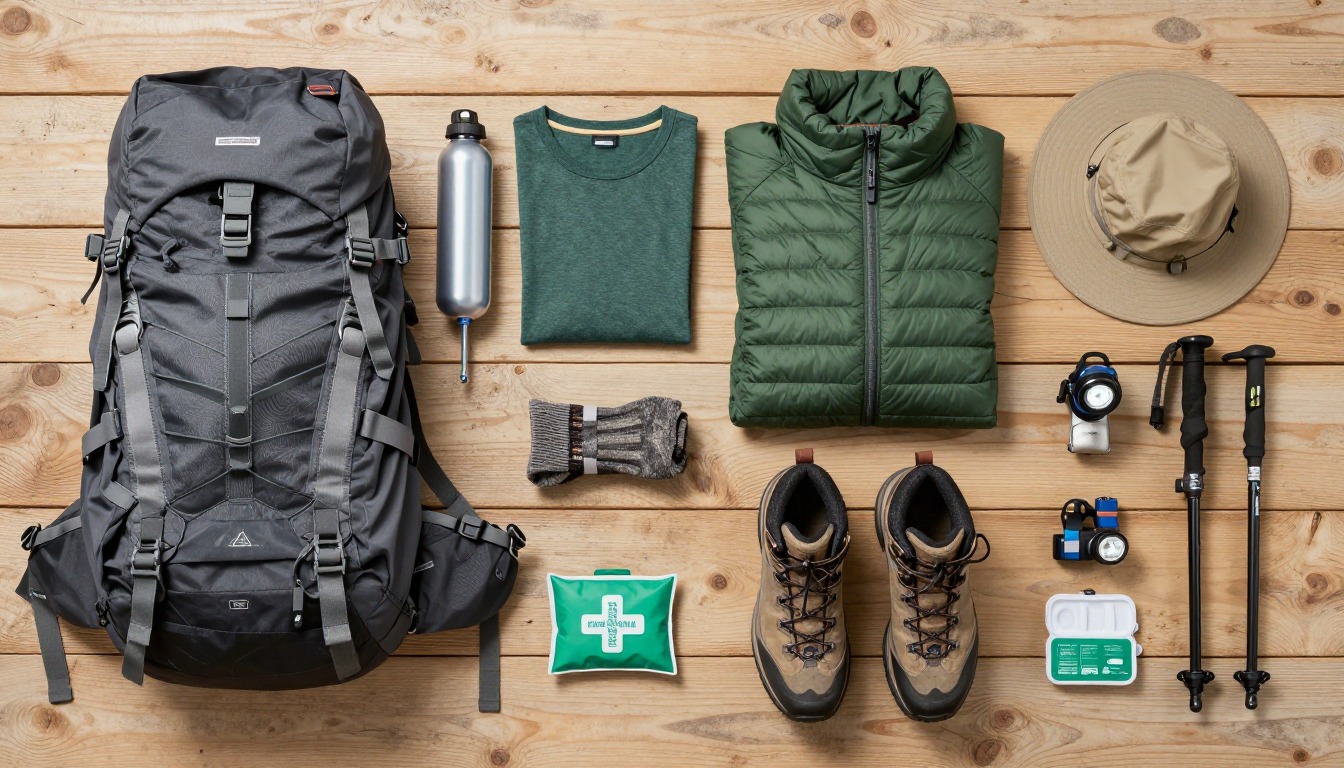
Matched to the terrain and conditions here. Real products — check current price on Amazon.



What the official numbers mean for each day
The TMB's official site puts the circuit at about 170 km with about 10,000 m of climbing, spread over roughly 10 days and around 60 hours of walking.1 Divided evenly, that is about 17 km (about 10.5 miles) and 1,000 m (about 3,300 ft) of ascent a day, with a similar amount of descent.
Naismith's rule, the classic hill-walking estimate, allows one hour per three horizontal miles plus one hour per 2,000 ft of ascent.3 For an average TMB day that gives about three and a half hours for distance plus about an hour and a half for climbing, so roughly five hours. The official figure of about six hours of walking per day is a little slower, which fits Mountaineering Scotland's point that walking speed depends on fitness, pack weight, ground conditions and slope.4
Pack weight compounds over ten days. In one lab study, the energy cost of walking rose roughly linearly with load, by about 7.6 watts for every extra kilogram carried.5 Because refuges supply meals and bedding, a hut-to-hut pack can leave the tent, stove and most food at home, and that saving is repaid on every one of those thousand-meter climbs.
The 2026 Swiss reroute and camping rules
Conditions on the circuit are not fixed. For 2026 the official site announced a new route in the Swiss sector, opening on 11 July, on the path between Prayon and Branche in the area known as Les Treutsebo, for safety reasons linked to rockfall risk. It adds that camping and bivouacking are strictly prohibited in that area.1 Older guidebooks and stage plans will not show the change, so check the official site before finalizing a Swiss stage.
This page notes that wild-camping rules differ by country and protected area; the Treutsebo ban is one concrete example of a local rule that overrides general assumptions. The official site also lists the Casermetta Espace Mont-Blanc information point as open from 25 June to 13 September 2026, which gives a sense of the staffed summer window.1
Descents, afternoon cols and what that means for kit
The TMB's descents are where legs and knees take the most punishment. In a lab study on a 25-degree downhill ramp, hiking poles lowered ground reaction force and cut knee compressive and shear forces by 12 to 25%.2 Another study found the benefit held with no pack, a day pack and a heavier expedition pack.6
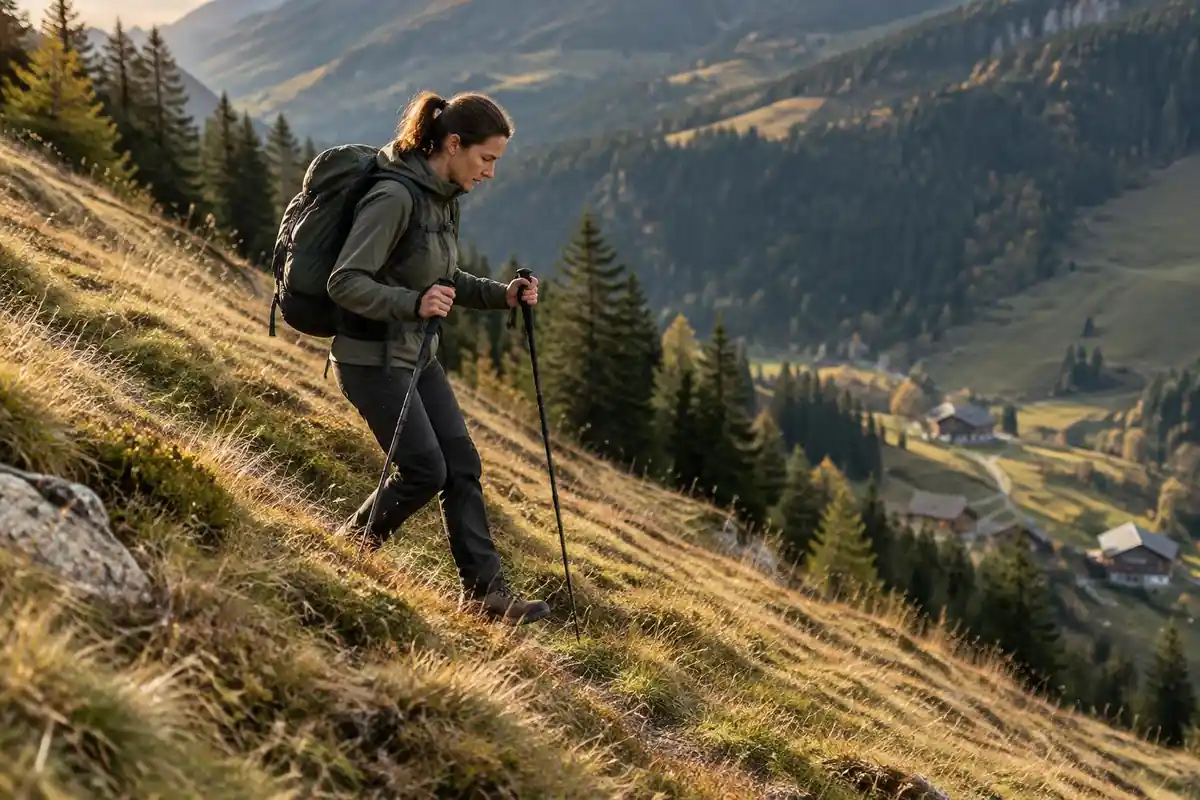
The cols also shape the daily schedule. The National Weather Service notes that mountain thunderstorms often build in the early afternoon and advises avoiding ridge tops, which is the case for crossing each pass in the morning.7 Keep a warm layer and a waterproof near the top of the pack, because the change from a sheltered valley to a windy saddle happens in minutes.
Common questions
Do I have to walk the entire circuit?
No, and lots of people don't. The route is well served by valley buses and lifts, which makes section-hiking straightforward — you can walk a few of the best stages and skip the rest, or base yourself in one valley and do the balcony sections as day walks. The Chamonix side in particular works well as a shorter trip.
Is the Tour du Mont Blanc technical?
The main route asks for no climbing skill: it's walking, on paths that are marked, maintained and busy. Some variants add short ladder, cable or chain sections and a bit of exposure, and those are the ones to check before committing. The real difficulty is cumulative — consecutive days of big ascent and bigger descent rather than any single hard move.
Clockwise or counter-clockwise?
Counter-clockwise is the conventional direction, and most refuges, guidebooks and stage plans assume it. Walking the other way means meeting the flow of hikers head-on all day, which some people actually prefer for the quieter refuges, but you'll be translating stage descriptions in your head. First-timers are usually better off going with the grain.
How fit do I need to be for it?
Fit enough to climb and descend steeply for several hours, then get up and do it again tomorrow. No single day is extraordinary; the challenge is stacking them back to back with a loaded pack. Hikers who train on repeated hilly days, rather than one big effort, tend to arrive in far better shape for it.
Complete gearsets for this trip
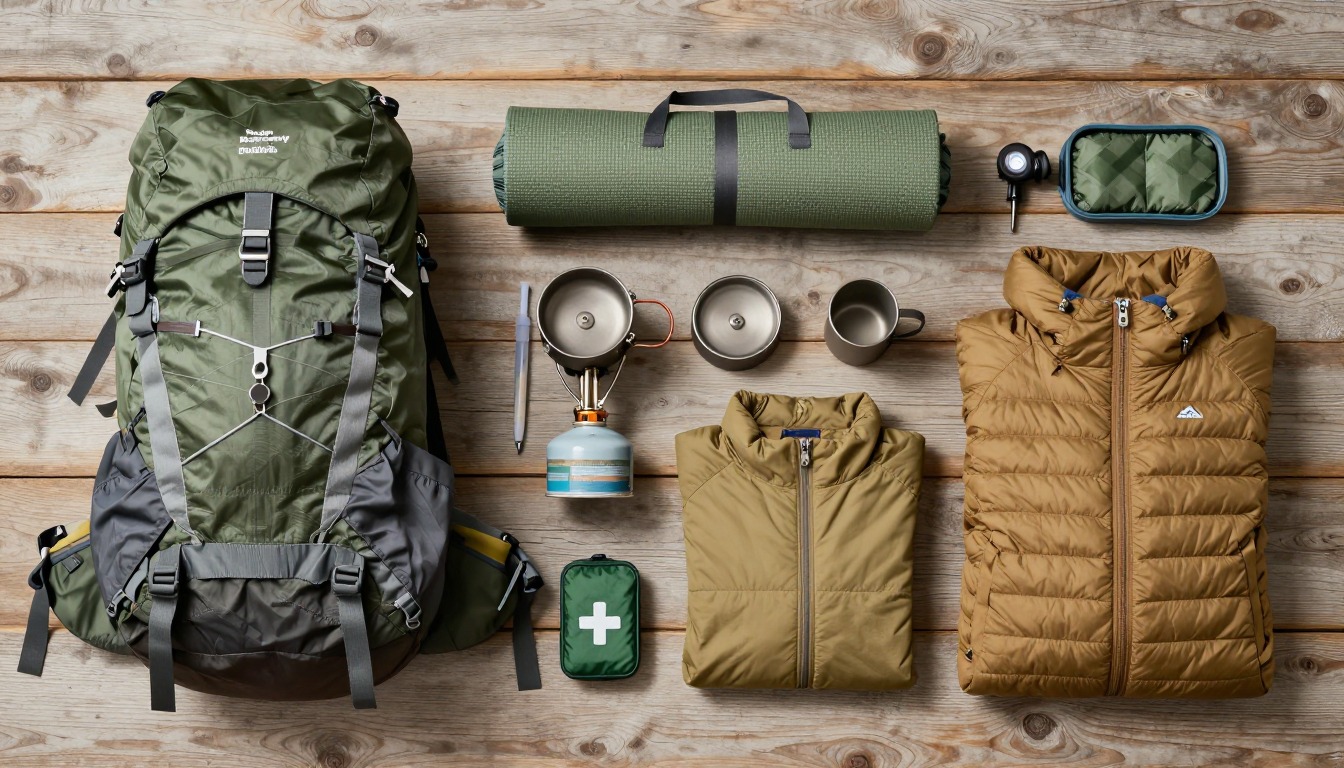
Full curated kits built for exactly this kind of hike.
Trail conditions, permits and access rules change without notice — always confirm current information on the official source above before you go. Some facts on this page are still pending owner verification and are marked accordingly. Product links and the accommodation map are affiliate links: we may earn a commission at no extra cost to you; product prices and availability are shown on Amazon, and accommodation prices on the booking site. See our affiliate disclosure.