
Best Time to Hike Tour du Mont Blanc — Chamonix
The best time to hike the Tour du Mont Blanc is mid-June to mid-September, once the high cols are clear of snow. That window also lines up with the warmest months of the year here and the longest days, with up to about 15 hours of daylight in June and July.
Month-by-month climate for Tour du Mont Blanc — Chamonix
| Month | Relative warmth | Rain | Daylight |
|---|---|---|---|
| Jan | Coldest | 107 mm | 8.8 h |
| Feb | Coldest | 74 mm | 10.1 h |
| Mar | Coldest | 83 mm | 11.6 h |
| Apr | Mild | 74 mm | 13.3 h |
| May | Warm | 125 mm | 14.7 h |
| Jun | Warmest | 107 mm | 15.5 h |
| Jul | Warmest | 103 mm | 15.2 h |
| Aug | Warmest | 92 mm | 14 h |
| Sep | Warmest | 77 mm | 12.3 h |
| Oct | Warm | 91 mm | 10.7 h |
| Nov | Cool | 109 mm | 9.2 h |
| Dec | Coldest | 136 mm | 8.5 h |
Modelled regional averages for 2010–2023 (rainfall) and calculated daylight hours; they describe the wider area, not a reading taken on the trail. “Relative warmth” compares each month with the warmest and coldest months of this place’s own year. It is not a temperature, and the high parts of a route are colder than the region around them.
The modelled regional averages show May as the wettest month of the main season at about 125 mm, with December wetter still at about 136 mm. September is the driest of the warm months at about 77 mm, while April and February are also relatively dry at about 74 mm each. Daylight swings from roughly 8.5 hours in December to 15.5 hours in June. Relative to this place's own year, June through September are the warmest months and December through March the coldest, with April and October sitting in between. These are regional averages, not trail measurements.
Tour du Mont Blanc — Chamonix season by season
Winter and early spring · December to April
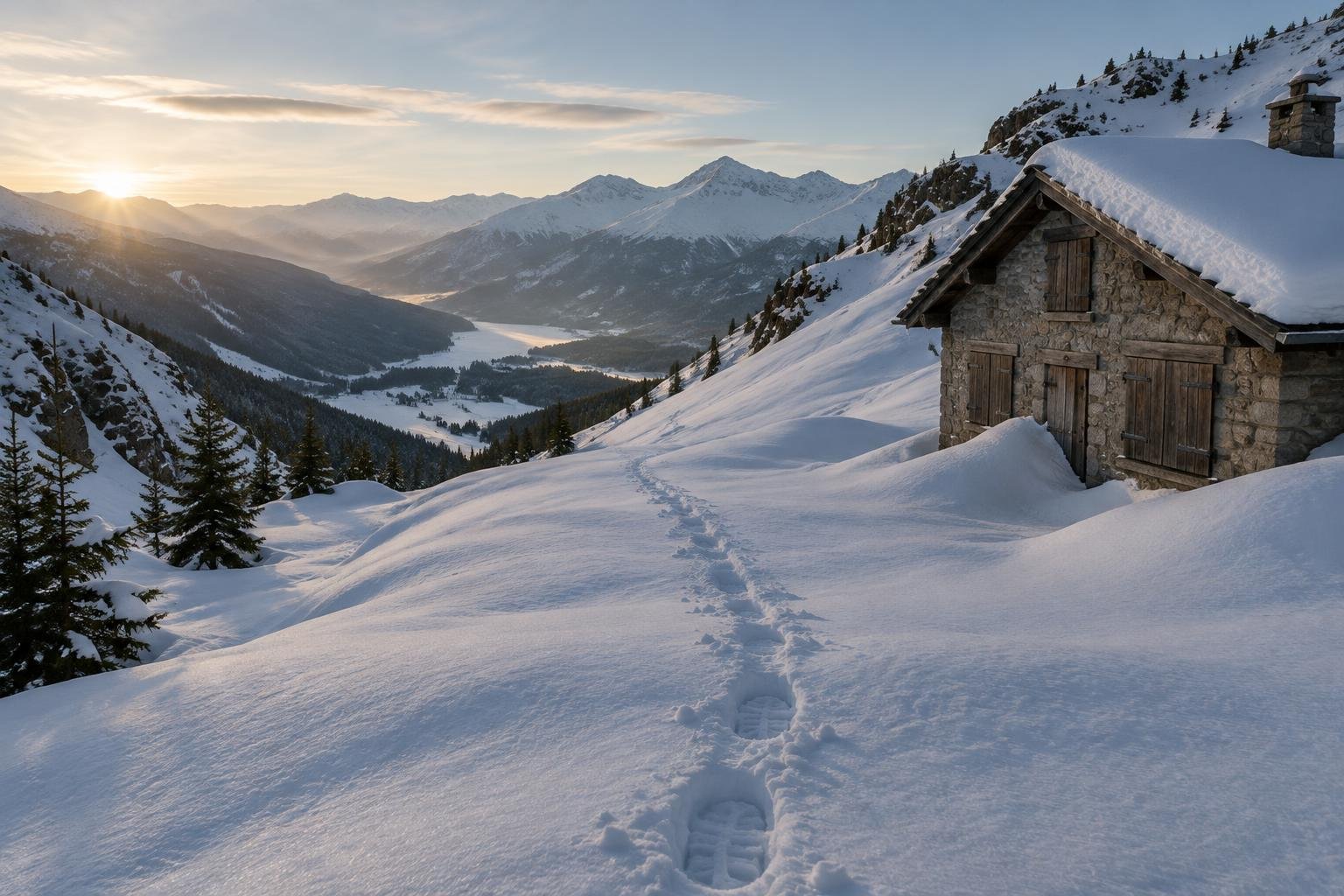
These are the coldest months of the year here, and daylight is short, only about 8.5 to 10 hours from December to February. December is also the wettest month at about 136 mm on average. This is well outside the official season guidance of mid-June to mid-September, when the high cols are clear of snow. The full hut-to-hut circuit is not what the managing authorities describe for this period, so treat it as a different undertaking and confirm current conditions with the regional authorities and refuge associations before planning anything.
Late spring · May to mid-June
Warmth is building by May, but it is also the wettest of the warmer months at about 125 mm on average, and June is still about 107 mm. Days are long, at roughly 14.7 to 15.5 hours, which sounds ideal. The catch is the high cols, which the official season guidance says need to be clear of snow before the main season starts. Timing in this shoulder window varies from year to year, so check with the managing authorities and refuge associations rather than assuming the route is ready.
Peak summer · mid-June to August
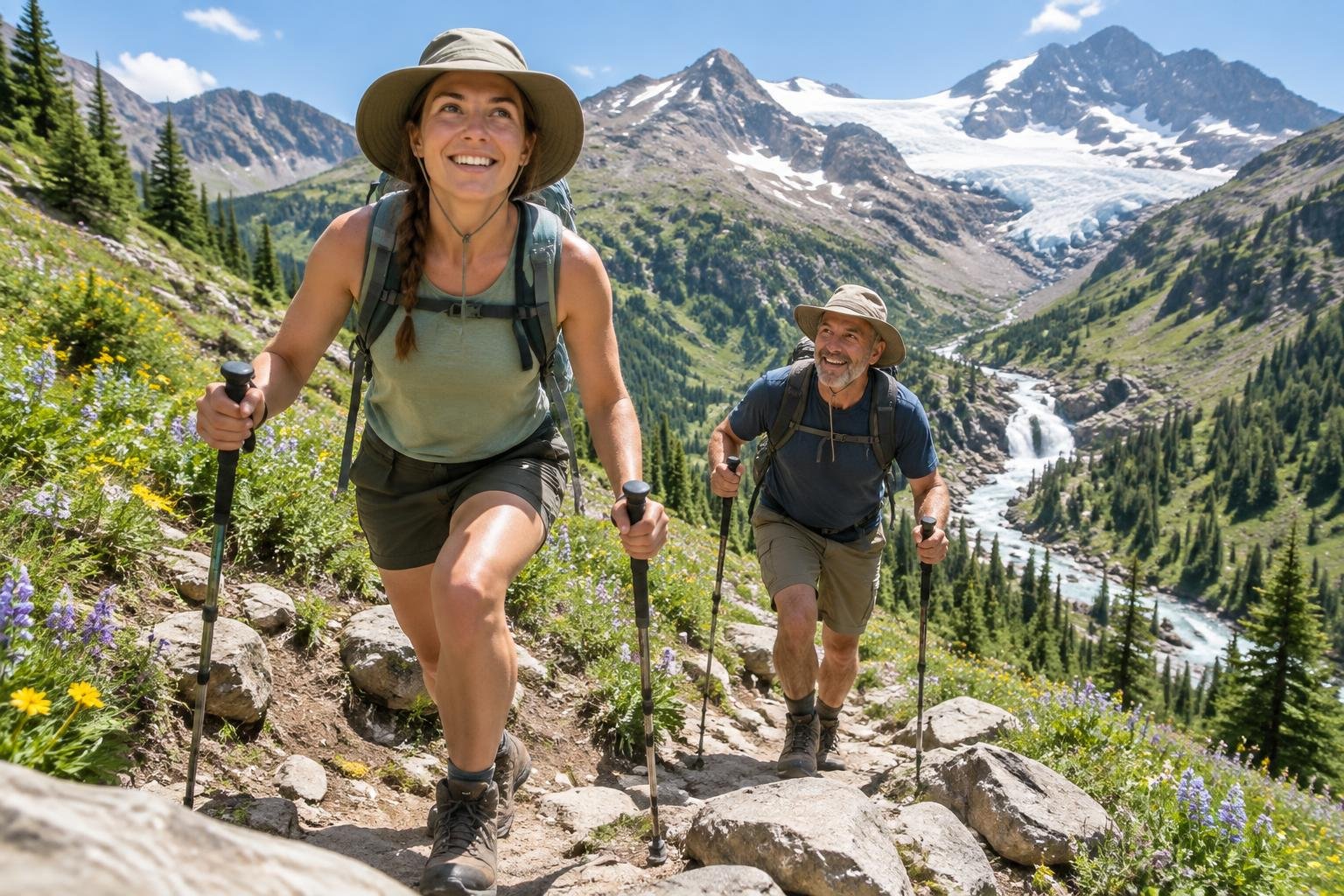
This is the core of the official season and the warmest stretch of the year here. Daylight peaks at about 15.5 hours in June and is still about 14 hours in August, giving generous margins for long stages. Rainfall remains meaningful, at about 107 mm in June, 103 mm in July and 92 mm in August on average, so rain cover still matters. Refuge reservations are effectively mandatory in summer, so this popular window needs booking well ahead.
Early autumn · September to November
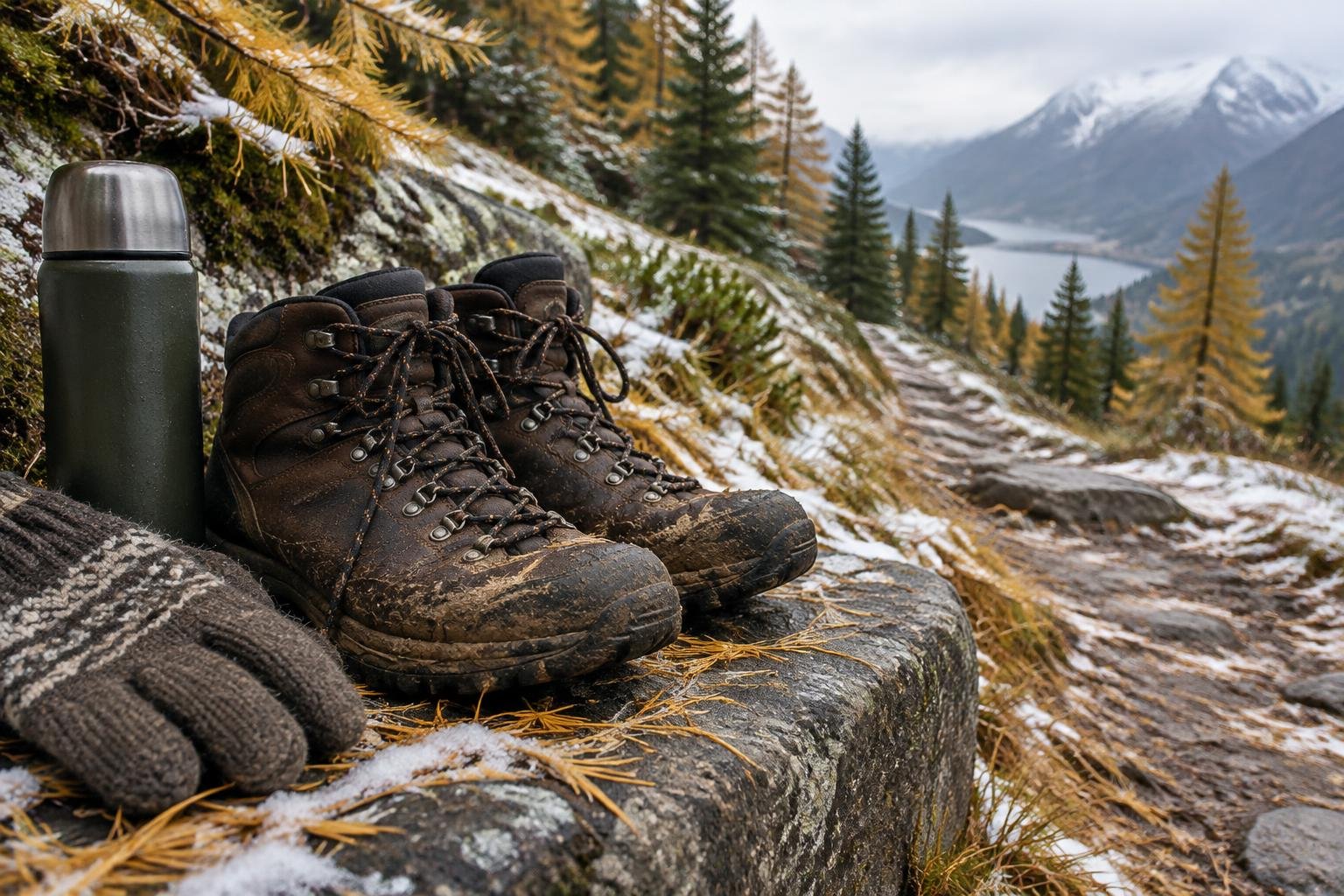
The official season runs to mid-September, and September is the driest of the warm months at about 77 mm on average, with about 12.3 hours of daylight. After that, warmth drops from warm in October to cool in November, daylight shrinks to about 10.7 and then 9.2 hours, and rainfall rises again to about 109 mm in November. Beyond mid-September the guidance no longer describes a standard season, so check with the regional authorities and refuge associations for what is open.
Official season guidance
Regional authorities & refuge associations: Mid-June to mid-September, once the high cols are clear of snow
No trekking permit is required, but refuge reservations are effectively mandatory in summer. Bivouac/wild-camping rules differ by country and protected area. As of 2026 a reroute applies in the Swiss section near Les Treutsebo, and camping and bivouacking outside official sites are not allowed along the route — check the official TMB notices.
Check current dates on autourdumontblanc.comWhat to pack for the season
Packing follows the season you choose. Even in the warmest months, plan layers you can add and remove, reliable rain cover, and sun protection for long, bright days. Shoulder-season trips call for extra warmth and a headlamp, since daylight shortens quickly after the main window closes.
For layering, rain cover and weather planning, see hiking in rain, heat and cold.
Timing mistakes to avoid
The most common mistake is picking a single month and ignoring the official season guidance, which ties the start to the high cols being clear of snow. Early-season enthusiasm can collide with lingering snow, while late trips run into shorter days and wetter weather. Another is leaving refuge bookings late, since reservations are effectively mandatory in summer. Finally, assuming wild-camping is a fallback is risky: rules differ by country and protected area, and camping outside official sites is not allowed along the route.
Common questions
When is the Tour du Mont Blanc usually open for hiking?
The official season guidance gives mid-June to mid-September, once the high cols are clear of snow. Exact readiness varies by year, so check with the regional authorities and refuge associations before committing to dates, especially at the start or end of the window.
Is July or August better for the Tour du Mont Blanc?
Both fall inside the official season and are among the warmest months. July averages about 103 mm of rain with roughly 15.2 hours of daylight, while August averages about 92 mm with about 14 hours. August is slightly drier and July slightly longer in daylight; the difference is modest.
How much daylight can I expect on the hike?
Daylight is calculated at about 15.5 hours in June, 15.2 in July, 14 in August and 12.3 in September. By October it falls to about 10.7 hours, and in December to roughly 8.5, so shoulder-season trips need much tighter stage planning.
Do I need to book ahead for summer?
No trekking permit is required, but refuge reservations are effectively mandatory in summer. Camping and bivouacking outside official sites are not allowed along the route, and rules vary by country, so book accommodation early and check the official TMB notices for current reroutes.
Sources
- Regional authorities & refuge associations — autourdumontblanc.com: official season and permit guidance.
- NASA POWER (Prediction Of Worldwide Energy Resources): monthly temperature and rainfall averages, 2010–2023, from MERRA-2 reanalysis. Daylight hours are calculated from latitude.
Conditions, closures and permit rules change without notice — confirm current information with the managing authority before you go. See our editorial policy and affiliate disclosure.