
Best Time to Hike Walker's Haute Route — Chamonix to Zermatt
The best time to hike the Walker's Haute Route is mid-July to mid-September, according to the official season guidance. That window pairs the warmest part of the year with long daylight, and it is when the huts and village services along the route are set up for walkers.
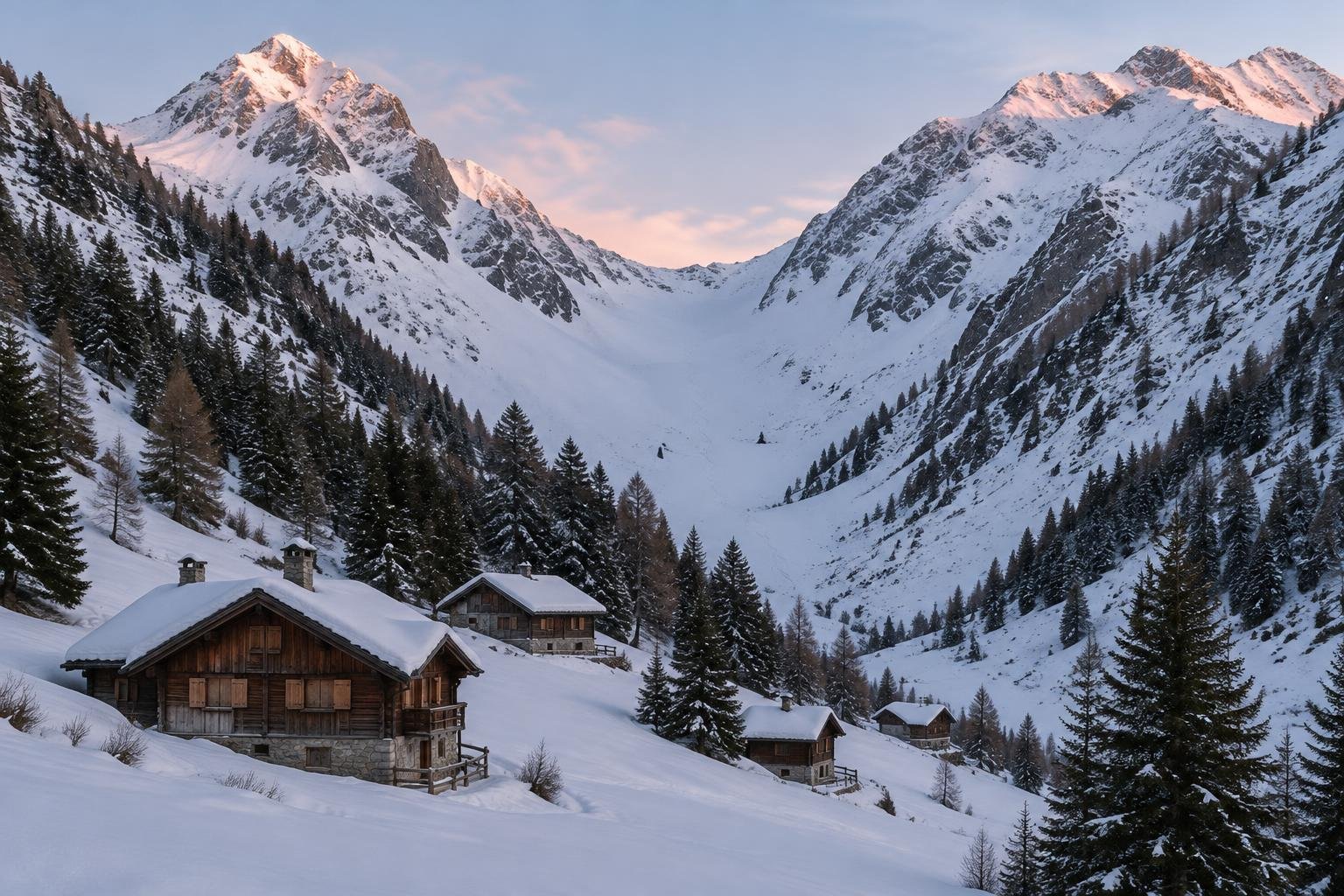
Month-by-month climate for Walker's Haute Route — Chamonix to Zermatt
| Month | Relative warmth | Rain | Daylight |
|---|---|---|---|
| Jan | Coldest | 67 mm | 8.8 h |
| Feb | Coldest | 50 mm | 10.1 h |
| Mar | Coldest | 63 mm | 11.6 h |
| Apr | Mild | 69 mm | 13.3 h |
| May | Warm | 112 mm | 14.8 h |
| Jun | Warmest | 100 mm | 15.5 h |
| Jul | Warmest | 96 mm | 15.2 h |
| Aug | Warmest | 92 mm | 14 h |
| Sep | Warmest | 66 mm | 12.3 h |
| Oct | Warm | 84 mm | 10.7 h |
| Nov | Cool | 99 mm | 9.2 h |
| Dec | Coldest | 84 mm | 8.5 h |
Modelled regional averages for 2010–2023 (rainfall) and calculated daylight hours; they describe the wider area, not a reading taken on the trail. “Relative warmth” compares each month with the warmest and coldest months of this place’s own year. It is not a temperature, and the high parts of a route are colder than the region around them.
Across the year, the modelled regional rainfall ranges from about 50 mm in February to 112 mm in May, with a second wet stretch in November at 99 mm. September is noticeably drier than the summer months at 66 mm, while June, July and August sit between roughly 92 and 100 mm. Daylight swings from 8.5 hours in December to 15.5 hours in June. June through September are the warmest months of this place's own year, while December through March are the coldest. These are regional averages, not trail measurements.
Walker's Haute Route — Chamonix to Zermatt season by season
Late winter and early spring · January to April
This is the coldest stretch of the year for this region, and daylight is short, at 8.8 hours in January rising to 13.3 hours by April. Rainfall is moderate, between 50 and 69 mm a month on average. The official season guidance points to mid-July to mid-September for this route, so these months fall well outside the recommended window. Anyone considering them should check current conditions and hut availability with the managing authority and not assume the route behaves as it does in summer.
Late spring · May to mid-July
Warmth builds through this period, with June among the warmest months of the year, and daylight peaks at around 15.5 hours. May is the wettest month in the data at 112 mm, and June and July still average close to 100 mm and 96 mm. The official season guidance starts only in mid-July, so the earlier part of this window sits outside it. The long days are tempting, but conditions on high sections can lag behind the calendar, so confirm with the managing authority before committing to early dates.
Core summer season · Mid-July to mid-September
This is the window recommended in the official season guidance, and the numbers support it. July through September are among the warmest months of this place's year, daylight remains generous at 15.2 hours in July and 12.3 in September, and rainfall eases from 96 mm in July to 66 mm in September. Hut bookings are effectively mandatory in summer, so plan ahead. Even in this window, the route is serious high-alpine terrain with glacier-edge sections, so watch the weather daily.
Autumn and early winter · Mid-September to December
Warmth steps down from warm in October to cool in November and coldest in December. Daylight shrinks quickly, from 12.3 hours in September to 8.5 hours in December, which shortens the usable walking day on a long route. Rainfall rises again to 84 mm in October and 99 mm in November. Because these months fall after the official season guidance ends, confirm hut and village service availability with the managing authority before planning anything late in the year.
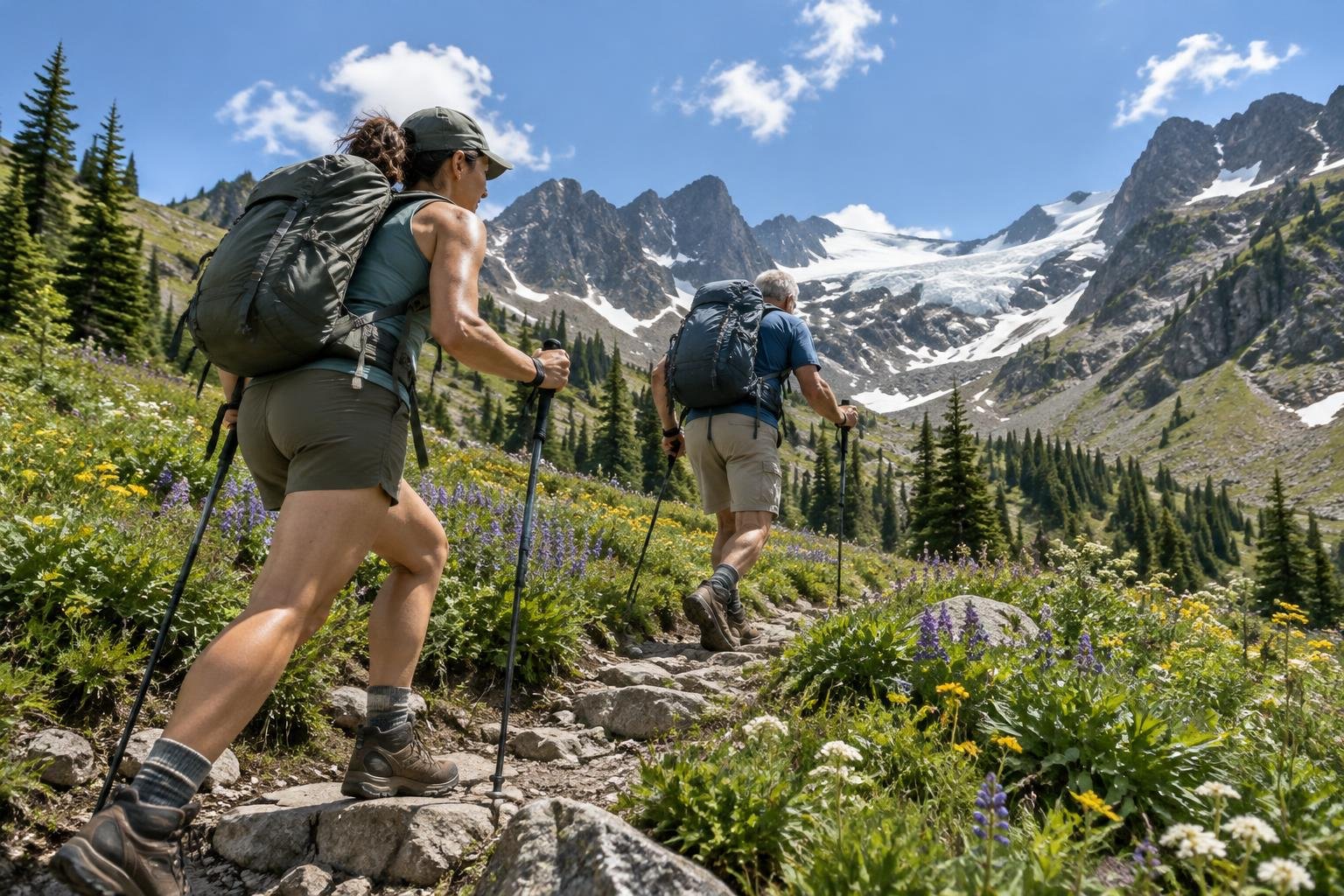
Official season guidance
Alpine clubs & regional authorities: Mid-July to mid-September
No permit is required, but hut bookings are effectively mandatory in summer. This is a serious high-alpine route with a few glacier-edge sections — go with the skills, or a guide, and watch the weather.
Check current dates on sac-cas.ch (Swiss Alpine Club, Swiss huts only)What to pack for the season
Packing should follow the season you choose. Even in the core summer window, pack layers you can add and remove, reliable rain protection given the regular monthly rainfall, and sun protection for long days at altitude. Shoulder-season trips call for extra warmth and a headlamp, since daylight shrinks quickly outside the summer months.
For layering, rain cover and weather planning, see hiking in rain, heat and cold.
Timing mistakes to avoid
The most common timing mistake is treating the route as a simple calendar choice. The official season guidance runs from mid-July to mid-September, so planning around only the warm months can put you outside it. Another is booking too late: hut bookings are effectively mandatory in summer. Finally, regional averages cannot predict conditions on glacier-edge sections, so keep dates flexible and check with the managing authority before you go.
Common questions
When is the official season for the Walker's Haute Route?
The official season guidance gives mid-July to mid-September as the best time to hike the route. This is when the warmest months, long daylight and summer hut operations line up. Because conditions can change, check with the managing authority for current guidance before finalizing dates.
Which month is driest on the Walker's Haute Route?
In the modelled regional data, February is the driest month at about 50 mm, but it is also among the coldest and has short days. Within the recommended summer window, September is the driest at about 66 mm on average. These are regional averages, not measurements taken on the trail.
How much daylight can I expect while hiking?
Daylight peaks at about 15.5 hours in June and is still around 15.2 hours in July and 14.0 hours in August. By September it drops to about 12.3 hours, and in December it falls to roughly 8.5 hours. Shorter days mean less walking time, so plan stages accordingly outside midsummer.
Do I need to book ahead for the best season?
No permit is required, but hut bookings are effectively mandatory in summer, which is also the recommended season. Because the route is serious high-alpine terrain with some glacier-edge sections, plan your dates around hut availability and confirm conditions with the managing authority before you travel.
Sources
- Alpine clubs & regional authorities — sac-cas.ch (Swiss Alpine Club, Swiss huts only): official season and permit guidance.
- NASA POWER (Prediction Of Worldwide Energy Resources): monthly temperature and rainfall averages, 2010–2023, from MERRA-2 reanalysis. Daylight hours are calculated from latitude.
Conditions, closures and permit rules change without notice — confirm current information with the managing authority before you go. See our editorial policy and affiliate disclosure.