
Best Time to Hike Annapurna Base Camp — the Sanctuary
The best time to hike Annapurna Base Camp is October to November or March to April, the two windows named in the official season guidance. Both fall outside the monsoon rains, which peak in July, and both offer a workable balance of daylight and moderate warmth for the multi-day teahouse trek.
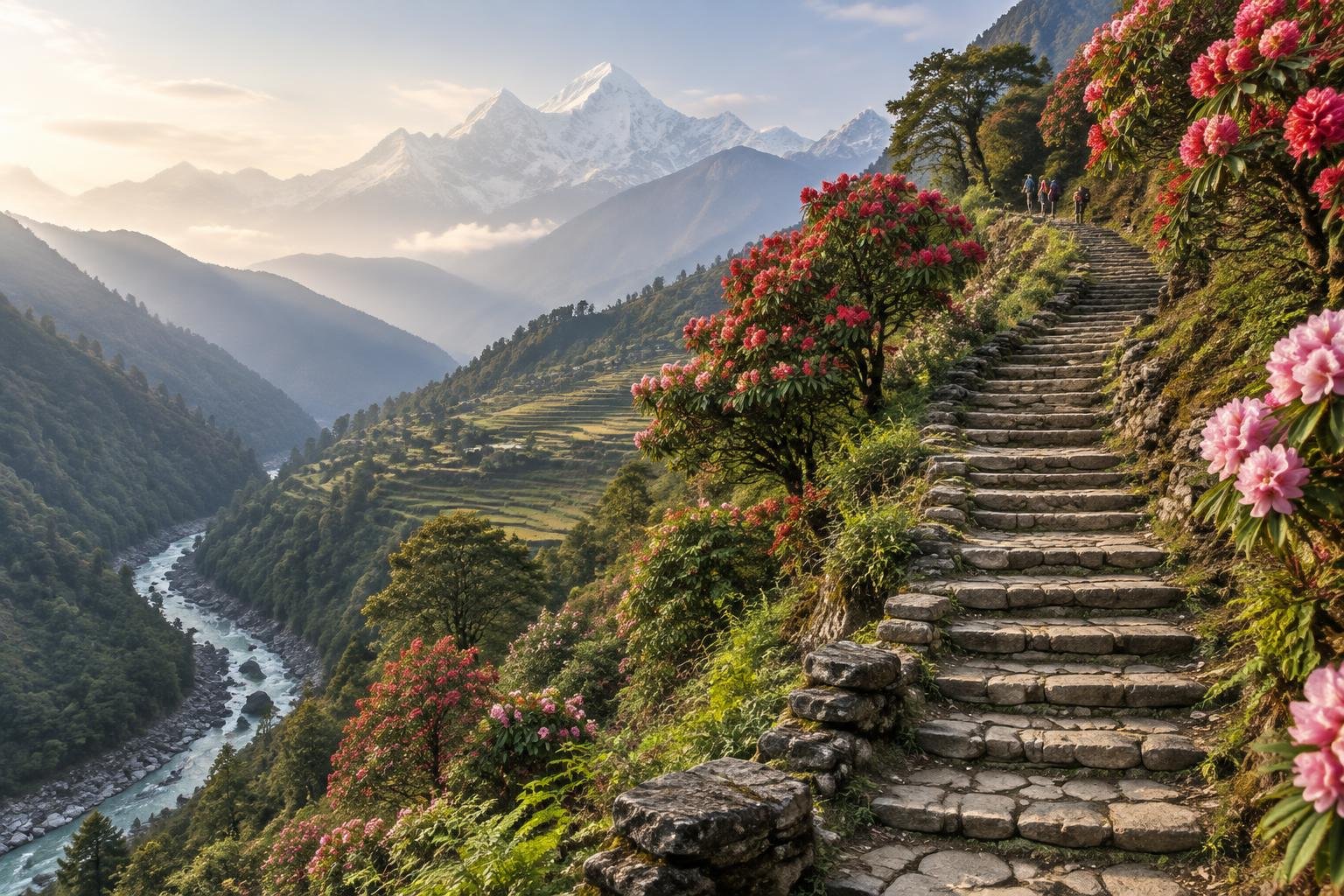
Month-by-month climate for Annapurna Base Camp — the Sanctuary
| Month | Relative warmth | Rain | Daylight |
|---|---|---|---|
| Jan | Coldest | 18 mm | 10.4 h |
| Feb | Coldest | 27 mm | 11 h |
| Mar | Cool | 42 mm | 11.8 h |
| Apr | Mild | 59 mm | 12.7 h |
| May | Warm | 148 mm | 13.4 h |
| Jun | Warmest | 286 mm | 13.8 h |
| Jul | Warmest | 443 mm | 13.6 h |
| Aug | Warmest | 387 mm | 13 h |
| Sep | Warmest | 259 mm | 12.2 h |
| Oct | Mild | 103 mm | 11.3 h |
| Nov | Cool | 3 mm | 10.5 h |
| Dec | Coldest | 9 mm | 10.2 h |
Modelled regional averages for 2010–2023 (rainfall) and calculated daylight hours; they describe the wider area, not a reading taken on the trail. “Relative warmth” compares each month with the warmest and coldest months of this place’s own year. It is not a temperature, and the high parts of a route are colder than the region around them.
The modelled averages show a sharp monsoon pulse. July is the wettest month at about 443 mm, followed by August (387 mm) and June (286 mm), while November (3 mm) and December (9 mm) are the driest. Daylight swings from roughly 10.2 hours in December to 13.8 hours in June. Relative to this place's own year, December through February are the coldest months and June through September the warmest, with April and October sitting at mild and March and November at cool.
Annapurna Base Camp — the Sanctuary season by season
Spring · March to April
This is one of the two windows the official season guidance recommends. Typically March is cool and April turns mild, while rainfall stays modest at about 42 mm and 59 mm. Daylight grows from roughly 11.8 to 12.7 hours, giving a comfortable margin for each day's walking. Rain increases noticeably by May, so spring hikers are best placed toward the earlier part of the window. Conditions change from year to year, so confirm the current situation locally.
Pre-monsoon and monsoon · May to September
These are the warmest months of the year here, but also the wettest. Modelled rainfall climbs from about 148 mm in May to 286 mm in June and peaks near 443 mm in July, easing to 387 mm in August and 259 mm in September. Daylight is at its longest, around 13 to 14 hours in midsummer, yet this period falls outside the official season guidance. Anyone considering it should expect persistent rain and check with the managing authority first.
Autumn · October to November
The second recommended window begins as the rains retreat. October is mild, with about 103 mm of modelled rain, while November turns cool and is nearly dry at about 3 mm. Daylight shortens from roughly 11.3 hours to 10.5, so plan walking days around earlier sunsets. The steep drop in rainfall from September to November is the clearest signal in the data and a big reason this window is favored. Check current conditions before you commit.
Winter · December to February
These are the coldest months of this place's year, with modelled rainfall low at about 9 mm in December, 18 mm in January and 27 mm in February. Daylight is at its shortest, around 10.2 to 11.0 hours, which limits how much ground you can cover each day. This period falls outside the official season guidance, so check with the managing authority or a licensed operator about conditions before planning a trek then.
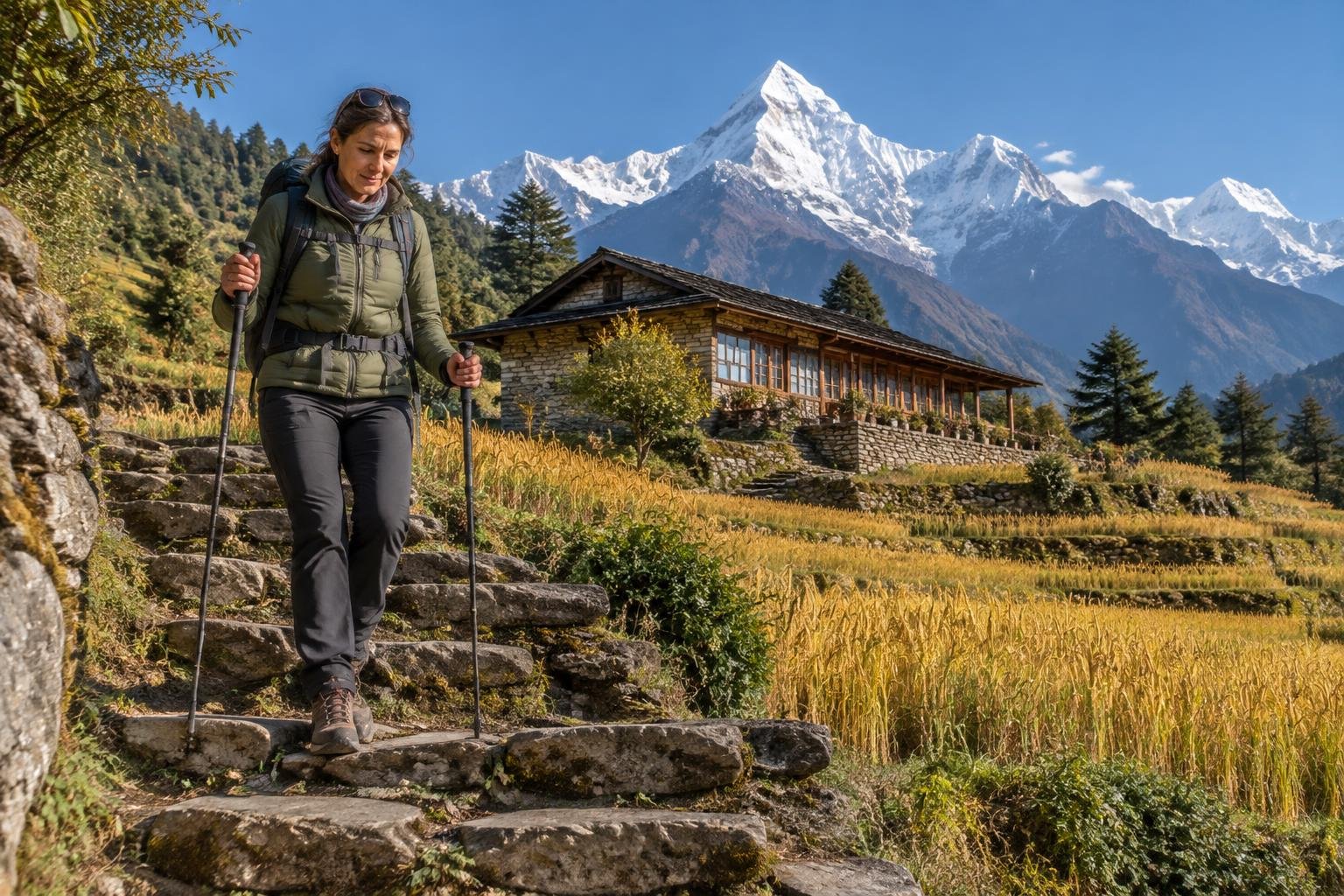
Official season guidance
ACAP / NTNC: October–November and March–April
You need the Annapurna Conservation Area (ACAP) permit and the required trekker registration, and Nepal’s rules on guides for trekkers have been revised, so check the current requirement with the Nepal Tourism Board or a licensed operator. Build in a rest/acclimatization day and manage the altitude gain into the Sanctuary.
Check current dates on ntb.gov.npWhat to pack for the season
Packing should follow the season you choose. Layers matter in every window because the trek spans a wide range of terrain, and a reliable rain cover is essential if you travel near the monsoon edges. Sun protection still counts at altitude. Shorter daylight in late autumn and winter makes a headlamp worth carrying, and a rest day built into your plan helps you pace the climb.
For layering, rain cover and weather planning, see hiking in rain, heat and cold.
Timing mistakes to avoid
A common mistake is picking a single month and assuming it is reliable, when the data shows rainfall shifting sharply from September to October and from April to May. Another is overlooking the official season guidance and booking the wet summer months because they look warmest. Timing also interacts with the permit and registration requirements, and with the need to schedule a rest and acclimatization day, so build slack into your dates rather than a tight schedule.
Common questions
Is October or April better for Annapurna Base Camp?
Both are within the official season guidance. October is mild with about 103 mm of modelled rain and tapering daylight, while April is also mild with about 59 mm. April generally sees less rain, but October follows the monsoon. Check current conditions with the managing authority before you decide.
Is it a bad idea to hike during the monsoon?
The monsoon months of June to September bring the heaviest modelled rainfall, peaking near 443 mm in July, and they fall outside the official season guidance. Rain can affect trail conditions and visibility. If you are considering this period, check with the managing authority or a licensed operator first.
When are the days longest on this trek?
Daylight is longest in June at roughly 13.8 hours and shortest in December at about 10.2 hours. In the two recommended windows, spring offers about 11.8 to 12.7 hours and autumn about 11.3 to 10.5 hours. Shorter days in November mean planning to finish walking earlier.
Does the best season affect permits or planning?
The permit and registration requirements apply regardless of season, and the rules on guides have been revised, so check the current requirement with the Nepal Tourism Board or a licensed operator. Peak-season timing is simply when planning ahead matters most, including a rest day for acclimatization.
Sources
- ACAP / NTNC — ntb.gov.np: official season and permit guidance.
- NASA POWER (Prediction Of Worldwide Energy Resources): monthly temperature and rainfall averages, 2010–2023, from MERRA-2 reanalysis. Daylight hours are calculated from latitude.
Conditions, closures and permit rules change without notice — confirm current information with the managing authority before you go. See our editorial policy and affiliate disclosure.