
Affiliate disclosure: this page contains affiliate links. Purchases made through them may earn us a commission at no extra cost to you. See our affiliate disclosure.
In plain English
On this trek you never pitch a tent. Each night you sleep in a teahouse, which is a small family-run lodge with simple rooms and a shared dining room. The villages on the trail are spaced so that each day ends at one, which means the trail decides where you sleep. That takes a lot of weight out of your pack, because you carry no tent, no stove and no cooking pots.
The same spacing does a second job. The higher you sleep, the thinner the air, and your body needs time to adjust. Climbing a little each day and sleeping a little higher each night gives it that time. Health agencies call this acclimatization, which just means getting used to altitude. Nepal Tourism Board says trekkers above 2,500 meters should treat feeling unwell as possible altitude sickness until proven otherwise.3
Because so much is arranged along the way, the paperwork matters. Nepal Tourism Board's own page says some routes, including this one, need a licensed guide and a card issued through a trekking agency, and it tells trekkers to check whether their route is on the list before they do anything else.1 Rules like these can change, so confirm them before you book.
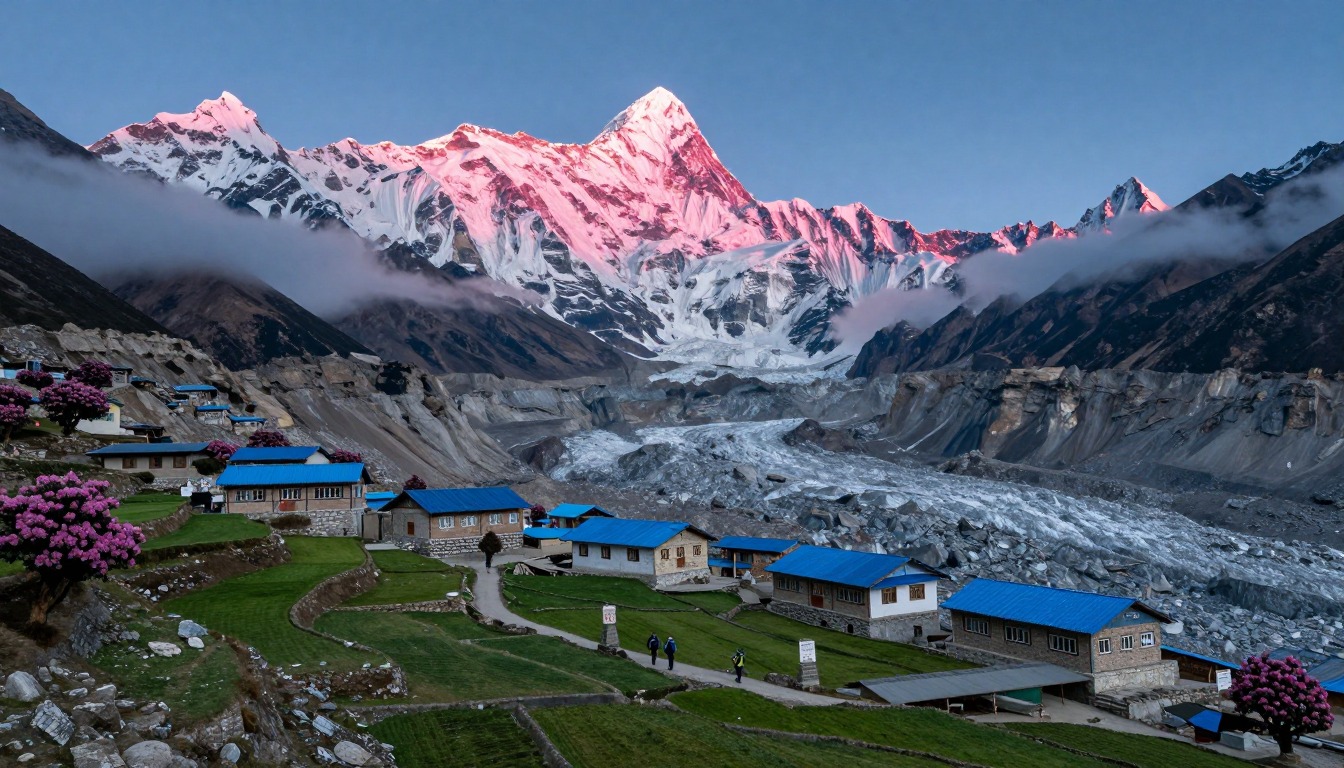
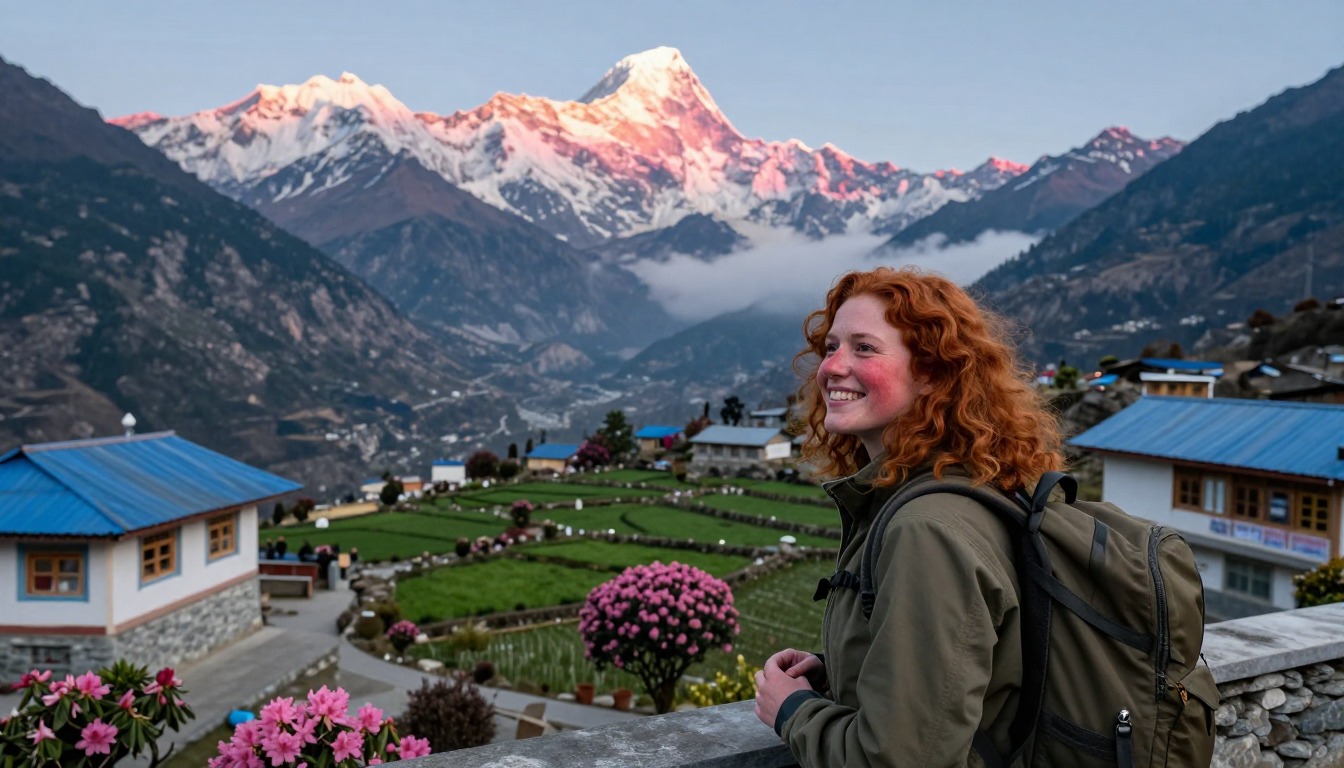
The Annapurna Base Camp trek is a teahouse walk in Nepal's Annapurna Conservation Area, following a river gorge up into the Annapurna Sanctuary — a glacial amphitheater ringed by peaks on nearly every side. Family-run teahouses line the route through villages like Chhomrong, Sinuwa and Deurali, all the way up to Machapuchare Base Camp and Annapurna Base Camp itself, so nobody carries a tent and where you sleep each night is set by the trail, not by choice.
Why hike here
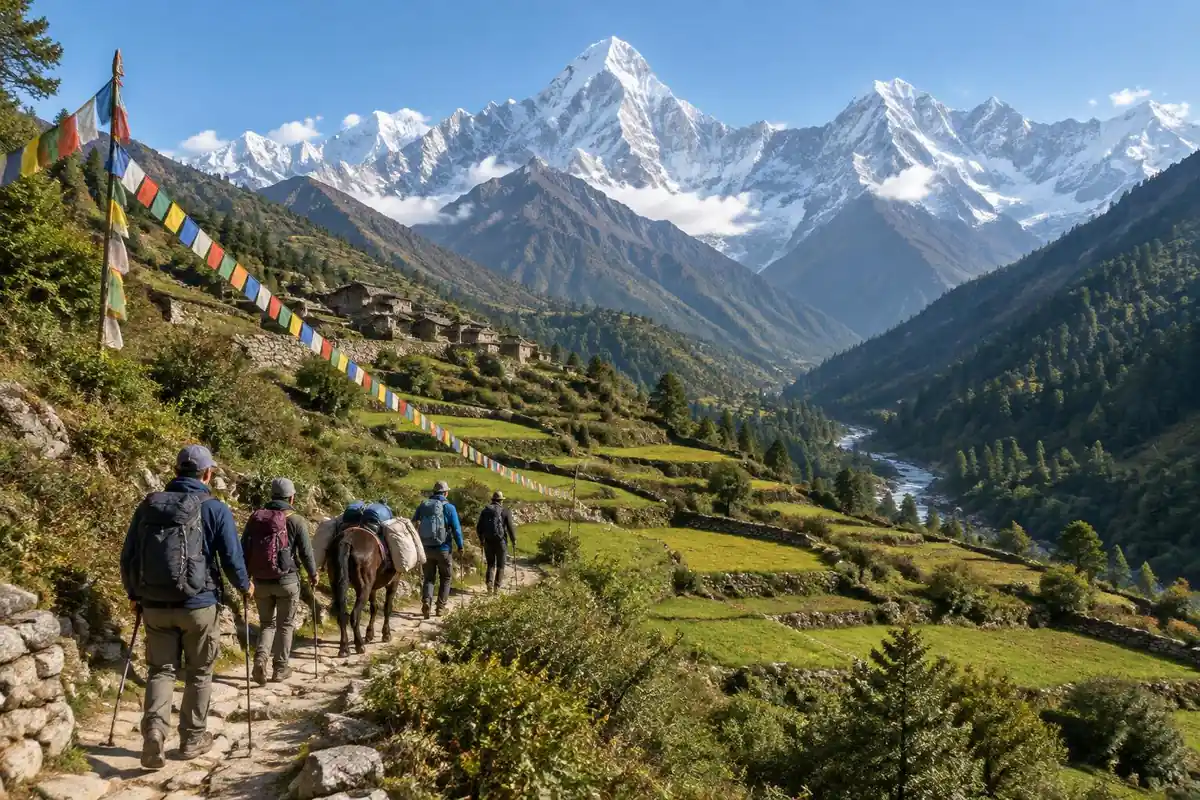
What makes the Annapurna Sanctuary different from a typical mountain hike is the reveal: days of climbing through forest and a narrowing river gorge, walls rising overhead, before the trail suddenly opens into the amphitheater itself and peaks appear on every side at once. Teahouses make this possible without carrying your own shelter — simple rooms, a shared dining hall with a wood stove, the same faces from the trail turning up again at dinner. Sleeping progressively higher each night, from Chhomrong through Sinuwa and Deurali toward Machapuchare Base Camp before the final push to Annapurna Base Camp, is also how your body adjusts to the altitude — here, the itinerary and the acclimatization schedule are effectively the same thing.
Getting there
There's no single road to the trailhead: most hikers fly into Kathmandu, then take a short domestic flight (or a long day of road travel) to Pokhara, the lakeside city that serves as the staging base for the whole Annapurna region. From Pokhara, a road transfer covers the last stretch to the trailhead area, and the trek continues on foot from there. Because Nepal Tourism Board lists this trek among routes needing a licensed guide and an agency-issued TIMS card (under a provision it dates to 31 March 2023, with a later notice about revised provisions), most hikers arrange their guide, porter and permit paperwork in Pokhara or Kathmandu before setting out, rather than at the trailhead itself.
Where to stay
The realistic options, closest-to-the-trail first. Book through the official links — we don't list prices or availability because they change all the time.
For example: Family-run lodges in the villages up the gorge (Chhomrong, Sinuwa, Deurali) and at Machapuchare and Annapurna Base Camp
Every trekker — teahouses are the only lodging in the Sanctuary.
Higher lodges are simpler and colder; space is tight in peak season.
Via a licensed trekking operatorFor example: Hotels and guesthouses in the lakeside city of Pokhara before and after
Everyone — Pokhara is the staging city for the trek.
Spend a night here to organize permits, a guide and transport.
Nearby-city lodging
Permits & rules
You need the Annapurna Conservation Area (ACAP) permit and the required trekker registration, and Nepal’s rules on guides for trekkers have been revised, so check the current requirement with the Nepal Tourism Board or a licensed operator. Build in a rest/acclimatization day and manage the altitude gain into the Sanctuary.
Gear you'll want for this trip
Matched to the terrain and conditions here. Real products — check current price on Amazon.

The itinerary and the acclimatization plan are one thing
The page notes that the Sanctuary route climbs a little each night, so the sleeping schedule doubles as an altitude schedule. Two health sources give numbers for that idea. Nepal Tourism Board says sleeping altitude should not rise more than 300 to 500 m a day above 2,500 m, measured from the previous night, with a rest day after every 1,000 m of gain.3 The CDC Yellow Book gives a similar rule from a higher starting point: above about 9,850 feet (roughly 3,000 m), sleeping altitude should rise no more than about 1,600 feet (roughly 490 m) a day, with an extra acclimatization day for every 3,300 feet (roughly 1,000 m).4
The two sources are not identical, and that is worth knowing. Nepal's guidance starts counting at 2,500 m, in line with a 2025 review of Wilderness Medical Society guidelines that notes higher altitude-illness risk above about 2,500 m.5 The CDC rule kicks in higher up. Neither depends on how fit you are, and the CDC states directly that physical fitness and training do not protect against altitude illness.4 It also says headache, typically starting 2 to 12 hours after arrival at altitude, is the main symptom of acute mountain sickness, and that you should never go higher to sleep while having symptoms.4 Because the villages fix where each night's bed is, the practical way to add margin is an extra night in a village, not a shorter day.
Who arranges the bed, the guide and the card
Nepal Tourism Board's TIMS page says that, under a revised provision effective March 31, 2023, specific protected areas need trekkers to be accompanied by a licensed trekking guide and to carry a TIMS card issued by a trekking agency. Its route list includes the Annapurna Circuit and the Poon Hill and Annapurna Base Camp trek, and it says agencies must register the trekkers, guides and details to obtain the cards.1 The page tells trekkers to find out first whether their route needs a guide and card, then contact a government-registered trekking agency.1
That is why the page's advice to sort permits in Pokhara or Kathmandu, not at the trailhead, is sound. Nepal Tourism Board's front page also carries a notice titled as a revised provision for trekking, so requirements are the kind of thing that gets updated. Confirm the current guide, card and permit requirements with the Annapurna Conservation Area project, which the page names as manager, and with a registered agency before you pay for anything.
What a teahouse-only route does to your pack
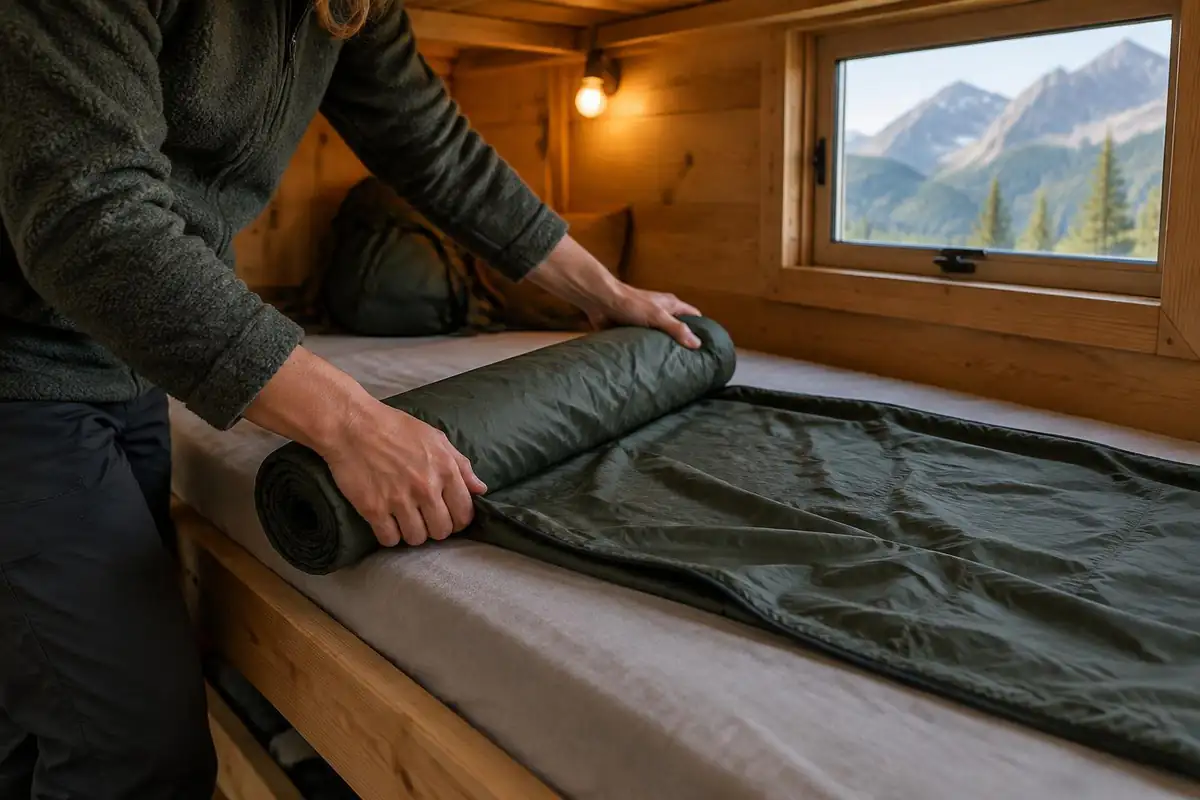
The National Trust for Nature Conservation, which runs the Annapurna Conservation Area, says people live inside the area and that it has more than 1,000 lodges, teashops and other services for trekkers, pilgrims and their support staff.2 That web of lodges is why you can leave the tent, stove and cookware at home. What stays in the pack is a sleeping bag suited to cold rooms, since the page warns that higher lodges are colder. Bag ratings are easy to misread: NEMO says the extreme rating marks serious risk of death from hypothermia within hours and is not a target, so choose by the comfort and limit figures.6
Water is the other thing a lodge does not fully solve. The CDC says clear mountain water can still contain germs, that boiling is the best treatment at 1 minute or 3 minutes above 6,500 feet, and that most portable filters remove parasites but not viruses.7 The trust also says a typical trekking group of 15 people generates about 15 kilos of non-biodegradable, non-burnable garbage in a 10-day trek, and calls litter a major concern.2 Carrying a small bag for your own wrappers and empty packets is a small habit that helps.
Common questions
Do I need to bring a tent for the Annapurna Base Camp trek?
No — family-run teahouses line the entire route, from the lower villages up through Machapuchare Base Camp to Annapurna Base Camp itself, so most nights you'll have a room and a shared dining hall rather than a tent. Rooms get simpler and colder the higher you climb, so pack for genuinely cold nights near the top.
What permits do I need for the trek?
You'll need an Annapurna Conservation Area Permit (ACAP) plus trekker registration, and Nepal Tourism Board lists this route among those needing a licensed guide under a provision dated 31 March 2023, so confirm the current guide rules, since a revised provision has since been noticed. These are typically arranged in Pokhara or Kathmandu before you set out. Because permit rules can change, it's worth confirming the latest requirements with a licensed trekking agency ahead of your trip.
When is the best time to hike into the Annapurna Sanctuary, and does that affect finding a room?
The main windows are October–November and March–April, when trails and mountain views are at their best — and also when teahouses see the most trekkers. Traveling with a guide helps, since they typically handle rooms as the group moves; if you're going independently in peak season, ask about a room as early in the day as you arrive.
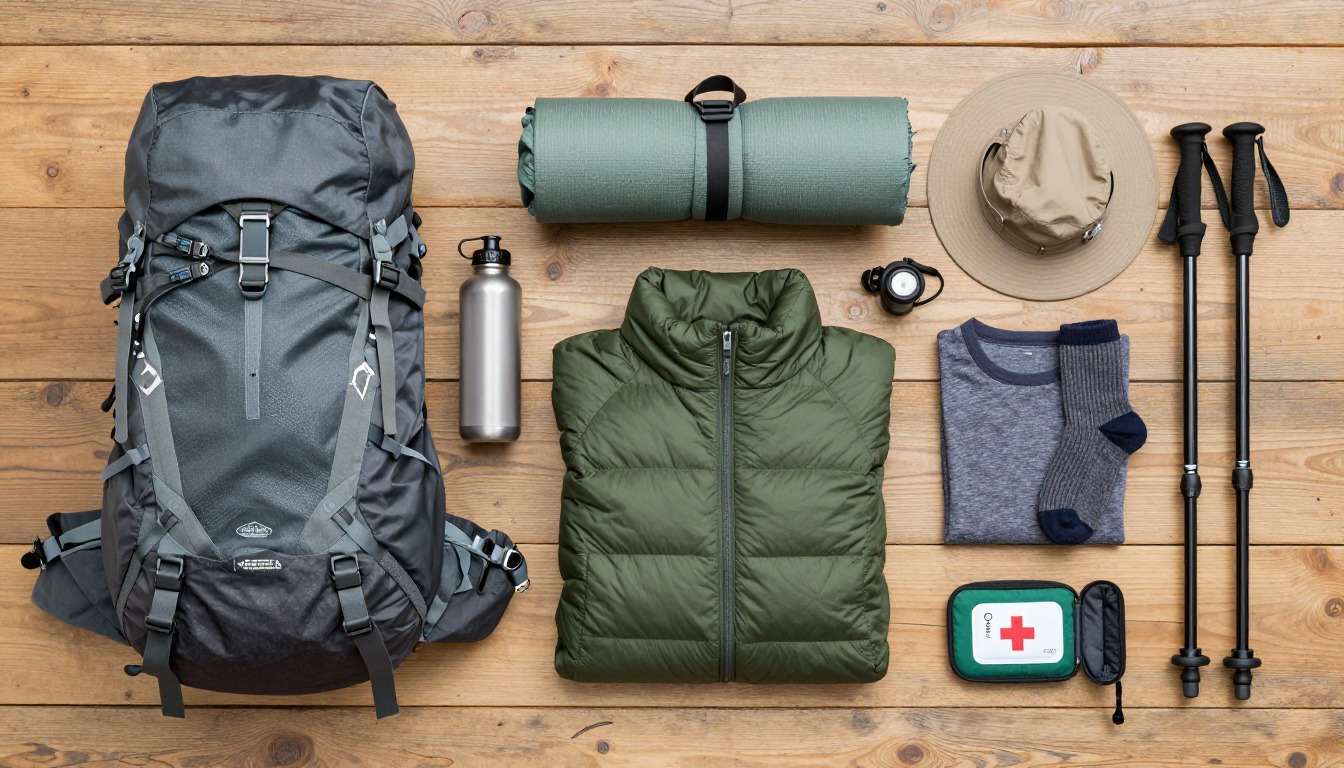
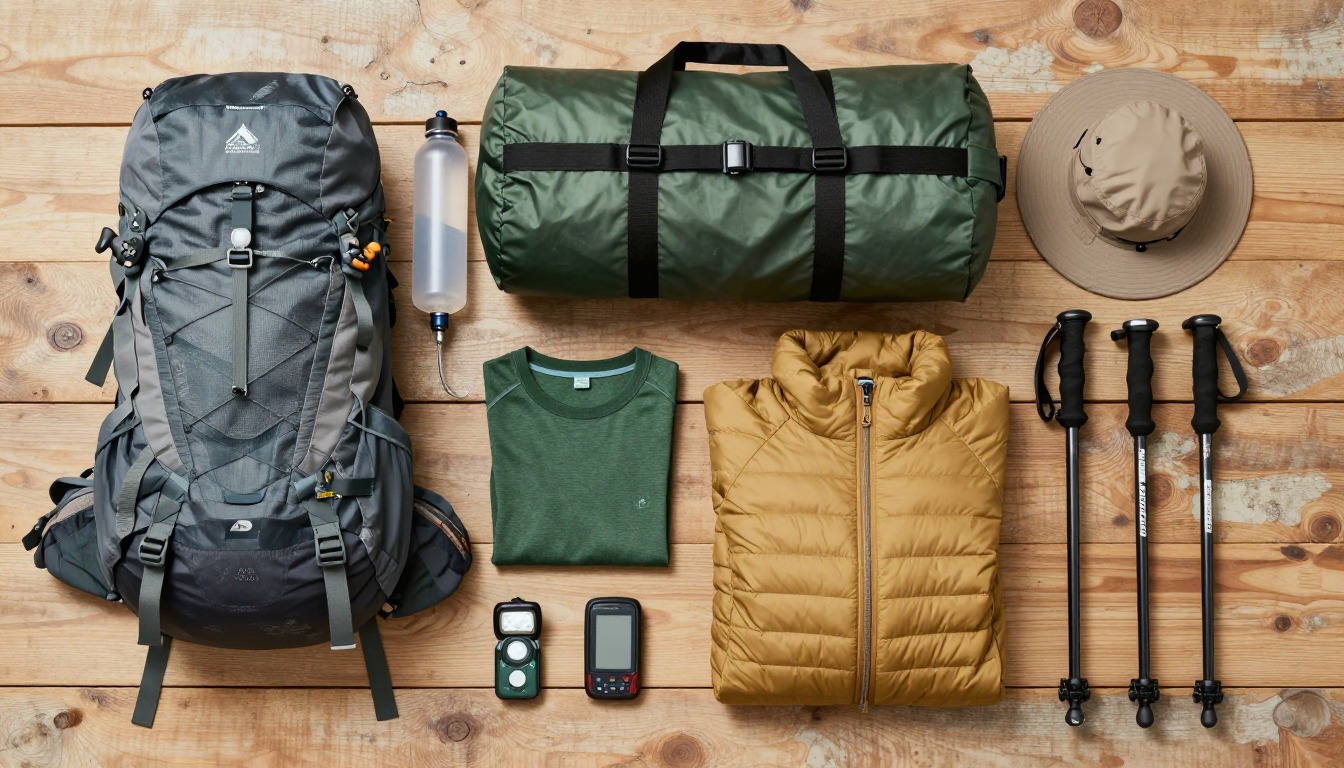
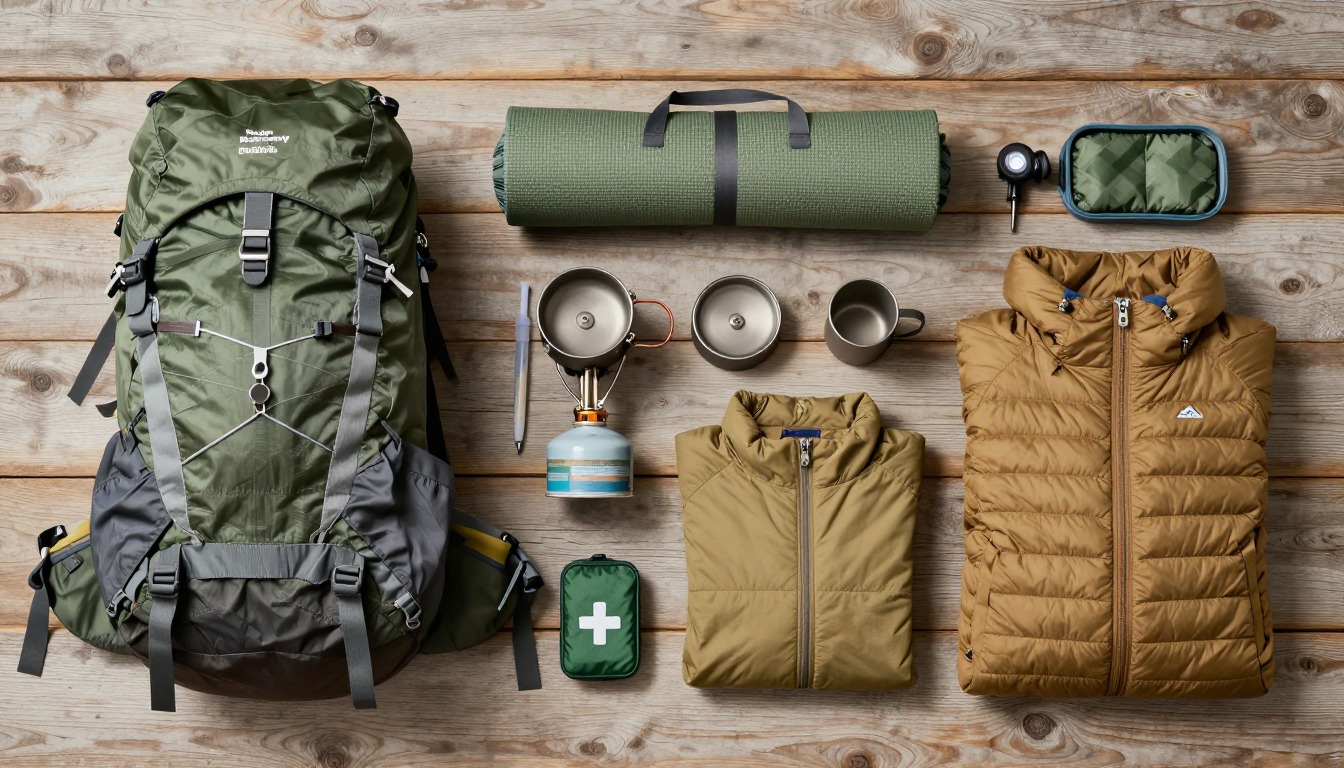
Complete gearsets for this trip
Full curated kits built for exactly this kind of hike — what to bring, why, and links to similar gear.
Lodging details are compiled from official parks, refuge associations and reservation systems and can change without notice. We publish no prices, availability or ratings — always confirm current information on the official site before booking or setting out. Product links and the accommodation map are affiliate links: we may earn a commission at no extra cost to you; product prices and availability are shown on Amazon, and accommodation prices on the booking site. See our affiliate disclosure.