
Best Time to Hike Causeway Coast Way — Giant’s Causeway
The best time to hike the Causeway Coast Way at Giant's Causeway is April to October, the window given in the official season guidance. Within it, late spring and summer bring the longest daylight, while April is the driest month and the warmest weather arrives from June to September.
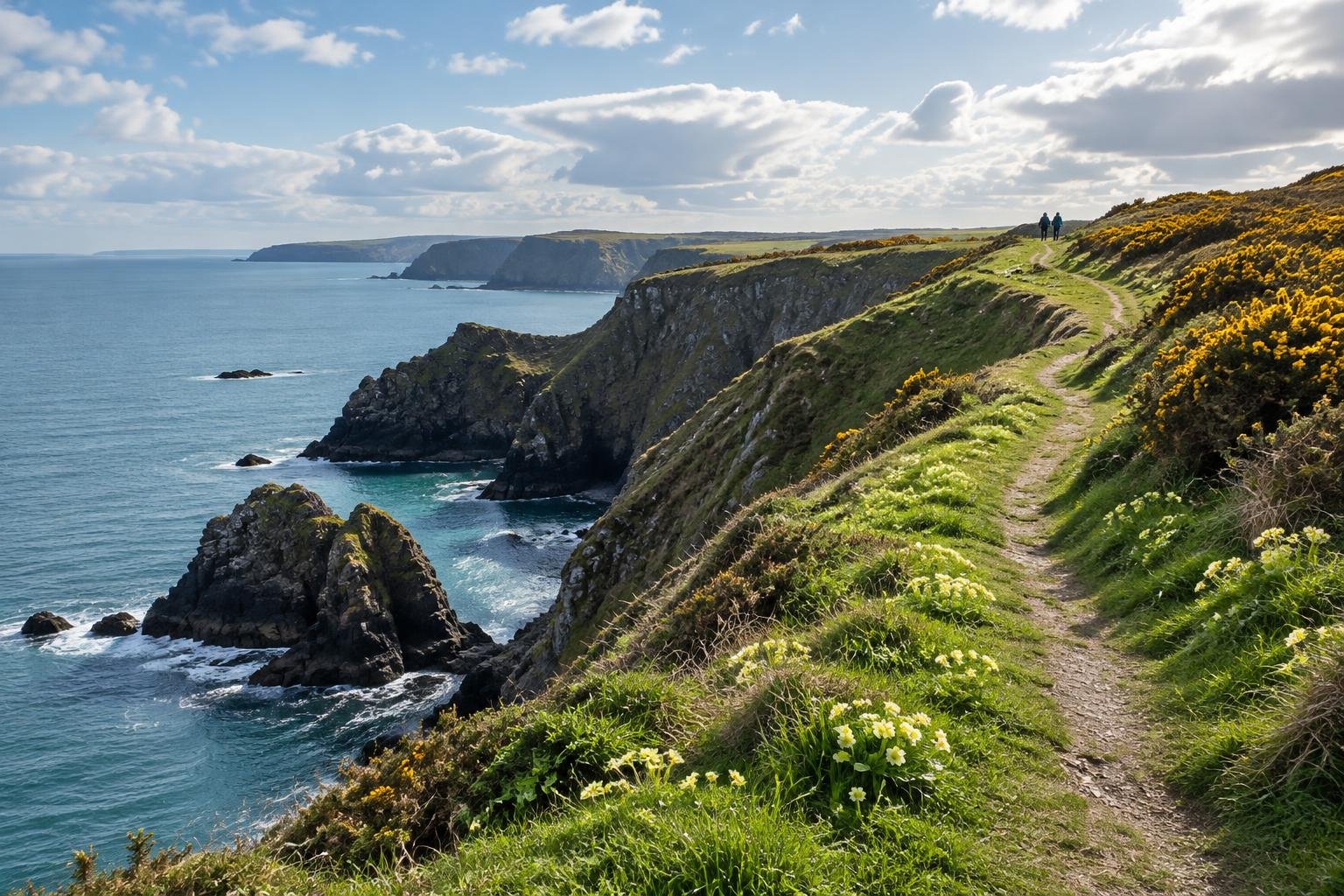
Month-by-month climate for Causeway Coast Way — Giant’s Causeway
| Month | Relative warmth | Rain | Daylight |
|---|---|---|---|
| Jan | Coldest | 101 mm | 7.5 h |
| Feb | Coldest | 94 mm | 9.3 h |
| Mar | Coldest | 82 mm | 11.5 h |
| Apr | Cool | 59 mm | 13.8 h |
| May | Mild | 78 mm | 15.9 h |
| Jun | Warmest | 88 mm | 17.1 h |
| Jul | Warmest | 106 mm | 16.6 h |
| Aug | Warmest | 103 mm | 14.8 h |
| Sep | Warmest | 99 mm | 12.4 h |
| Oct | Mild | 121 mm | 10.1 h |
| Nov | Cool | 112 mm | 8 h |
| Dec | Coldest | 121 mm | 6.9 h |
Modelled regional averages for 2010–2023 (rainfall) and calculated daylight hours; they describe the wider area, not a reading taken on the trail. “Relative warmth” compares each month with the warmest and coldest months of this place’s own year. It is not a temperature, and the high parts of a route are colder than the region around them.
Modelled regional averages show rain every month, so a dry day is never guaranteed. April is the driest at about 59 mm, while October and December are the wettest at roughly 121 mm each. July and August still see about 106 and 103 mm. Daylight swings from just 6.9 hours in December to 17.1 hours in June. Relative to this place's own year, June through September are the warmest months, and December through March are the coldest. These are typical figures for the region, not measurements taken on the trail itself.
Causeway Coast Way — Giant’s Causeway season by season
Spring · March to May
March is among the coldest and wettest months, with about 82 mm of rain and roughly 11.5 hours of daylight, and it falls just before the official April start. April is the driest month on average, around 59 mm, with 13.8 hours of daylight and cool conditions. By May it turns mild, with about 78 mm of rain and nearly 16 hours of light. Spring suits walkers who want long days and the lowest rainfall of the season window.
Summer · June to August
June through August are among the warmest months of the year here, with daylight peaking at about 17.1 hours in June. That gives plenty of time to walk the coast path unhurried and pause at the basalt columns. Rainfall is not low, though, at roughly 88 mm in June, 106 mm in July and 103 mm in August on average. Expect showers to be part of the picture even in the warmest part of the year.
Early autumn · September to October
September stays among the warmest months, with about 12.4 hours of daylight and around 99 mm of rain. October is the last month of the official season and the wettest in the supplied data, at roughly 121 mm, with warmth easing to mild and daylight shrinking to about 10.1 hours. Cliff paths can be slick, so a shorter day and wetter conditions mean more careful planning. Check tides and the forecast before setting out.
Late autumn and winter · November to March
Outside the official April to October window, conditions become cooler and then coldest from December to March. Daylight falls to about 8 hours in November and just 6.9 hours in December, while rain stays heavy at about 112 to 121 mm in those months. With exposed cliff paths already described as potentially slick, short days and persistent rain leave little margin. Confirm current conditions with the managing authority before considering a winter visit.
Official season guidance
National Trust & local councils: April to October
No permit is needed to walk the coast path, though the Giant’s Causeway visitor center (National Trust) charges for its facilities and parking. Cliff paths are exposed and can be slick — check tides and weather.
Check current dates on nationaltrust.org.uk (Giant’s Causeway)What to pack for the season
Packing follows the season more than the calendar. Rain is likely in every month, so a dependable waterproof layer and pack cover matter year-round. Add warm layers toward the cooler and coldest months, and sun protection for the long summer days. Carry a headlamp or light source when daylight is short, especially from October onward, and wear footwear with good grip for slick cliff paths.
For layering, rain cover and weather planning, see hiking in rain, heat and cold.
Timing mistakes to avoid
A common mistake is choosing a month by warmth alone and overlooking that rain stays heavy from June through December. Another is ignoring the official April to October guidance and heading out in the short, wet days of winter on exposed cliff paths. Visitors also forget that tides and weather affect the route, so timing a walk without checking them can leave you rushed or turned back. Check with the managing authority for current conditions.
Common questions
What is the best month to hike the Causeway Coast Way?
April is the driest month on average at about 59 mm, while June to September are the warmest relative to this place's year. For a balance of lighter rain and long daylight, late spring is a sensible target. Either way, stay within the official April to October guidance.
Is summer the best time to walk the Giant's Causeway coast path?
Summer offers the warmest weather and the longest days, up to about 17 hours of daylight in June. It is not the driest season, though, with July averaging around 106 mm of rain. Showers are typical, so waterproofs still belong in your pack even in the warmest months.
Can I hike the Causeway Coast Way in winter?
The official season guidance is April to October, and winter brings the coldest conditions, heavy rain of roughly 94 to 121 mm a month, and only about 7 hours of daylight in December. Cliff paths can be slick. Check tides, weather and current advice from the managing authority before going.
How much daylight do I have for a walk here?
Daylight varies widely, from about 6.9 hours in December to roughly 17.1 hours in June. April offers around 13.8 hours and October about 10.1. In the shorter months, plan an earlier start and carry a headlamp so you are not caught on exposed cliff paths after dark.
Sources
- National Trust & local councils — nationaltrust.org.uk (Giant’s Causeway): official season and permit guidance.
- NASA POWER (Prediction Of Worldwide Energy Resources): monthly temperature and rainfall averages, 2010–2023, from MERRA-2 reanalysis. Daylight hours are calculated from latitude.
Conditions, closures and permit rules change without notice — confirm current information with the managing authority before you go. See our editorial policy and affiliate disclosure.