
Affiliate disclosure: this page contains affiliate links. Purchases made through them may earn us a commission at no extra cost to you. See our affiliate disclosure.
In plain English
The Causeway Coast Way follows the north coast of Northern Ireland. It is not one clean trail. It stitches together cliff-top paths, quiet lanes and open beaches, and the famous stone columns of the Giant's Causeway sit in the middle of it. Most people walk a section or two rather than the whole route.
The two things that shape a day here are the tide and the wind. Some beach stretches are hard or impossible to pass when the sea is high, so a tide table is as important as a map. And because the coast has almost no shelter, wind can make an easy path feel hard and cold.
That is why the pack matters less than what is inside it. You want a waterproof jacket, a warm layer, a hat and something to keep your dry clothes actually dry. A small daypack, closed snugly, is enough for most sections because towns and buses are never far away.
What the hike is like
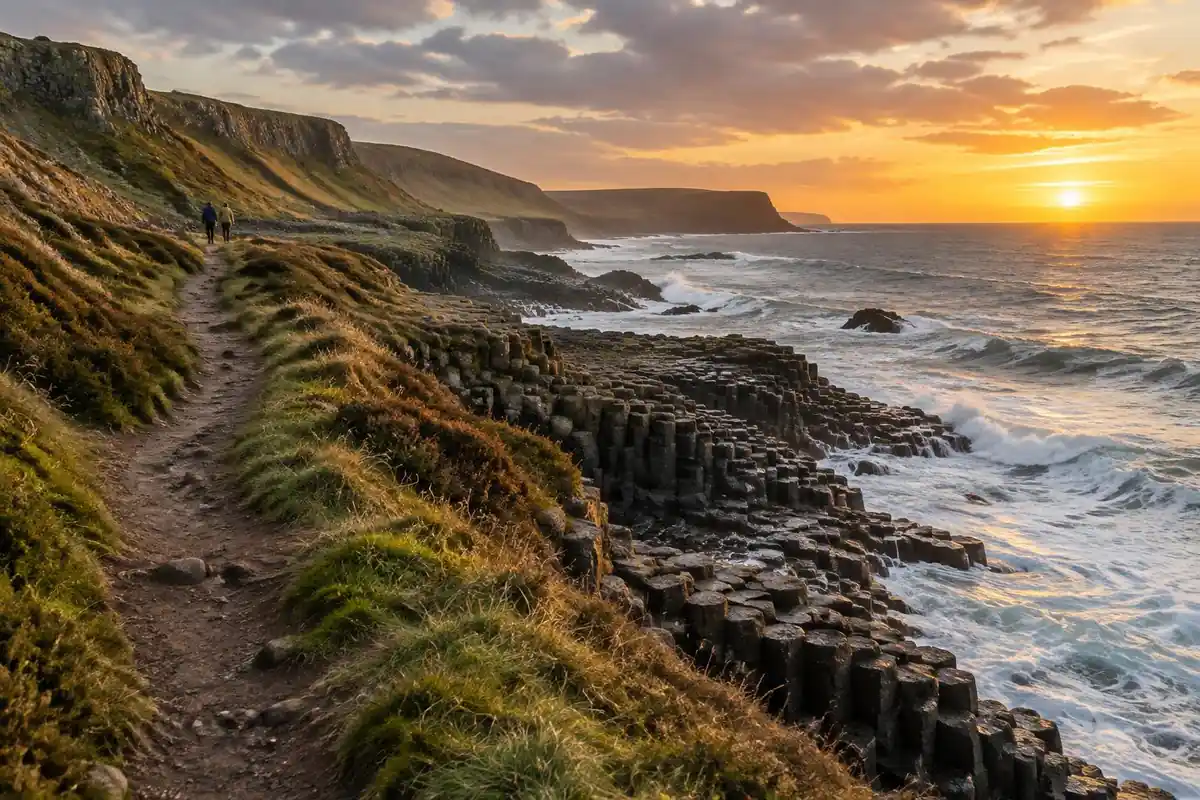
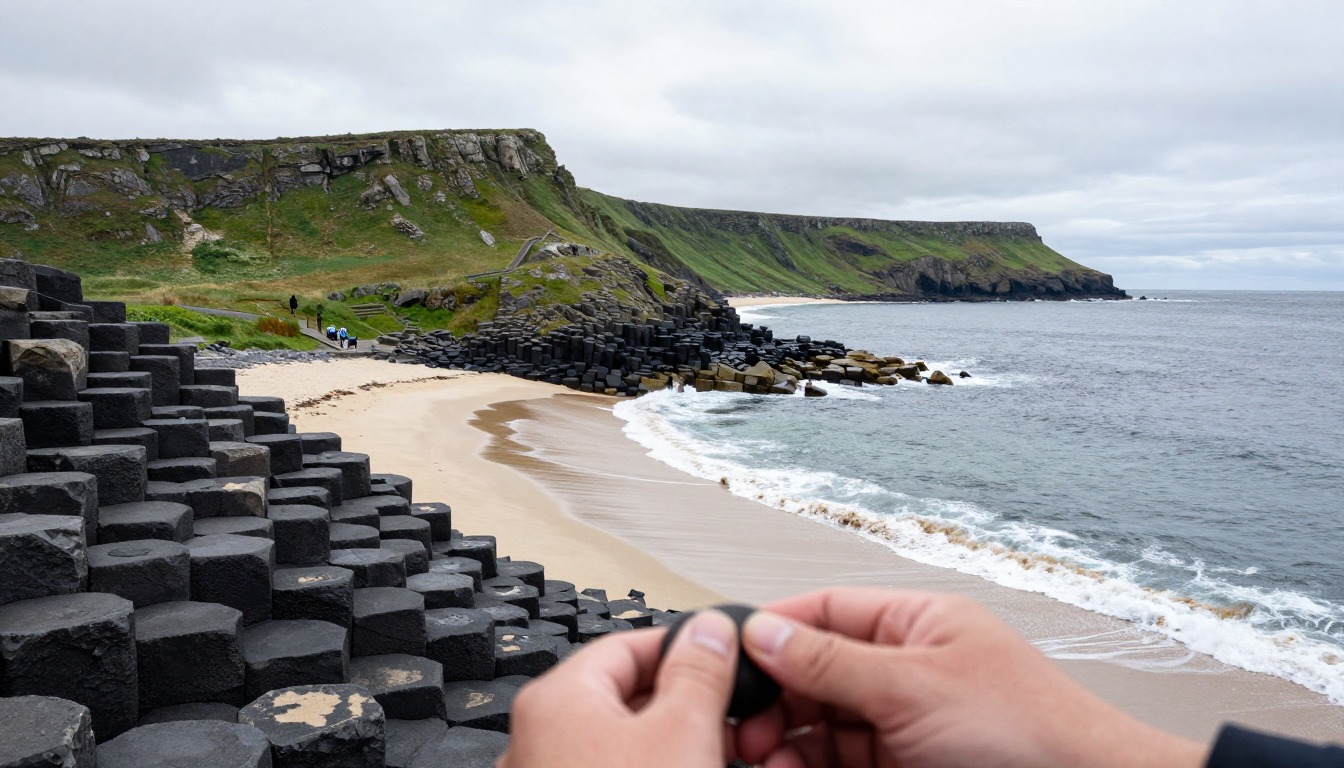
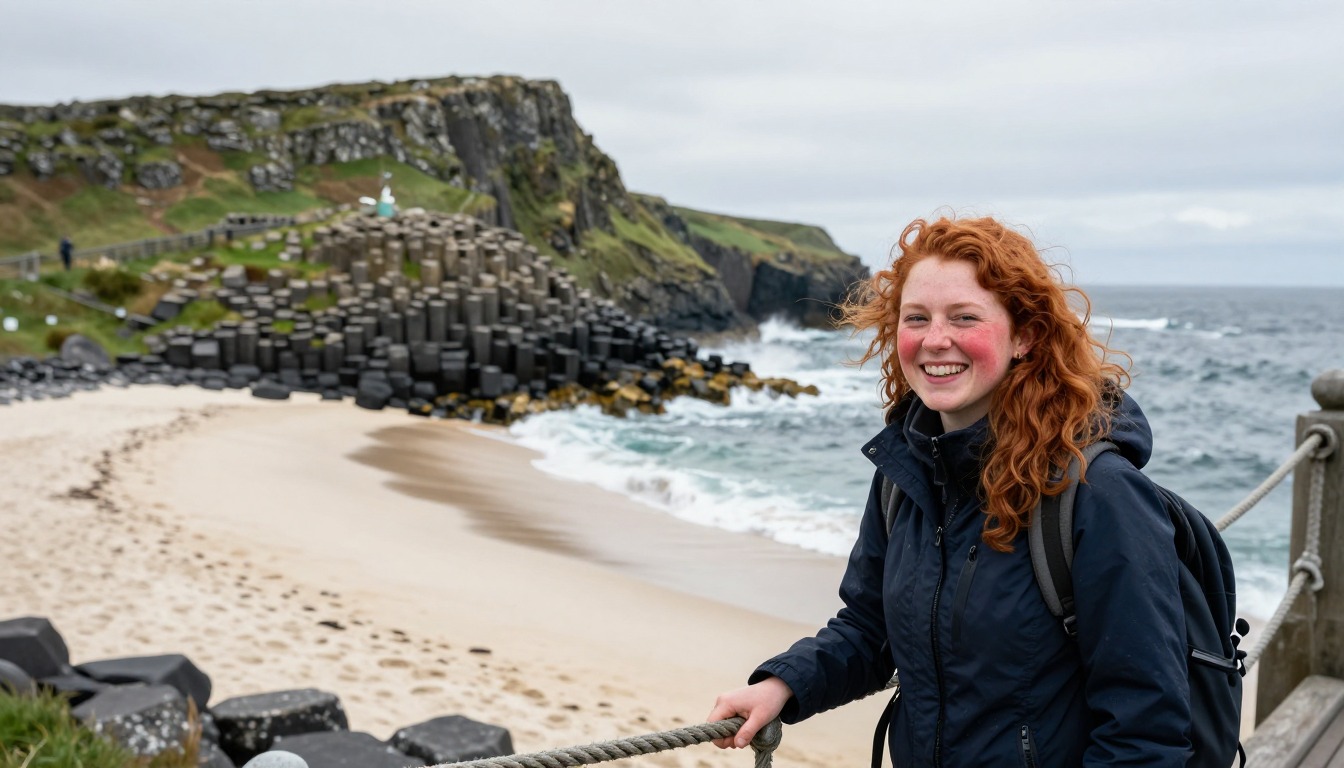
The Causeway Coast Way is a stitched-together route rather than one continuous trail tread: grassy clifftop paths, stretches of quiet lane, long open beaches where the walking surface changes with the tide, and short, steep stepped sections linking the high ground to the shore. Around the Giant's Causeway itself the path runs along the cliff top with the basalt colonnade below, and a stepped descent drops walkers down to the columns at sea level, where the rock is uneven, often wet, and far busier than the trail either side of it. East and west of there the coastline keeps repeating the same rhythm: climb onto a headland, contour above the sea, drop to a bay, cross the sand, climb again. It is low-level walking with almost no shelter, so Atlantic wind does more to set the difficulty than any gradient.
How to plan the itinerary
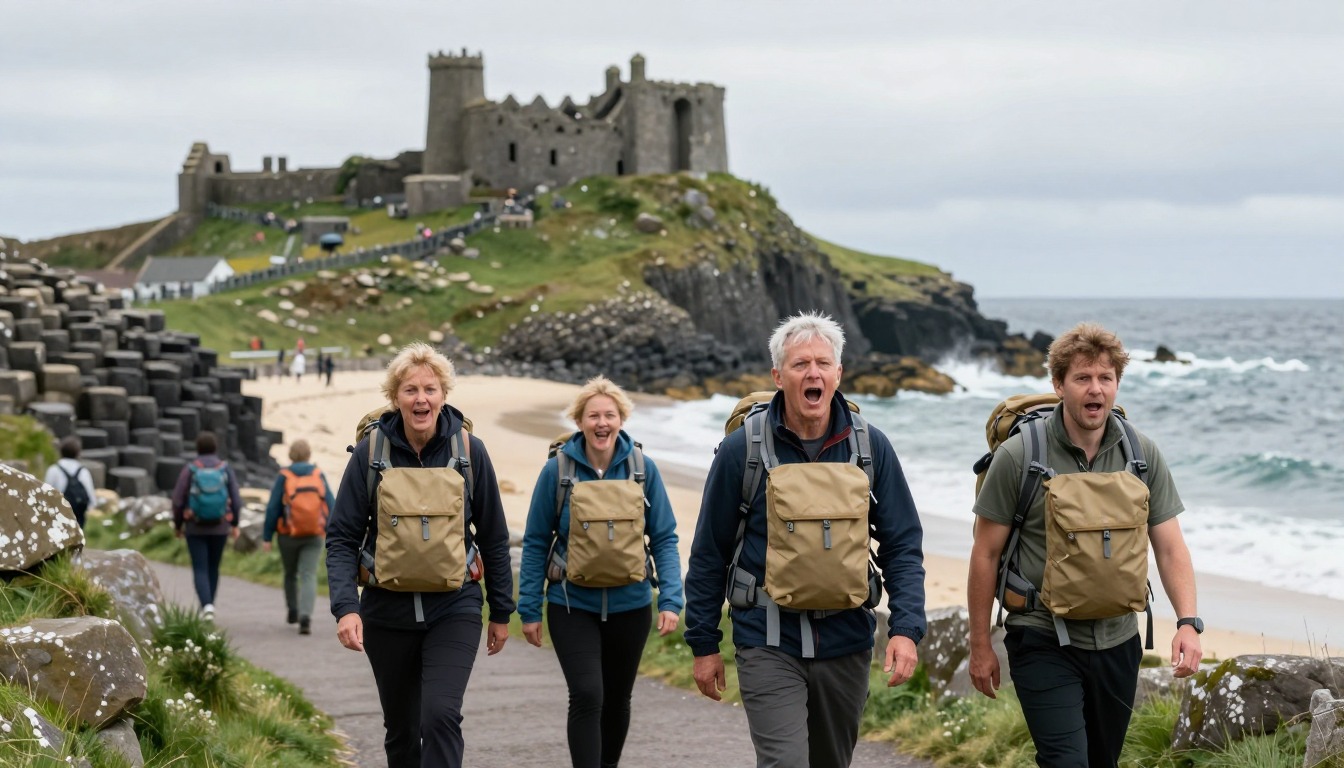
Two approaches dominate. Some walkers take the whole thing end to end over a few days, moving between the coastal towns and carrying only a daypack, since the route never strays far from a road or a bed. Others base themselves in one town and pick off sections as day walks, using the coastal bus to reach a start point and ride back from the finish. That second option is easier logistically and lets you swap a cliff section for a beach section depending on the wind. Either way, the stretch around the Causeway is the piece most people prioritize, and it is worth timing for early or late in the day when visitor traffic thins. Tides shape the plan more than distance does, since some beach sections are not passable near high water, so check the tide table before fixing your start time.
Plan this trip in 5 steps
-
Pick the right pack
Match a pack to your trip, fit and priorities.
-
Book a place to stay
Campgrounds, huts and lodges near Causeway Coast Way — Giant’s Causeway.
-
Plan food & water
Calories, food weight and water for your days on trail.
-
Estimate your time
Pre-filled with this trail’s distance and climb — adjust for your pace.
Trail-specific tips
Plan around the tide rather than the clock. Several beach sections narrow or disappear at high water, and detouring around them can cost more than simply waiting an hour. The other recurring mistake is underestimating exposure: this is sea-level walking, but the clifftop stretches take the full force of Atlantic wind, and wet grass on a sloping cliff edge is genuinely slick. Carry a windproof layer even on a warm forecast, and keep well back from unfenced edges. General preparation and safety advice lives at /trail-smarts/.
Permits & rules
No permit is needed to walk the coast path, though the Giant’s Causeway visitor center (National Trust) charges for its facilities and parking. Cliff paths are exposed and can be slick — check tides and weather.
Gear suited to this hike
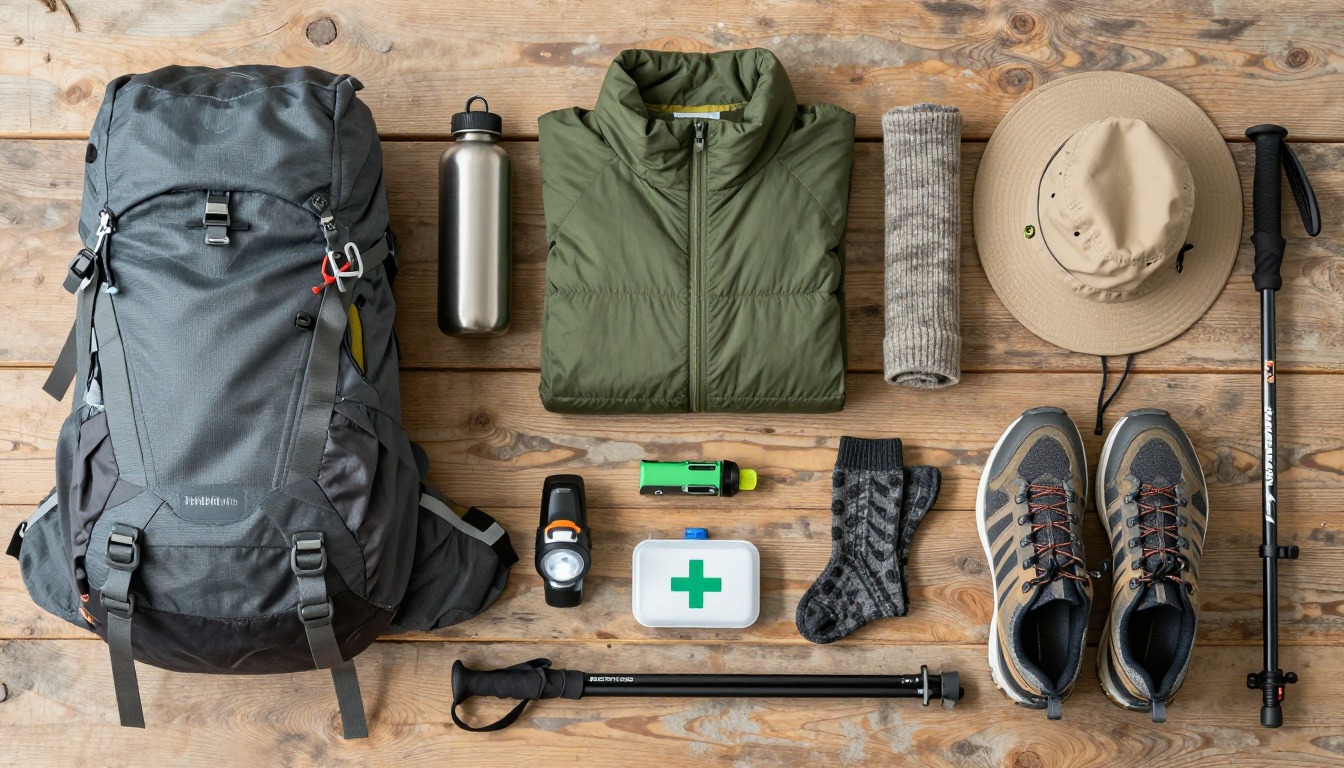
Matched to the terrain and conditions here. Real products — check current price on Amazon.


Tides, beaches and the decision to wait
Sand walking looks flat and easy on a map, but it can put you in a place with limited escape routes when the water rises. The page already advises checking tides; the practical version is to set your start time so the beach sections fall on a falling or low tide, and to treat a missed window as a reason to wait rather than push on. Tide timing is local information from a tide table for the day, not something a general guide can give you.
A pack that rides close and stable helps on soft sand and uneven cliff steps. A review of load carriage found that the energy cost of walking with a backpack rises with load weight, walking speed and grade, and that keeping the load's center of mass close to your own gives the lowest energy cost.3 On a route where you can stop in a town for lunch, that argues for a light daypack rather than carrying the day's food and spare kit.
Cold, wet and windy: what the layers are for
The CDC warns that hypothermia can develop in air above 40°F if you are chilled by rain, sweat or cold water, and it lists hikers as a higher-risk group.1 Exposed headlands with a steady Atlantic wind are exactly the setting where a sweaty climb is followed by a chilled stop. The National Park Service recommends layers you can add and remove, and wool or synthetic over cotton, since wet cotton will not keep you warm.4
REI notes that pack fabric coatings can still let water in through seams and zippers.2 A waterproof stuff sack for the spare layer costs almost nothing in weight and keeps the one dry item you will need at the end of a wet section. Rain covers are less useful in strong wind, which REI says waterproof stuff sacks can handle better.2
Cliff-top footing and when poles help
The stepped descent to the columns and the short climbs between bays are the parts where poles help. Laboratory work on a steep downhill ramp found knee compressive and shear forces fell by 12 to 25% with poles,5 while on level ground one study found no reduction in knee compression.6 Poles are therefore a good match for a coast of repeated climbs and drops, and a poor reason to carry more on the flat beach stretches.
Poles also give a third point of contact on slick grass near unfenced edges. They are not a substitute for staying well back from the drop in wind.
Checking access before you go
Treat distances and timings here as planning estimates. Access arrangements and any charges at the Giant's Causeway are set by whoever manages it, so check current notices from the National Trust, the local council and the landowners before you set out.
Common questions
Do you have to walk the whole Causeway Coast Way?
No, and most people do not. The route passes through a string of coastal towns linked by bus, so it splits neatly into day-length sections you can walk one at a time. Plenty of visitors only walk the stretch either side of the Giant's Causeway and treat the rest as optional. The route rewards that kind of picking and choosing.
Can you walk to the Giant's Causeway instead of driving in?
Yes. The coast path arrives at the Causeway on foot from either direction along the cliff top, with a stepped descent down to the columns themselves. Walking in is a pleasanter approach than the car park and may avoid parking charges, though fees can apply at the visitor center; check current arrangements locally.
How difficult are the cliff sections?
Technically easy, but exposed. The path is generally well-trodden and needs no scrambling, yet it runs close to unfenced drops in places, climbs and descends repeatedly between headlands and bays, and gets slippery on wet grass and mud. Wind is the real variable. Sure footing and a willingness to turn back matter more than fitness here.
What happens if you reach a beach section at high tide?
Some stretches simply are not passable at high water, and a few have limited escape routes off the sand. The practical answer is to check tide times the night before and set your start so you hit those sections on a falling or low tide. If you misjudge it, wait rather than trying to scramble around.
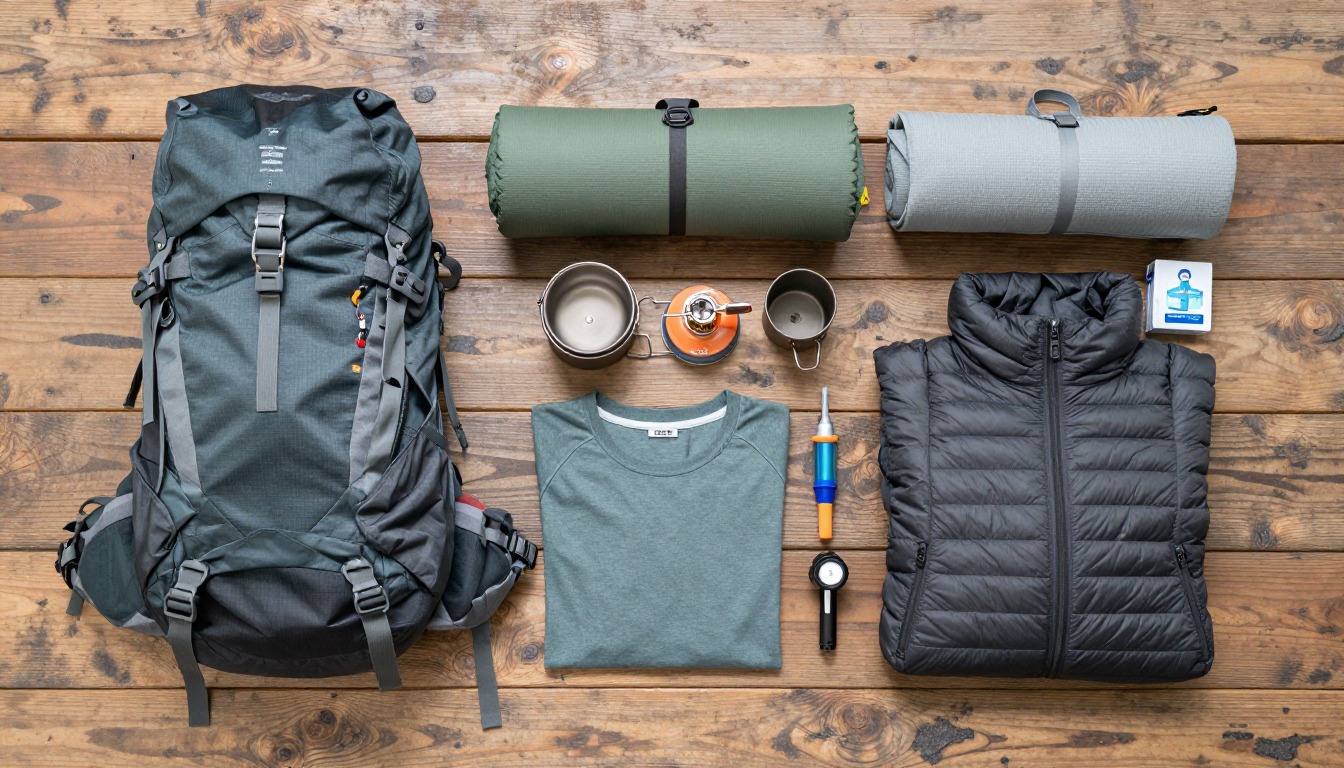
Complete gearsets for this trip
Full curated kits built for exactly this kind of hike.
Trail conditions, permits and access rules change without notice — always confirm current information on the official source above before you go. Some facts on this page are still pending owner verification and are marked accordingly. Product links and the accommodation map are affiliate links: we may earn a commission at no extra cost to you; product prices and availability are shown on Amazon, and accommodation prices on the booking site. See our affiliate disclosure.