
Best Time to Hike Isle of Skye — Quiraing & Old Man of Storr
The best time to hike the Isle of Skye's Quiraing and Old Man of Storr is April to October, per the official season guidance. Within that window, late spring and early summer pair the longest daylight with comparatively lower rainfall, while the walks stay rough, muddy and exposed whenever you go.
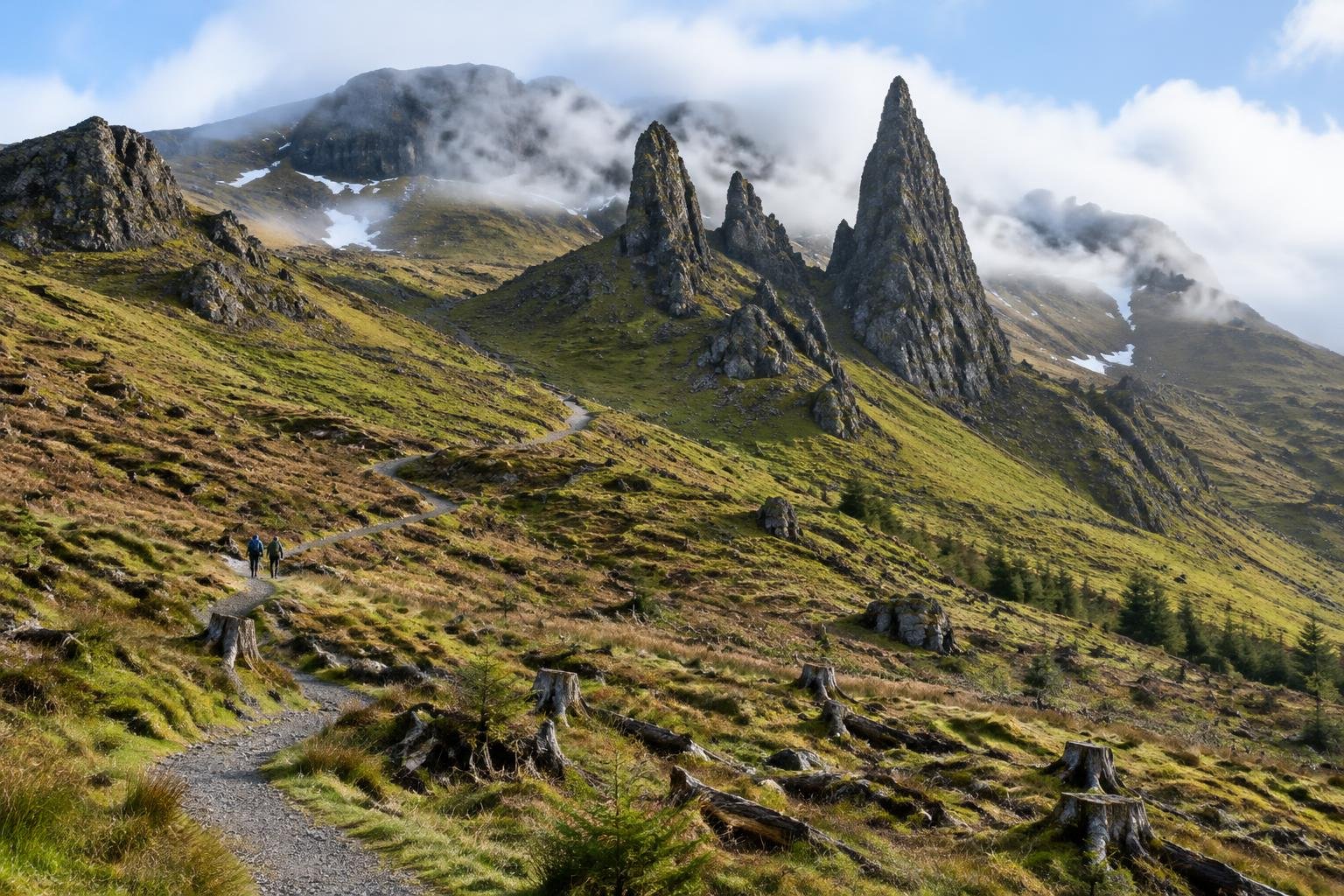
Month-by-month climate for Isle of Skye — Quiraing & Old Man of Storr
| Month | Relative warmth | Rain | Daylight |
|---|---|---|---|
| Jan | Coldest | 155 mm | 7 h |
| Feb | Coldest | 132 mm | 9.1 h |
| Mar | Coldest | 115 mm | 11.4 h |
| Apr | Cool | 76 mm | 14 h |
| May | Mild | 100 mm | 16.3 h |
| Jun | Warmest | 86 mm | 17.7 h |
| Jul | Warmest | 116 mm | 17.1 h |
| Aug | Warmest | 123 mm | 15 h |
| Sep | Warm | 136 mm | 12.5 h |
| Oct | Mild | 163 mm | 9.9 h |
| Nov | Cool | 142 mm | 7.6 h |
| Dec | Coldest | 186 mm | 6.3 h |
Modelled regional averages for 2010–2023 (rainfall) and calculated daylight hours; they describe the wider area, not a reading taken on the trail. “Relative warmth” compares each month with the warmest and coldest months of this place’s own year. It is not a temperature, and the high parts of a route are colder than the region around them.
The modelled regional averages show a wet year throughout. April is the driest month at about 76 mm, followed by June at 86 mm and May at 100 mm. October at 163 mm and December at 186 mm are the wettest. Daylight swings widely, from about 6.3 hours in December to 17.7 hours in June. Relative to Skye's own year, June to August are the warmest months, and January to March plus December are the coldest. These are regional averages, not trail measurements, so treat them as a guide to the pattern rather than a forecast.
Isle of Skye — Quiraing & Old Man of Storr season by season
Spring · April to May
April is the start of the official season and, on average, the driest month of the year at about 76 mm, with roughly 14 hours of daylight and cool conditions. May adds mild warmth and about 16.3 hours of light, though rainfall rises to around 100 mm. This is a good window if you want long days and comparatively less rain. The Old Man of Storr and Quiraing remain rough, muddy and exposed, so footwear still matters, and arriving early helps because the small car parks fill fast.
Summer · June to August
June to August are the warmest months of Skye's year and carry the most daylight, peaking near 17.7 hours in June. That gives generous time for a slow, unhurried walk among the pinnacles. Rainfall still averages about 86 mm in June, 116 mm in July and 123 mm in August, so showers remain typical. Expect the busiest conditions and early car park fills. Keep well back from the unfenced drops and confirm current conditions with the managing authority.
Early autumn · September to October
September is still relatively warm for this place, with about 12.5 hours of daylight, though rainfall climbs to around 136 mm. October stays mild but is wetter at about 163 mm, and daylight drops to roughly 9.9 hours, so the margin for a late start narrows. October sits at the end of the official season, which means earlier finishes matter. Ground that is already rough and muddy tends to become more so as the wettest months approach.
Late autumn and winter · November to March
This stretch falls outside the official season of April to October. Daylight is short, from about 6.3 hours in December to 7.6 in November, and January to March plus December are the coldest months of Skye's own year. Rainfall is heavy, with December the wettest at about 186 mm and January at 155 mm. Because the paths are already muddy and exposed, these months leave little margin. Check with the managing authority before planning anything outside the season.
Official season guidance
Highland Council & landowners: April to October
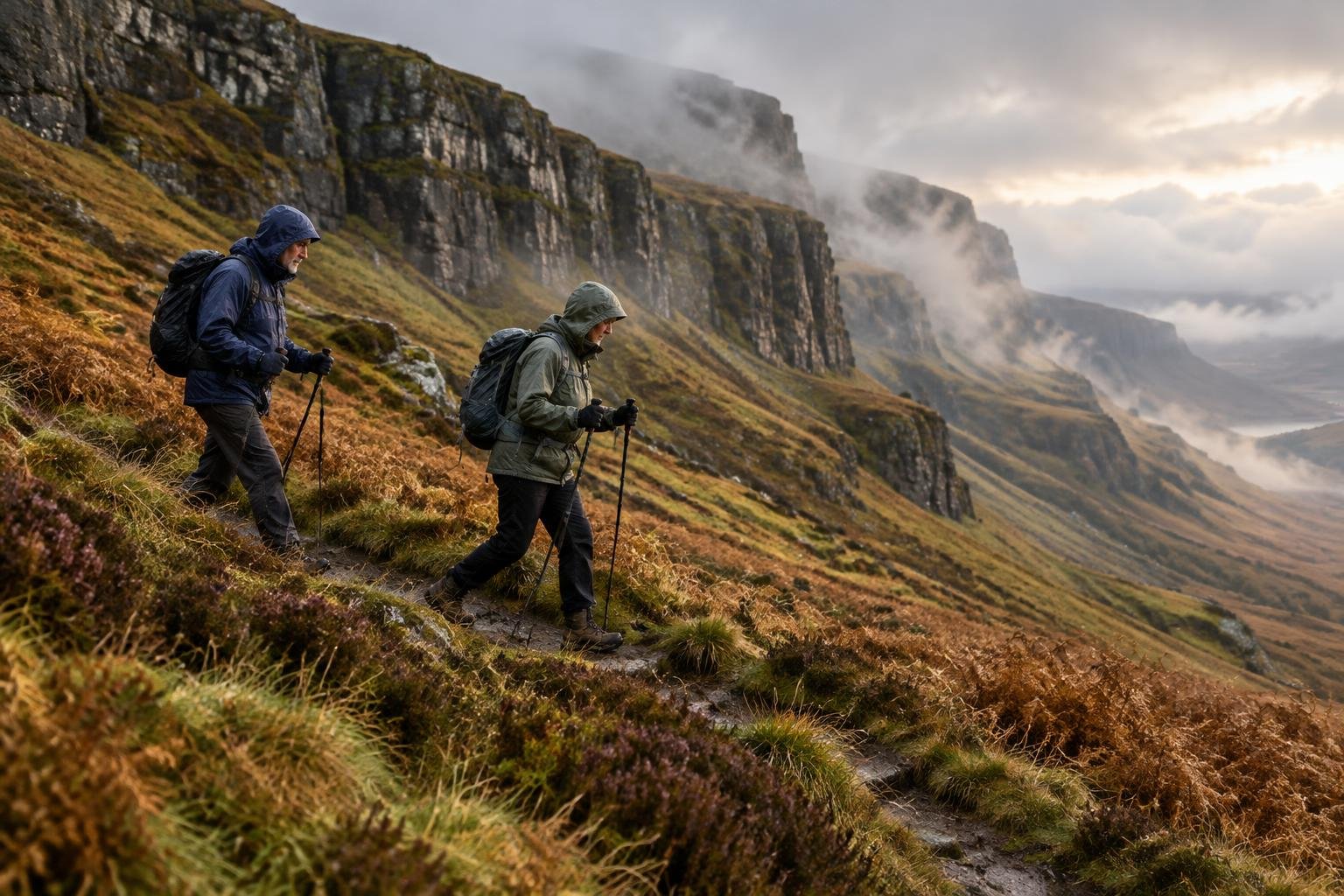
No permit is needed. The Old Man of Storr and Quiraing are short but rough, muddy and exposed; wear proper footwear, keep back from the unfenced drops, and arrive early because the small car parks fill fast.
Check current dates on forestryandland.gov.scot (Forestry and Land Scotland)What to pack for the season
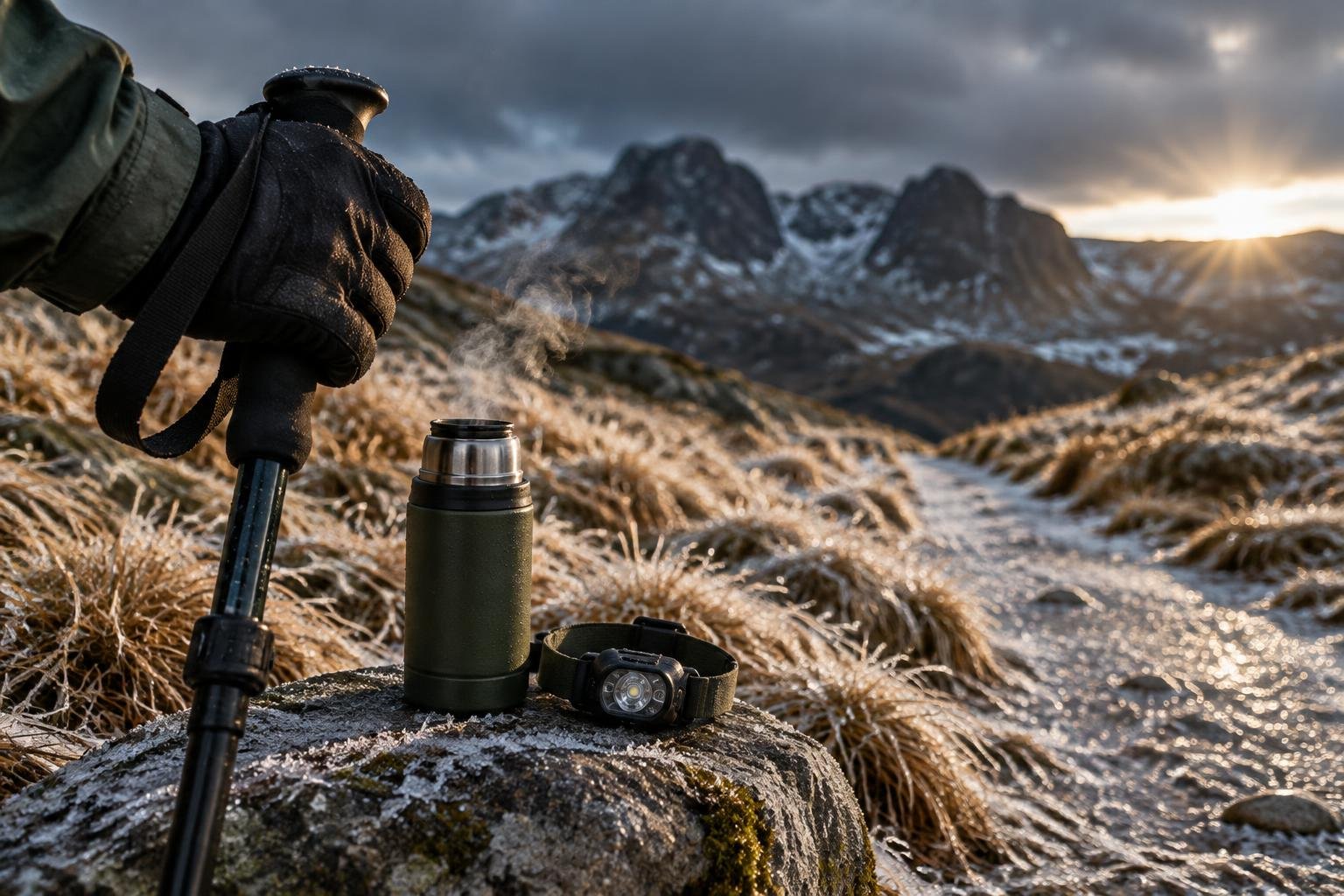
Packing here is driven by wet, changeable weather and shifting daylight. Bring layers you can add or remove, reliable waterproof outer layers and footwear suited to mud, since the paths are rough and muddy. A headlamp earns its place outside summer, when days shorten sharply. In the brighter months, sun protection and extra water still make sense on exposed ground.
For layering, rain cover and weather planning, see hiking in rain, heat and cold.
Timing mistakes to avoid
The biggest mistake is assuming a short walk needs little planning. These routes are exposed and muddy, and rainfall is significant in every month, so picking a month on warmth alone misses the point. Another is arriving late: the small car parks fill fast, which argues for an early start in any season. Also avoid ignoring the official April to October guidance, and check current conditions with the managing authority before you travel.
Common questions
What is the driest month to hike the Old Man of Storr and Quiraing?
On the modelled regional averages, April is the driest month at about 76 mm, followed by June at 86 mm. These are typical figures rather than trail measurements, so showers are still possible. Expect rough, muddy ground regardless of the month you choose.
How much daylight do I get for a Skye walk in summer?
Daylight peaks at about 17.7 hours in June and stays long through July and August, at roughly 17.1 and 15.0 hours. That gives plenty of time for an unhurried walk. Even so, an early start helps because the small car parks fill fast.
Is it worth hiking in the shoulder months of April or October?
Both fall within the official April to October season. April is typically the driest month, with about 14 hours of daylight, while October is wetter at around 163 mm and has shorter days of about 9.9 hours. Plan earlier finishes in October and check conditions with the managing authority.
Can I hike here between November and March?
Those months fall outside the official season of April to October. Daylight is short, rainfall is heavy, and the paths are already rough, muddy and exposed. Conditions can change, so confirm current guidance with the managing authority before planning anything in winter.
Sources
- Highland Council & landowners — forestryandland.gov.scot (Forestry and Land Scotland): official season and permit guidance.
- NASA POWER (Prediction Of Worldwide Energy Resources): monthly temperature and rainfall averages, 2010–2023, from MERRA-2 reanalysis. Daylight hours are calculated from latitude.
Conditions, closures and permit rules change without notice — confirm current information with the managing authority before you go. See our editorial policy and affiliate disclosure.