
Best Time to Hike Lake District — Striding Edge & Scafell Pike
The best time to hike Lake District — Striding Edge & Scafell Pike is April to October, according to the official season guidance. Winter turns both routes into a mountaineering outing. Daylight is longest from May to August, and April is the driest month on average.
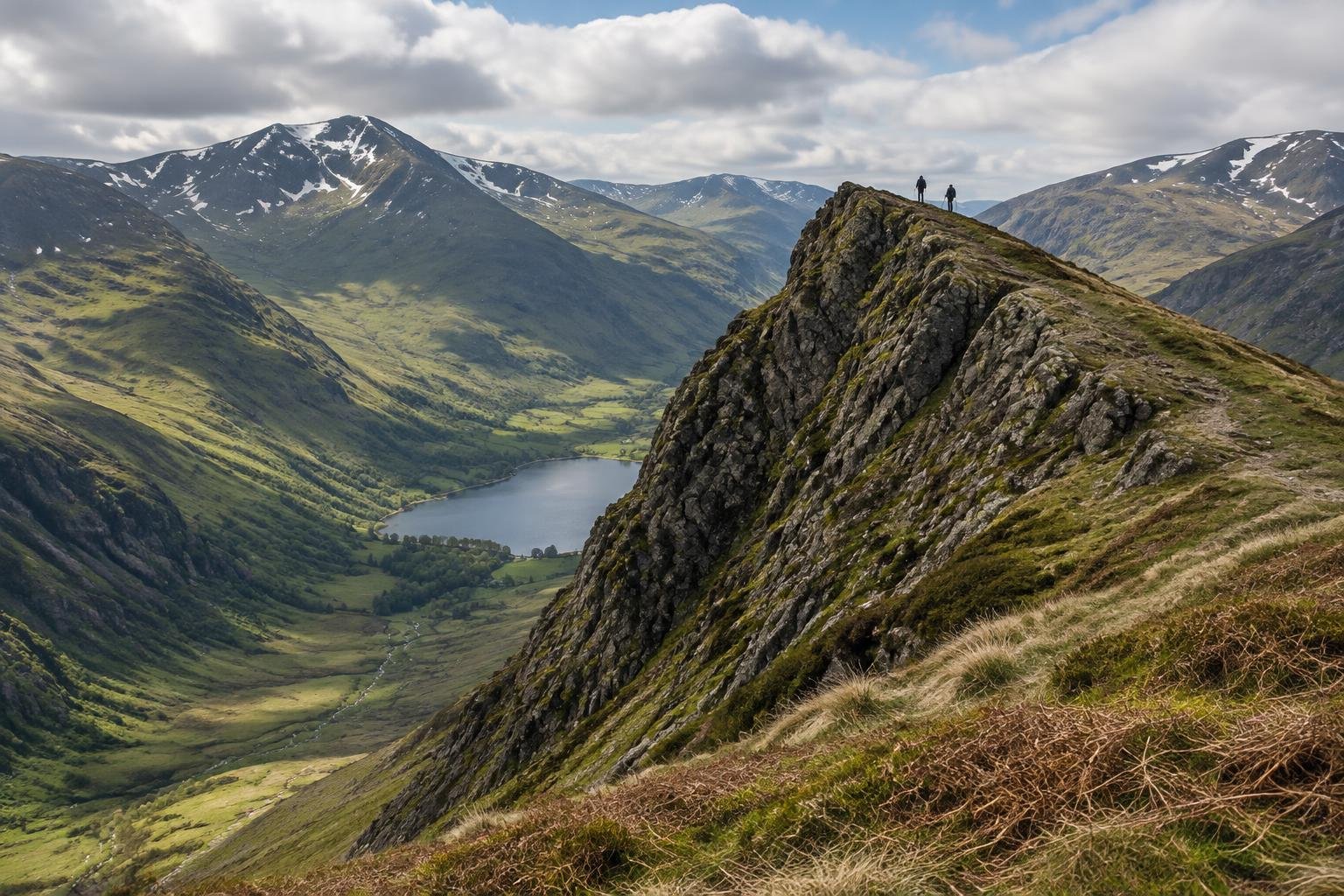
Month-by-month climate for Lake District — Striding Edge & Scafell Pike
| Month | Relative warmth | Rain | Daylight |
|---|---|---|---|
| Jan | Coldest | 117 mm | 7.6 h |
| Feb | Coldest | 114 mm | 9.4 h |
| Mar | Coldest | 93 mm | 11.5 h |
| Apr | Cool | 58 mm | 13.8 h |
| May | Mild | 76 mm | 15.8 h |
| Jun | Warmest | 90 mm | 16.9 h |
| Jul | Warmest | 118 mm | 16.5 h |
| Aug | Warmest | 123 mm | 14.7 h |
| Sep | Warm | 109 mm | 12.4 h |
| Oct | Mild | 134 mm | 10.2 h |
| Nov | Cool | 127 mm | 8.1 h |
| Dec | Coldest | 148 mm | 7.1 h |
Modelled regional averages for 2010–2023 (rainfall) and calculated daylight hours; they describe the wider area, not a reading taken on the trail. “Relative warmth” compares each month with the warmest and coldest months of this place’s own year. It is not a temperature, and the high parts of a route are colder than the region around them.
The modelled averages show April as the driest month at about 58 mm, while October (134 mm) and December (148 mm) are among the wettest. Rain stays fairly heavy through summer, with July and August at 118 and 123 mm, so a dry window is never guaranteed. Daylight swings from about 7.1 hours in December to 16.9 in June. Relative to this place's own year, June to August are the warmest months and December to March the coldest. These are regional averages, not trail measurements.
Lake District — Striding Edge & Scafell Pike season by season
Spring · March to May
March sits among the coldest and wetter months at about 93 mm, with 11.5 hours of daylight, and it falls outside the official April to October season. April is the driest month on average at roughly 58 mm, with cool conditions and 13.8 hours of light, which makes it appealing for planning a clear-day attempt. May turns milder with about 76 mm and up to 15.8 hours of daylight. Longer days leave room for the slow, careful scrambling that Striding Edge demands.
Summer · June to August
June to August are the warmest months of this place's year and offer the longest days, peaking near 16.9 hours in June. That extra light is useful on a rough summit like Scafell Pike, where a slow pace is common. Rainfall is not low, though, at about 90 mm in June, 118 mm in July and 123 mm in August, so wet weather is still part of the picture. Pick a clear day, because the summit is cloud-prone, and check conditions with the managing authority before setting out.
Autumn · September to October
September is still relatively warm, with about 12.4 hours of daylight and around 109 mm of rain. October is milder, with 10.2 hours of daylight, and it is the last month of the official season. Its modelled rainfall of about 134 mm is among the highest of the year, so the weather can turn wet. Shorter days mean less margin for an exposed scramble or a long summit push. Autumn can suit walkers comfortable with changeable conditions, but it asks for earlier starts.
Winter · November to March
Winter is outside the official April to October season, and the official guidance calls it a mountaineering outing. November is cool, while December, January, February and March are the coldest months of this place's year. Daylight drops to about 7.1 hours in December and 7.6 in January. December is also the wettest month on average at about 148 mm. With such short days and demanding conditions, these months suit only experienced, well-equipped mountain walkers who check guidance from the Lake District National Park Authority first.
Official season guidance
Lake District National Park Authority: April to October; winter is a mountaineering outing
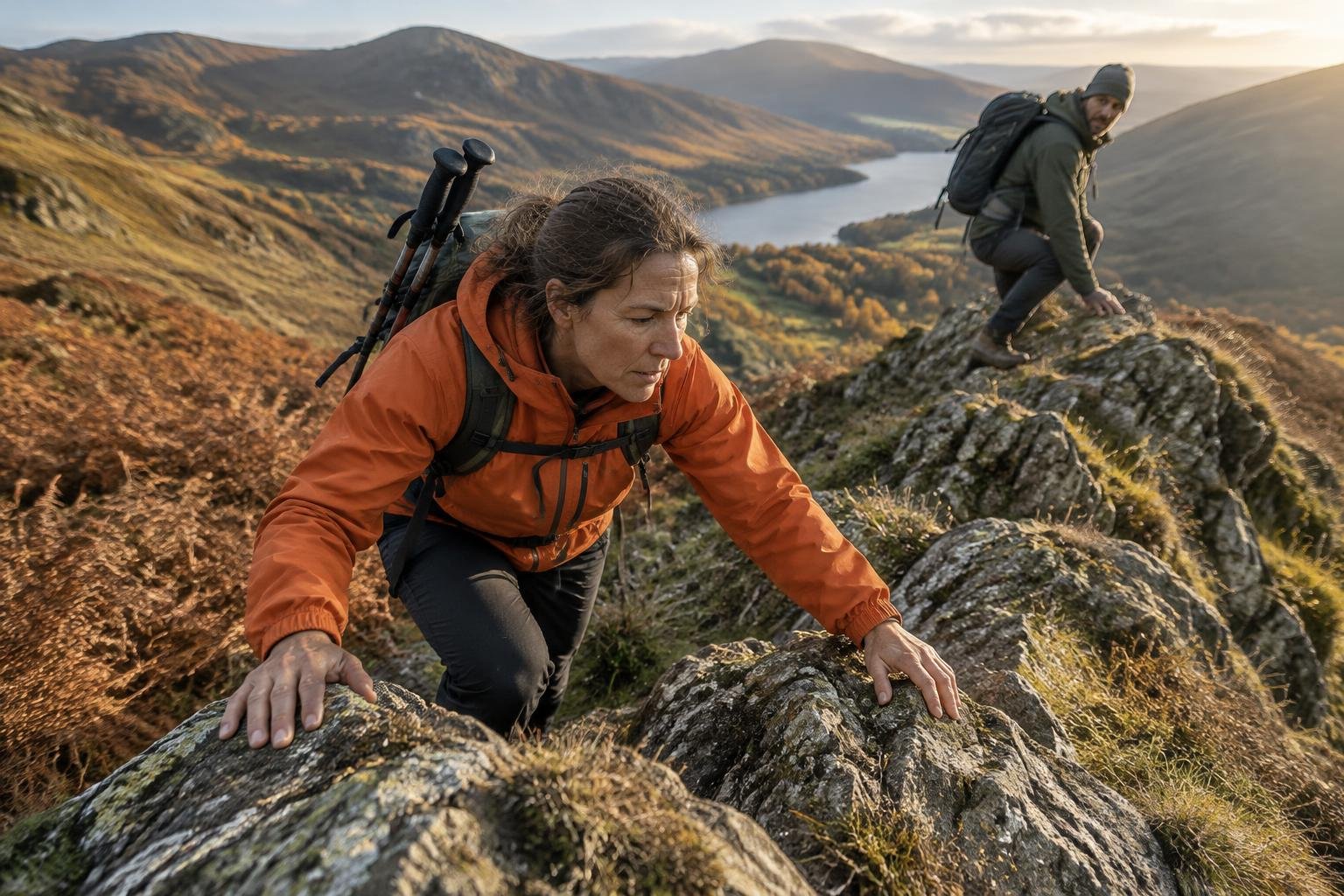
No permit is needed. Striding Edge is a genuine exposed scramble that has caught out many walkers — attempt it only in good conditions with a head for heights, and pick a clear day for Scafell Pike’s rough, cloud-prone summit.
Check current dates on lakedistrict.gov.uk (walking in the Lake District)What to pack for the season
Packing should follow the season. Pack layers you can add or shed quickly, since conditions on the tops can differ from the valleys. Rain cover matters in every month, given the steady rainfall averages. Bring sun protection for the long summer days. In autumn and winter, carry a headlamp, because daylight can fall to about 7 hours.
For layering, rain cover and weather planning, see hiking in rain, heat and cold.
Timing mistakes to avoid
The main mistake is booking around a single month and ignoring the weather on the day. Striding Edge is an exposed scramble that has caught out many walkers, and Scafell Pike's summit is rough and cloud-prone, so a clear day matters more than the calendar. Another error is treating the modelled rainfall as a forecast; it is only an average. Winter attempts also go wrong when walkers assume a normal hike, when the official guidance calls it mountaineering.
Common questions
Is April a good month for this hike?
April opens the official season and is the driest month on average at about 58 mm, with cool conditions and roughly 13.8 hours of daylight. That makes it a reasonable choice, but a clear day still matters on Scafell Pike's cloud-prone summit. Confirm current conditions with the Lake District National Park Authority.
Can I hike Striding Edge and Scafell Pike in winter?
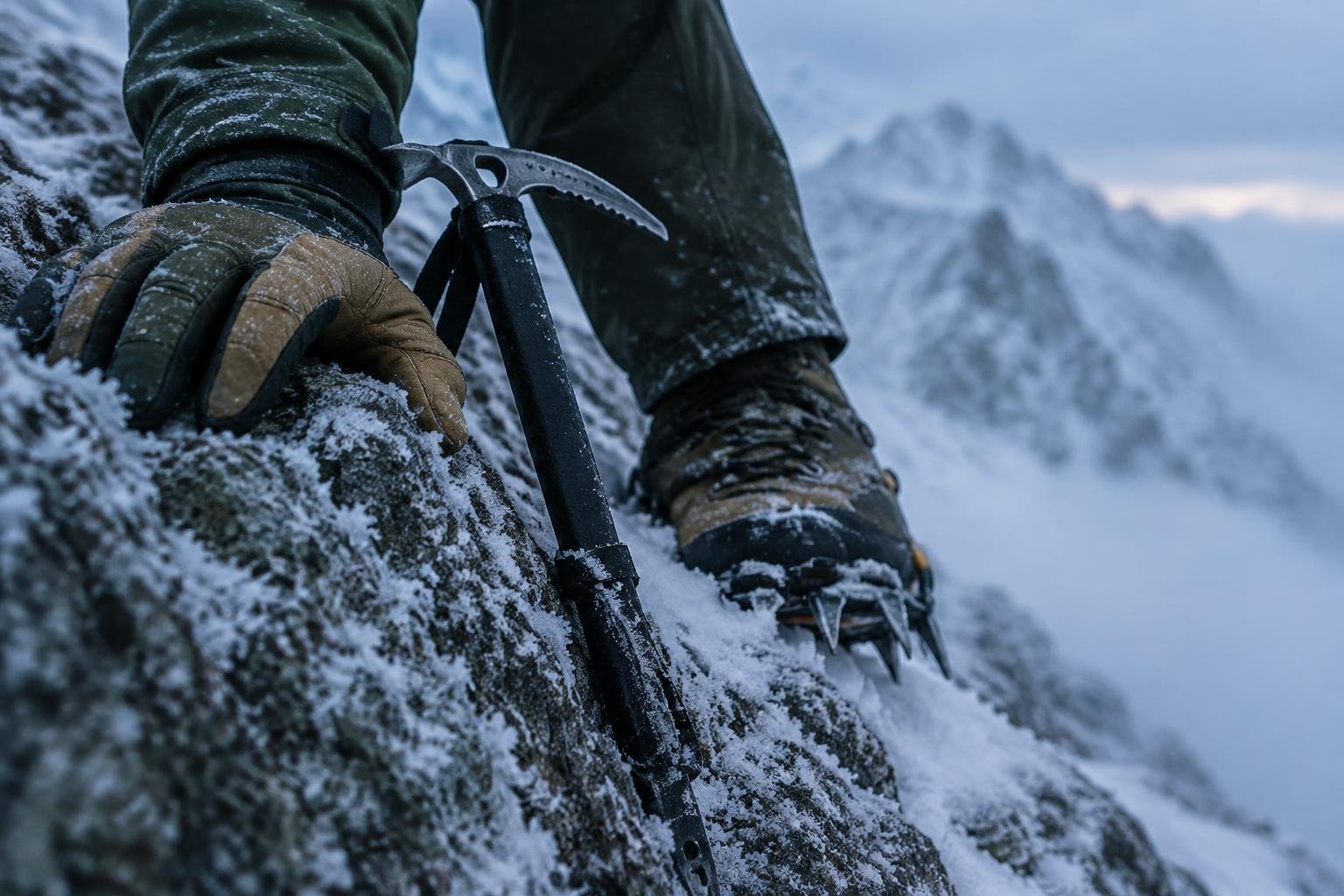
The official guidance describes winter as a mountaineering outing, not an ordinary hike. Daylight falls to roughly 7 hours in December and the months are among the coldest of the year. Only experienced, properly equipped walkers should consider it, after checking with the managing authority.
Which months have the most daylight?
Daylight peaks around June at about 16.9 hours, with May, July and August also long at roughly 15.8, 16.5 and 14.7 hours. That extra light suits a careful scramble on Striding Edge or a slow summit push on Scafell Pike.
Does summer mean dry weather for these hikes?
Not necessarily. Modelled rainfall averages about 90 mm in June, 118 mm in July and 123 mm in August, so wet days are still common. These are regional averages, not forecasts, so check conditions before you go and choose a clear day for the summit.
Sources
- Lake District National Park Authority — lakedistrict.gov.uk (walking in the Lake District): official season and permit guidance.
- NASA POWER (Prediction Of Worldwide Energy Resources): monthly temperature and rainfall averages, 2010–2023, from MERRA-2 reanalysis. Daylight hours are calculated from latitude.
Conditions, closures and permit rules change without notice — confirm current information with the managing authority before you go. See our editorial policy and affiliate disclosure.