
Affiliate disclosure: this page contains affiliate links. Purchases made through them may earn us a commission at no extra cost to you. See our affiliate disclosure.
In plain English
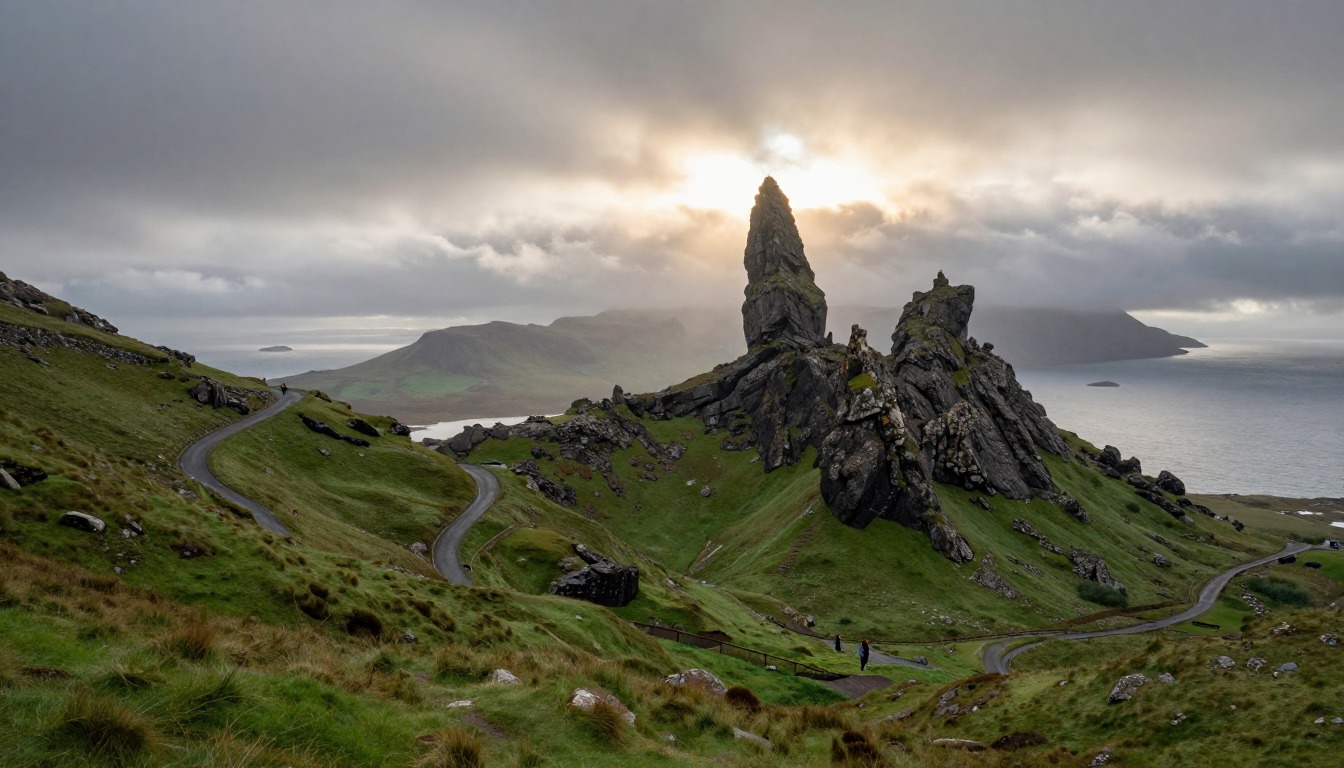
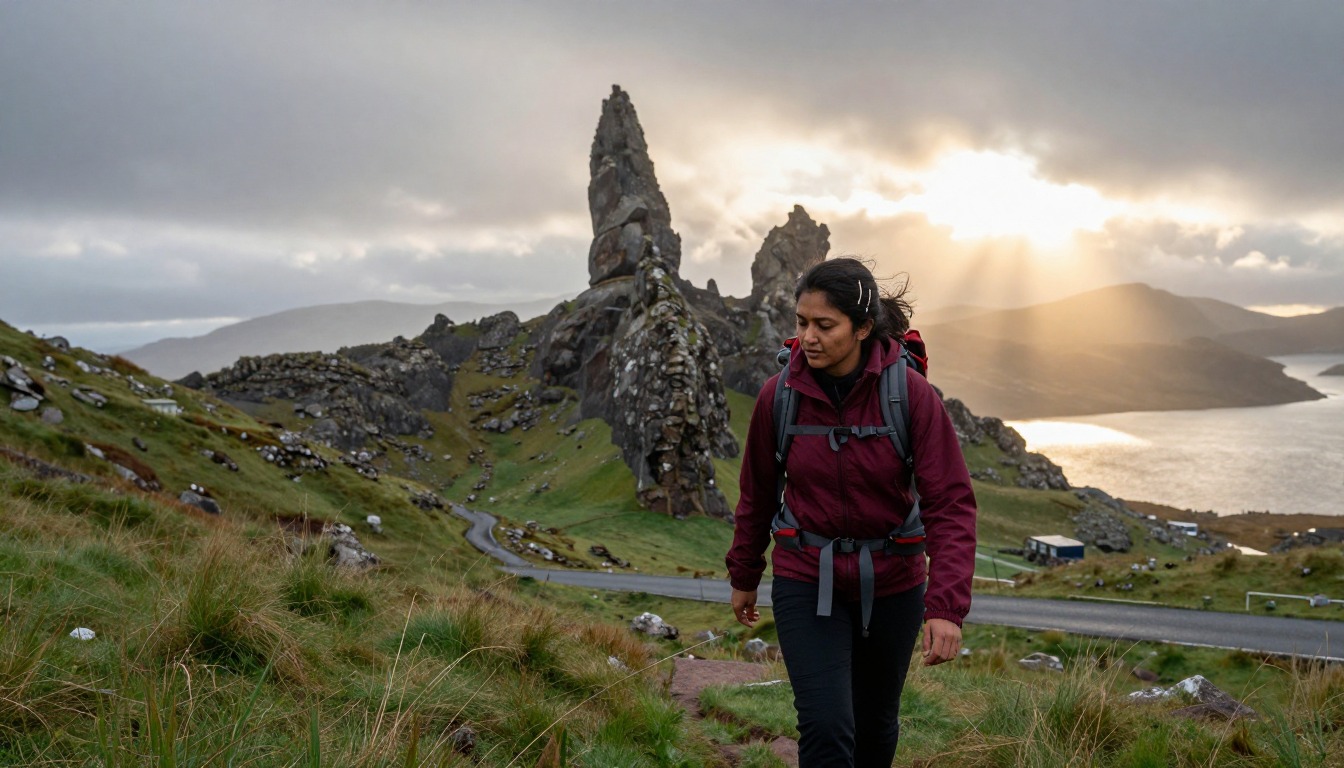
The Old Man of Storr and the Quiraing are two of the best-known short walks on the Isle of Skye in Scotland. Neither is long. What makes them tricky is the ground. The rock is basalt, which turns greasy when wet, and the paths are often muddy, washed out or steep on one side.
Think of it like walking on a wet kitchen floor that also happens to be on a hillside. Good tread on your boots helps a lot. So does going slowly and looking at where each foot lands.
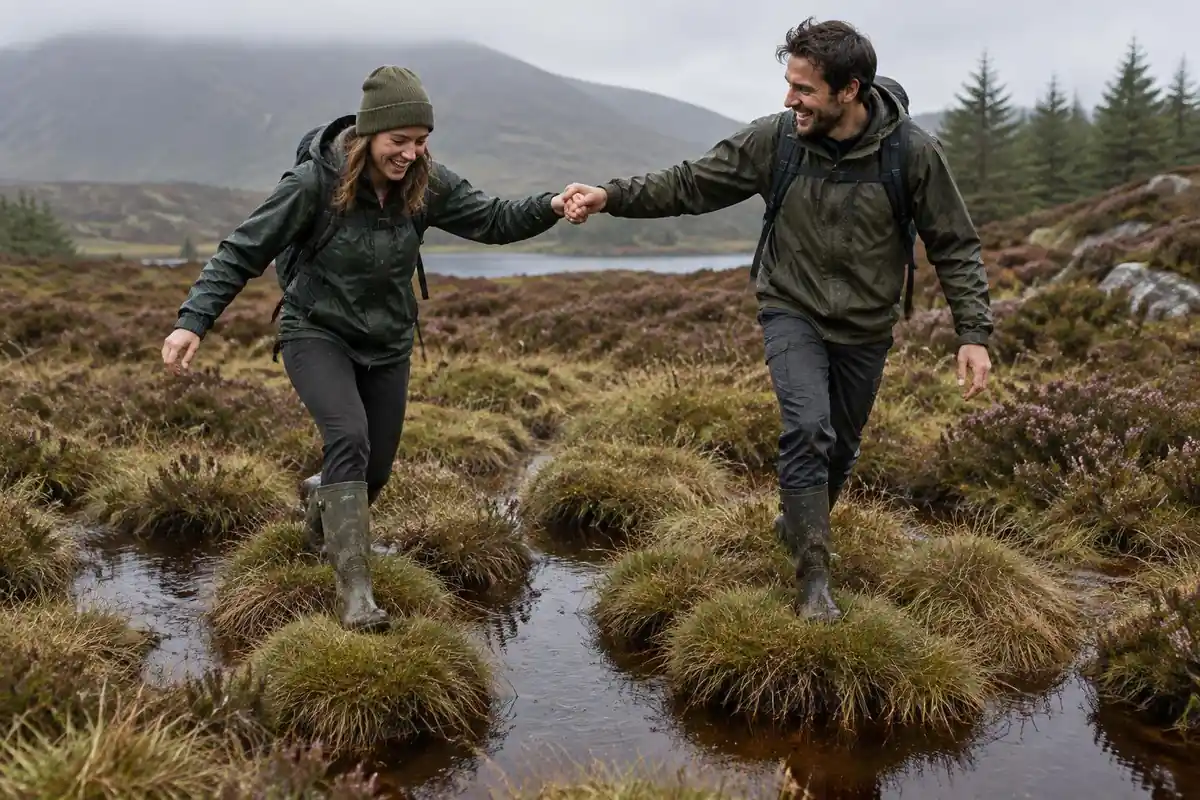
Weather changes fast on Skye. You can start in sunshine and be in cold rain and wind an hour later. That is why a small pack with a waterproof jacket, a warm layer and a hat matters more here than a big pack. If the cloud drops onto the cliffs and you cannot see the path edge, the sensible choice is to wait or turn back.
What the hike is like
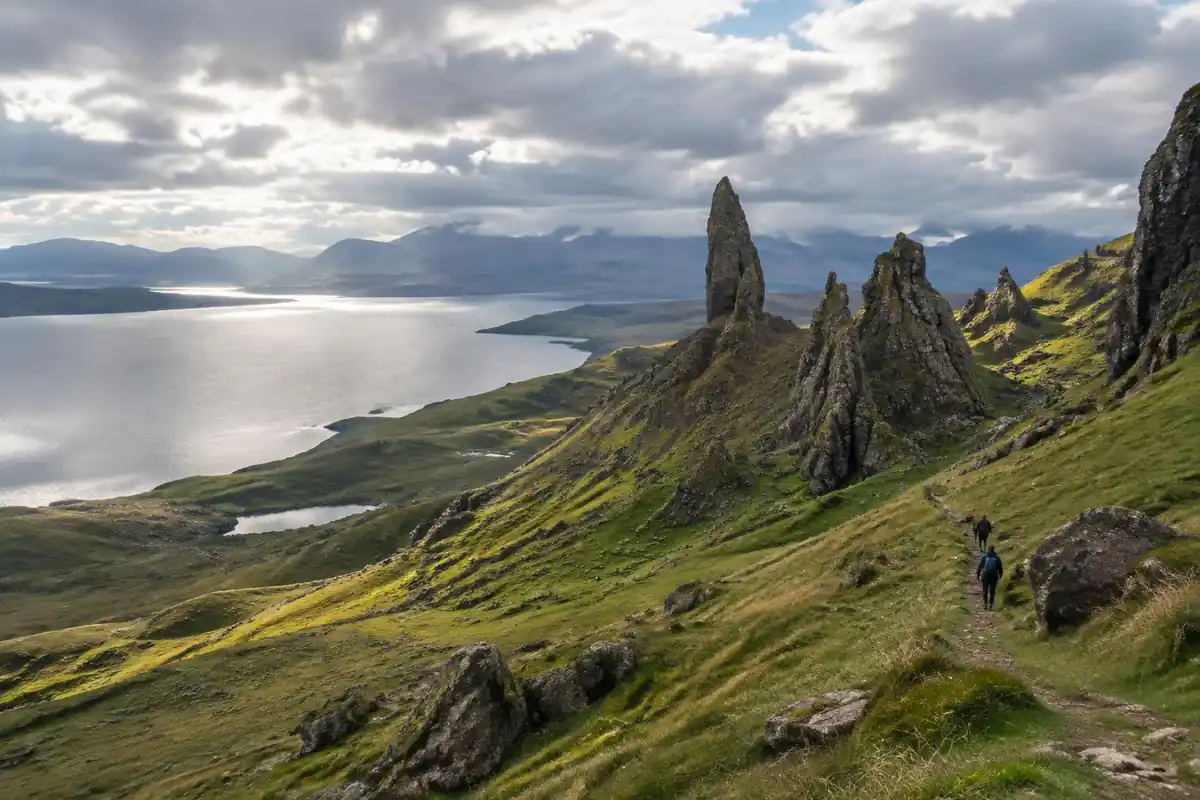
These are two short walks with very different mechanics. The Storr is a climb: a rebuilt gravel path leaves the roadside and rises through the stumps of an old conifer plantation, then steepens onto grass and eroded ground as the pinnacles come into view. Above that the maintained surface gives out and the ground between the rock towers becomes a braid of informal trods, loose and wet and steep. The Quiraing works the other way around, contouring rather than climbing: a narrow path traverses the flank of the landslip below the cliffs, crossing gullies and washed-out sections with a steep grassy drop falling away on one side, before an optional steep pull takes you up onto the plateau above. Both are basalt underfoot, and basalt is greasy when wet, which on Skye is much of the time.
How to plan the itinerary
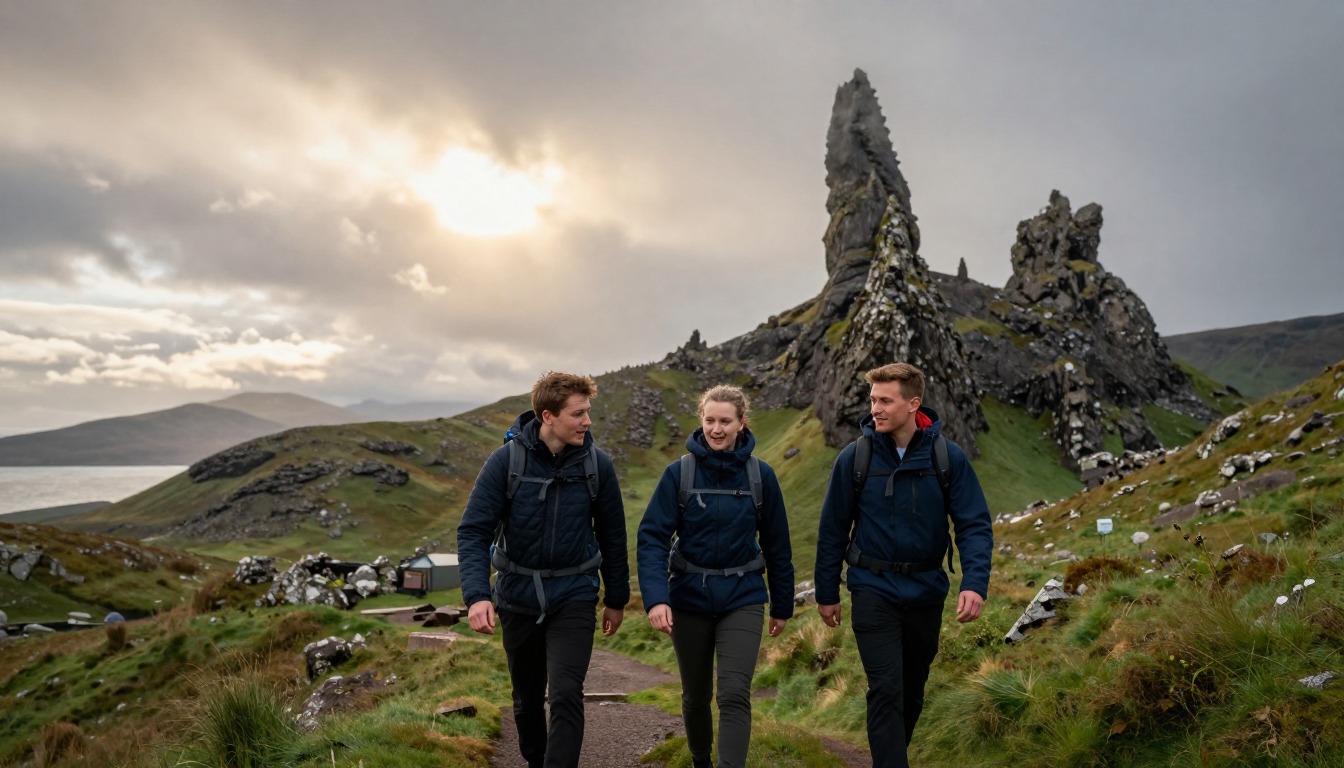
Most visitors treat these as two separate outings rather than one continuous hike, and fit both into a single day from a base on the peninsula. A common pattern is the Storr first thing, before the car park fills, then a short drive north to the Quiraing for late morning or afternoon. Each walk occupies a few hours rather than a full day, so there is room for both plus the driving between them. Splitting them over two mornings is the calmer option and gives you a second chance if one of them is socked in with cloud, which happens often enough to plan for. At the Quiraing, hikers choose between turning back along the same traverse or committing to the full loop up onto the plateau above; the out-and-back is the simpler option and skips the steepest ground.
Plan this trip in 5 steps
-
Pick the right pack
Match a pack to your trip, fit and priorities.
-
Book a place to stay
Campgrounds, huts and lodges near Isle of Skye — Quiraing & Old Man of Storr.
-
Plan food & water
Calories, food weight and water for your days on trail.
-
Estimate your time
Pre-filled with this trail’s distance and climb — adjust for your pace.
Trail-specific tips
The most common mistake here is treating a short walk as a casual one. Both routes are rough, wet, and edged with unfenced drops, and people regularly arrive in trainers and street clothes for ground that wants boots with real grip. Start early, because the small car parks at both trailheads fill long before mid-morning and the light is better besides. Cloud sits on the Trotternish ridge often, so have a plan for a view-free day. On the Quiraing traverse, take the drop side seriously in wind. For the general safety groundwork, see /trail-smarts/.
Permits & rules
No permit is needed. The Old Man of Storr and Quiraing are short but rough, muddy and exposed; wear proper footwear, keep back from the unfenced drops, and arrive early because the small car parks fill fast.
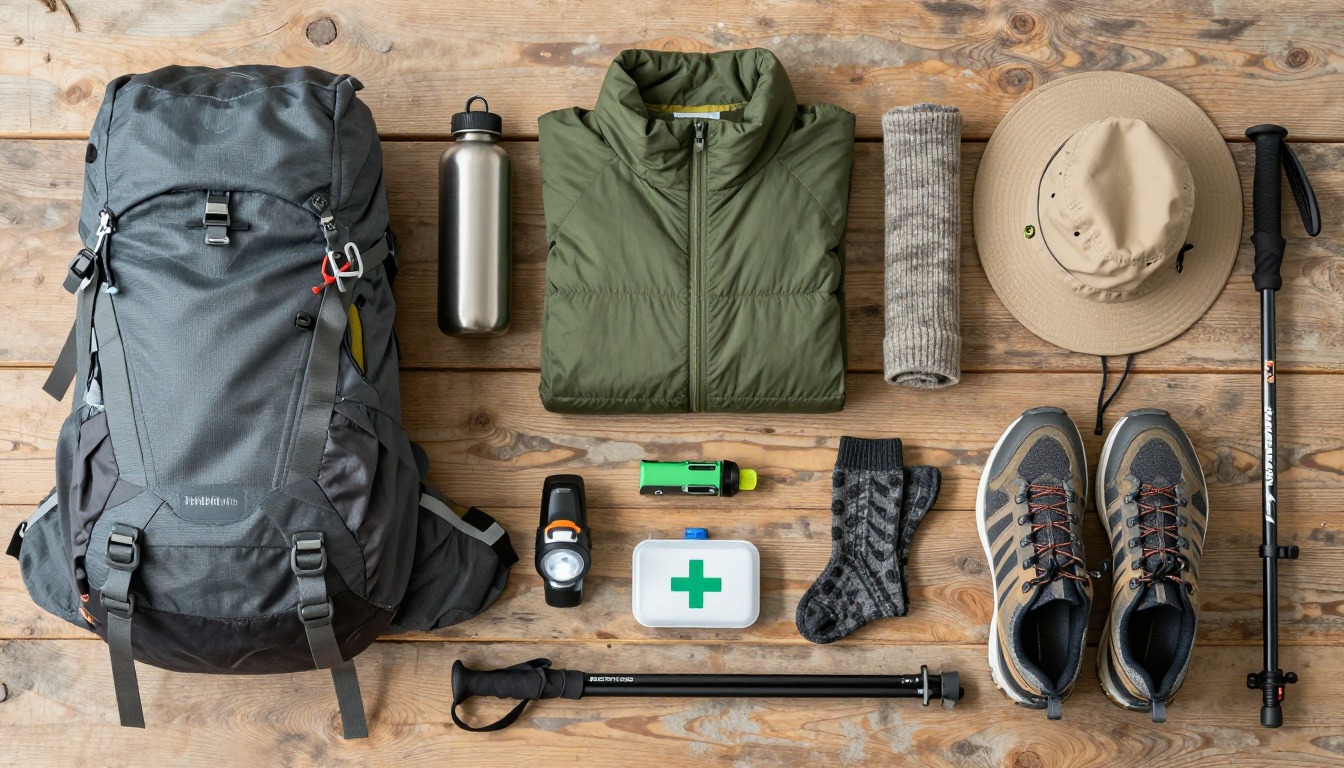
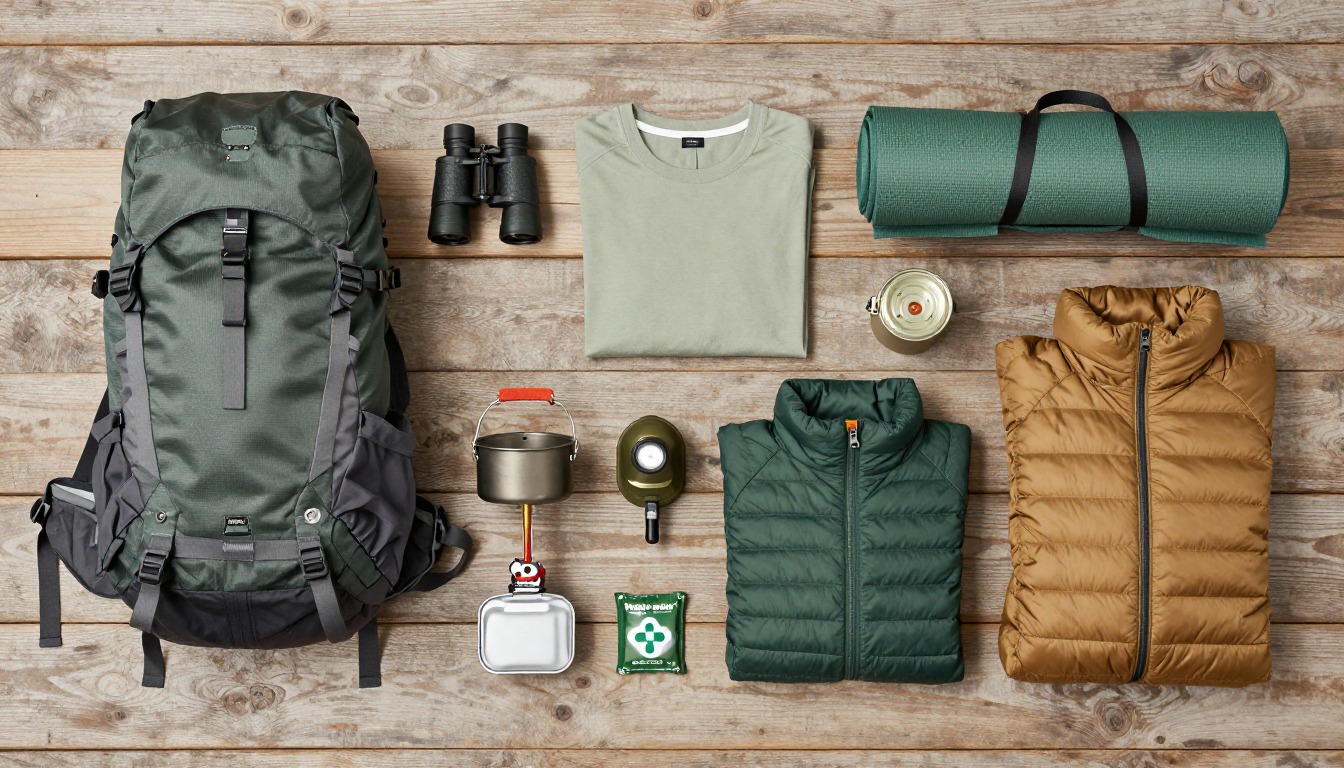
Gear suited to this hike
Matched to the terrain and conditions here. Real products — check current price on Amazon.
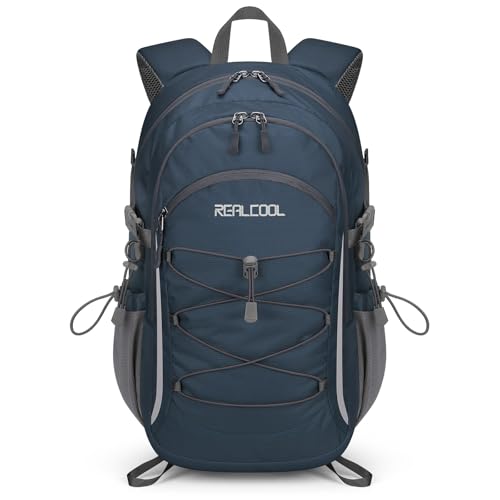
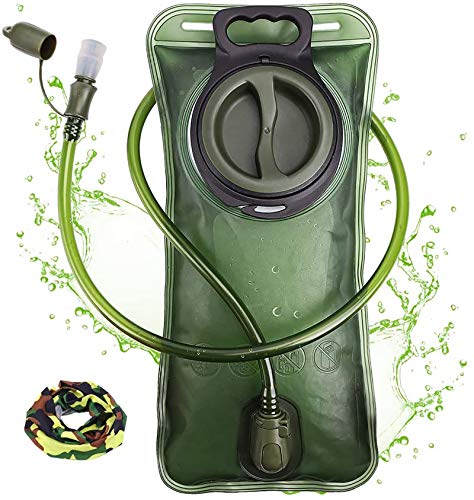


Why wet weather, not distance, sets the gear list
Because both walks are only a few hours long, it is tempting to carry almost nothing. The risk that catches people is getting soaked and then chilled. The CDC says hypothermia can develop even in air above 40°F if a person is chilled by rain or sweat, and it lists hikers among the people at higher risk.1 Its warning signs include shivering, exhaustion, confusion and fumbling hands, and the person affected may not realize what is happening.1
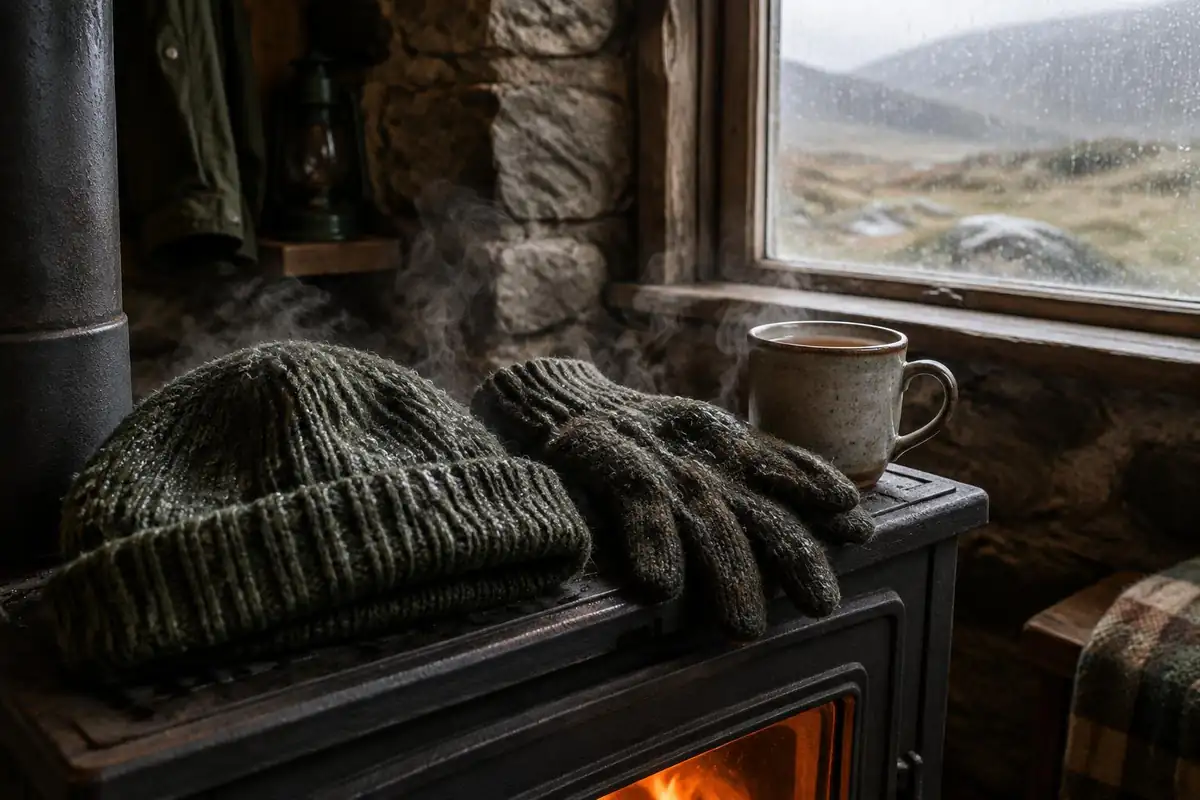
That makes the layers in the pack more important than the pack's size. The National Park Service advises layers you can add or remove, and wool or synthetic fabric over cotton because wet cotton will not keep you warm.3 A daypack with a waterproof shell, an insulating layer and a hat covers most Skye days. The NPS Ten Essentials list is a sensible checklist for the rest, including a light source for a late return and a way to tell someone your plan.4
Keeping the contents dry
REI notes that pack fabrics usually have a waterproof interior coating, but water can still seep in through seams and zippers.2 On a peninsula where showers arrive sideways, that means the spare layer you are counting on can end up damp. Putting the insulating layer and any electronics in a waterproof stuff sack inside the pack is an alternative to a rain cover, and REI says it can work better than a cover in wind.2 Wind is exactly what the Quiraing traverse gets.
Deuter makes a similar point about sustained downpours getting past zippers and seams even when the fabric itself is waterproof.5 A rain cover also flaps and can catch on a narrow path edge, which is a small but real annoyance on a traverse with a steep drop beside it.
Loose ground, poles and how the load sits
The steep, eroded sections of the Storr and the washed-out gullies at the Quiraing are where poles help most. In a laboratory study on a 25-degree downhill ramp, hiking poles lowered knee compressive and shear forces by 12 to 25%.6 On level ground the picture is different: one study found poles did not appear to reduce knee compression during level walking.7 So the benefit is mainly for the descents, not the gentle contouring.
Load position matters on uneven ground. A review of soldier load carriage found that keeping the load close to the body's center of mass gives the lowest energy cost, and that low or mid-back placement may suit uneven terrain while high placement may be best on even terrain.8 For a light daypack the practical point is simple: keep it small and snug so it does not swing when you step across a gully.
Checking conditions before you go
Distances, timings and conditions on this page are planning estimates. Look for current notices from the local council or landowner and a fresh mountain weather forecast before you go, because weather on Skye can change quickly.
Common questions
Can you hike the Old Man of Storr and the Quiraing on the same day?
Yes. Both take a few hours rather than a full day, and they sit a short drive apart on the same road north along the peninsula. Most people do the Storr early and the Quiraing later. Just budget for the drive, the parking scramble, and the fact that wet, uneven ground slows you more than the short distances suggest.
Do you have to scramble at the Old Man of Storr?
Not to reach the classic viewpoint near the base of the pinnacles. That part is walking, steep and eroded but still walking. Beyond it, people wander onto steeper, looser ground between the rock towers, and that is where it turns hands-on and genuinely unstable. There is no obligation to go there, and good reason not to.
Is the Quiraing path dangerous?
It is not technical, but the main traverse is narrow, sometimes washed out, and runs above a steep grassy slope with nothing between you and it. In wind or wet, that combination is what catches people out rather than any single hard move. Footing and weather judgment matter far more here than fitness does.
What footwear do you actually need?
Waterproof boots with genuine tread. The ground on both walks holds water long after rain, the basalt underneath goes slippery when wet, and the eroded sections are churned to mud for much of the year. Grippy trail runners work if you accept wet feet; smooth-soled trainers are the thing to avoid on either route.
Complete gearsets for this trip
Full curated kits built for exactly this kind of hike.
Trail conditions, permits and access rules change without notice — always confirm current information on the official source above before you go. Some facts on this page are still pending owner verification and are marked accordingly. Product links and the accommodation map are affiliate links: we may earn a commission at no extra cost to you; product prices and availability are shown on Amazon, and accommodation prices on the booking site. See our affiliate disclosure.