
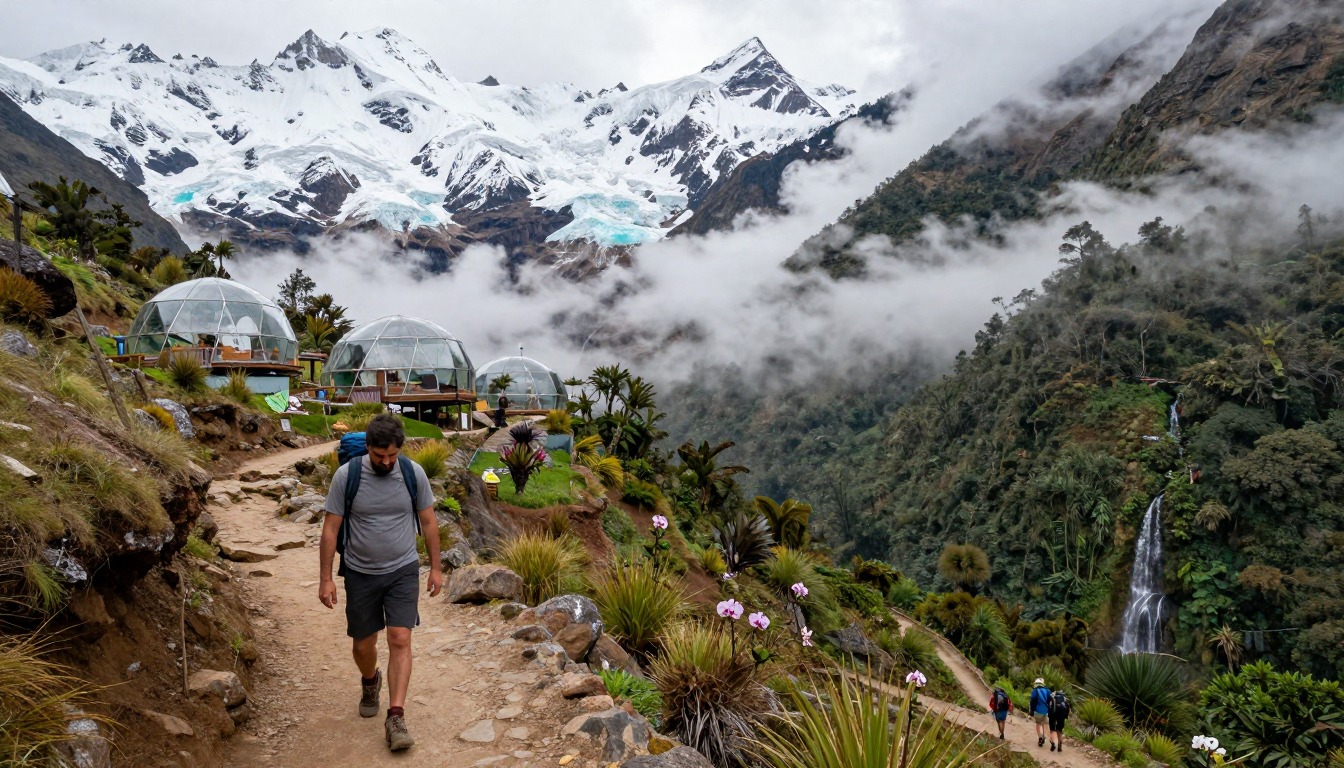
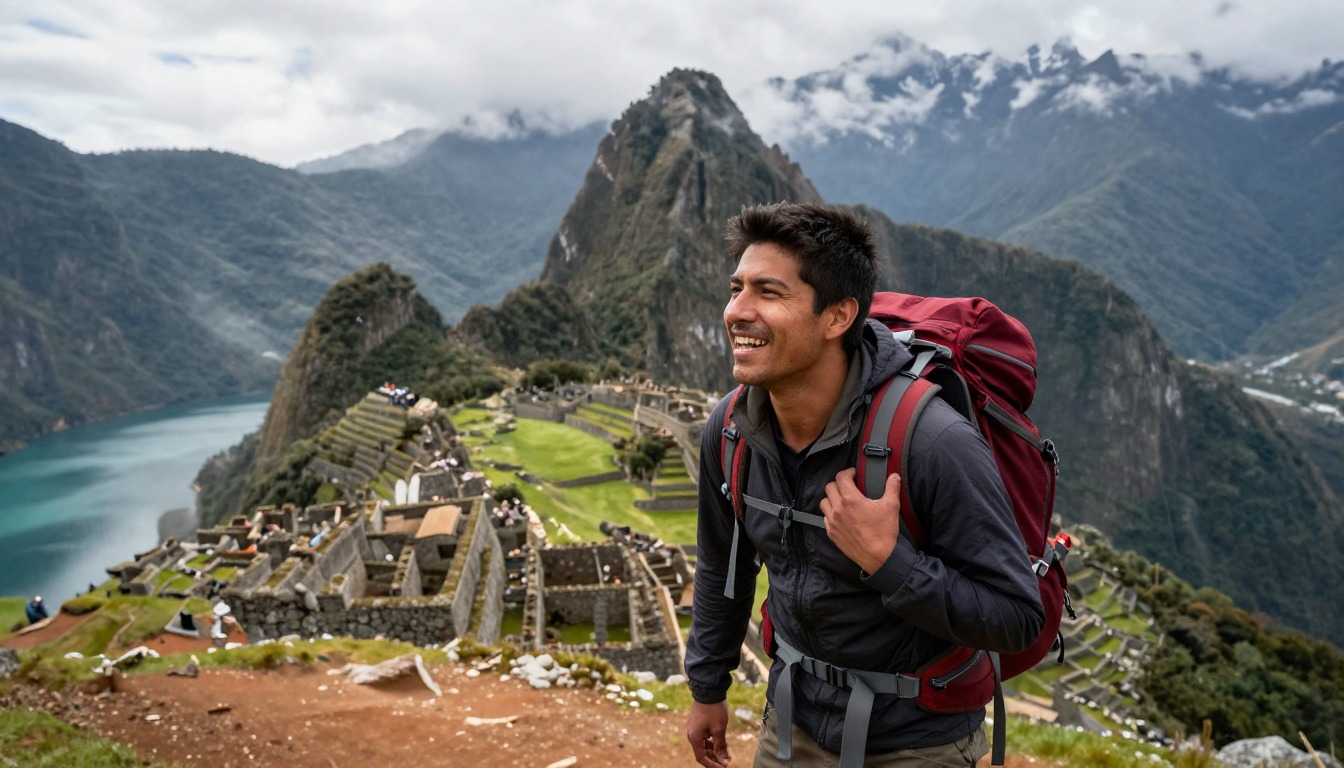
Illustrative artwork — an impression of Salkantay Trek, not a literal photograph.
The Salkantay Trek is a roughly five-day route through the Andes of Peru's Cusco region, climbing over the high Salkantay Pass past the turquoise waters of Humantay Lake before dropping toward Machu Picchu. It's grown into the most popular alternative to the classic Inca Trail, largely because it skips that trail's limited permit system. That doesn't mean sleeping arrangements are simple, though — where you stay each night is still built around fixed stops along the route, mostly organized by a guide.
Why hike here
What makes the Salkantay memorable is the range of scenery packed into a few days. The trek opens with a look at Humantay Lake, a glacier-fed pool so turquoise it looks tinted, sitting beneath a wall of ice and rock. From there the trail climbs steadily toward Salkantay Pass itself, a high, exposed crossing under the snow-capped bulk of Salkantay mountain, cold and thin-aired at the top but rewarding once you're over it. The descent trades high alpine terrain for cloud forest — the vegetation thickens, the air turns humid, and the trail eventually drops into a warmer, greener valley on the way toward Machu Picchu. Few treks shift character this much in one route, from glacier lake to snow pass to jungle in a matter of days.
Getting there
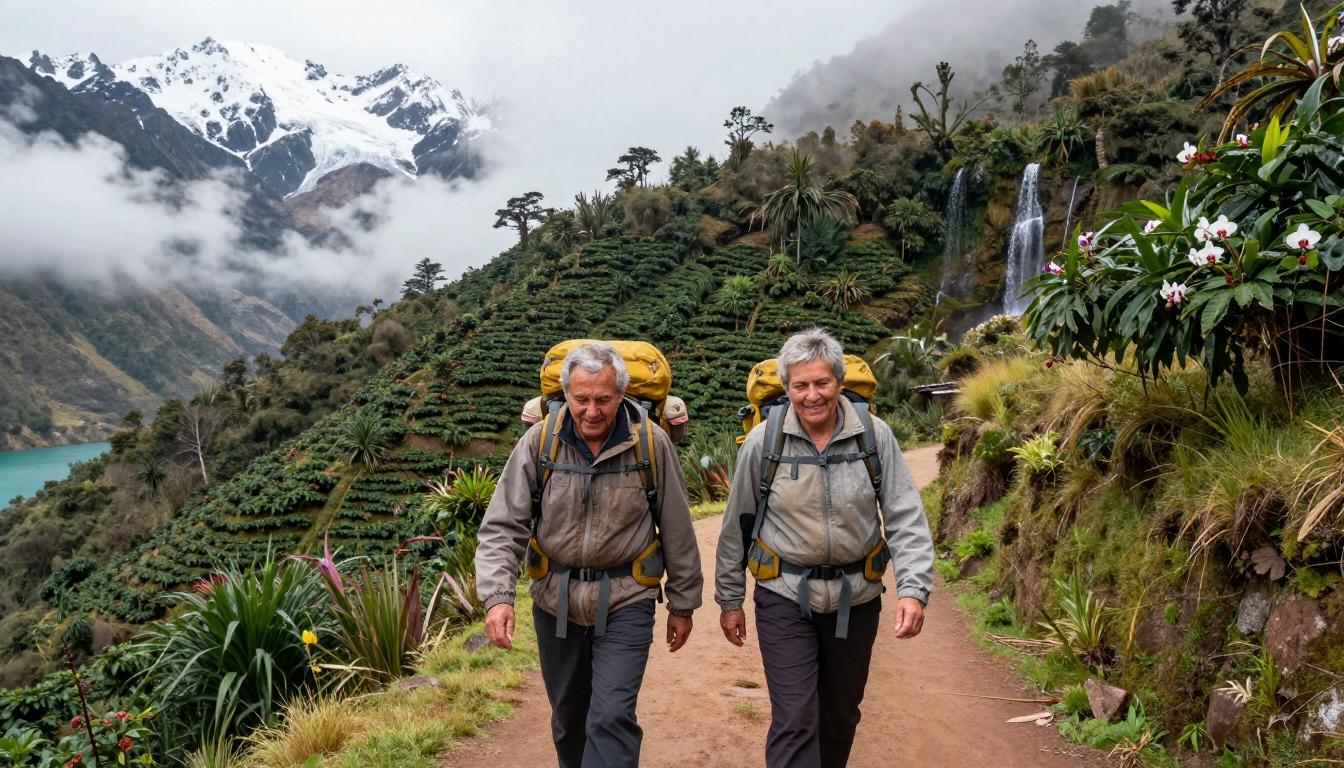
Cusco, which has its own airport, is the gateway to the Salkantay Trek — most international travelers fly into Lima first, then take a short connecting flight to Cusco rather than trying to cover the distance by road. From Cusco, your operator arranges the road transfer out to the start of the trail, and at the other end, after crossing Salkantay Pass and descending through the valley, the route brings you down to Aguas Calientes for the approach to Machu Picchu. Because entry to the ruins is by timed ticket, book that slot well before you travel.
Where to stay
The realistic options, closest-to-the-trail first. Book through the official links — we don't list prices or availability because they change all the time.
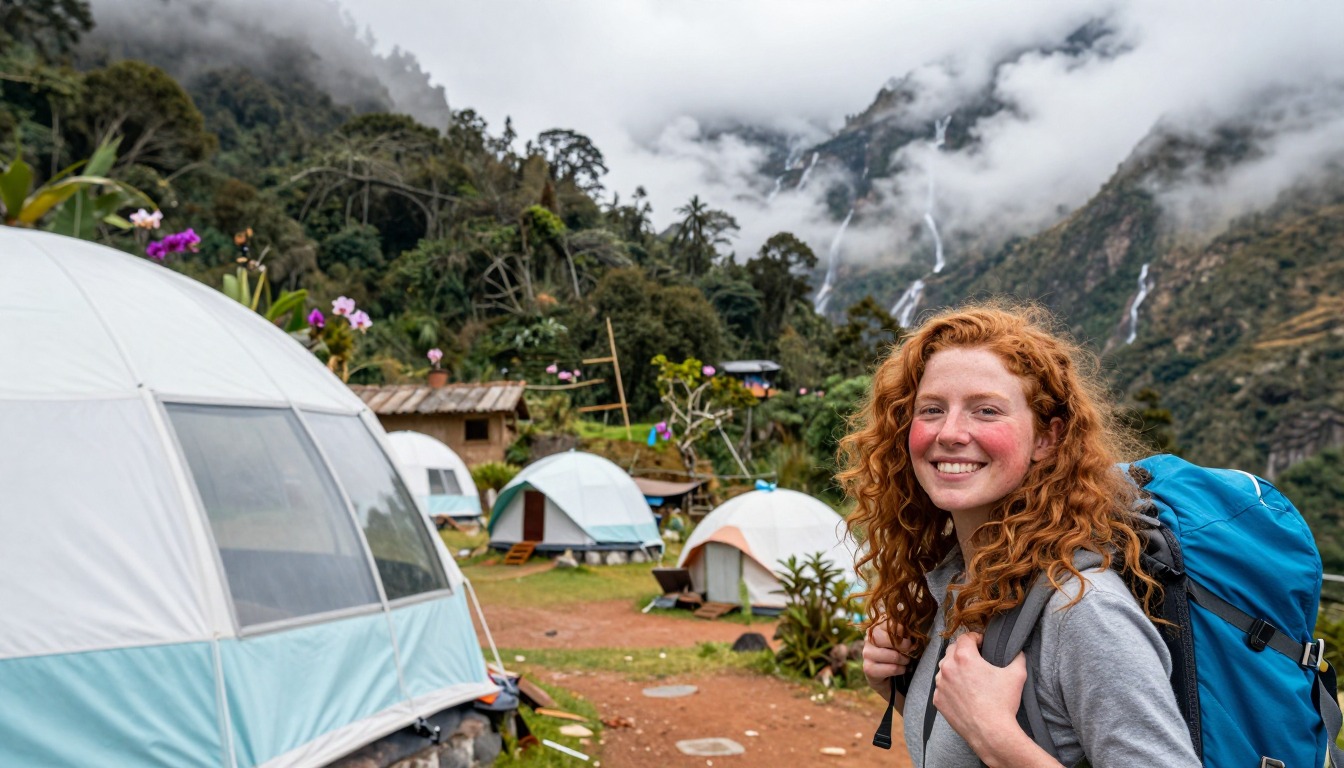 Illustrative — evokes the setting, not a specific property.
 For example: Rustic mountain lodges, cabins and campsites at stops like Soraypampa and along the route
Most trekkers — operators arrange a mix of lodges and camps each night.
A popular Inca Trail alternative that does not need the Inca Trail permit.
Booked through a trekking operatorFor example: Hotels and hostels in Cusco (acclimatize) and Aguas Calientes below Machu Picchu
Everyone — Cusco before, Aguas Calientes at the end.
Spend a few nights in Cusco first to acclimatize.
Nearby-town lodgingPermits & rules
The Salkantay does not require the limited Inca Trail permit, but you still need a Machu Picchu entry ticket (timed, book ahead) and most people go with a guided operator. The Salkantay Pass is high — acclimatize in Cusco first.
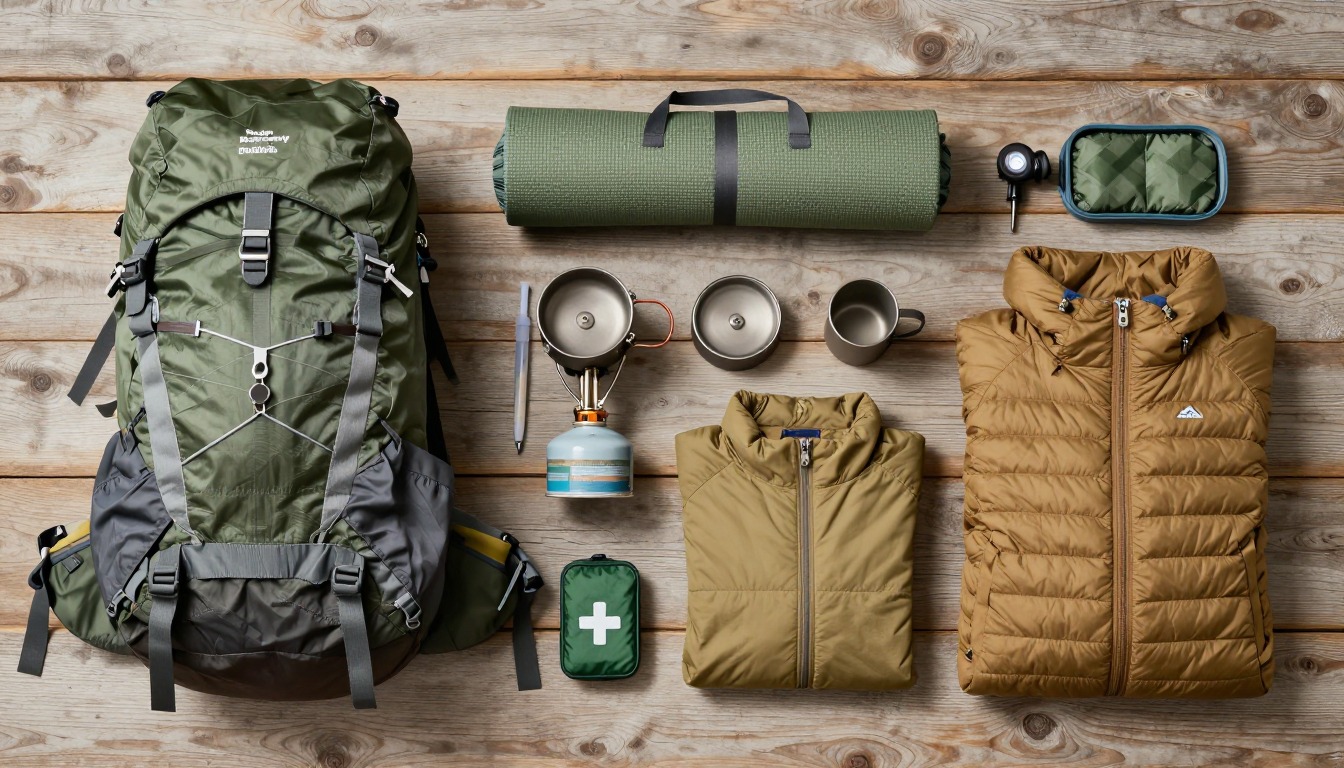
Gear you'll want for this trip
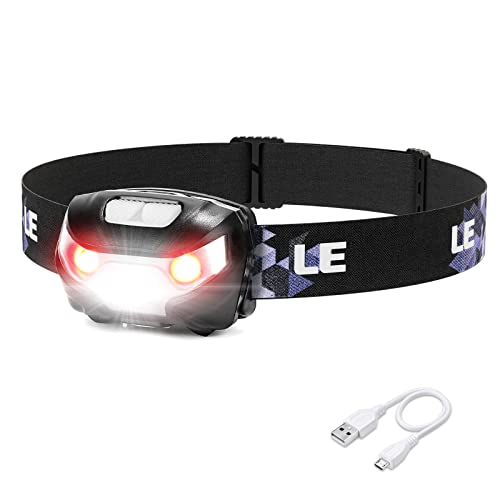
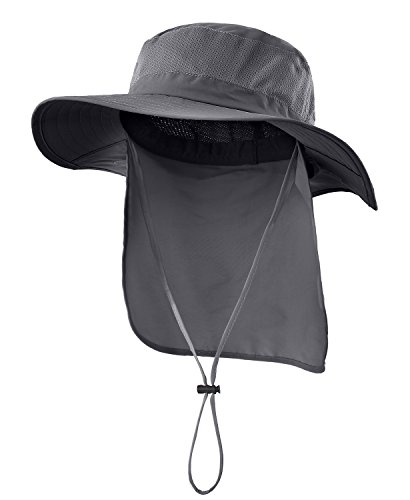
Matched to the terrain and conditions here. Real products — check current price on Amazon.

Common questions
Do I need an Inca Trail permit to hike the Salkantay Trek?
No. The Salkantay route sits outside the government permit system that limits Inca Trail spots, so it doesn't sell out the same way and can often be booked closer to your travel dates. You'll still need a timed entry ticket for Machu Picchu itself, which is separate from any trekking permit and should be booked in advance.
What's the lodging actually like along the Salkantay Trek?
Expect a mix, not a single style of accommodation. Early stops like Soraypampa typically have rustic mountain lodges and cabins alongside campsites, all arranged by your trekking operator as part of the package. Before and after the trek, you'll stay in ordinary hotels or hostels — a few nights in Cusco to acclimatize, then a night in Aguas Calientes near Machu Picchu.
When's the best time to hike the Salkantay Trek, and how do I handle the altitude?
The dry season, roughly May through September, gives the most reliable weather and clearest mountain views for crossing Salkantay Pass. Because the pass sits at serious elevation, spend a few days in Cusco beforehand to acclimatize, stay hydrated, and pace yourself on the climb — altitude affects fit hikers too, not just beginners.
Complete gearsets for this trip
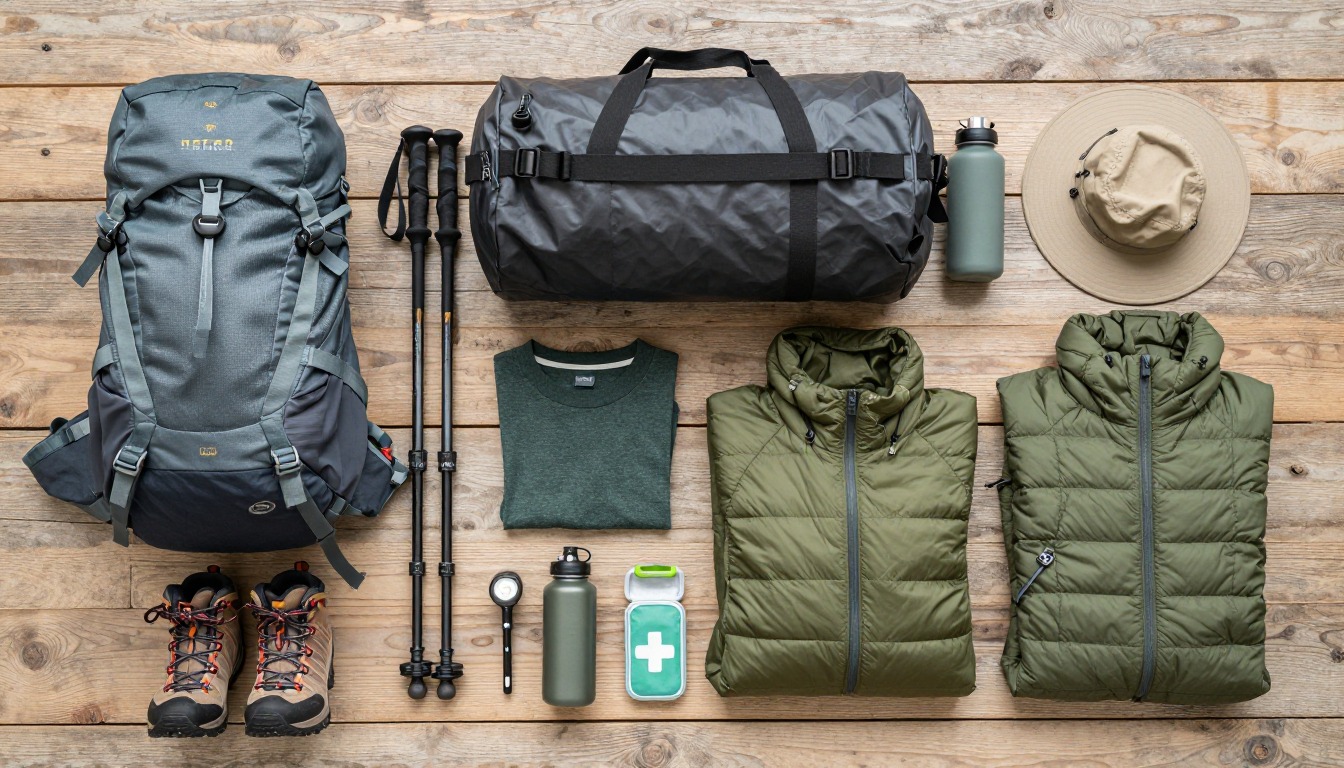
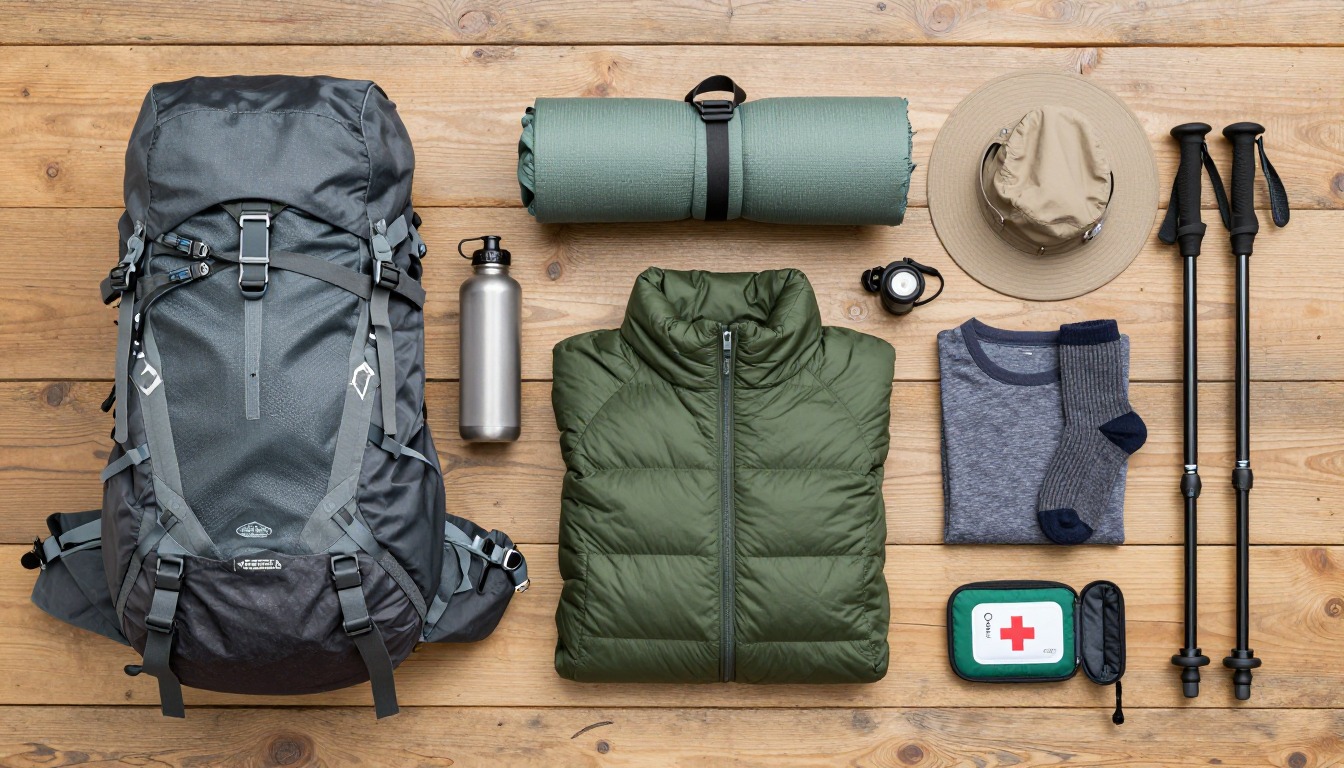
Full curated kits built for exactly this kind of hike — what to bring, why, and links to similar gear.
Lodging details are compiled from official parks, refuge associations and reservation systems and can change without notice. We publish no prices, availability or ratings — always confirm current information on the official site before booking or setting out. Product links are affiliate links: we may earn a commission at no extra cost to you; prices and availability are shown on Amazon. See our affiliate disclosure.