
Best Time to Hike Kilimanjaro — Barafu & the Summit
The best time to hike Kilimanjaro's Barafu camp and summit push is during the two drier windows: January to March and June to October. Regional rainfall is lowest from June through August, so those months are often the most dependable. Always confirm current conditions with Tanzania National Parks (TANAPA) before you commit.
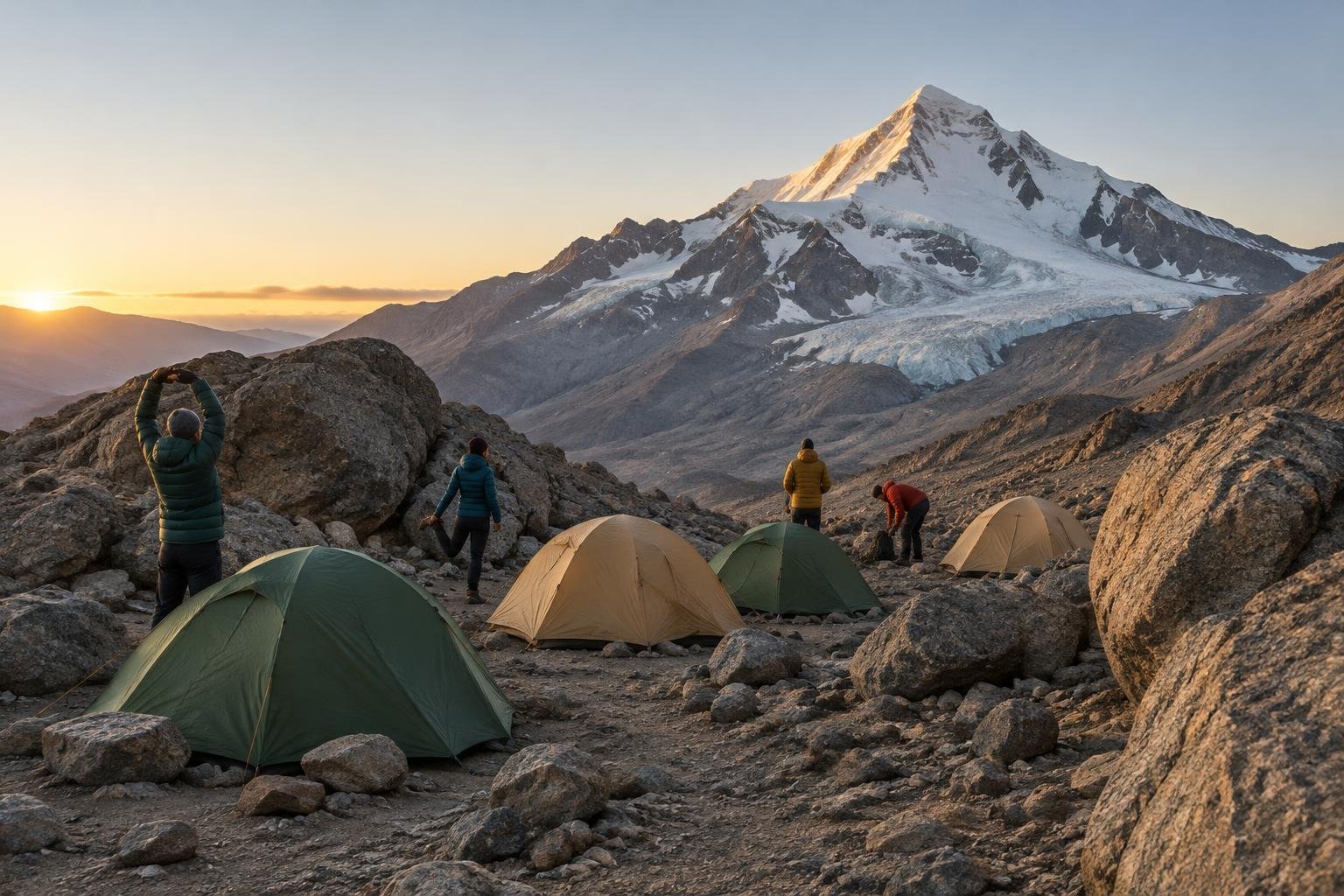
Month-by-month climate for Kilimanjaro — Barafu & the Summit
| Month | Rain | Daylight |
|---|---|---|
| Jan | 84 mm | 12.2 h |
| Feb | 84 mm | 12.1 h |
| Mar | 116 mm | 12 h |
| Apr | 189 mm | 11.9 h |
| May | 169 mm | 11.9 h |
| Jun | 69 mm | 11.8 h |
| Jul | 44 mm | 11.8 h |
| Aug | 62 mm | 11.9 h |
| Sep | 75 mm | 12 h |
| Oct | 90 mm | 12.1 h |
| Nov | 213 mm | 12.1 h |
| Dec | 172 mm | 12.2 h |
Modelled regional averages for 2010–2023 (rainfall) and calculated daylight hours; they describe the wider area, not a reading taken on the trail. Temperature changes little from month to month here, so we don’t chart it. Altitude, not season, drives how cold it feels on the route, so check the managing authority’s guidance for the section you plan to walk.
The modelled regional numbers show a clear wet-and-dry rhythm. July is the driest month at about 44 mm, with June and August also low at roughly 69 mm and 62 mm. Rainfall climbs sharply in April (about 189 mm) and peaks in November at around 213 mm, with December and May also wet. Daylight barely moves, ranging from about 11.8 hours in June and July to 12.2 hours in December and January. Because daylight is steady all year, rainfall is the main variable to weigh when choosing your month. These are modelled regional averages, not trail measurements.
Kilimanjaro — Barafu & the Summit season by season
Early-year dry spell · January to March
This is the first of the two windows named in the official season guidance. Rainfall is relatively modest in January and February, at about 84 mm each, then rises to roughly 116 mm in March as the wetter months approach. Daylight sits near 12 hours, so the schedule for the midnight push stays predictable. Treat March as the edge of the window, since the numbers are already trending wetter. Check with TANAPA for current conditions before booking.
Long rains · April to May
These are the wettest months of the first half of the year, with roughly 189 mm in April and 169 mm in May on average. They fall outside the official season guidance, which lists only January to March and June to October. Heavy rain is more likely on the upper mountain, and daylight stays near 11.9 hours, so there is no extra light to offset slower, wetter conditions. Most climbers aiming for the summit avoid this stretch and choose a drier window instead.
Main dry season · June to October
This long window is the most reliable part of the year in the data. July is the driest month at about 44 mm, June and August sit around 69 mm and 62 mm, and September and October rise gently to roughly 75 mm and 90 mm. Daylight runs from about 11.8 hours in midsummer to 12.1 hours by October. If you want the steadiest odds for the Barafu summit push, aim for June through September and confirm details with TANAPA.
Short rains · November to December
November is the wettest month in the dataset at about 213 mm, and December follows at roughly 172 mm. Neither month appears in the official season guidance. Daylight is the longest of the year, about 12.1 to 12.2 hours, but that does not offset the rainfall. Wetter conditions can make the already demanding summit push harder to manage. Most operators and climbers plan around these months rather than through them, so check with TANAPA if you are considering this period.
Official season guidance
Tanzania National Parks (TANAPA): January–March and June–October
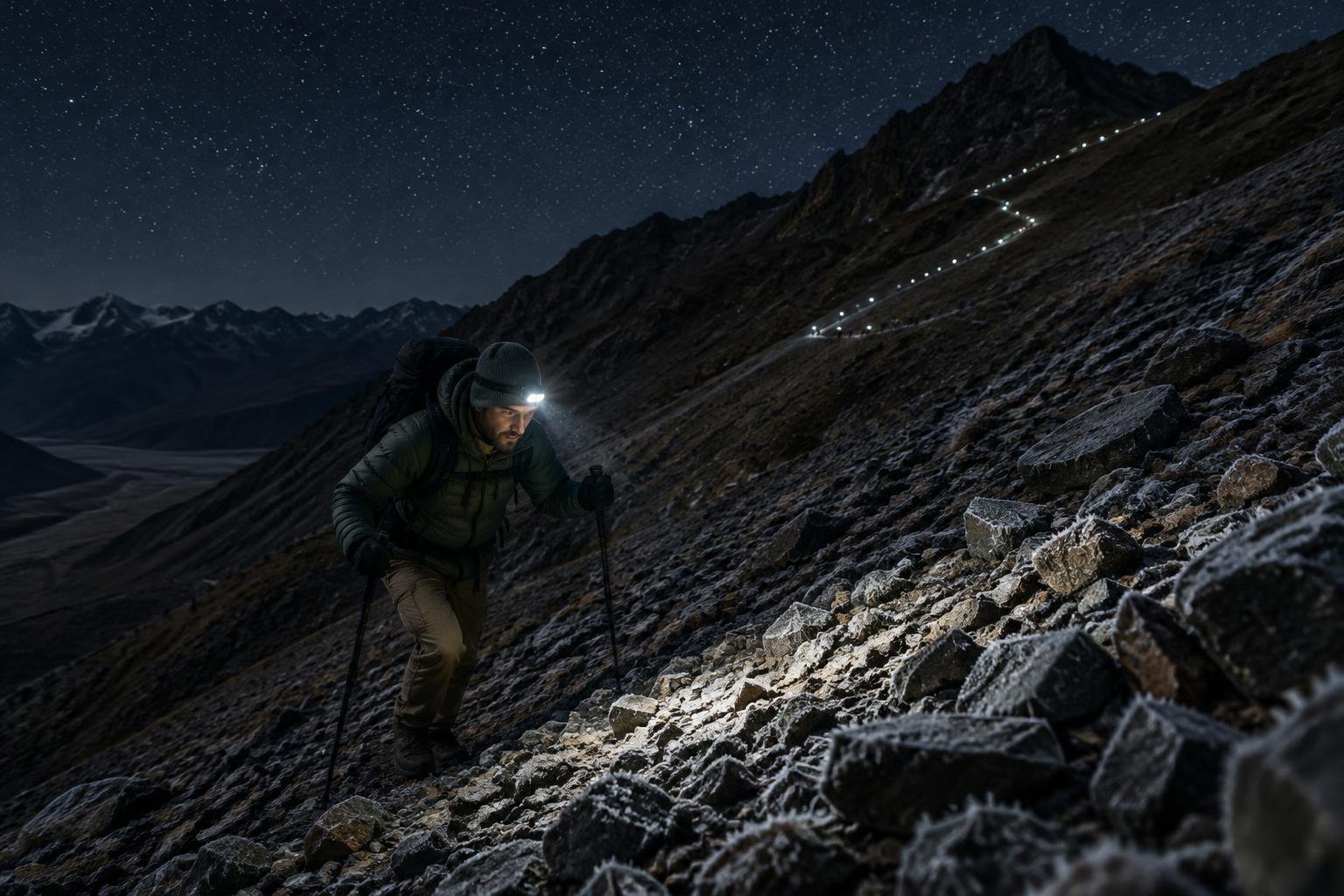
The summit push is the crux of any Kilimanjaro climb — guided, at extreme altitude, and in freezing pre-dawn cold. It must be done with a licensed operator and crew; go slowly (“pole pole”) and be honest about altitude symptoms.
Check current dates on tanzaniaparks.go.tz (Kilimanjaro visitor guide)What to pack for the season
Packing should follow the season you choose rather than a single list. Plan for layers you can add or remove as you gain altitude, and carry reliable rain protection even in the drier months, since mountain weather changes. Bring sun protection for long exposed stretches and a headlamp for the pre-dawn start. Follow your licensed operator's gear guidance, and keep warm clothing accessible rather than buried in the pack.
For layering, rain cover and weather planning, see hiking in rain, heat and cold.
Timing mistakes to avoid
The biggest timing mistake is treating the summit push as an ordinary day hike and picking a date by convenience alone. Another is choosing a month outside the official season guidance, January to March and June to October, without checking with TANAPA first. Relying on a single month's rainfall figure also misleads, because these are modelled regional averages, not conditions at the trail. Finally, don't build an itinerary with no slack. Going slowly ("pole pole") and honestly acknowledging altitude symptoms matter more than hitting a fixed date.
Common questions
What is the best month to hike to Kilimanjaro's summit from Barafu?
The modelled data points to July as the driest month, at about 44 mm of regional rainfall, with June and August also low. These fall inside the official June to October window. Conditions still change, so confirm current guidance with Tanzania National Parks (TANAPA) before choosing a date.
Is there more than one good season for the summit push?
Yes. The official season guidance names two windows: January to March and June to October. The June to October window is longer and shows the lowest rainfall in the data, while January to March is also workable but trends wetter by March. Ask TANAPA or your licensed operator about current conditions.
Which months should I avoid for the Barafu summit climb?
April, May, November, and December are the wettest months in the modelled data, with November the highest at about 213 mm and April around 189 mm. None of these months appear in the official season guidance. Many climbers avoid them, though you should confirm with TANAPA.
Does daylight change much across the year?
Not much. Calculated daylight ranges from about 11.8 hours in June and July to roughly 12.2 hours in December and January. That means the length of the day is rarely the deciding factor for the summit push, so rainfall and official season guidance are the better guides when picking your month.
Sources
- Tanzania National Parks (TANAPA) — tanzaniaparks.go.tz (Kilimanjaro visitor guide): official season and permit guidance.
- NASA POWER (Prediction Of Worldwide Energy Resources): monthly temperature and rainfall averages, 2010–2023, from MERRA-2 reanalysis. Daylight hours are calculated from latitude.
Conditions, closures and permit rules change without notice — confirm current information with the managing authority before you go. See our editorial policy and affiliate disclosure.