
Best Time to Hike Overland Track
The best time to hike the Overland Track is during the booked season, which runs roughly October to May. In the Southern Hemisphere summer, daylight is long and the modelled averages show the warmest months and the least rain, though mountain weather can still turn wet.
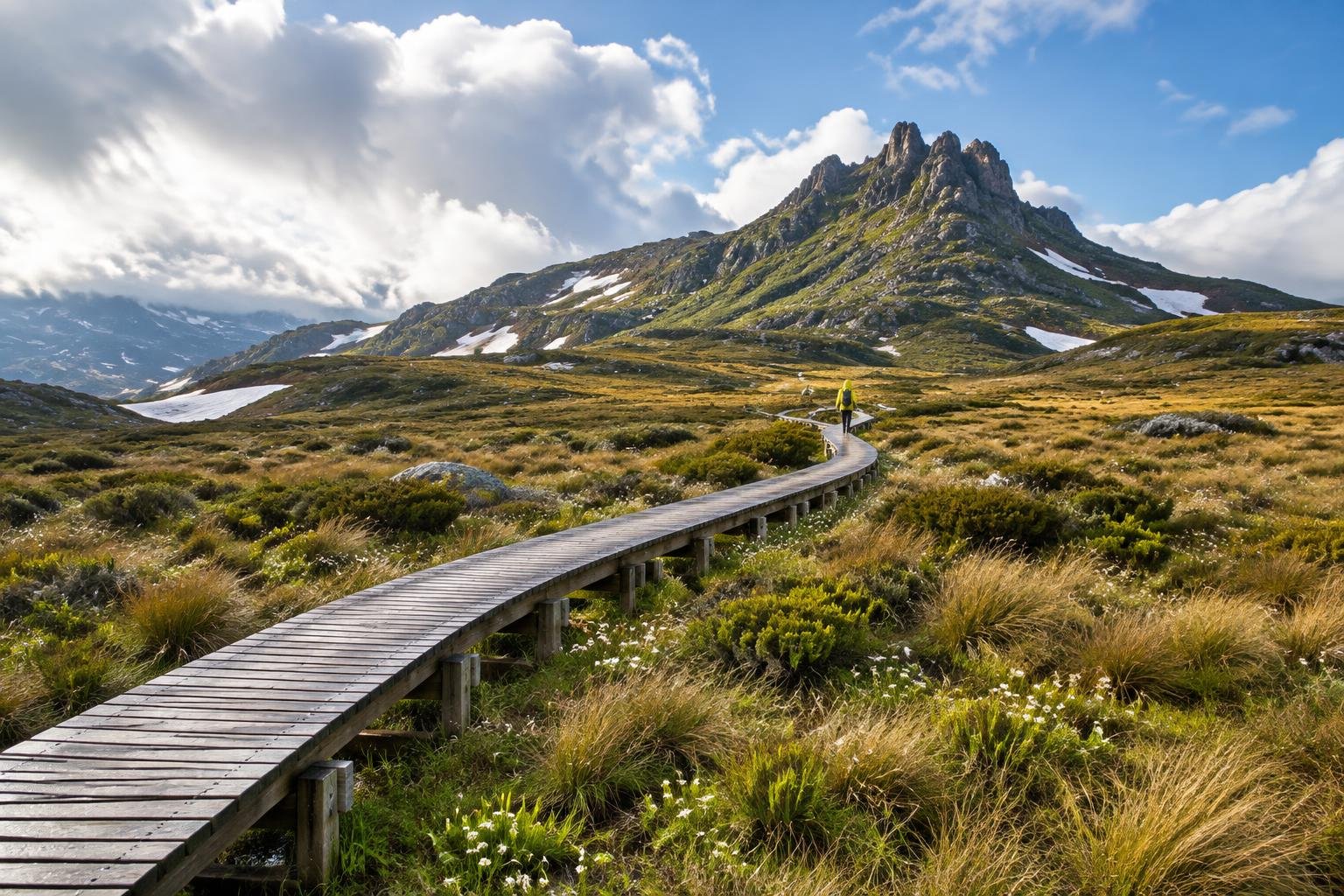
Month-by-month climate for Overland Track
| Month | Relative warmth | Rain | Daylight |
|---|---|---|---|
| Jan | Warmest | 65 mm | 14.7 h |
| Feb | Warmest | 60 mm | 13.6 h |
| Mar | Warm | 92 mm | 12.3 h |
| Apr | Mild | 75 mm | 10.9 h |
| May | Cool | 106 mm | 9.6 h |
| Jun | Coldest | 100 mm | 9 h |
| Jul | Coldest | 106 mm | 9.2 h |
| Aug | Coldest | 117 mm | 10.3 h |
| Sep | Cool | 95 mm | 11.7 h |
| Oct | Mild | 111 mm | 13.2 h |
| Nov | Warm | 83 mm | 14.4 h |
| Dec | Warmest | 79 mm | 15 h |
Modelled regional averages for 2010–2023 (rainfall) and calculated daylight hours; they describe the wider area, not a reading taken on the trail. “Relative warmth” compares each month with the warmest and coldest months of this place’s own year. It is not a temperature, and the high parts of a route are colder than the region around them.
The modelled averages show a clear split. January and February are typically the driest months, at about 65 mm and 60 mm, and they are also the warmest months of this place's own year. August is the wettest at about 117 mm and, with June and July, sits among the coldest months. Daylight swings from roughly 9.0 hours in June to about 15.0 hours in December, which changes how much trail you can cover. These are regional averages, not trail measurements, so treat them as a guide to the pattern rather than a forecast.
Overland Track season by season
Spring shoulder · September to November
Spring brings fast-lengthening days, from about 11.7 hours of daylight in September to roughly 14.4 hours by November. Warmth moves from cool through mild to warm across these months, but rainfall stays fairly high, with October averaging about 111 mm before easing to around 83 mm in November. The managing authority's booked season starts roughly in October, so the early part of this window falls outside it. Check Tasmania Parks & Wildlife Service guidance for dates and conditions before committing.
Summer · December to February
Summer is the heart of the booked season and the best fit for most walkers. December to February are the warmest months of this place's own year, and January and February are the driest in the data, at about 65 mm and 60 mm on average. Daylight peaks near 15.0 hours in December, leaving plenty of time to reach each hut or campsite. This is also when you must reserve a start date and pay the fee, so plan ahead. Even so, the park guidance stresses that mountain weather is cold and wet in any season.
Autumn · March to May
Autumn is a gradual slide. March is still warm, with about 12.3 hours of daylight and around 92 mm of rain, while April turns mild and May cool, with May climbing to roughly 106 mm. Daylight shrinks to about 9.6 hours by May, which shortens your walking day noticeably. The booked season runs roughly to May, so late autumn is still within the official window, but you should expect cooler, wetter walking and plan for earlier finishes each day.
Winter · June to August
Winter falls outside the booked season and is the least forgiving window. June, July and August are the coldest months of this place's own year, with about 100 mm, 106 mm and 117 mm of rain on average, and August is the wettest month in the data. Daylight drops to about 9.0 hours in June, giving very little margin on a multi-day route. The managing authority's guidance and rules are built around the booked season, so check with Tasmania Parks & Wildlife Service about conditions before considering any trip outside it.
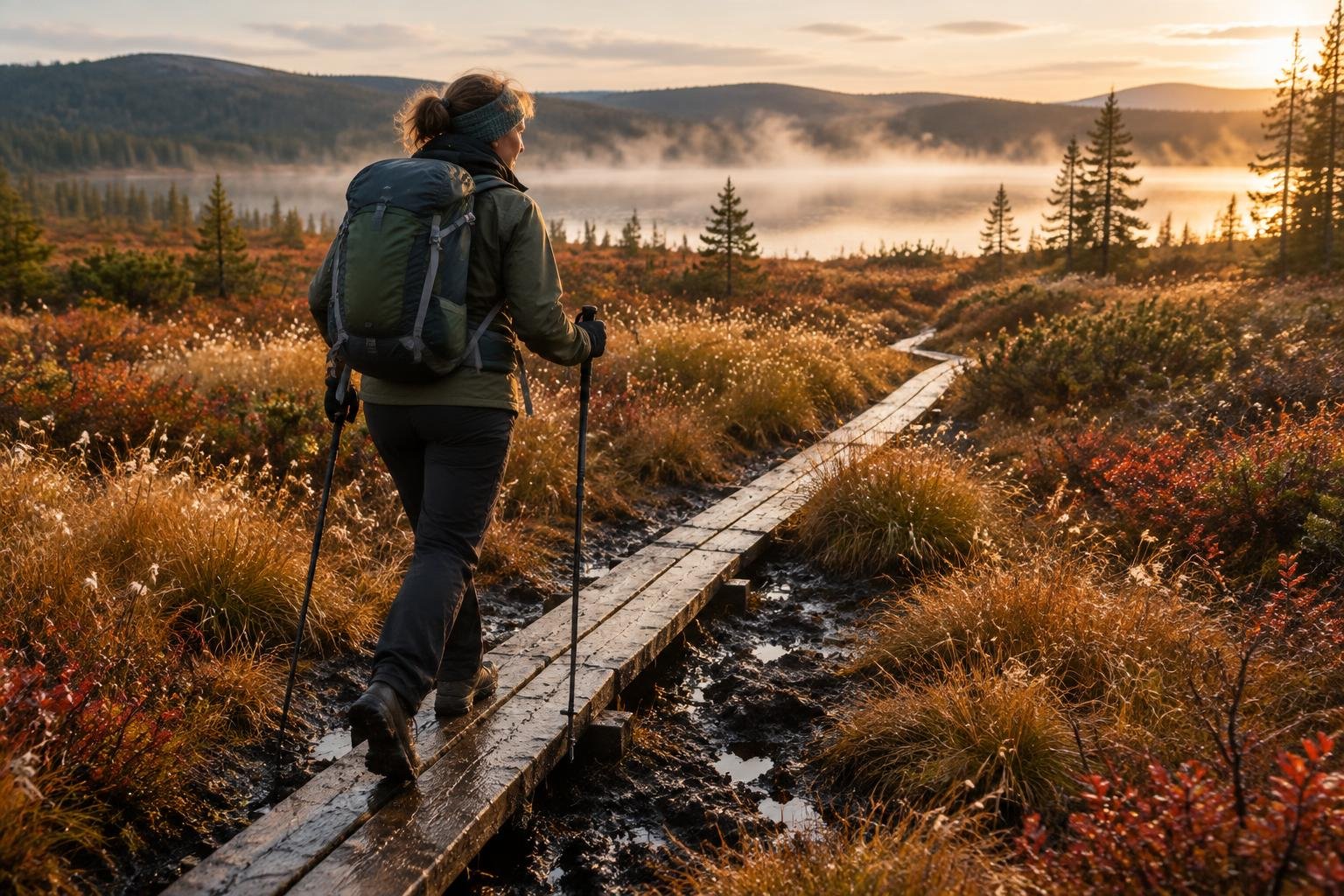
Official season guidance
Tasmania Parks & Wildlife Service: The booked season runs roughly October to May
In the peak booked season you must reserve a start date, pay the Overland Track fee, and walk north-to-south; the public huts are first-come, so always carry a tent. Tasmanian mountain weather is cold and wet in any season — pack for all of it.
Check current dates on parks.tas.gov.au (Overland Track)What to pack for the season
Because the park guidance says mountain weather is cold and wet in any season, pack as if every month could bring rain and chill. Bring layers you can add or shed, reliable rain cover for you and your gear, and sun protection for the longer summer days. Carry a headlamp, especially in autumn and spring when daylight is shorter. You must also carry a tent, since the huts are first-come.
For layering, rain cover and weather planning, see hiking in rain, heat and cold.
Timing mistakes to avoid
A common mistake is picking a month on the strength of one average and ignoring the managing authority's guidance. The data shows even the driest months still see rain, so no window guarantees dry weather. Another is overlooking the booking rules: in the peak booked season you must reserve a start date, pay the fee and walk north-to-south. Walkers also underestimate how daylight shrinks toward May. Finally, don't treat the huts as guaranteed shelter, because they are first-come; always carry a tent whatever month you choose.
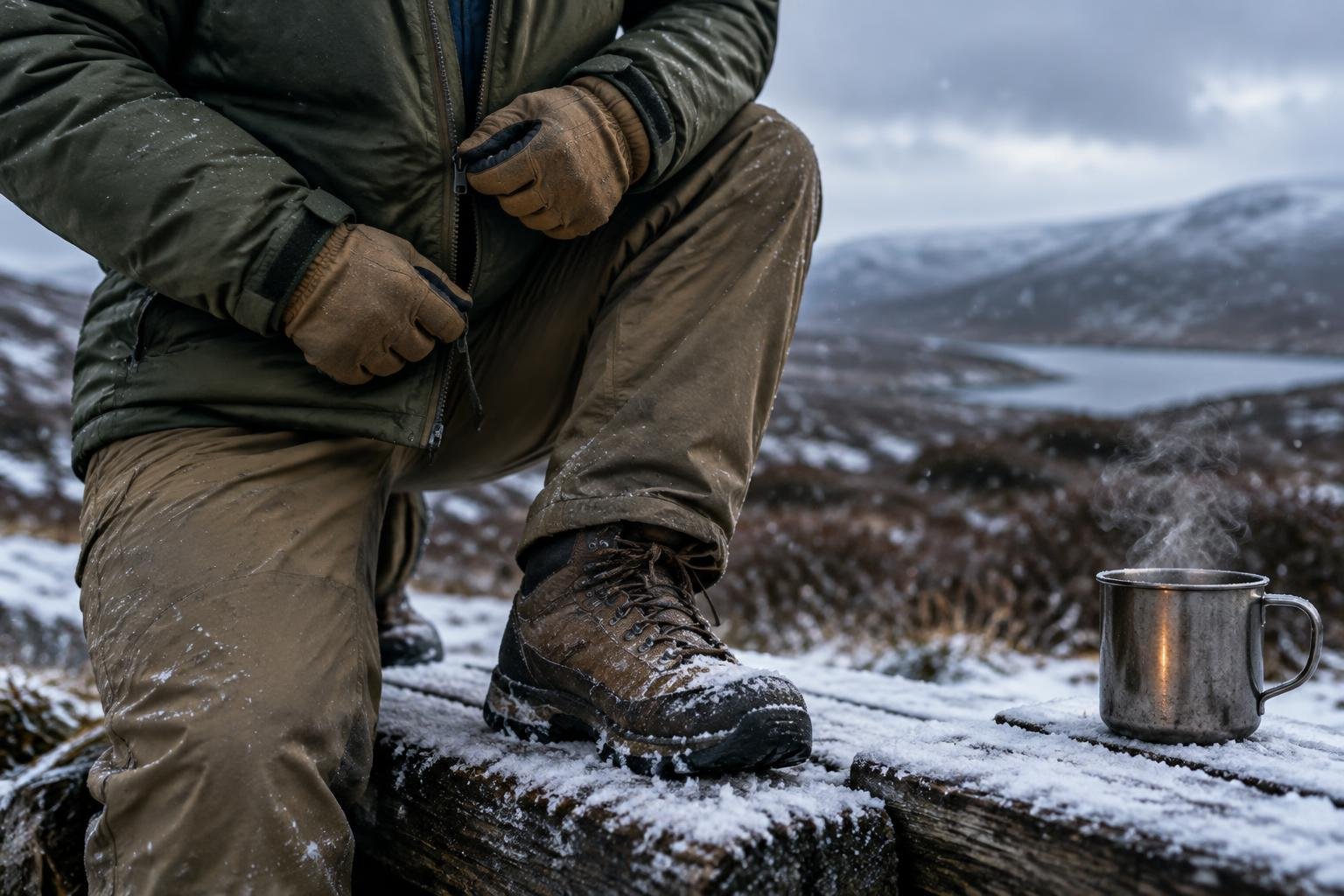
Common questions
When is the Overland Track booked season?
The booked season runs roughly October to May. During the peak booked season you must reserve a start date, pay the Overland Track fee and walk north-to-south. Check Tasmania Parks & Wildlife Service for the exact dates and current rules before you plan your trip.
Which months are driest on the Overland Track?
In the modelled regional averages, February and January are the driest months, at about 60 mm and 65 mm. These are averages rather than trail measurements, and the park guidance notes that mountain weather is cold and wet in any season, so still expect rain.
How much daylight do I get on the Overland Track?
Calculated daylight ranges from about 9.0 hours in June to about 15.0 hours in December. In the booked season, that means roughly 9.6 hours in May and up to around 15.0 hours in December, so autumn days leave much less time to finish each section.
Is summer the best time for the Overland Track?
For most walkers, yes. December to February are the warmest months of this place's own year, and January and February are the driest in the data. Daylight is also longest then. However, the park guidance says to pack for cold and wet weather in any season.
Sources
- Tasmania Parks & Wildlife Service — parks.tas.gov.au (Overland Track): official season and permit guidance.
- NASA POWER (Prediction Of Worldwide Energy Resources): monthly temperature and rainfall averages, 2010–2023, from MERRA-2 reanalysis. Daylight hours are calculated from latitude.
Conditions, closures and permit rules change without notice — confirm current information with the managing authority before you go. See our editorial policy and affiliate disclosure.