
Overland Track vs Larapinta Trail: Which Should You Hike?
Choose Overland Track if you want a six-day alpine trek through moorland and rainforest and are happy to carry a tent for cold, wet weather; choose Larapinta Trail if you want desert ridge walking you can take in sections, planned around water tanks and cooler-season heat. Which is right depends on climate, time and self-sufficiency.
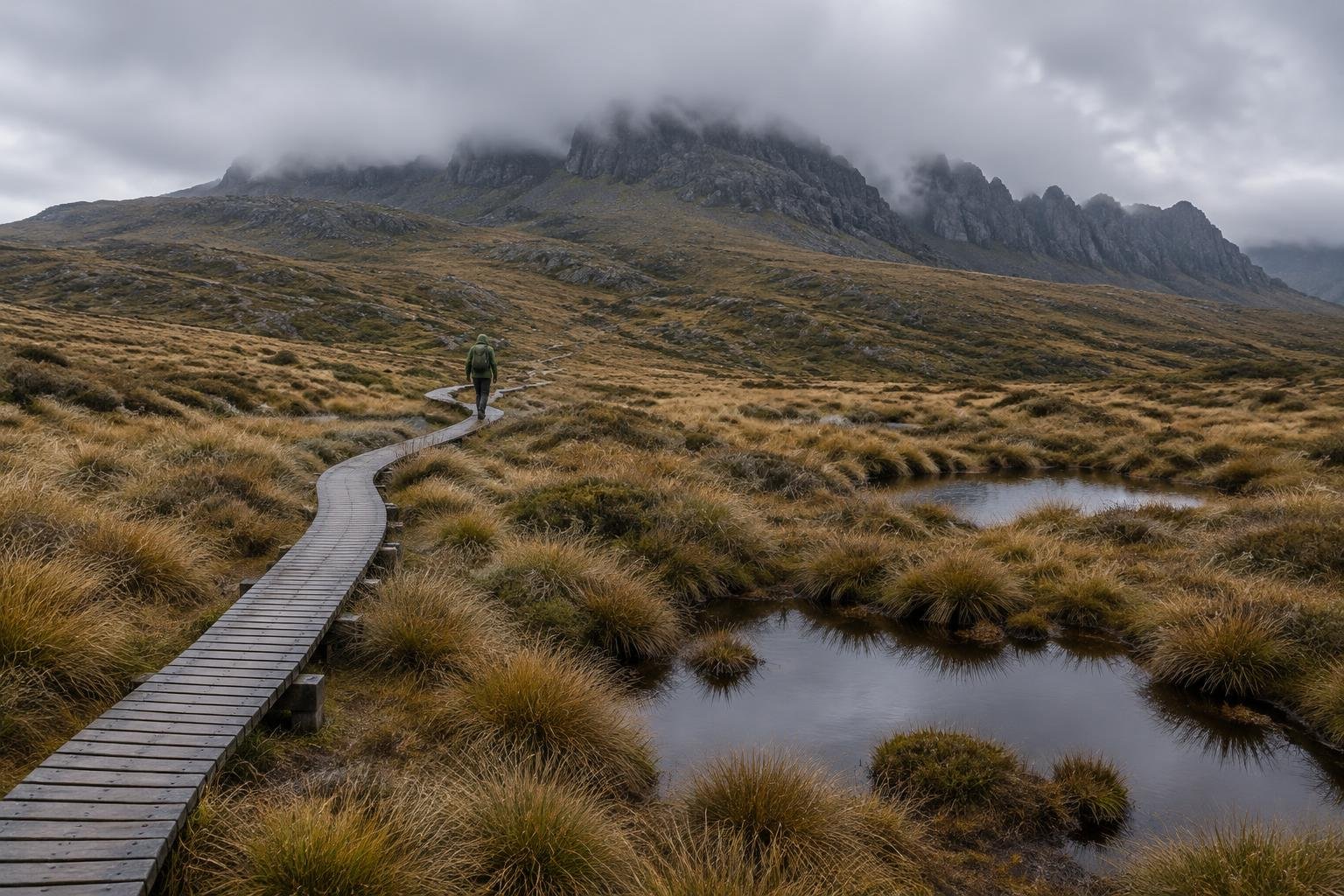
Overland Track and Larapinta Trail at a glance
The Overland Track is a 65 km point-to-point trek through Tasmania's Cradle Mountain country, usually walked in 6 days. The Larapinta Trail is a 223 km point-to-point route through the Red Centre, usually walked in sections across 12 stages. Both are remote Australian walks that hikers weigh up when choosing a big trip.
| Overland Track | Larapinta Trail | |
|---|---|---|
| Place | Cradle Mountain · Tasmania, Australia | Red Centre · Northern Territory, Australia |
| Distance | ~65 km, point-to-point (Ronny Creek/Cradle Mountain to Narcissus Hut/Lake St Clair), typically 6 days | 223 km, point-to-point (Alice Springs/Simpsons Gap to Mount Sonder), usually walked in sections across 12 stages |
| Elevation gain | Check the official source | Check the official source |
| Difficulty | Strenuous multi-day alpine trek (Parks Tasmania caps daily walker numbers and expects solid bushwalking self-sufficiency; remote, exposed high country) | Difficult overall as a through-hike; NT Parks grades individual sections from Class 2 (easier) to Class 5 (very hard/exposed), and summer heat plus water scarcity add serious risk |
| Route type | thru-hike | point-to-point |
| Official season | The booked season runs roughly October to May | Cooler months, May to September (summer is dangerously hot) |
| Managed by | Tasmania Parks & Wildlife Service | NT Parks and Wildlife |
Effort and difficulty
The Overland Track is about 65 km, typically 6 days, and Parks Tasmania describes it as a strenuous alpine trek over duckboard, soupy peat, rainforest roots and exposed plateau. The Larapinta Trail is 223 km and rated difficult overall, with sections graded Class 2 to Class 5. It is the bigger commitment in total distance, and walkers who go end to end are out for weeks. Elevation gain is not published on this page, so check each official source. Larapinta's heat and scarce water add serious risk, while Overland's challenge is mud, cold and weather.
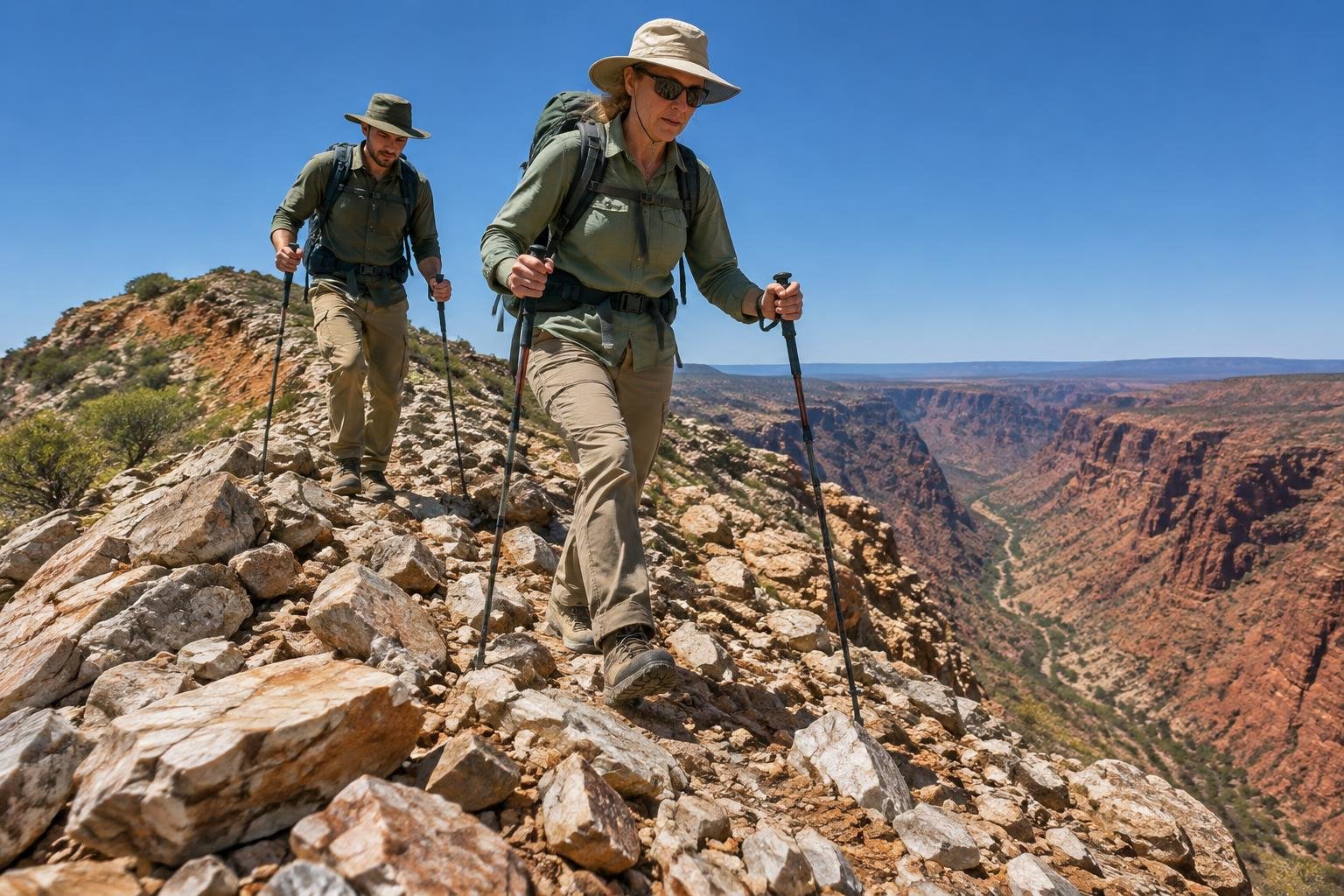
Season, permits and booking
The Overland Track's booked season runs roughly October to May, and in peak season you must reserve a start date, pay the fee and walk north to south. Larapinta is walked in the cooler months, May to September, because summer is dangerously hot, and multi-day walks and campsites must be booked online before you arrive. Rules and seasons can change, so confirm current details with Tasmania Parks & Wildlife Service and NT Parks and Wildlife.
Which one is right for you?
Choose Overland Track if…
Choose the Overland Track if you want a defined, roughly six-day trip with a clear start and finish and are comfortable with bushwalking self-sufficiency in cold, wet, exposed country. It suits walkers who like variety, from moorland to rainforest, and who will add side trips to peaks and waterfalls. You should book your start date and always carry a tent, because the public huts are first-come.
How to hike Overland TrackChoose Larapinta Trail if…
Choose the Larapinta Trail if you prefer dry desert ridgelines and want flexibility: most people walk two or three sections, using Alice Springs as a base. It suits hikers who can plan carefully around water tanks, start before first light and rest through the hottest hours. Carrying a satellite phone or personal locator beacon is recommended, and a supported operator is a common option.
How to hike Larapinta TrailWhat the two have in common
Both are remote, point-to-point Australian walks managed by state or territory park services, and both require advance booking in some form. Each demands self-reliance, careful planning and respect for weather, whether cold and wet in Tasmania or hot and dry in the Northern Territory. Both also offer side trips or sections that are steeper and rougher than the main route, so you can tailor the effort.
How your choice changes what you pack
The choice changes what you carry. Overland packing centers on waterproof and warm layers for cold, wet weather and a tent for when huts are full. Larapinta packing centers on sun protection, enough water capacity to bridge the gaps between tanks, and a way to call for help. Trip length also affects food planning, since longer Larapinta stretches need resupply or an operator.
Common questions
Which is harder, the Overland Track or the Larapinta Trail?
They are hard in different ways. The Overland Track is a strenuous alpine trek with mud, cold and exposure. Larapinta is rated difficult overall, with sections up to Class 5, and heat and limited water add serious risk. Larapinta is far longer in total distance.
Which is better for first-timers?
Neither is a casual walk. The Overland Track expects solid bushwalking self-sufficiency. Larapinta lets you choose individual sections and use a supported operator, which can ease the planning. Check the difficulty grades and your own experience before deciding.
Can I walk either trail year-round?
The sources describe seasons rather than year-round walking. The Overland Track's booked season runs roughly October to May. Larapinta is walked from May to September because summer is dangerously hot. Confirm current guidance with each managing authority.
Do I need to book ahead for both?
Yes. In peak season the Overland Track requires a reserved start date and a fee, and huts are first-come. Larapinta multi-day walks and campsites must be booked online before arrival. Check each authority for current requirements.
Sources
- Tasmania Parks & Wildlife Service — parks.tas.gov.au (Overland Track): official information for Overland Track.
- NT Parks and Wildlife — northernterritory.com (Tourism NT, Larapinta Trail): official information for Larapinta Trail.
Conditions, permits and access rules change without notice — confirm current information with each managing authority before you go. See our editorial policy.